
Pitch sans Parsis
The last Parsi cricketer to represent India in a Test match was in 1975
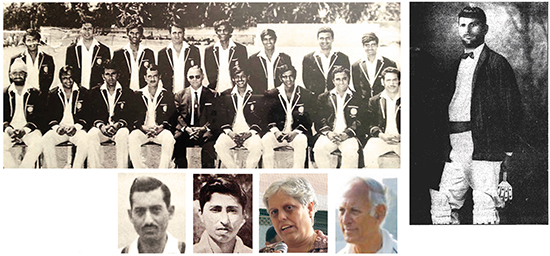
This article features all 11 Parsis who have played Test matches for India from 1932 (the first ever Test India played) to 1975. In alphabetical order they are: Soli Colah (two Tests), Contractor (31), Engineer (46), Jehangir Irani (two), Jamshedji (one), Meherhomji (one), Modi (10), Piloo Palia (two), Surti (26), Keki Tarapore (one) and Umrigar (59).
Three of them, Engineer, Meherhomji and Irani, were wicket-keepers.
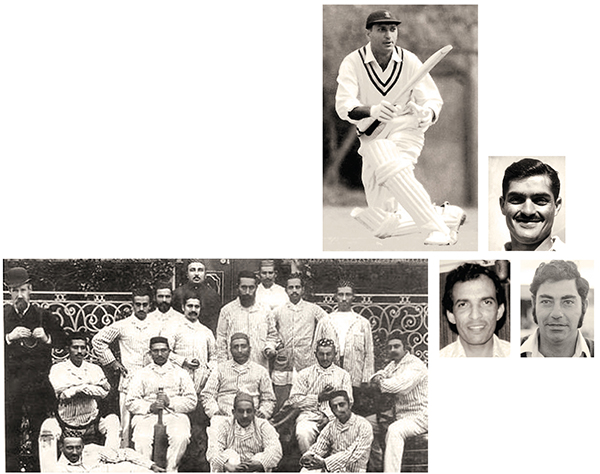
Only Contractor (aged 84 years) and Engineer (80 years) are alive.
Umrigar and Contractor captained India with distinction. Umrigar, nicknamed "Palm tree hitter,” was the most outstanding cricketer of them all scoring 3,631 runs (hitting 12 centuries, highest score 223) at an average of 42.22 and took 35 wickets at an average of 42.08 (best bowling 6 for 74) and 33 catches. Till Sunil Gavaskar came on the scene in the 1970s, Umrigar was the most prolific Indian batsman, scoring the most runs and centuries.
Contractor was a courageous opening batsman who made 1,611 runs averaging at 31.58, hitting one century (108 runs) and held 18 catches. He almost died on the field in West Indies facing fast bowler Charlie "Chucker” Griffith in March 1962. A rising ball struck him on the head and he lost consciousness. Happily, he is still with us 56 years later.
Handsome Engineer was a dynamic personality, scoring runs aggressively and keeping wickets like an acrobat. He scored 2,611 runs, averaging at 31.08, smashing two centuries with 121 as the highest score, took 66 catches and stumped 16. "Flamboyant Farokh” was just six runs short of becoming the first Indian to score a century before lunch on January 13, 1967, the first day of the Madras Test against West Indies that boasted a terrifying pace attack of Wes Hall and Griffith. In many ways, it was Engineer who erased India’s image as dull dogs of Test cricket.
Surti was an outstanding all-rounder scoring 1,263 runs, averaging at 28.70, with his highest score being 99 and capturing 42 wickets at 46.71 (best spell 5 for 74) and taking 26 catches. He was India’s first world-class fielder. He later played Sheffield Shield cricket for Queensland, Australia, with distinction, becoming the first one from Queensland to take a hat-trick in the Sheffield Shield.
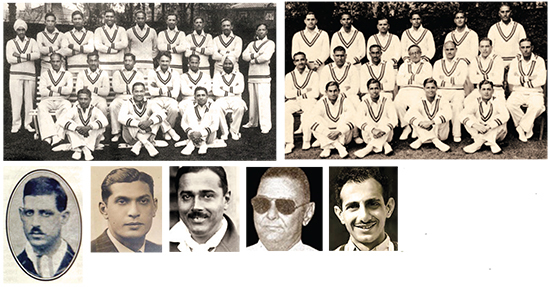
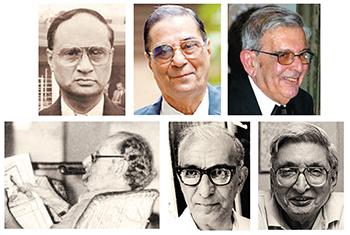
Modi was among the most elegant batsmen in Test history. There were few Tests in his era and he made 736 classy runs in 10 Tests, averaging at 46.00, hitting one century. He was at his best against the strong West Indies team in 1948-49. In that series he scored 560 runs, averaging at 56.00, hitting over 50 in each of the five Tests; 63, 112, 80, 87, 56 and 86 (six scores). In that series he was associated in three century partnerships with Vijay Hazare. In the final Test at Brabourne Stadium, Bombay, the consistent pair of Modi and Hazare brought India to only six runs short of her first ever Test victory. But for poor sportsmanship shown by the visitors to slow down the game, India would have been victorious.
Thus the Parsis have played a total of 181 Tests for India, scoring 9,960 runs at an average of 34.34, hitting 16 centuries (plus a score of 99 by Surti), taken 81 wickets at 46.31, held 153 catches and stumped 17 batsmen (16 stumped by Engineer, one by Irani). The highest score has been by Umrigar (223) who hit 12 of the 16 hundreds. Best bowling spell has also been by Umrigar, 6 for 74.
The 12th Parsi to play Test cricket was Ronnie Irani. His father Jimmy migrated to England in 1961. Born in Lancashire in 1971, Ronnie, 6’4” tall, played three Tests for England, making his debut against India in the 1996 Birmingham Test. He also played 31 One-day Internationals for England and 232 first-class matches for Essex, his highest score being 218 in 2007. He was in the England squad for the 2003 World Cup. Knee injury hastened his retirement in 2007.
The Eduljee sisters Behroze and Diana also played for India in women’s Tests, both debuted in the same Test, against West Indies in Bangalore in 1976. This was the only Test for Behroze but Diana, six years younger, became famous among women cricketers. In 20 Tests from 1976 to 1991 (her last Test was against Australia at Melbourne in 1991) she scored 404 runs and took 63 wickets, her best spell being 6 for 64.
This April, Diana, 62, was awarded BCCI’s (Board of Control for Cricket in India) Lifetime Achievement Award but chose not to accept it since she is part of the Committee of Administrators (CoA) currently overseeing the work of the Board. She issued a statement: "Since I am a member of the Supreme Court appointed CoA of the BCCI, I do not think it is appropriate for me to accept this honor at this juncture. I have discussed my decision with my family, friends and well-wishers who wholeheartedly support my decision… In fact, I had made my decision very clear last year as well when my name was suggested for this honor.”
Others on the pitch
Back to men’s cricket, Bahadur Kapadia, Nariman Marshall and wicket-keeper Rusi Jeejeebhoy toured overseas with Indian cricket teams, the first two to England in 1932 and Jeejeebhoy to the West Indies in1970-71 but without playing a Test.
J. N. Bhaya and dashing Dady Havewalla played unofficial ‘tests’ for India. Spinner Noshir Mehta was close to selection but the presence of world-class spinners E. A. S. Prasanna, Bishan Bedi and B. S. Chandrasekhar kept him out. Mehta played 57 matches for Hyderabad capturing 178 wickets at an excellent average of 21.07, best spell 6 for 16.
All-rounder Hoshie Amroliwala played 44 matches for Bombay scoring 1,782 runs, averaging at 44.55, hitting two centuries, highest score 139 and took 14 wickets at 24.35, best spell 6 for 44.
Rusi Dinshaw played at an international level for Pakistan, touring India in 1952-53 but was not selected in a single Test.
For other iconic Parsi cricketers, Test cricket came too late. They were Dr Mehellasha Pavri — recognized as India’s first great cricketer, elegant batsmen Kekhushru Mistry and Rustomji Meherhomji, the noted Kanga clan (P. D., M.D., Dinshaw D. and Homi D.), Jehangir Warden, B. D. Gagrat, Nasarvanji Bapasola, the slam-bang B. C. Machliwalla, Hormasji Vajifdar and Fali Kapadia, Bahadur’s brother.
P. D. Kanga led India to England in 1888. Dr Homi Kanga was the president of the BCCI. The Kanga League in Bombay was named after him as also a cricket library at the Wankhede Stadium.
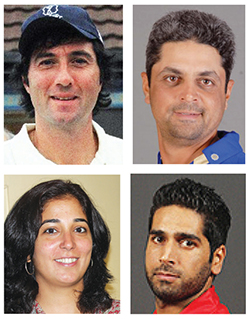
Zubin Bharucha was a promising Ranji Trophy player in the 1990s but migrated to England when at his peak. In 17 first-class matches he scored 1,021 runs averaging at 42.54 hitting three centuries, highest score 164 not out. He was associated in a century partnership with the great Sachin Tendulkar. Bharucha later ran the World Cricket Academy in Bombay.
Right-handed batsman and right-arm medium pace bowler Zubin Surkari plays for the Canadian national cricket team.
The first Zoroastrian on the US Women’s cricket team, Delkash Shahriarian plays as opening batsman and wicket keeper.
The Irani Cup, one of three major tournaments in India, is named after the late Z. R. Irani, former president of the BCCI.
Lest we forget, Parsis have given to Indian cricket the best cricket commentator, A. F. S. Talyarkhan (AFST). I also enjoyed his daily column in The Times of India which always ended with "Do you get me, Steve?” Even after 60 years, I haven’t decoded who Steve was! Can a Parsiana reader help?
Apart from the legendary AFST, Fredun de Vitre gave ball-by-ball commentary on All India Radio. In the 1950s, Pakistani diplomat the late Jamsheed Marker became famous for his cricket commentary on Radio Pakistan. Then there were eminent sports writers Dicky Rutnagar, Behram Contractor (alias Busybee) and statistician Bapoo Mama. Not to be left behind, Test umpires Piloo Reporter and Dara Dotiwalla umpired together in the Delhi Test against England in 1984.
As we all know with pride, Parsis are the pioneers of cricket in India. Being Anglophiles in the 19th century, they were the first to learn cricket from the Englishmen. When the Hindus and Muslims had little idea of what cricket was all about, Parsis took a cricket team to England in 1886 under the captaincy of Dr Dhunjishaw Patel, 46 years before the first Test India played in 1932.
At a farewell dinner for the pioneering Parsi team to England on April 17, 1886, Sir Pherozeshah Mehta said, "As artists go to Italy to do homage to the Great Masters, as pilgrims go to Jerusalem to worship at a shrine, so now the Parsis are going to England to do homage to the English cricketers, to learn something of that noble and manly pastime in the very country which is its chosen home.”
Another magic moment for Parsis was in 1962 when India toured the West Indies. They reached their zenith when four of them played in the first Test in Port-of-Spain as also in the second Test in Port Elizabeth. The fabulous four were skipper Contractor, former captain Umrigar, wicket-keeper Engineer and all-rounder Surti.
Four players in a team of 11 make it 36.36%. To put it in perspective, Parsis then constituted only 0.00007% of the Indian population. A huge achievement!
Sadly, since 1975 no Parsi has represented India in a Test match, the last one being Engineer. That means not even one in 43 years. Why, I have often wondered. Why, why, I have lamented. Is it because Parsis have become more job and career oriented in the last few decades? Or since 1975 we have no Parsi cricket heroes to emulate?
Come on, wake up Zoro cricketers, we need to cheer a Bawa in the Test arena!