
Music
Popularizing the classics
The National Centre for the Performing Arts is endeavoring to reach out to larger audiences of all ages across the city
Is classical music a dying form? "Certainly not,” says Khushroo Suntook, chairman of the National Centre for the Performing Arts (NCPA). "If there has been a great art form which has found favor for more than 500 years and which has attracted people of diverse cultures, cutting across barriers of color, caste and creed, it is unlikely to die out. This great art form is performed in all the continents of the world. Imagine, in the United States alone, there are over 1,200 registered orchestras. It is true that popular music based largely on rhythm and beat, like that of the present day, or creative jazz of the 1920s to the 1940s has competed with classical music. In Italy, Germany and many parts of Europe, it is as essential an entertainment as major sporting events today.”
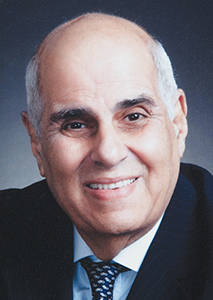
Suntook has been at the helm of the NCPA for the last 18 years, first as vice chairman and later as chairman. It was during this golden period that the Symphony Orchestra of India (SOI) was established, an orchestra which has completed 12 glorious years and which has been conducted by some of the most respectable names in the profession like Carlo Rizzi, Charles Dutoit, Martin Brabbins and Karl Jenkins, to name a few.
Suntook has been at the helm of the NCPA for the last 18 years, first as vice chairman and later as chairman. It was during this golden period that the Symphony Orchestra of India (SOI) was established, an orchestra which has completed 12 glorious years and which has been conducted by some of the most respectable names in the profession like Carlo Rizzi, Charles Dutoit, Martin Brabbins and Karl Jenkins, to name a few.
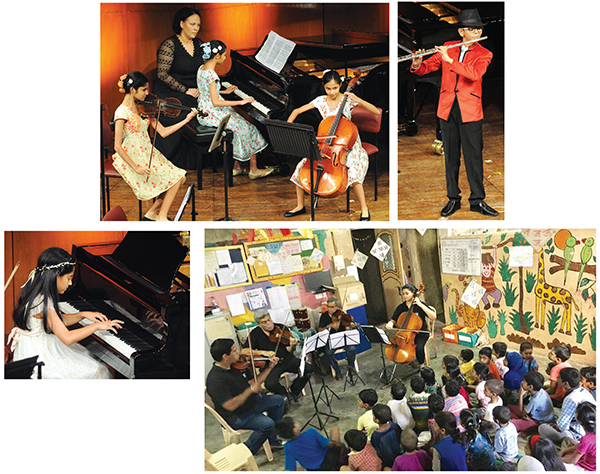
Center, alongside and above: children performing in and attending programs at the
National Centre for the Performing Arts
But is the appreciation of classical music a domain of the elderly? How does one get the younger generation interested in classical music? The NCPA has established a school for music and an orchestra of children between the ages of eight to 14 years which performed in Bombay on April 11, 2018. They have even played at Abu Dhabi. "Gone are the days when children were forced by their parents to listen to classical music. More and more younger students are coming to the school. The Russian method of teaching is adopted whereby a youngster studies not only one instrument but has to learn another as well. Education is imparted in a holistic manner where knowledge is also acquired on the writing and history of music.”
The manner of teaching has also changed over the years. Suntook remembers how strict his teachers were and how often he was rapped on the knuckles for playing a wrong note. The days of endless repetition of scales and Czerny’s exercises have ceased. The teachers now make the entire process of learning fun; no compulsion is placed on the students. It is little wonder that the school has a waiting list of students. So dedicated are the children that many come after school several times a week from Bandra, carrying cellos which are larger than themselves.
But apart from the students at the school, youngsters are encouraged to come for programs like, Sergei Prokofiev’s Peter and the Wolf which was especially written to attract the young audience. A narrator tells the story (when SOI last performed it Amitabh Bachchan was supposed to do this but was indisposed and the role was taken on by Alyque Padamsee). The intention of the piece is to introduce children to individual instruments of the orchestra. Each character is represented by an instrument: the grandfather by a bassoon, the bird by a flute, the wolf by three horns. Musicians from the orchestra were dressed up like the animals to make the musical work more appealing to the young audience.
"Children should be introduced to music at an early stage, at school or even better at home but it is essential that one has a decent listening system. Otherwise you are losing half the enjoyment that this music offers. It would be best if they had friends of their own age group who were also interested in classical music,” he says. Suntook recalls his college days at St Xavier’s when every Tuesday from 5 p.m. to 7 p.m. the Jesuit priests used to play classical music for the students. The records were supplied by the USIS (United States Information Services). "They were old 16” records played on turntables which were used to entertain the troops during the war and which were left over.” Suntook fondly remembers listening to a brilliant version of Beethoven’s opera Fidelio. He also spoke warmly of classical music symphony concerts which were held in the quadrangle of the College. A particularly memorable one was with the Vienna Philharmonic Orchestra under Herbert von Karajan.
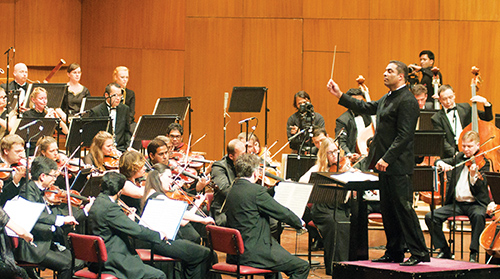
Zane Dalal leads the Symphony Orchestra of India
For a pittance you can now legally download "the Best of Beethoven” or any other composer from the internet. Has this popularized western classical music? "On the contrary,” said Suntook. "As a youngster, I remember buying a recording of Verdi’s Aida from Rhythm House. It was recorded on 20 discs at the speed of 78 rpm (rounds per minute). Each cost Rs 7.50 and when pocket money was a meager amount, a group of us interested youngsters paid the princely sum of Rs 150 over two years.” The music was precious because they had paid for it laboriously with their own money and this thrill of striving for the acquisition of these records will never compare with something which can be downloaded by the click of a button.
Several people feel that youngsters are put off classical music by the formal dress of the orchestra in black jackets and tailcoats. Suntook feels that an afternoon concert in shirts and trousers is quite acceptable but if formal attire has to be done away with, then it should be replaced by some definite color scheme, the men in blue, the women in red, not a haphazard orgy of colors. And what about the formal coat and tie tradition the audience is forced to follow? Suntook concedes that this may be true of certain theaters like the Royal Opera House in London but then the English National Opera House has a much more relaxed atmosphere.
The general belief is that classical music should be "explained” or "understood.” Does this put young people off? Suntook replied, "Young people should be properly introduced to western classical music. You can’t make children listen to Wagner.” Ballet is a great favorite, especially amongst the girls. Several adults have sat through a lecture by Zane Dalal, the associate music director of the SOI, on the history of western classical music. "So possibly there may not be one yardstick for all.” A recent and extremely inventive production of La Bohème Revisited (where, contrary to normal practice, the orchestra played on the stage and not in the pit) was a great success with the younger audience because the music was interspersed with a commentary from a narrator.
Parsis have a long tradition of being interested in western classical music. Considering their dwindling numbers they still are present in large numbers at all concerts. However, it is unfortunate that the school has only one Parsi student and there are no Parsi players in the SOI.
On the subject of finances, Suntook mentioned that this was a perennial problem in the early days. It is only after the death of Jamshed Bhabha that these problems have diminished. Besides Citibank that supports the SOI, there are several individuals and organizations who have contributed generously to the coffers of the NCPA. No aid comes from the government as the formalities are endless. The contribution of the Tatas to set up the NCPA was noteworthy. In the last 10 years, the group has made some donations from its various companies. It is a blessing that the finances required for a concert can be flexible; there could be a single solo performer, a duo, a trio and so on. The costs of staging an opera would be phenomenal. Not only do you need a world class opera house (which we have at the Jamshed Bhabha Theatre) with a pit, but an orchestra, a conductor, a chorus, lead singers; the list never ends.
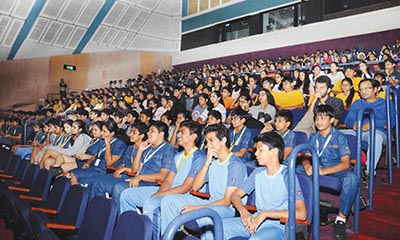
School students appreciating a musical performance
Is western classical music elitist? "Certainly not,” says Suntook. "This is a narrow and unfortunate view. It was probably true at one time when it was the entertainment of kings and courts and when the nobles flocked to boxes in theater houses more to be seen than to hear. One cannot forget that the poorest of people have been the greatest of composers, some even finding it difficult to afford paper to write down the melodies coursing through their minds.”
The NCPA and SOI have done their fair share of bringing western classical music to as many people they possibly can. Outreach initiatives are aimed at people from all backgrounds. The Citi-NCPA Aadi-Anant, one of their flagship Indian music festivals, travels to cities across India every year. The SOI Chamber Orchestra has a monthly concert at Prithvi Theatre in Juhu, apart from traveling to other parts of the country. Last summer, the musicians of the SOI gave performances at various venues across the city, including a cancer hospital, an old age home. They regularly hold open rehearsals during its seasons giving young audiences the opportunity to hear a live symphony orchestra. These are conducted as interactive sessions, where the children are introduced to the various instruments and get to interact with the conductor and the musicians to bring them closer to the music. Their most recent open rehearsal during the Spring 2018 season included over 600 children from various local schools and NGOs (nongovernmental organizations) in attendance. The NCPA also hosts an annual Christmas party for children from various NGOs, where there are performances, games and other activities.
◆ ◆ ◆
From the archive