
Cover Story
“The right initiative”
The launch of the SOAS Shapoorji Pallonji Institute of Zoroastrian Studies will facilitate research into the religion
A glass façade with etchings of Persepolis, specially commissioned in Bombay, marked the entrance to the newly launched SOAS (School of Oriental and African Studies) Shapooji Pallonji Institute (SSPI) of Zoroastrian Studies in central London. The Institute, established from a munificent gift of five million pounds by the Shapoorji Pallonji Group, will "disseminate knowledge about Zoroastrianism – its history, culture, languages and people – through three main channels: teaching, research, outreach,” specified the co-chairs of the Institute Dr Sarah Stewart and Dr Almut Hintze in their email responses to Parsiana.
Referring to "the great journey that we are about to begin,” at the inaugural function of the Institute at the Brunei Gallery at SOAS on June 27, 2018, the chairman of the Shapoorji Pallonji Group Shapoor Mistry stated, "These are the first baby steps that we take to protect our culture and religion and I’m sure that this… is the right initiative and the only way forward is with SOAS.” The Shapoorji Pallonji Group with interests in construction, real estate, engineering goods, home appliances and other businesses is India’s largest private enterprise and is said to employ over 60,000 people.
Referring to "the great journey that we are about to begin,” at the inaugural function of the Institute at the Brunei Gallery at SOAS on June 27, 2018, the chairman of the Shapoorji Pallonji Group Shapoor Mistry stated, "These are the first baby steps that we take to protect our culture and religion and I’m sure that this… is the right initiative and the only way forward is with SOAS.” The Shapoorji Pallonji Group with interests in construction, real estate, engineering goods, home appliances and other businesses is India’s largest private enterprise and is said to employ over 60,000 people.
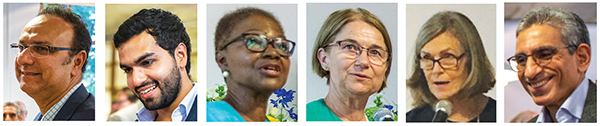
From l: Shapoor and Pallon Mistry, Baroness Valerie Amos, Dr Almut Hintze, Dr Sarah Stewart, Kekoo Colah
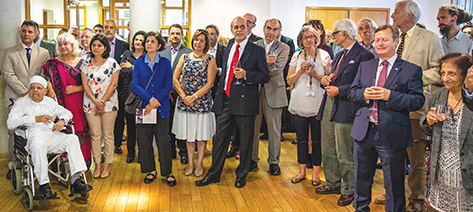
Dastur (Dr) Kaikhusroo JamaspAsa (seated far l) and invitees at the launch
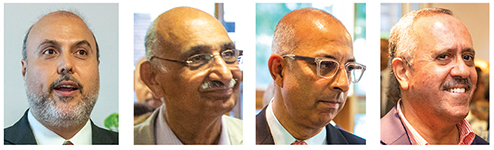
From l: Malcolm Deboo, Darayus Motivala, Rohinton Kalifa, Zarir Cama
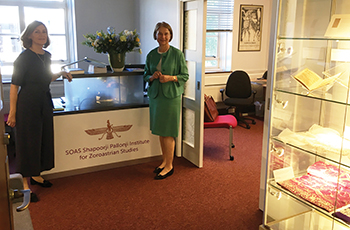
Stewart (l) and Hintze at the Institute
The endowment was made by the parent company, Shapoorji Pallonji and Company Private Limited and two of their Group companies, Afcons Infrastructure and Sterling and Wilson.
"The vision of our chairman is that the creation of this Institute will ensure that SOAS continues to develop as the world’s leading center of Zoroastrian studies, advancing in perpetuity the understanding and appreciation of this ancient religion,” mentioned Kekoo Colah, executive director of Shapoorji Pallonji and Company Private Limited. The Institute may further "consider some form of collaboration with other recognized institutes in India and elsewhere, the main aim being to advance the study of Zoroastrianism and make this knowledge available and accessible to as wide an audience as possible through conventional means and digitally. The Institute may also serve as a neutral platform to discuss various issues concerning the religion and the global Zoroastrian diaspora,” Colah informed Parsiana.
Thanking the Mistry family for the "transformational gift,” SOAS director Baroness Valerie Amos stated, "Over a period of some 80 years, SOAS has significantly promoted the study and understanding of Zoroastrianism and Iranian languages through engagement with the public, teaching and research. Today we celebrate this legacy in the form of a new Institute, named fittingly after its supporters — the founder of the Shapoorji Pallonji Group and Shapoor’s grandfather Shapoorji Mistry, himself a philanthropist and highly successful captain of industry.”
"I hope that many of you – colleagues at SOAS and members of the Zoroastrian community — will help us to shape the future of the Institute to make the success that Shapoor Mistry and his family wish for and so richly deserve,” remarked Stewart who holds the Shapoorji Pallonji Lectureship in Zoroastrianism.
Providing a historical perspective on SOAS’ research in Zoroastrianism, Hintze commented, "The endowment of the SSPI is mind-blowing... The fact that the Institute is endowed means that it will be there in perpetuity. It is an immense privilege to be part of this enterprise, and I can already see us going from strength to strength.”
At the launch of SSPI, invitees were treated to a four-minute Virtual Reality (VR) video of the yasna ritual. Wearing VR headset (a head mounted device that permits the wearer to experience the virtual space without being physically present) and led by the voice of a Zoroastrian priest they could gain insights into the meaning of ritual actions and recitations. The teaser was from the three-hour film on the yasna ritual made by the Multimedia Yasna (MUYA) team in Bombay in 2017 when the spherical VR camera was placed in the middle of the ritual precinct. MUYA is a multidisciplinary international project based in SOAS and funded by the European Research Council that examines the core ritual of the Zoroastrian religion.
The other guests at the launch included Pallon Mistry, non executive director at AFCONS Infrastructure Limited, Dastur (Dr) Kaikhusroo JamaspAsa of Bombay’s Anjuman Atash Behram who recited an Avestan benediction, Malcolm Deboo, president of the Zoroastrian Trust Funds of Europe, Darayus Motivala, honorary secretary of the World Zoroastrian Organisation, Rohinton Kalifa, vice chairman of Worldpay and Zarir Cama, one of the sponsors of "The Everlasting Flame: Zoroastrianism in History and Imagination” exhibition at SOAS in 2013.
The function was brought to a close with a santur recital by Dr Peyman Heydarian.
SOAS, a stronghold
"Zoroastrianism has been studied at SOAS since 1929 thanks to the Parsi Community’s Lectureship, which was held by Sir Harold Walter Bailey and Walter Bruno Henning. Renowned scholar Prof Mary Boyce taught Zoroastrianism from 1947 until 1982. Many other distinguished scholars of Zoroastrianism and Iranian Studies have taught at SOAS, including Prof John Hinnells (see "A faithful friend,” pg 37) Prof A. D. H. Bivar, Prof Philip Kreyenbroek and Prof Nicholas Sims-Williams,” notes the SOAS website.
"Work has already begun to establish an SSPI digital archive via Hintze’s research project that involves the digitization of the Yasna,” the co-chairs conveyed to Parsiana. "The archive will eventually be a wonderful resource for students, scholars and the wider community. We need help in identifying less known (or unknown) private collections that may have valuable manuscripts that need preserving and digitizing.”
"Zoroastrianism has been studied at SOAS since 1929 thanks to the Parsi Community’s Lectureship, which was held by Sir Harold Walter Bailey and Walter Bruno Henning. Renowned scholar Prof Mary Boyce taught Zoroastrianism from 1947 until 1982. Many other distinguished scholars of Zoroastrianism and Iranian Studies have taught at SOAS, including Prof John Hinnells (see "A faithful friend,” pg 37) Prof A. D. H. Bivar, Prof Philip Kreyenbroek and Prof Nicholas Sims-Williams,” notes the SOAS website.
"Work has already begun to establish an SSPI digital archive via Hintze’s research project that involves the digitization of the Yasna,” the co-chairs conveyed to Parsiana. "The archive will eventually be a wonderful resource for students, scholars and the wider community. We need help in identifying less known (or unknown) private collections that may have valuable manuscripts that need preserving and digitizing.”
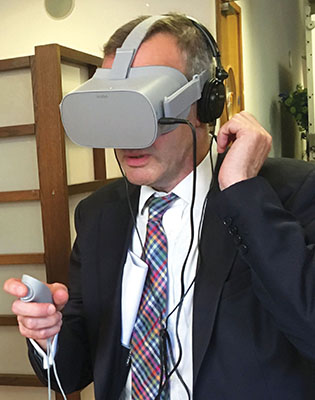
Guest experiences Virtual Reality video of the yasna ritual
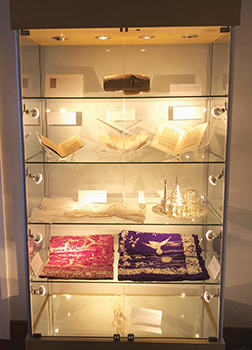
Display case bearing Zoroastrian exhibits
Based on Stewart’s research project in Iran, the endangered languages institute at SOAS has digitized a collection of recordings in Dari. "We would like to add to these and establish an SSPI sound archive. Recordings privately held would also be welcome here,” mention the co-chairs.
In the coming year, plans are under way to conduct one or two-week courses on aspects of Zoroastrianism in London and beyond. In collaboration with the University of Bergen, they will hold a course in Rome in 2019. Thereafter they would like to do the same in Bombay for which they say they would require help with publicity and logistics. Further they are "working on widening our participation with schools starting with London.”
Currently the SSPI has three rooms divided by glass paneled sliding doors. These can be used for small classes, presentations and receptions, or the doors can be opened to serve as a large seating area to view a full screen. The co-chairs have a room on either side of the central office where sits the Shapoorji Pallonji part-time executive officer Clive Bream who studied Persian at SOAS and provides administrative support for the Institute and its co-chairs including managing the SSPI scholarships program, providing support for students, serving as coordinator for the Institute’s Senior Advisory Council, liaising with external members in India as well as potential funders and other partners.
The room bears a display case containing some priceless Avestan manuscripts as well as some garas, a ses, kusti, plus the replica of the Cyrus Cylinder commissioned for "The Everlasting Flame” exhibition by Farrokh Kavarana, former director of Tata Sons. "These items are here on a temporary basis (for the launch of the Institute). We would dearly love to have some permanent items donated,” state the co-chairs.
As they remark, "There is plenty of work for the Institute and this is just the beginning.”
◆ ◆ ◆
From the archive