
Creating Cytecare
The one-year-old Cytecare Hospital in Bangalore is a multidisciplinary, state-of-the-art cancer institution
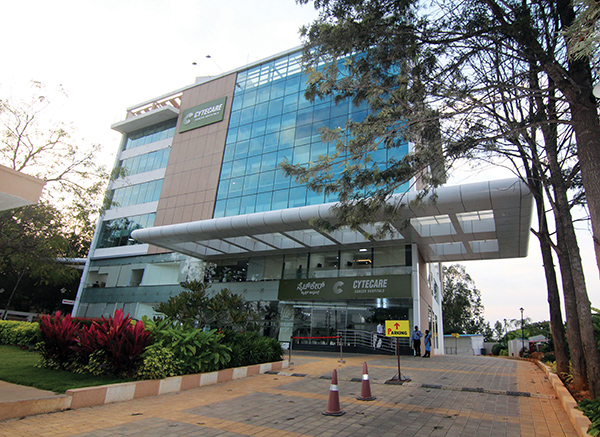
Cytecare Hospital
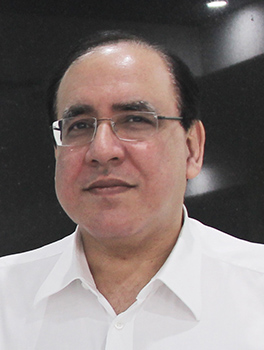
Dr Ferzaan Engineer: attention to minutiae
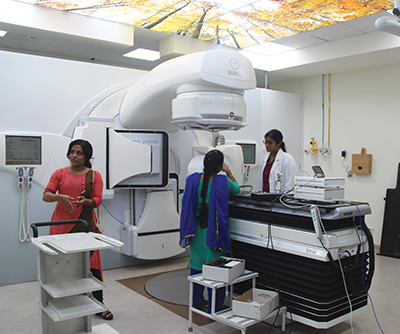
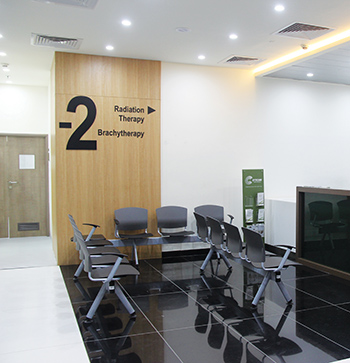
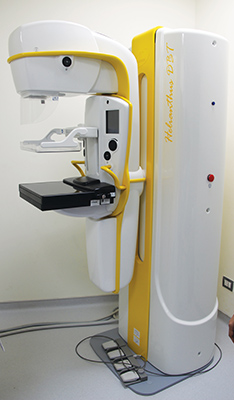
Advanced radiation equipment at Cytecare: for precision and patient safety
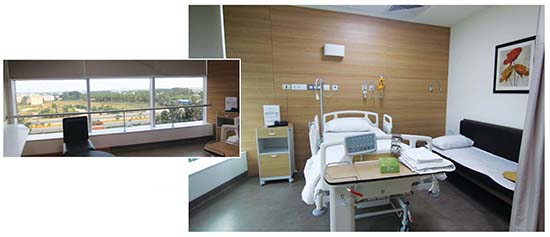
Determined to create "a world class hospital and make it financially viable,” Cytecare Hospitals Private Limited resolved to have "a great building with the best doctors and the best equipment.” Confronted with a choice of doing something that is excellent or affordable, Engineer has always stressed on "perfection and creating a model that is patient centric,” he informed the Parsiana team when we met him at the Hospital on December 14, 2017 and reiterated the next day when he spoke under the auspices of the Bangalore chapter of the World Zarathushti Chamber of Commerce (WZCC) at the Clarks Exotica Convention Resort.
With 45 doctors including a dedicated team of surgeons and 300 staff members serving the 150-bed, five-storey Hospital, the super specialty team of oncologists are equipped to deal with different cancers: head and neck, breast, gastrointestinal, gynecological, blood. "We have a dedicated multidisciplinary medical team merging evidence based protocols and targeted therapies with advanced technologies for greater precision and better treatment,” states one of their brochures. The catch phrase adopted by Cytecare is "Fighting cancer the right way.” Engineer is determined that patients be offered "holistic care.” "Cyte is derived from the Greek word kytos which means cell. We represent care at a cellular level,” notes their website.
During its first year nearly 3,000 patients from all over the world passed through the portals of Cytecare, according to the chairman. On completing a year of operations in end 2017, Cytecare chose to celebrate by publishing a hardbound book, Real Stories. Real Heroes that devotes two pages each to15 cancer survivors to serve as an inspiration to others.
When creating Cytecare, they "didn’t cut corners.” There are five operation theaters, two intensive care units. A rare feature is the fire ramp that would enable evacuation in case of emergency from even the top floor. There is parking facility for 160 cars. Preferring to invest in the "best machines you can buy in the world,” their sophisticated diagnostic and therapeutic aids include the GE Discovery IQ 16 slice PET with LightBurst technology that reduces scan time without compromising on image quality to enable better lesion detection; Digital Mammography and Tomosynthesis with its superior breast imaging technology that offers a plethora of viewing options; Elekta Versa HD used in the delivery of stereotactic body radiotherapy and radiosurgery programs with higher precision and patient safety in mind.
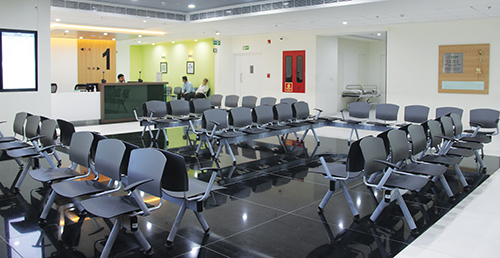
 Prior to starting the Hospital, the Cytecare team visited Harvard and the Sloane boutique hospitals in the US to understand the needs of a cancer patient/caregiver and implement the best practices in India. Cytecare has been designed with foremost concern for patients. At their out patient departments, the emphasis is on minimizing waiting time for patients. The three radiation bunkers were built under the supervision of the Indian Atomic Energy Commission. The radiation department has room for 22 to 28 beds.
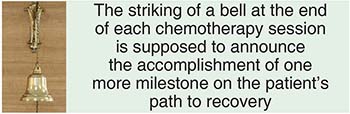
 For the six-hour chemotherapy session, the patient has the option of simultaneously experiencing "virtual reality like a walk on the moon.” The choice before them "is to have fun or be miserable.” Near the 16-bed chemotherapy section on the first floor is a prominent bell. The striking of a bell at the end of each chemotherapy session is supposed to announce the accomplishment of one more milestone on the patient’s path to recovery.
It is at the Tumor Board Room where the multidisciplinary panel of specialists meet every week to review cases and decide on the best course of treatment. In the same Tumor Board Room, Engineer conveyed to the Parsiana team that "I am in constant touch with patients. Very interested in minutiae and small things” that can impact patients in a major way. "We celebrate every patient’s birthday… In the radiation chamber you can hear symphony playing. It is 15 minutes for the patient and we want it to go very well.” He also impresses on the doctors at Cytecare to devote "more time for their patients, joke with them and take selfies.”
To support patients undergoing treatment, they have a navigator program where buddies who are cancer survivors are available for hand-holding at crucial junctures or conducting yoga sessions for those who are interested. "Cancer patients need a different support system. There is need for counseling, continuum of care in the home setting,” remarked Engineer who is also the co-founder and joint chairman of Medwell Ventures which offers home healthcare services under the Nightingales brand. "Soft infrastructure differentiates this Hospital,” declared Engineer.
They made sure they did not introduce a specialty at Cytecare unless we got the best doctors and technology. They have created facilities for tissue banking so that no tissue is wasted. "It will be kept for decades” with the necessary permissions.
Resourceful responsibility
Built at a cost of USD 31 million (Rs 200 crores), Engineer revealed how the funds were primarily raised from two billionaire investors, one from India and the other from the US. Erstwhile chief executive officer (CEO) of Quintiles India, Engineer was able to additionally bring in 20 million from four of his former colleagues at Quintiles within a week. He refers to "the happy coincidence when he met Dr Naren Ramakrishnan,” director of proton therapy, neurologic and pediatric radiation oncology and co-director of the brain and spine tumor program at the University of Florida Health Cancer Center who offered "to help and invested half a million dollars in the Hospital. He hosted our team in the US and took them to three or four centers of excellence in the US.”
The executive leadership responsibilities at Cytecare are shared by the other three co-founders: Suresh Ramu who is the CEO, Himanshu Shah who works as the chief financial officer and Dr Anthony Pais who is clinical director. Additionally Dr Selwyn Colaco serves as chief operating officer and Girish Kulkarni as chief medical informatics officer.
Currently their bed occupancy is 15 to 20% and though they are losing three crore rupees every month, they hope to break even within two years. To offer cost efficient treatment, although tests are done at the market rate, patients are not advised to undergo any unnecessary procedures.
While surgery, chemotherapy and radiation are considered the three pillars of cancer cure, Engineer wonders, "Is it the real solution to curing cancer? Are we looking at alternatives? A lot of cures are coming from a deeper genetic understanding. What we need is not a shotgun approach but tailoring something specific for specific regions. Precision medicine leads to a better understanding” of how pathways that lead to a proliferation of cancer cells can be blocked using immunotherapy, hormone therapy and other options.
Adopting the "hub and spoke model,” doctors on their panel perform surgery only at Cytecare although they can offer consultation service from other centers too. The oncologists at Cytecare "are literally the number one names in the country,” declares Engineer. Commending his colleagues for their "very high integrity,” he was sanguine there is "zero leakage of money because of inefficiency or corruption.”
Having set up "a Section 8 company” to run the Hospital, they want to promote it as a "humanistic center for excellence” whilst using the money received as donations to help cure indigent patients. Under its gap funding scheme, patients who cannot afford treatment will be assisted by Cytecare. They stratify patients in terms of how much assistance can be rendered and to whom, depending on the age and the circumstances of the family. "A young woman with two kids would get top priority,” Engineer explains, adding, "It is not an easy decision. A lot of scientific thought goes into this.” Until Cytecare completes its third year it is not eligible for donations under Corporate Social Responsibility initiatives but Engineer is confident more funds will come their way.
 They are approved for cashless insurance by 14 of the 16 companies. "Forty percent of the patients who come to us are adequately covered by insurance. If insured, patients have peace of mind and don’t have to worry about a financial crisis in addition to the disease,” he reasoned.
Cancer care in India
"Well annotated data is a big issue in our country… Cancer care in India is generally inadequate… abysmal in spite of the private sector having good doctors,” observed Engineer. As per world statistics, 50% of those diagnosed with cancer are saved. If they live for five years after being diagnosed, they qualify as cancer survivors.
"India has its own set of challenges in the treatment of this chronic disease — awareness, affordability and access to medical centers,” reveals Engineer. He has served on the advisory board of the Indian Society for Clinical Research and been a member of the National Committee on Drugs and Pharmaceuticals of the Confederation of Indian Industry and the Pharmaceuticals and Biotechnology Committee of the Federation of Indian Chamber of Commerce and Industry. In India there is one oncologist for 1,600 people. A lot of oncologists are clustered in four or five urban areas. At the historical Tata Memorial Hospital which is considered "the holy grail for cancer in India, it is sometimes difficult to walk through its corridors” due to the influx of patients, points out Engineer. As an education and research institution, it offers remarkable opportunities.
With new advances in the treatment of cancer and tumors, patients could lead a normal life if detected early. "Patients who come for treatment, come very late.” There are only 20% who come in the first or second stage of the disease, which means the medical staff has to offer "more palliative care (to keep the patient comfortable in the terminal stage) instead of cure” for those who come later. At other times, patients are brought to oncologists after being given wrong treatment in general hospitals.
"Cancer has taken centerstage as a significant global threat… The world population has multiplied eight-fold in the last 200 years,” currently standing at 7.6 billion with an average life expectancy of 71.5 years. As compared to 85 years in Singapore and 90 years in Monaco, life expectancy in India stands at 68, points out Engineer, stating, "Age trumps” all other causes of cancer.
Parsi patients
Only a few Parsi patients have availed of Cytecare’s facilities. Although there are no exclusive facilities for Parsis at Cytecare, WZCC Bangalore chapter members can show their membership card to avail of a 10% discount on all consultations. "I would help them personally but not institutionally,” clarifies Engineer, assuring community members "of extra love.”
"When the gene pool is not diluted, I would expect the community to have certain problems,” Engineer comments on the inbred Parsi community, wishing "there was more data/statistics available on the community. Looking at genes takes all bias away; genes can’t lie,” he states matter-of-factly. When asked to comment on the community, he smiles, "I love Parsis. They are very interesting; very quirky.” With his reformist views, he considered the Goolrookh Gupta case before the Supreme Court as "a good starting point for getting equality for women. Why don’t women speak up?” he asked rhetorically. To those who prefer to stick their heads in the sand on the belief "if you say anything it will split the community,” 55-year-old Engineer reasons, "There is nothing left to split. We have passed the tipping point where we can expect to remain a viable community.” To those who are "sleeping at the controls,” the reformist states, "This is intellectual cowardice.”
Content to respect all religions saying "there are positive attributes in all,” Engineer asserts, "I am neither a believer nor an agnostic. I am ignorant. I don’t have an opinion on what someone else should do.” Although he does not wear the sudreh-kusti he says he "enjoys going to the fire temple to pray and meditate.”
With his roots in Ahmedabad, Ferzaan’s mother Bapsy was a teacher and wrote for the Gujarat Samachar while father Nariman had an aerated drinks factory that manufactured soda under the brand name of TajMahal. Ferzaan studied at St Xavier’s Loyola Hall before graduating from the L. M. College of Pharmacy and earning his PhD from the University of South Carolina in USA. He subsequently attended executive management programs at the Kenan-Flagler Business School in USA, the Indian Institute of Management in Ahmedabad and at INSEAD in France, according to his life profile. He was conferred the AACP (American Association of Colleges of Pharmacy) New Investigator’s Award and received research grants from the National Institutes of Health in USA. He initially worked as assistant professor of pharmaceutical sciences in the US followed by an industry position as vice president of research for Core Healthcare before associating himself with Quintiles. His wife Mahrukh, who succumbed to cancer in 2013, also worked for Quintiles, as head of human resource management. They have a son Varun, aged 22 years who works in Los Angeles and daughter Anaya, aged 16, who is studying in Bangalore.
Beginning 2018 "we want to start building more hospitals in India, grow as a charity and use the charity for research and resource groups,” states Ferzaan whose most important role as Cytecare chairman is "raising money, getting funds and deciding on strategies.” One of the top equity funds in the world is willing to finance their next hospital. "Money is available if you have a credible project,” realizes Engineer. To those who are willing to make compromises saying "kya farak padta hai (what difference does it make)?” Engineer responds, "Everything matters.”