
Cover Story
Politics per eedu
A Facebook group for sharing recipes encourages good neighborliness and provides a fillip to culinary entrepreneurship
"Celebrating the everyday cook, rejuvenating the traditional kitchen,” announces the Facebook page of Parsis Exchange Recipes (PER). Positioned as a "repository of recipes, food videos and food stories; some Parsi, some not; some quick and easy; others involved and challenging,” the group has 7,901 members who regularly post images and recipes of their triumphs in their kitchens.
Chicago based copywriter and creative director Vera Dinshaw Springett, who is a co-admin (administrator) of the PER informed Parsiana on February 14, 2018 the genesis of the group: "People divided over politics came together via food... it is what we Parsis do best after all,” she states. "The end of 2016 was tumultuous for many of us Parsis here in the USA (with the upcoming Presidential elections). Conflicting views and opinions led to many social media battles and exchanges that weren’t always friendly. Tempers flared. Opinions flew. And comments remained unfiltered for months prior to the elections and much after.” PER co-admin Arbez Shroff Patel and Springett were then on opposing sides of the political fence and "had shared a heated argument or two on Facebook. Each time we ended with an apology and the promise to be nicer.” Having grown up in the same building in Karachi, Pakistan, "decades apart from each other... we had a connection (in food). And that helped us find some common ground, despite our political differences,” she says.
Chicago based copywriter and creative director Vera Dinshaw Springett, who is a co-admin (administrator) of the PER informed Parsiana on February 14, 2018 the genesis of the group: "People divided over politics came together via food... it is what we Parsis do best after all,” she states. "The end of 2016 was tumultuous for many of us Parsis here in the USA (with the upcoming Presidential elections). Conflicting views and opinions led to many social media battles and exchanges that weren’t always friendly. Tempers flared. Opinions flew. And comments remained unfiltered for months prior to the elections and much after.” PER co-admin Arbez Shroff Patel and Springett were then on opposing sides of the political fence and "had shared a heated argument or two on Facebook. Each time we ended with an apology and the promise to be nicer.” Having grown up in the same building in Karachi, Pakistan, "decades apart from each other... we had a connection (in food). And that helped us find some common ground, despite our political differences,” she says.

Vera Dinshaw Springett (left) and Arbez Shroff Patel: inspired by food
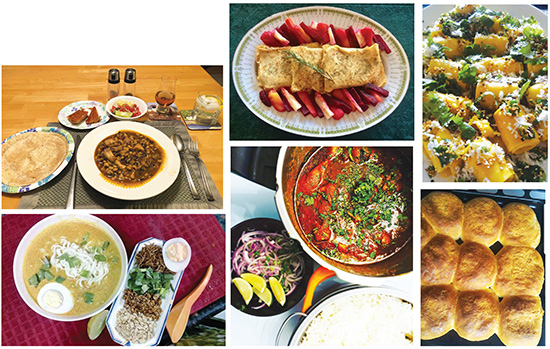
Dishes posted on the Facebook page of Parsis Exchange Recipes
Springett started posting recipes on her personal Facebook wall on a daily basis after the elections. "I sought comfort in sharing recipes, and friends from both sides of the political spectrum began commenting on my food posts.” Her posts "seemed to invite more peaceful conversations amongst even the most contentious of adversaries, and began bringing us together.” Having flirted with the idea of starting a recipe group in the past with another friend, she had demurred from taking the plunge then.
When Springett posted a Butternut Squash Soup recipe on the evening of December 3, 2016 on her personal Facebook page, "a few of us, including Patel, who happens to be an excellent cook,” got talking about forming a new group. Patel recommended that "Parsis Discuss Politics” (another Facebook group Springett was a part of) should change its name to "Parsis Exchange Recipes.” That was the impetus for creating PER for both co-admins. "Not to mention, PER also signifies "per eedu (with egg on top),” because we Parsis make everything per eedu!” states Springett. "We thought we wouldn’t have more than 30-50 members initially. But somehow it took off. And we are growing daily.” PER is a "Secret Group” (where you have to be invited by a member or a co-admin to join up; secret groups cannot be viewed by general users) "to avoid spammers and to protect our members.”
Being different
It’s not only about an online presence. To celebrate Navroz in 2017, Springett and other PER members participated in the Federation of Zoroastrian Associations of North America’s (FEZANA) Zoroastrianism Awareness Project "to share a snippet of our culture” with friends and neighbors by gifting them any sweet dish. A note on FEZANA’s website states: "Suggestions for mithoo mohnu include khatai, ravo, badam pak, sev, dahi, mava cake, kumas, Parsi custard, mava ni boi, dar ni pori, badam-ni-boi, jalebi, rabri... Iranian traditions for NowRuz, include sweets and nuts, for the Haft Sheen table.”
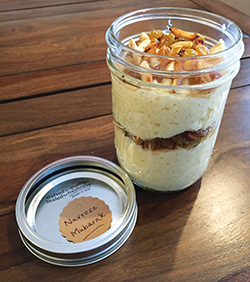
"I delivered mason jars full of homemade ravo, layered with toasted almonds and golden raisins to six neighboring families,” states Springett. Every family member received, besides the dessert, a short description about Navroz and the significance of ravo on this auspicious occasion. "It was very well received and my neighbors had all kinds of questions from ‘How do you pronounce this?’ to ‘When can I eat this?’” she exults.
 Roshan Rivetna, also of Chicago, made and distributed Irani toot (mulberry and marzipan candy) for the project. Canada based author and chef Niloufer Mavalvala made khatais. "Following my post on PER, my cousin Diana prepared ravo the same way and distributed it to neighbors in Phoenix, Arizona. A young man, Zuben Modi in Toronto didn’t have time to make anything. So in the spirit of the project, he instead went to an Irani restaurant there, picked up boxes of kebabs and distributed it to the homeless.”
 Springett says that "as people are becoming more aware of the project, they will participate. FEZANA is working on spreading the word about it.” She is "hoping we can do more this year and support this lovely initiative. I’ve already purchased my mason jars and I’m ready to go!”
Unlike some amateur cooking groups on the net, PER encourages the food items posted by their members be sold as a business. "But, kindly write ‘For Sale’ so our members can contact you directly to purchase your items, and not request your recipes,” states one of their house rules. "PER is proud to encourage, support and respect the Parsi community’s small business entrepreneurship,” it adds. This aid to entrepreneurship "has encouraged a few other ladies and me to make and sell batasas here in the USA and Canada too. We’re called the Batasa Babes,” said Springett.
"Very early on, I received a great suggestion from Mavalvala that we allow members to pick the winner of the cover image each week, rather than Arbez and myself picking a winner every week.” That is how the PER Weekly Cover Image Challenge came to fruition. "It gives the members of the group the feeling that they have a say in how this group operates,” exults Springett. "Each week I work with the winner to pick the next week’s winner and to provide honorable mentions to many of the wonderful contributions we see posted all week long,” she explains. "I want them (the contributors) to feel special and appreciated on PER, whether they make a simple Akuri or an extravagant deconstructed lamb. Everyone works hard in the kitchen to serve their family on a daily basis. And these folks deserve to know PER is here to lend a very supportive hand and a pat on the back.
"Our goal is to keep our members engaged at all times. That is how PER has thrived, and will survive. If someone posts for the first time, we thank them in an effort to encourage them to continue to post. But, more so, for their bravery to share their food and their thoughts.” Admitting that "posting a recipe and picture in a group of very-opinionated members can be daunting for some,” Springett says that she wants "all members to know we’re here to support their posts and truly look forward to them. All it takes is one post for members to see how much they are loved and appreciated on PER.”
"We’ve managed to connect long-lost friends and family members. I have discovered family members I never knew existed. It’s been a deeply gratifying journey. And I sincerely hope PER continues to bring years of joy to everyone,” ends Springett. Farrokh Jijina
Parsiana carries a few recipes by PER members:
DOODH NA PUFF
Serves 4
Come November, as the temperature dives, Parsis cannot wait to enjoy a very special dessert in a tall glass tumbler, usually made available by door-to-door sellers at our Parsi colonies or by lovely village belles if we happen to visit Udvada.
Well known in our Parsi community as doodh na puff (milk froth or milk foam) this winter specialty is unheard of by anyone aside from us Parsi folk.
Sadly this age old winter cloud of milk is quickly vanishing from our memories as Parsis themselves are from the planet!
Legend has it that in the olden days, sweetened milk was reduced and its pot hung from a tree, so that it might be brushed by moonlight. Others claim dangling the mulmul (muslin)-covered milk pot exposed it to night dew, while the more scientific-minded put all the effort down to a basic need to chill the liquid in the pre refrigerator era.
Anyhow, milk boiled, sweetened and reduced was kept all night on a roof or tree, then early the next morning, hand beaten and the foam so collected came to be known as doodh na puff.
Many connoisseurs do not know how easy it is to make in one’s own home. Follow a few basic tips and tricks and you are only a night’s sleep away from your favorite winter treat.
Full cream milk or buffalo milk (1 l)
Full fat dairy cream (1 tbsp)
Castor sugar (2-3 tbsp)
Nutmeg powder (a pinch)
Cardamom powder (a pinch)
Pistachios (powdered — a pinch)
A bowl of ice
An electric or hand whisk or a butter churner
Boil the full cream milk along with the sugar. Once cool, add dairy cream and refrigerate it overnight. Next day, whisk it in a bowl that has been kept over a larger container with ice cubes and keep removing the froth in the glass that you wish to serve it in. Once the glass has been filled to the brim, sprinkle with cardamom, nutmeg and pistachio powders.
Serve immediately.
Note: It is important to serve this dish immediately. As time passes, the bubbles will settle down and turn into milk again. You can flavor the milk with vanilla, rose, saffron or any other essence of your choice. The ice bath is put underneath in order to stabilize the whipped milk by keeping it cool; the same principle for whipping cream applies here too. The dairy cream can be substituted for fresh cream (malai) that has been skimmed off another batch of full fat milk.
PARINAAZ MAROLIA
Serves 4
Come November, as the temperature dives, Parsis cannot wait to enjoy a very special dessert in a tall glass tumbler, usually made available by door-to-door sellers at our Parsi colonies or by lovely village belles if we happen to visit Udvada.
Well known in our Parsi community as doodh na puff (milk froth or milk foam) this winter specialty is unheard of by anyone aside from us Parsi folk.
Sadly this age old winter cloud of milk is quickly vanishing from our memories as Parsis themselves are from the planet!
Legend has it that in the olden days, sweetened milk was reduced and its pot hung from a tree, so that it might be brushed by moonlight. Others claim dangling the mulmul (muslin)-covered milk pot exposed it to night dew, while the more scientific-minded put all the effort down to a basic need to chill the liquid in the pre refrigerator era.
Anyhow, milk boiled, sweetened and reduced was kept all night on a roof or tree, then early the next morning, hand beaten and the foam so collected came to be known as doodh na puff.
Many connoisseurs do not know how easy it is to make in one’s own home. Follow a few basic tips and tricks and you are only a night’s sleep away from your favorite winter treat.
Full cream milk or buffalo milk (1 l)
Full fat dairy cream (1 tbsp)
Castor sugar (2-3 tbsp)
Nutmeg powder (a pinch)
Cardamom powder (a pinch)
Pistachios (powdered — a pinch)
A bowl of ice
An electric or hand whisk or a butter churner
Boil the full cream milk along with the sugar. Once cool, add dairy cream and refrigerate it overnight. Next day, whisk it in a bowl that has been kept over a larger container with ice cubes and keep removing the froth in the glass that you wish to serve it in. Once the glass has been filled to the brim, sprinkle with cardamom, nutmeg and pistachio powders.
Serve immediately.
Note: It is important to serve this dish immediately. As time passes, the bubbles will settle down and turn into milk again. You can flavor the milk with vanilla, rose, saffron or any other essence of your choice. The ice bath is put underneath in order to stabilize the whipped milk by keeping it cool; the same principle for whipping cream applies here too. The dairy cream can be substituted for fresh cream (malai) that has been skimmed off another batch of full fat milk.
PARINAAZ MAROLIA
CHICKEN FARCHA BITES
There is something about moist, succulent chicken which is oh-so-hard to resist and this doesn’t disappoint! Chicken farcha is the traditional Parsi version of fried chicken. It is enjoyed as a treat for special occasions due to its deep-fried decadence. It is usually prepared on the bone and coated in an egg batter.
As much as I love fried chicken in any form, I wanted to create an easier, boneless, bite-sized, healthier baked version and I promise you won’t miss the deep frying because the taste is so indulgent, and flavor packed! I’ve used chicken breast for this recipe as it is healthier and easier to cut into cubes.
Some people don’t like chicken breast because they find it can be too dry or stringy but that only happens when it is overcooked. The secret to moist chicken breasts every time is tenderizing them before cooking.
There is something about moist, succulent chicken which is oh-so-hard to resist and this doesn’t disappoint! Chicken farcha is the traditional Parsi version of fried chicken. It is enjoyed as a treat for special occasions due to its deep-fried decadence. It is usually prepared on the bone and coated in an egg batter.
As much as I love fried chicken in any form, I wanted to create an easier, boneless, bite-sized, healthier baked version and I promise you won’t miss the deep frying because the taste is so indulgent, and flavor packed! I’ve used chicken breast for this recipe as it is healthier and easier to cut into cubes.
Some people don’t like chicken breast because they find it can be too dry or stringy but that only happens when it is overcooked. The secret to moist chicken breasts every time is tenderizing them before cooking.
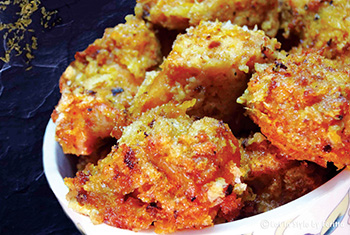
Chicken farcha bites
Busy hostesses and mums take note: This recipe can be made a day ahead, stored in the fridge in an airtight container overnight and reheated on the grill or oven before serving.
Chicken breasts (500g or 1 lb or 3 boneless pieces cut into cubes)
Baking soda (2 tbsp)
Lemon/lime juice (2 tbsp)
Ginger-garlic paste (2 tsp)
Chili powder (½ tsp)
Paprika (½ tsp)
Garam masala (½ tsp)
Ground coriander (½ tsp)
Turmeric powder (¼ tsp)
Olive oil (1 tbsp)
Butter (1 tbsp — melted)
Salt (½ tsp)
Black pepper (½ tsp)
Breadcrumbs (1 cup — toasted)
Ground cumin (¼ tsp)
Eggs (3 — lightly beaten)
Salt (½ tsp)
Black pepper (½ tsp)
Chili powder (¼ tsp)
A little extra butter/oil for greasing your baking dish.
Place the cubed chicken pieces into a small mixing bowl. Add the baking soda and mix well to ensure all the pieces are covered. Set aside, covered, in the fridge for about 20 minutes. Thoroughly rinse with water to remove all baking soda once the time is up.
Return the chicken into your mixing bowl and add the lemon/lime juice, ginger-garlic paste, chili powder, paprika, garam masala, ground coriander, turmeric, salt and pepper to the chicken and mix well to coat the pieces with the marinade. Cover and place in the fridge for about two hours.
After two hours remove from the fridge and mix in the oil and butter to coat the chicken. In a small bowl mix the toasted breadcrumbs and ground cumin. In another bowl add the eggs, salt, pepper and chili powder.
Preheat the oven to 180°C/375°F. Grease a large baking sheet or a glass baking dish. Alternatively, you could also use baking paper to prevent sticking. Construct an assembly line of your chicken pieces, the bread crumbs, the egg mixture and your greased/lined baking dish. Take the bowl with the breadcrumbs and toss a few pieces of chicken at a time into the breadcrumbs and then dip into the egg mixture to make sure it is coated, shaking off any excess and place directly on the greased baking sheet/dish. Continue process until all your chicken is used up. Bake for 20 minutes or until a golden crust is achieved. If you want more crunch, after baking, give the chicken a few extra minutes over the grill to crisp up even more.
Serve with your favorite sauce or dip as an appetizer or as part of a main meal.
FERITTA
CHICKEN IN WHITE SAUCE PIE
Taking inspiration for their recipe of Chicken in White Sauce
Taking inspiration for their recipe of Chicken in White Sauce
from PER members Dinshaw Wania and Behrooz Mistry,
I adapted it to make my own pie.
For the white sauce
Milk (250 ml)
Chicken (½ kg — boneless)
Ginger paste (1 tsp)
Garlic paste (1 tsp)
Green chili paste (1 tsp)
Habanero or hot sauce (to taste)
Black and white pepper (½ tsp)
Egg (1)
All purpose flour (2 tbsp)
Butter (2 tbsp)
Onions (2 to 3 tbsp — chopped)
For the white sauce
Milk (250 ml)
Chicken (½ kg — boneless)
Ginger paste (1 tsp)
Garlic paste (1 tsp)
Green chili paste (1 tsp)
Habanero or hot sauce (to taste)
Black and white pepper (½ tsp)
Egg (1)
All purpose flour (2 tbsp)
Butter (2 tbsp)
Onions (2 to 3 tbsp — chopped)
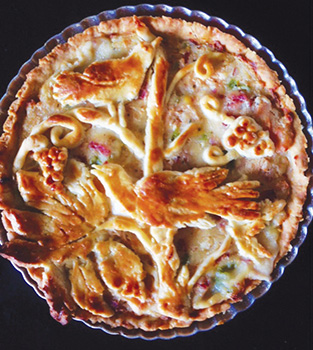
Chicken in white sauce pie
Boil and shred the chicken and keep aside. Fry onion and chili paste in butter for three minutes.
Add all purpose flour and cook for two-three minutes, then add the shredded chicken and stir well.
Add milk in portions until the mixture is of a thick consistency. Leave to cool.
For the short crust pastry dough
Flour (1 cup)
Fine sea salt (1 tsp)
Cold, unsalted butter, diced (2/3 cup or 10-11 tbsp)
Ice-cold water (4-6 tbsp)
Place flour and salt in a food processor. Add the butter and mix for about 10 seconds or until the mixture resembles coarse breadcrumbs. Tip into a mixing bowl. Add four tbsp of water and stir the mixture with a butter knife until the dough just comes together. If it seems too dry, add another one or two tbsp of water. Try not to make the dough too wet, as it results in a crumbly pastry. Lightly knead the dough into a smooth ball, wrap in plastic wrap, and chill for at least 30 minutes before using. Divide into two halves.
Pre heat oven to 350°F. Take a pie plate with a removable bottom, grease it well with butter. Roll out one half of the dough gently into the size of the pie plate. Keep it at a level ½” thick. Prick with a fork and make sure the edges of the pastry dough are evenly pressed with your knuckles. Cut out a piece of tin foil to fit into the pie dish, empty some dried beans onto the tinfoil and blind bake the pie crust till it’s light brown in color and feels crusty.
Spoon in the white sauce carefully, roll out the other piece of pie dough, make sure you make cuts all over the dough, place it on the white sauce and cut out the leftover sides with a knife. With the fork tines press down the dough all along the periphery sealing the pie. Brush well with a beaten egg and bake till golden brown on top for roughly 20 minutes.
KAINAAZ PATEL
For the short crust pastry dough
Flour (1 cup)
Fine sea salt (1 tsp)
Cold, unsalted butter, diced (2/3 cup or 10-11 tbsp)
Ice-cold water (4-6 tbsp)
Place flour and salt in a food processor. Add the butter and mix for about 10 seconds or until the mixture resembles coarse breadcrumbs. Tip into a mixing bowl. Add four tbsp of water and stir the mixture with a butter knife until the dough just comes together. If it seems too dry, add another one or two tbsp of water. Try not to make the dough too wet, as it results in a crumbly pastry. Lightly knead the dough into a smooth ball, wrap in plastic wrap, and chill for at least 30 minutes before using. Divide into two halves.
Pre heat oven to 350°F. Take a pie plate with a removable bottom, grease it well with butter. Roll out one half of the dough gently into the size of the pie plate. Keep it at a level ½” thick. Prick with a fork and make sure the edges of the pastry dough are evenly pressed with your knuckles. Cut out a piece of tin foil to fit into the pie dish, empty some dried beans onto the tinfoil and blind bake the pie crust till it’s light brown in color and feels crusty.
Spoon in the white sauce carefully, roll out the other piece of pie dough, make sure you make cuts all over the dough, place it on the white sauce and cut out the leftover sides with a knife. With the fork tines press down the dough all along the periphery sealing the pie. Brush well with a beaten egg and bake till golden brown on top for roughly 20 minutes.
KAINAAZ PATEL
NALLI GOSHT (Lamb shanks coo-ked in a spiced yoghurt curry)
Serves 4
Mughlai cooking in India is popular for all the right reasons. Deep, rich flavors with spices that are at the helm of curries. The warmth in these curries and the layers of flavors are second to none. Dishes like nihari and kofta are part of the repertoire.
Visiting family homes for a traditional Mughlai feast was always a treat. My favourites include murgh mussallam, kheema and korma. Mughlai cooking is renowned for its variety of kebabs and biryanis; both are a must at celebratory occasions and weddings as well.
The recipe is a tad lengthy and also will need time and slow cooking but the wait and all the effort will be rewarded with perfectly cooked lamb shanks with meat falling off the bone.
Serves 4
Mughlai cooking in India is popular for all the right reasons. Deep, rich flavors with spices that are at the helm of curries. The warmth in these curries and the layers of flavors are second to none. Dishes like nihari and kofta are part of the repertoire.
Visiting family homes for a traditional Mughlai feast was always a treat. My favourites include murgh mussallam, kheema and korma. Mughlai cooking is renowned for its variety of kebabs and biryanis; both are a must at celebratory occasions and weddings as well.
The recipe is a tad lengthy and also will need time and slow cooking but the wait and all the effort will be rewarded with perfectly cooked lamb shanks with meat falling off the bone.
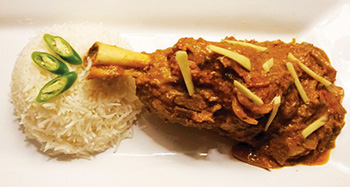
Nalli gosht
Lamb shanks (4, preferably small ones; you can get the butcher to trim them as well)
Garlic (6 cloves)
Ginger (1” piece)
Kashmiri chili powder (mild paprika) (2 tsp)
Coriander powder (1 tsp)
To make the curry
Vegetable oil (3 tbsp)
Butter (1 tbsp)
Cinnamon stick (1” — broken in half)
Green cardamom pods (6)
Cloves (5)
Black peppercorns (12)
White onions (2 medium — thinly sliced)
Green chilies (2 — slit lengthwise)
Kashmiri chili powder (mild paprika) (½ tsp)
Turmeric powder (1 tsp)
Coriander powder (2 tsp)
Tomato puree (1 heaped tbsp)
Yoghurt (4 tbsp)
Water (400 ml)
Salt (to taste)
Nutmeg (½ tsp)
Fresh coriander (chopped — for garnish)
Lemon juice (1 tbsp)
Add the lamb shanks to a bowl. Blend the garlic and ginger with a little water to a fine puree to form a paste. Mix the chili powder and coriander powder with the paste. Marinate the lamb shanks in this spice paste for a few hours or even overnight.
To make the curry, in a heavy bottom large sauce pan heat the oil along with the butter. Add the cinnamon stick, green cardamom, cloves and peppercorn. Sizzle for a few seconds as they infuse the oil. Now add the onions and cook on a medium flame for 10-12 mins, stirring often. Add the slit chilies and stir. The onions will start to soften and go light brown; at this stage add the chili, turmeric and coriander powder. Stir well to cook the spices. If it gets too dry, add a splash of water.
Add the tomato puree and fry for a minute, making sure the spice mix does not stick to the bottom of the pan. Tip in the marinated lamb shanks sealing the pieces and cooking for seven-10 minutes. Add the yoghurt along with the water and stir well to make a creamy gravy. Season to taste.
Bring the curry to a boil and simmer for an hour stirring half way through the cooking process. Make sure to turn the lamb shanks over to coat them in the curry. Now add the nutmeg powder. Stir well and simmer with the lid slightly open for 20-25 minutes. The lamb at this stage will be tender and the curry will thicken. Garnish with coriander and some lemon juice. Serve with roti or naan and your choice of salad.
SHERI JEDDY
PORK VINDALHO
Serves 6
The name "vindalho” originated from the Portuguese dish "carne de vinha d’alhos,” a pork dish marinated in wine and garlic. Goans modified this Portuguese dish by adding spices and substituting palm vinegar for wine. Thus originated vindalho which is misspelled and known all over as vindaloo. The word aloo in Hindi means potato and the original recipe has been adapted with the addition of potatoes, including cooking with other meats like chicken, beef or lamb.
This dish is traditionally prepared only with pork (no potatoes) for feasts and special occasions. It is rich, tangy with a hint of sweet, not hot at all. More like pickle. No water is used in the cooking process. Marinating the meat overnight and cooking it on a low heat ensures that the spices penetrate through the meat, resulting in a unique and unforgettable dish. This dish tastes better as it ages.
Serves 6
The name "vindalho” originated from the Portuguese dish "carne de vinha d’alhos,” a pork dish marinated in wine and garlic. Goans modified this Portuguese dish by adding spices and substituting palm vinegar for wine. Thus originated vindalho which is misspelled and known all over as vindaloo. The word aloo in Hindi means potato and the original recipe has been adapted with the addition of potatoes, including cooking with other meats like chicken, beef or lamb.
This dish is traditionally prepared only with pork (no potatoes) for feasts and special occasions. It is rich, tangy with a hint of sweet, not hot at all. More like pickle. No water is used in the cooking process. Marinating the meat overnight and cooking it on a low heat ensures that the spices penetrate through the meat, resulting in a unique and unforgettable dish. This dish tastes better as it ages.
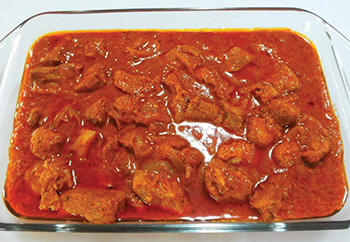
Pork vindalho
Pork belly (1 kg — cut into 2” cubes)
Palm or cashew feni (1 tbsp —
optional)
Onions (2 large, around 4 cups — sliced)
Oil (2 tbsp)
Sugar (½ tsp)
Salt
To be ground to a paste (with vinegar, no water)
Kashmiri dried red chilies (20)
Peppercorns (10)
Cloves (10)
Cinnamon sticks (4 — 1½” each)
Green cardamoms (4 — optional)
Cumin seeds (1 tsp)
Turmeric powder (½ tsp)
Garlic (8 large cloves)
Ginger (1½” piece)
Palm or white vinegar (3/4 cup)
Wash meat, pat dry, apply salt and ground masala. Marinate meat overnight in the refrigerator.
Heat oil in a pan and saute sliced onions till light brown. Add marinated pork, lower flame and sear the meat while cooking the rawness of the spices. Cover pan and cook on very low heat, stirring occasionally. Half way through the cooking process, add feni, sugar and taste for salt. The dish is ready when meat is tender with a thick gravy.
Balance the spice and sourness with addition of sugar and vinegar. The dish is tangy with vinegar, so no tamarind is required.
JESSIE D’SOUZA
◆ ◆ ◆
From the archive