
Calcutta celebrates
Year long festivities marked the 150th anniversary of the Calcutta Zoroastrian Community’s Religious and Charity Fund
Blessed with increasing financial resources with the market value of the trust’s assets valued at over Rs 100 crore, last year the trustees disbursed aid of Rs 131 lakhs to deserving community members. The super seniors and the juniors are given special attention by the five trustees: Numazar (Noomi) Mehta, Bahadur Postwalla, Cyrus Madan, Russi Jeejeebhoy and Pessi Dadina. With 80 members of the community aged over 80 years, the CZCRCF has a home care program for seniors, and the 46 youngsters in the community (including those from interfaith unions) aged under 18 years are encouraged with an annual Navroz gift of Rs 7,000 each.
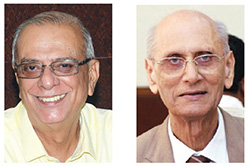
Noshir Wadia (left) and Sam Medora
From their administrative office on the fifth floor of their building in Chowringhee the trust administers the Manackjee Rustomji Dharamsalla, flats at three locations, the Jamshedji Rustomji Saklat Ravangah and the Tower of Silence. Three floors are leased out to various business entities.
"CZCRCF is seen to be the big brother for other Parsi organizations in Calcutta… but we do not behave like your typical big brother,” says Postwalla. "There is a great spirit of cooperation among the bodies that run the other institutions,” he adds. These include the Ervad Dhunjeebhoy Byramjee Mehta’s Zoroastrian Anjuman Atash Adaran (established 1912, which is involved in litigation over who has the right of entry), The Calcutta Parsi Amateur Dramatic Club (1907), the Calcutta Parsee Club (1908), The Saklat Physical Culture Institute (1933), the Parsi Zoroastrian Association (1935), the Calcutta Zoroastrian Stree Mandal (1936) and The Calcutta Parsee Youth League (1939). Parsiana will detail the activities of some of these organizations in subsequent issues.
The sesquicentennial logo designed by Spenta Wadia depicting the iconic Howrah Bridge was the leit motif at different events. It featured on a plaque that Mehta had unveiled in the Olpadvala Memorial Hall on October 30, 2016 and as a chalk design at the October 31, 2017 function.
Entertainment by Kaizad Gherda (see "Morose musician,” Events and Personalities, Parsiana, January 21, 2016), champagne toasts and a Parsi style dinner catered by Dharamsalla managers Dara and Meher Hansotia were other highlights of the inaugural event when Madan, the program subcommittee chair, had promised "at least one program every month.”
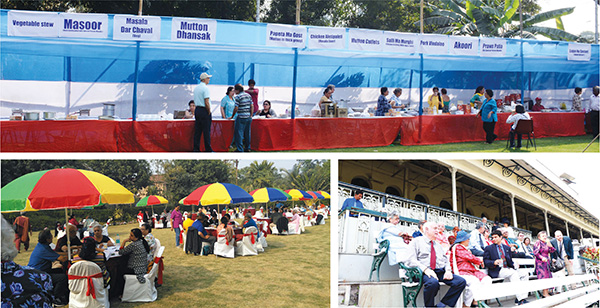
Actor Boman Irani was the star of the November 2016 program when he gave a talk on motivation and regaled the audience with numbers belted out by him. December saw a picnic, which included breakfast, a Parsi lunch and three rounds of housie, in the home of Zarin and Pessi Dadina. Three successive functions took place in January 2017: a sing-along with Gary Lawyer followed by a biryani dinner and a 90-minute Gujarati comedy Dinshawji na dabba gul staged by dramatist Yazdi Karanjia’s troupe from Surat. The Calcutta Parsee Club organized a Parsi Food Festival and fancy dress competition for children of Club members in that month too.
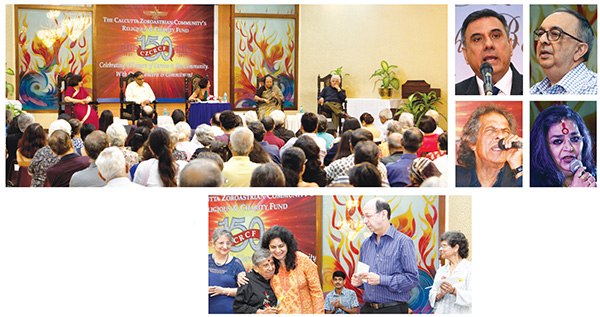
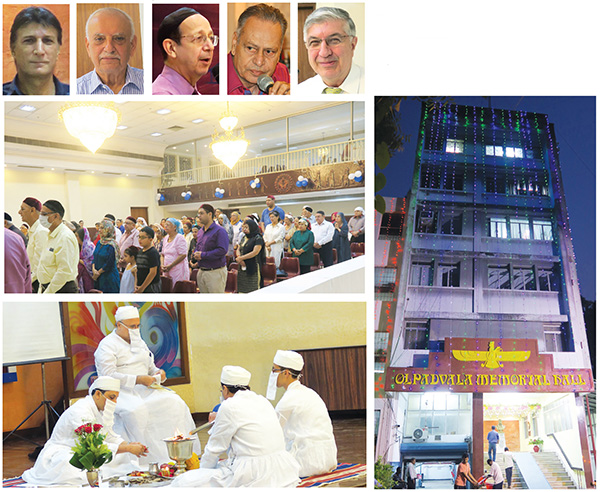
February saw a display of photographs of community assets and properties, and a chat session with representatives of the Parsi institutions in the city. "The Surti biscuits flown in from Bombay were a complete sellout,” states the CZCRCF annual report. The same month included a lunch hosted by Frenny and Rustom Daroga at the Royal Calcutta Turf Club. Jurist and Parsiana columnist Berjis Desai interacted with community members in March, with a Chinese dinner following. Calcutta nurtured songstress Usha Uthup (whose sister Uma was married to thespian Jimmy Pocha) belted out English and Hindi songs at a function in August and staff members of the trust were felicitated at a function in September.
The penultimate function, just prior to the October 31 finale was a discussion on "Parsees: only a handful, but what a handful!” with panelists Parzor head Dr Shernaz Cama, educationist Devi Kar, debator and neurosurgeon Dr Sandip Chatterjee, and socialite and consultant Suhel Seth. The discussions were moderated by Calcutta born veteran journalist Bachi Karkaria.
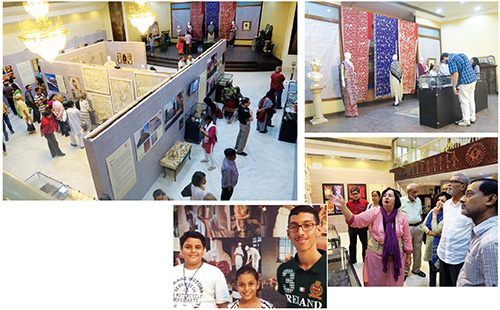
"There is such a great sense of community and togetherness among the Calcutta Parsis,” Cama informed Parsiana on October 29. She was in the city with the "Threads of Continuity” exhibition that she had curated in Delhi from March to May 2016 (see "Exhibition euphoria,” Parsiana, June 7, 2016),” and brought to the Olpadvala Memorial Hall, from October 26-29, 2017. "They (Calcuttans) are so positive about (Zoroastrian) culture,” she added, estimating that the venue hosted over 3,500 visitors, including students from 15 city schools. Cama was appreciative of the 30 local volunteers, specially the community youngsters. Pointing to the quartet of students — siblings Yasna and Danish Buchia, Tanya Batlivala and Ervad Darius Modi, she told us that some of them "even attended to the Hall decorations before going to school!”
The exhibition showcased Zoroastrian and Parsi history down the ages with a section devoted to the Calcutta Parsis. Over 45 panels and approximately 300 artifacts were on display. The show comprised "about 50% of what was on display in Delhi,” mentioned Cama. The Curator’s Walk hosted by Cama each day saw, on the ultimate day, a visit from the West Bengal State Minorities Commission chairman Abu Ayes Mondal. Cama is aiming to put up this show as a permanent exhibit at the Zoroastrian Information Centre in Udvada by December this year, in time for the Iranshah Udvada Utsav.
A food court that sold Parsi cuisine put up by the Dharamsalla managers, Calcutta Zoroastrian Stree Mandal and Calcutta resident Supriya Mancherji, operated in the basement of the Hall on the days while the exhibition was on. "Good takings,” reported a beaming Postwalla, who oversaw the operations there.
Around 270 members, nearly 60% of the Zoroastrians based in the West Bengal capital had assembled for the function on October 31, 2017. A four-mobed jashan led by Ervad Jimmy Taraporwalla supported by Ervads Behram and Darayas Karanjia and Modi, followed by a humbandagi kicked off the evening. After a brief welcome by Madan, the gathering joined in singing "Happy-Birthday-to-the-trust” led by Jamsheed (Jimbo) Vatcha. A short audiovisual presentation on the year long celebrations, put together by Ratan Postwalla, with live commentary by Madan helped the members to relive the happy moments of the sesquicentenary. Signing off with "See you in 2067,” his remark was met with applause and a sprinkling of raised eyebrows. Refreshments and dinner catered by Marzban Bilimoria and served by community volunteers followed.
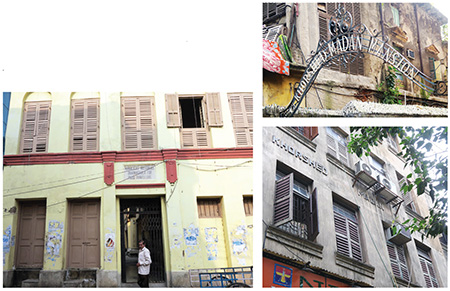
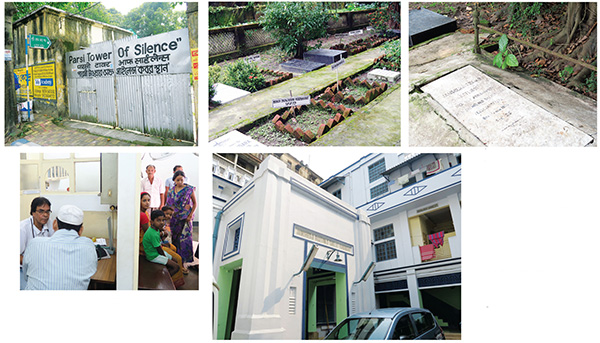
Right: CZCRCF flats at Lenin Sarani; above, left: Dharamsalla
The team of five trustees elected every seven years jointly shoulders the responsibilities of CZCRCF for they have neither designations nor exclusive portfolios. Noshir Wadia serves as the chief executive officer (CEO) of the body, with previous CEO Sam Medora standing in when needed.
According to the last annual report of CZCRCF: "We had 433 Parsi Zoroastrians and 131 non Parsi spouses and children (who may attend the annual general meetings and other functions organized by the trust, but cannot vote or stand for trusteeship) as on March 31, 2017. There was only one birth in our community (and)…14 deaths; and there were two navjotes, and three marriages (all interfaith) during the year.” There were 12 deaths in the April-October 2017 period.
In the annual general meeting (AGM) of CZCRCF in July 2016 Mehta had described the future of the community as "tense.” Stating then that the community was rapidly declining, he had said that it would be foolish not to use the rising financial resources to protect the decline in the population, and if possible, add to it. "If the community did nothing about it, nothing would happen, but if they decided to do something, then it is not improbable that the twin objectives… could be met,” he had said. A debate on how to stop the exodus of young people from the city, methods to attract Parsis to make Calcutta their home and making newcomers feel welcome had ensued.
The shrinking population of the city is reflected in the low demand for housing in the existing properties. Medora informs us that five of the 40 flats owned and managed by the trust are vacant at present. Mehta had stated in his annual report for the year 2016-17 that 30 years ago, "if there was one flat available, we would get 35 applications.” Today there are no takers, he wrote.
The trust proposes to construct a seven-storied building with 17 flats of one, two and three bedrooms for the more affluent community members, a community hall and a senior citizen’s home on an existing property. The construction of the building will be funded from sale of older assets within the city and accrued surpluses, according to Medora. "There are possibly… five to seven families who are waiting for (the building) to come up and who are genuinely in need of improved accommodation,” notes the March 2017 annual report of the trust.
In conversation with Parsiana on October 30, 2017, Mehta said that CZCRCF trustees "decide what we have to do, then find the money to do it.” Of the Rs 131 lakh aid disbursed last year, medical help accounted for Rs 52 lakhs or 40%. Welfare grants for the period amounted to Rs 34 lakhs. The annual Navroz gift to children is "to give them a sense of belonging.”
A home care program for seniors run by volunteers under the supervision of the trust has come in for much appreciation all around (see "Inspiring elder care,” Events and Personalities, Parsiana, May 21, 2017). Convalescing members can stay in the Manackjee Rustomjee Dharamsalla for Parsi Travellers. There are three elderly women at present there.
The Trust celebrates World Elders Day annually to fete the city’s elderly. Health checks are provided to every member over 30 years of age. A cosmopolitan medical dispensary is open six days a week in an annex to the Ravangah. Dispensary volunteer Homai Bilimoria informs Parsiana that new registrants pay Rs 10 and then five rupees for every subsequent visit. Allopathic and homeopathic doctors are available alternately and certain medication is provided free. Flats for community members are also located in the annex.
The 15-room Dharamsalla on Bow Street offers 10 rooms to travelers of which eight are air-conditioned. Prices are a maximum of Rs 950 per day for lodging, including breakfast. Meals can be provided for a modest amount. Having incurred a loss of Rs 11 lakhs in the last year on the Dharamsalla account, CZCRCF’s annual report notes that the trustees are "considering raising funds from the Dharamsalla properties, and providing alternative, though smaller, accommodation with up to four or six rooms… for visitors.”
The Sir Dinshaw Manekjee Petit Zoroastrian Library established in 1889 is managed by CZCRCF. Medora states that they are trying to popularize its patronage among community members and non-Parsis. An advocate for legal assistance is available free to community members each afternoon five days a week at the trust office. The forthcoming edition of CZCRCF’s directory will include names and communication particulars of ex-Calcuttans who now live outside the city, their annual report promises.
Consignment matters
The Ravangah in Saklat Place is the venue for four-day after-death prayers and has stay facilities for bereaved families. After the geh sarna there, bodies are taken in a hearse driven by Parsi volunteers to the dakhma for consignment. A few bodies are taken directly from the home or hospital to the Tower of Silence in Beliaghata.
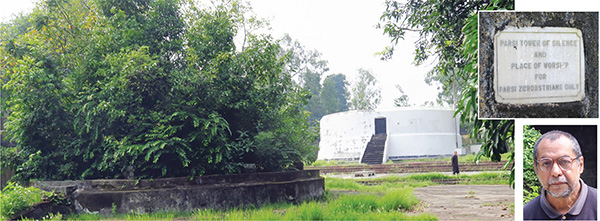
The property around the Tower of Silence in Calcutta admeasures 11¾ bhigas (approximately 3.88 acres; information courtesy Wikipedia; conversion rates vary from state to state), plus about 10 bhigas (approximately 3.3 acres) of leased out land there. Once a remote location, Beliaghata is now a bustling residential-cum-office area, 14 km from 52, Chowringhee, the CZCRCF office. A corner of the dakhma property near the bungli is reserved for burial of ashes of community members who opted for cremation.
"It is not easy for anyone to take our land when I am here,” states 67-year-old Calcutta-born, Nasik-educated Behli Bulsara, caretaker for the last 34 years at the Tower of Silence, who supervises a team of five workers. Parsiana was querying him as to whether any of the 11¾ bhigas of their land that houses an unused dakhma and a functional one is under threat of being usurped by anti-social elements as is the case with a few community assets in Gujarat. Bulsara recalls that in the years he started work at Beliaghata, there were about 20 community deaths annually. It is a solitary life for Bulsara who shows us around the bungli, his only weekly outing being to the CZCRCF office.
"In the last 20 years, I must have seen vultures around here only once or twice,” Bulsara informs us, matter-of-factly. The (aluminum) solar panel is not working right now, he states. Medora informs that it has not been operational for the last few months due to a defect in the control panel which will be set right soon.
There also exist two graves from the first decades of the 20th century, where members’ families had opted for burial. "I once saw a man in shorts sitting on one of the stones,” Bulsara tells us gravely. "I asked him why he was there, but he did not respond. I abused him, and he vanished,” he states. "My workers have heard some sweeping noises in the night near the old dakhma,” he says, pointing out the area. Now in a state of disrepair, "the trustees planted trees in it,” he adds, pointing to the waist-high-wall of the defunct dakhma that was built in 1822 at a cost of Rs 35,000. The new one was built in 1912. "I used to take the bodies into this dakhma when I first started working here in 1982,” Balsara points out.
The community was apprised by Mehta at the September 19, 2017 AGM that "as it is becoming increasingly difficult to maintain a dakhma,” members should be "prepared to consider an alternative form of disposal,” including the option of setting up a crematorium at Beliaghata. CZCRCF proposes to take "initial steps to dispose of approximately 10 bhighas of property” in Beliaghata adjacent to the Towers.
On October 31, 2017, The Times of India reported that 55-year-old Maneksha Bhesania who died on October 24 could not be consigned and had to be cremated due to non-availability of pallbearers. Family members or volunteers place the bodies in the dakhma. "It is not an unlikely scenario that we will not always have sufficient (volunteer) pallbearers. To the extent possible, we shall see that the wishes of the deceased’s family members are fulfilled. But, where it becomes impossible, everyone will have to please understand,” said a statement from CZCRCF.
Medora informed Parsiana on November 8 that a general body meeting was scheduled for November 19 where the position of the trustees would be amplified to the community. A two-page note states, "The CZCRCF has never employed pallbearers. The Atash Adaran has employed ‘kamdars’, who have assumed the role of pallbearers over the years. In this task, they have been aided by volunteers, and a list is kept by the Trust.” While only three male members opted to be volunteer pallbearers in response to a recent call, interestingly, two women have offered their services. The note mentions that work has started to identify volunteer pallbearers from outside Calcutta, provide housing for them and with the community’s assistance, find jobs for them too. Inviting the community’s views, the trustees state that they "believe this to be the correct way forward.”
Speaking historically
The idea of a "general purpose fund to cater to the welfare of the Parsi community in Calcutta” was first mooted in December 1866 by three Parsis who met at the then extant Banaji Agiary on Ezra Street. Maneckjee Rustomjee, Cowasjee Pestonjee and Nowrojee Dhalla were the first trustees who managed an initial fund of Rs 12,297, with a deed of trust [under the style of Zoroastrian Community’s Religious (or Charitable) Fund] executed on October 31, 1867. A hundred years later, the deed was amended: the number of trustees was increased from three to five, and their term of office was reduced to seven years. Earlier, trustees could hold office for a lifetime.
The story of how CZCRCF acquired the property at 52, Chowringhee that serves as its office and houses the Olpadvala Memorial Hall has its origins in the crusading women of the evocatively named Pipla Club. In the years preceding the Second World War, the Parsi elite of Calcutta would gather each evening opposite the Victoria Memorial under a large pipal tree, with chairs thoughtfully brought to the venue by Edulji Olpadvala, a trustee of CZCRCF, in the boot of his car. Heir to an aerated water company business Byron and Company, Olpadvala was a keen Rotarian and member of the Calcutta Parsee Club, notes a tribute to him in the trust’s directory.
The ladies of Pipla Club constantly urged Olpadvala to build a community hall as they found the halls of the two agiaries too small for holding weddings, navjotes and other functions and Firpos, the Grand and the Great Eastern Hotels were too expensive. During the War, the Pipla Club moved to another location as the authorities requisitioned the area. After the War, the ladies, who were by now also members of the Calcutta Parsee Club that had opened its doors to women in 1932, continued to voice their concern over the lack of a hall in Calcutta for the community.
In 1967, Olpadvala lost his wife Ratanbai, which led him to gift his mansion on the arterial Chowringhee to his co-trustees at CZCRCF with a request to build a hall after his death on the premises. A turn in the fortunes of Byron and Company led to the childless Olpadvala living in penury. Only a few weeks before his death in 1971, the community realized that so dire was his condition that he was forced to sell knickknacks from his home for his daily subsistence. In 1985, the then trustees perpetuated his memory through the Hall that bears his name.
As stated an optimistic Madan at the October 31 function, "We have been in Bengal for the last 150 years and will be here for many more.”