
History
Balancing and building
Bombay businessmen have historically trod a fine line between minding their own interests with the need to keep in the good books of the powers-that-be
The coastal port city of Bombay "gave space to 18th century traders to become business barons — there was more latitude to expand, than say, in Calcutta; the pathshalas (local schools) honed the mathematical skills of their students… this was a major asset in business; businessmen displayed a fine sense of balance between the need to keep the administration happy and at the same time further their own interests,” according to special features editor of The Economic Times (ET) Vikram Doctor. He was speaking at a panel discussion on "Building Bombay: Business Families and the City,” organized by public programming platform Avid Learning, an initiative of the Essar Group, in association with the National Gallery of Modern Art at the Gallery on August 9, 2017. His co-panelists were historian and assistant professor at the University of South Carolina Dr Dinyar Patel and historian Murali Ranganathan. City historian and blogger (bombaywalla.org) Dr Simin Patel moderated the discussion.
Parsi and other merchant families of the 18th century invested in Bombay’s infrastructure, unlike the predominantly English businessmen of Calcutta, who were repatriating funds back to the home country, according to Doctor. "The divisions between the ruling classes and the ruled were not as wide as they were in Calcutta…The presence of intermediaries such as Armenians and Parsis (who were ‘neither British nor Indian’) in Bombay helped business flourish.”
Dinyar provided a counterpoint: Parsis were indeed seeing themselves as Indians. Social reformer Behramji Malabari, for instance, was squarely against several British policies in the 1800s. Ranganathan added that Jamsetjee Jejeebhoy, despite being knighted in 1842, was "writing to British members of parliament with great vehemence” about what he believed were unfair practices of the administration in the country.
Parsi and other merchant families of the 18th century invested in Bombay’s infrastructure, unlike the predominantly English businessmen of Calcutta, who were repatriating funds back to the home country, according to Doctor. "The divisions between the ruling classes and the ruled were not as wide as they were in Calcutta…The presence of intermediaries such as Armenians and Parsis (who were ‘neither British nor Indian’) in Bombay helped business flourish.”
Dinyar provided a counterpoint: Parsis were indeed seeing themselves as Indians. Social reformer Behramji Malabari, for instance, was squarely against several British policies in the 1800s. Ranganathan added that Jamsetjee Jejeebhoy, despite being knighted in 1842, was "writing to British members of parliament with great vehemence” about what he believed were unfair practices of the administration in the country.
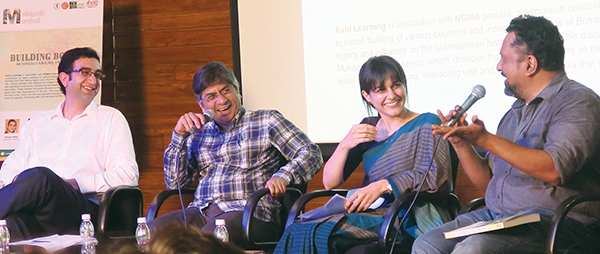
Above (left to right): Dr Dinyar Patel, Murali Ranganathan, Dr Simin Patel,
Vikram Doctor: A lighter moment when discussing early Bombay businessmen
In response to Simin’s observation that nationalist associations were a late entry to the city, as compared to Calcutta and Poona, Dinyar provided the background to the involvement of business families in the political scenario of Bombay: The 1852 setting up of the Bombay Association with philanthropist Jagannath Shankarshet ("the go-to man for the English for all things Hindu”) as president and with the involvement of Jejeebhoy "was a flop due to fissures in the sethia (business barons) leadership.” There was no consensus within the Association on what recommendations it should make for changes in the charter of the British East India Company (EIC). "Business depended on the EIC so most of the sethias did not support anything that could be detrimental to their businesses,” he quipped. Though initially supportive of nationalist ventures, the merchant princes "backed out” when the radicals got the upper hand within the Indian National Congress, according to Dinyar. Giving the example of the Petit baronets, the historian said that they did not want to be seen as overtly supporting the nationalist cause. The support-and-withdrawal trend continued till Independence, he stated. "If we were in the 1970s we may have been able to write a better history of the political scenario,” he complained about shoddily maintained state public archives.
Indian businessmen who were responsible for the growth of the city in the 18th century were ready to pick up tips on good business methods from their overseas trading partners. Giving the example of Jejeebhoy, "the most prominent Indian merchant dealing with China in the first half of the 19th century,” Ranganathan said that there was a great "synergistic relationship” between Jejeebhoy and his partners at Jardine Matheson and Company of Canton.
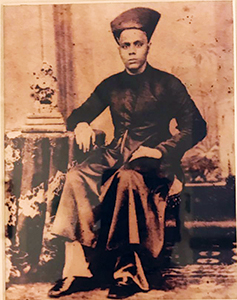
Mohammad Ali Rogay: largely unremembered
"The British may have introduced a good education system to the Indians, but it was the Indians who put their plans into practice by setting up schools and providing text books,” according to Dinyar. There was roughly equal British and Indian participation on the boards of the schools that were set up under the Bombay Native Education Society, he said. In the late 1840s, the merchant princes of Bombay played a significant role in women’s education. Dinyar recalled the role of the Cama family, and in particular "Kharshedji Nassarvanji Cama, (who) despite having no formal education donated large amounts for the cause.” He endowed prizes for the best essays written by girl students on topics as diverse as "The prevention of small pox through proper vaccination,” and "Astrology is bunk,” said the historian. Prizes for students were often wrist watches! Shankarshet even allowed the Society to set up a school on his private property.
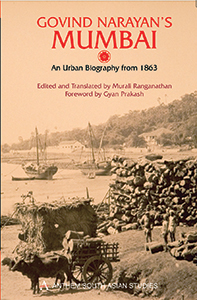
By the 1790s, the city was "recognized as a global city, having surpassed all ports on the west coast of the country in importance,” Ranganathan commented. Shahir Malhari, a poet from Junnar who was in the service of the Scindia royals, was "shocked, surprised and impressed” while passing through Bombay, said Ranganathan, who has translated the city’s history from Govind Narayan’s 1863 Marathi publication Mumbaiche Varnan (Description of Bombay, pictured). The poem, which was read out by Ranganathan, is composed in the style of a lavni (a genre of music) in Urdu and extols the virtues of the city: Mumbai shaher gulzar (Bombay city, a bed of roses) being an oft-repeated refrain. References to the people of the city, the trades practiced, important buildings and clock towers abound in the poem.
Ranganathan rued that Mohammad Ali Rogay, an equal partner of Jejeebhoy in "the biggest firm of Bombay,” Jamsetjee Jejeebhoy and Company (from 1818 when the venture was established, till his death in 1850), "has vanished from public history and is dismissed with a footnote” in historical documents. References to him survive only in a few Urdu books from the 1840s. Rogay is remembered with a small plaque on the grounds of the Anjuman-I-Islam school. Another forgotten businessman and associate of Jejeebhoy is ship owner Motichand Amichand (1782-1836), a baron of the opium trade who exported Malwa-grown opium through Bombay port. "A derasar (Jain place of worship) on a road renamed after him in Central Bombay, the erstwhile Love Lane, is the only reminder of his work. "Almost nothing (original documentation) is available about early businessmen except for Jejeebhoy,” ended Ranganathan.
 Many business families from West Pakistan made India their home after Independence and then spread their wings to Hong Kong and Africa. Doctor explained that families like the Premjis (they had set up Western Indian Vegetable Products Limited to manufacture cooking oil and soaps, the forerunner of today’s software giant Wipro) assumed that cross country trade would continue "and it did, till well into the late 1950s.” According to Doctor, Bombay based business families played a role in the growth of Karachi and Aden too.
Doctor reminded the audience about the involvement of the princely states in the development of modern Bombay, to which Ranganathan quipped "we are moving from merchant prices to princes!” Doctor spoke of the sponsorship of jurist, economist and politician Bhimrao Ambedkar’s education by the Gaekwads of Baroda. "Many princes sponsored the studies of bright engineering students in the USA.” Jejeebhoy supported the claims of the Raja of Satara and the Nawab of Janjira to their respective territories when they were under threat of being absorbed into the Empire. The maharajas invested in the fledgling airline industry by building airstrips in their territories to facilitate stopovers for short haul flights. "The early Tata Airlines flights carried paan (betel leaf) and mangoes for the maharajas,” said Doctor, who writes a periodic column on food in ET.
Simin questioned the panelists if industrialist families of today’s Bombay are focused more on supporting the arts and culture than on building infrastructure. "We are not seeing investment in philanthropy… it is seen as the government’s responsibility alone,” Doctor quipped. "The British did not fund all infrastructure projects… they encouraged charity minded individuals to make investments of a civic nature,” he added. "Sad to see them build 27-storied houses for themselves,” quipped Dinyar in a reference to the palatial housing built by the Ambanis for their residence. Doctor recounted that in the days of yore, clock towers were favorite endowments among Bombay merchants. As an aside, he said that there were tussles between the government and donors who funded clock towers as to what time the towers should display — what was to become nationally accepted Indian Standard Time, or local Bombay Time. (The latter is today followed by some fire temples and for performing religious ceremonies.) Simin recalled the prizes given to distinguished female students in the days of yore — wrist watches — and mentioned that "time must have had a very important place in people’s lives.”
In response to a question from the audience, the panelists agreed that sethias played a role in the field of entertainment too. Tyabji Bhai Miya (father of Sir Badruddin Tyabji, the lawyer who served as the third President of the Indian National Congress) encouraged experimental theater by hosting amateur troupes at "his palace in the native town” and Jejeebhoy sponsored gymnastic groups for his guests’ entertainment. Cinema halls were built by not-so-well known business families.
Earlier, Asad Laljee, chief executive officer of Avid Learning welcomed the audience of about 140 people and reminded those present that the current discussion was part of a series called "Multipolis Mumbai” which "decodes the past while looking to the future.”
◆ ◆ ◆
From the archive