
Transgenders’ tale
The Parcel by Anosh Irani. Published in 2016 by Fourth Estate, an imprint of HarperCollins Publishers India Limited, A-75, Sector 57, Noida, Uttar Pradesh 201301. Pp: 264. Price: Rs 399.
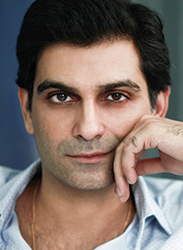 Anosh Irani (pictured) starts his novel, The Parcel, with a scene which is familiar to most Bombayites. At a crossing at Bombay Central, a transgender, Madhu, is positioned outside the window of a taxi begging for money. She is, like most members of her tribe, very persistent and with the connivance of a shrewd taxi driver, the passenger finally gives her Rs 10 just before the traffic lights change.
The protagonist, Madhu, (a common name for persons of either sex) is an ageing member of her kind. The list of names transgender persons are called by is endless: in Tamil it is "thirunangai” meaning "mister woman,” but the most common is "hijra” which in Urdu means "migration.” The ambivalence in their sex is paralleled in the way they are seen by society: they are shunned but at the same time invited for weddings and child-naming ceremonies; they are a nuisance to the general public but several consider it fortunate to be blessed by transgenders.
Madhu is now 40 and the ravages of time are evident in her physical condition. She is no longer as beautiful as she once was and has to now contend with flabby muscles and a stomach resembling a shapeless "hot water bag.” No longer appealing sexually to her clients she has been compelled to move away from prostitution as well as celebratory events and is now relegated to begging on the streets. Madhu lives with a close-knit family of hijras supervised by the 80-year-old Gurumai, whose name aptly describes her role as teacher/protector and mother.
One day, she receives a call from Padma Madam, a powerful brothel owner in the red light area of Bombay. A "parcel” has arrived and Madhu has been entrusted with the role of "unpacking” it. The term "parcel” is applied to any young girl sold into prostitution who has to be prepared for her first night. In this case, the parcel is Kinjal, a 10-year-old girl from Nepal who has been sold to a middleman and brought to work in the red light district. Her vulnerability and childlike innocence is evident in Irani’s description of her: her hair is well-oiled, neatly parted and divided into two ponytails. She is to be particularly prepared for her first night for which 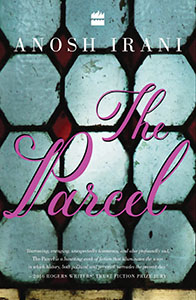 Padma Madam has been paid a substantial sum by a HIV (human immunodeficiency virus) "pojeetive” man who believes that sexual intercourse with a virgin would rid him of this ailment. This task, if left to the pimps to perform would merely result in "turning (the girls) into vegetables” which would be counterproductive. Madhu’s role is to use strategy and a psychological approach to help make Kinjal’s initial experience less painful and traumatic.
Irani portrays Madhu’s complex character with great sensitivity. He describes the early life of an effeminate boy and the ordeal he is put through not only at school but also at home. His parents continually treat him like defective goods and compare him to his younger brother who is a "real son.” But in spite of all Madhu’s pain and suffering at the hands of his parents, 30 years later she yearns for her parental home and haunts a bridge from where she can observe the family that abandoned her. The one constant feature in Madhu’s life is Gajja, a ward boy in J. J. Hospital with whom she had an amorous relationship several years ago and who still remains a very good friend.
It is evident that this harrowing and powerful novel is the result of long and painstaking research. Irani must have met several characters from Kamathipura as the social background is extremely vivid, vital and well documented. In fact, the research is so thorough that in several instances The Parcel reads more like a sociological study of the lives of hijras and prostitutes rather than a novel. The initial pages rely too heavily on description. The brief episode of extracting money from an unwilling passenger goes on for several pages and there is too much unnecessary detail. More time and energy have been futilely spent on matters which could easily have been condensed: Alexander cinema and the films it shows, the stables at Bellasis Road, the role of the hijras in history. In fact, the arrival of the parcel occurs when we are almost past 13% of the novel. This slows the pace and a great deal of interesting information is lost in a mire of unnecessary detail. Irani describes several customs and traditions of the transgender community which, I am sure, are not known to most of us. Many of us are totally unaware of the internal structures and organization of the hijra community, their strange burial ceremonies and the fact that the language they speak is a dialect which is a strange mixture of Hindi and Urdu.
In an interview with National Post, September 26, 2016, Irani says, "For me literature really is about creating some sort of disturbance, some shift in consciousness if you tell the story well enough.” In this respect, The Parcel certainly performs what Irani set out to do.