
City chronicler
J. R. B. Jeejeebhoy wrote on various aspects of Bombay city life in the first half of the 20th century
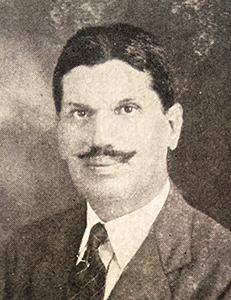 Punchayet on November 4, 1819. The object was to "restrain and punish” the "numerous men and women from the Zoroastrian community (who were) engaged in sinful deeds.” The decree required that Parsi women should not resort to (Hindu) temples, tombs, "or worship the taboot (box in which a dead body is buried or cremated)” and stop believing in charms and amulets. Nassessalars (pall bearers) were ordered to keep "the strictest watch” near the Fort Gate (as most Parsis then lived in the Fort); female transgressors were liable to be detained at the nassakhana (house for pall bearers). J R B Jeejeebhoy’s Bombay Vignettes: Explorations in the History of Bombay, a collection of 41 articles by city historian Jeejeebhoy Rustomjee Byramjee (JRB) Jeejeebhoy (1885-1960) includes this nugget of information.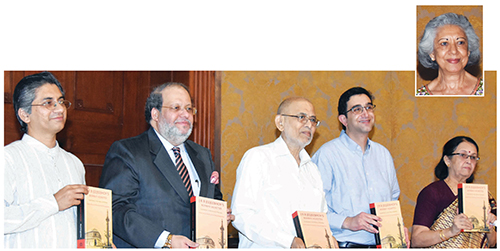
Edited by researcher Murali Ranganathan, the tome is the third publication of The Asiatic Society of Mumbai (ASM) from their Vimal Shah Endowment instituted in 2015. Ranganthan has previously edited and translated Govind Narayan’s Mumbai: An urban biography from 1863. Vignettes was launched on November 3, 2018 by Dr Neville Mehta, chief executive officer of Mumbai First, in the portrait-lined Durbar Hall of the Town Hall that houses the ASM. Keynote speaker for the evening and assistant professor of history at the University of South Carolina, Dr Dinyar Patel, spoke about the enigmatic Jeejeebhoy. Interspersed between speeches, ASM president Sharad Kale and honorary secretary Prof Vispi Balaporia read extracts from the book.
The researcher noted in his talk at the launch that Jeejeebhoy was "an associate of sorts” of lawyer and political leader Sir Pherozeshah Mehta ("his political guru”), which perhaps resulted in his writing Some Unpublished and Later Speeches and Writings of Sir Pherozeshah Mehta in 1918. Calling Pherozeshah "a masterful personality,” Jeejeebhoy wrote in a 1945 article in the Bombay Chronicle that "during the 50 years of his career there was not one stage of public activity, whether in the civic, provincial or imperial sphere on which his dominating individuality did not count as one of the foremost advocates of progress and reform.” Jeejeebhoy does not seem to have pursued a political career aggressively, "but continued to be on the fringes” of the national political mainstream till the end of the 1930s, commented Ranganathan.
The cover of Vignettes carries an image of the Cursetjee Manockjee Fountain (widely known as Khada Parsi), at its erstwhile location. The Fountain was erected by Manockjee Cursetjee, the first Indian member of the Society, in memory of his father Cursetjee Manockjee. Ranganathan explained that since Manockjee Cursetjee was blackballed many times when he tried to become a member of the Society, he chose a "backdoor entry.” He became a member of the London Branch of the Asiatic Society and was allowed access as a guest member, till his membership was finally approved in 1840! Manockjee Cursetjee went on to establish the Alexandra Native Girls’ Institution (now the Alexandra Girls’ English Institution) in 1861. Khada Parsi today stands a few hundred meters from its original location near the Nagpada junction. It was shifted there in 1931, somewhat lost between crisscrossing flyovers.
Slaves and fast hackeries
In "Rash Driving in Bombay” Jeejeebhoy noted that "natives who drove their hackeries in a violent manner” were fined Rs 100 (sic) from January 1770 onwards, commented Balaporia. A year later, a proclamation "forb(ade) all persons to gallop horses about the streets of the town and upon the Green (currently Horniman Circle Gardens) on pain of being fined or punished otherwise.”
Kale read extracts from Jeejeebhoy’s "Slave trade in old Bombay.” Noting that slavery was rampant in Bombay even before the arrival of the English (in the 1660s), he referred to a January 1736 government mandate that six women and four boys had to be sent to St Helena on each ship calling at the Bombay port and going in that direction. Slaves from Africa were regularly sold in the city and "any deficit in the army was made up by slaves,” he said. Jeejeebhoy noted in the Sanj Vartaman (SV) Annual in 1931 that Sir Bartle Frere, governor of Bombay between 1862 and 1867 had estimated the slave population in British India at between eight and nine million in 1841.
"Bit of an anachronism”
Though he wrote prolifically about city life, Jeejeebhoy "hardly revealed anything about himself,” said Patel. "We do not know what he did on a day-to-day basis…Though he studied at both Bombay University and the London School of Economics, he got degrees from neither.” Patel reminded the audience that Jeejeebhoy was born in the year that the Indian National Congress was formed and died in the year Maharashtra state came into existence.
A "transitional figure,” Patel said that the writer was in his prime when Parsis were changing from traditional clothing to Western wear and from writing in Gujarati to English. "A bit of an anachronism,” Patel noted that in a 1921 article "Non-cooperation: Its pros and cons” Jeejeebhoy criticized the "short sighted statesmanship” of the colonial government as also the non-cooperation movement.
The study of history will help civic leaders to be able to better plan for the future, the academician remarked. Stating that the history of the city is often forgotten or misunderstood, Patel stated, "it is very easy to rewrite it to suit parochial interests…The best way to remember JRB is to make history more accessible to all, not only for the privileged… Make history the corner-stone of the city,” he said.
"You breathe in history, because history is in dusty scraps,” according to Patel, referring to poor storage of archival material in Bombay. For today’s researcher, it may be easier to access libraries in Chicago or Oxford, the assistant professor said. Jeejeebhoy had bemoaned of a similar situation in his 1952 book Bribery and Corruption in Bombay. Jeejeebhoy had noted that material for his writings was "extracted from government publications (and other records)… some of them fast crumbling to pieces.”
In his address, Neville called Jeejeebhoy "the first person to be concerned about the city heritage and its laws.” Calling Ranganathan an excavator of libraries and archives, he reiterated that the book "holds the promise of discovery.” The organization that Neville manages, Mumbai First, "wants to turn Bombay into a smart city,” noted Society vice president Dr Meena Vaishampayan, while introducing him.
In her vote of thanks, Balaporia recollected the support of the trustees of the Society, including Cyrus Guzder "who attends all our functions,” Sir Jamsetjee Jejeebhoy for attending the book launch, and the staff of the Society.
 a silk curtain hanging over a small aperture, where the sacred fire was burning,” wrote recorder (chief judge) of Bombay Sir James Mackintosh (1765-1832) in his diary about his August 26, 1810 visit to "an "aighairee or fire temple.” Mackintosh founded the Literary Society of Bombay in 1804 which later merged into the Bombay Branch of the Royal Asiatic Society. Calling it a "very plain building, with nothing of that peculiarity which religious edifices generally have,” Mackintosh narrated that "we were received by (the head priest) Mulla Perose (sic), the Parsi priest who was educated 14 years in Persia. About Mulla Feroze, Mackintosh says that "he was not without information and agreeable manners.”
 This nugget appeared in "Sir James Mackintosh in Bombay: His connection with the Parsis” by city historian J. R. B. Jeejeebhoy in the Sanj Vartaman Annual for 1926. The article is part of J. R. B. Jeejeebhoy’s Bombay Vignettes: Explorations in the History of Bombay. Jeejeebhoy explains that "the fire temple refers to Dadysett Atash Behram (and not Agiary) founded by the father of Mackintosh’s friend Ardeseer Dady in 1783.” Its then head priest Dastur Mulla Feroze bin Mulla Kaus (1758-1830) was "a very learned Dastur and taught Persian to Governor Duncan on a salary of Rs 100 per mensem.” Calling Mackintosh and Mulla Feroze "two of the brightest stars of the Bombay literary firmament,” Jeejeebhoy noted that the duo "had seen each other previously on more than one occasion and had discussed the philosophies of their respective religions.”
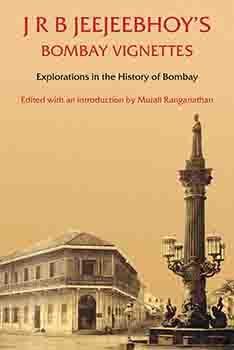 The 430-page hardbound Vignettes includes articles "on various aspects of the city between 1920s and 1950s,” grouped into four sections: the city (11 articles); judicial and legal institutions (12); colonial personages (11); Parsi community and culture (seven). While Jeejeebhoy wrote in numerous journals (the Bibliography lists 30), he contributed at least one article for each special Navroz issue of the newsmagazine Sanj Vartaman (SV). Of the seven articles exclusively about Parsi culture, the one titled "Communal discipline among the Bombay Parsis in olden times” is the only article where Jeejeebhoy not only used a Gujarati source but also reproduced quotes in the Gujarati script verbatim.
Jeejeebhoy penned the "Introduction to Parsi Lustre on Indian Soil” for H. D. Darukhanawala’s compilation of biographical sketches of men and women of note published in 1939. He began by saying that "it would have been more expedient had the task of writing an introduction… been entrusted to some alien hand not connected with the community,” but believed that the biographies were "within the bounds of truth and justice.” Lustre was reprinted by Parsiana in 2017.
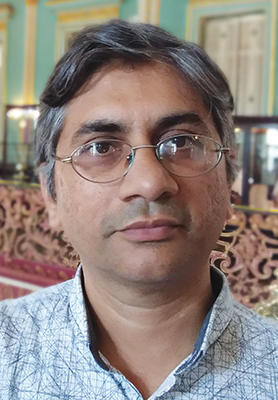
Having authored three books, "nearly 50 articles on a wide variety of subjects” and "innumerable letters” to newspapers, topics as diverse as Sabbath rituals and moving pictures to the first elephants in the city were par for the course for Jeejeebhoy. To many of his readers, his style and quotations from poetry and history "would have exuded a period flavor,” noted the book’s editor Murali Ranganathan (pictured) in the Introduction. "Let his work be in a more popular style,” remarked Kaiser-I-Hind (KIH) in response to one article in 1921.
While Jeejeebhoy’s writings will be of interest to the casual reader as well as a serious researcher into the city’s history, Ranganathan’s 33-page Introduction, annotated with 71 foot notes is painstakingly executed. Its first segment deals with Jeejeebhoy’s relationship with the Parsis and the city. The researcher then delves into the historian’s family background.
Jeejeebhoy could claim sethia (affluent person) ancestry from both his parents, notes Ranganathan. His mother Avabai was a sibling of Sir Jamsetji Jejeebhoy, the third baronet, while his father Rustomjee’s family had interests in textile manufacturing and ice making.
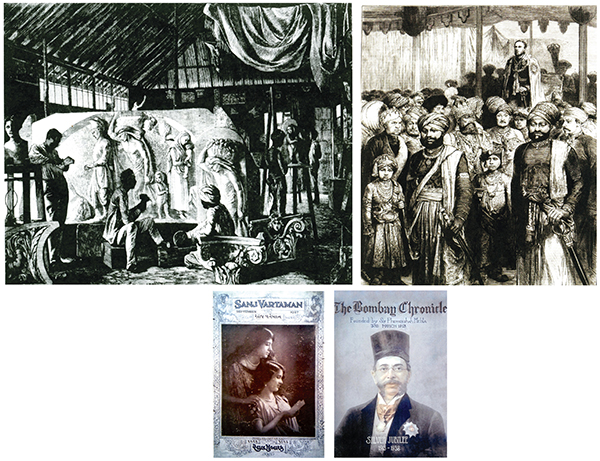
The editor details a few of the publications, "now shrouded in obscurity” like SV and KIH where Jeejeebhoy’s writings were first published. Dedicating over three pages of the Introduction to SV, Ranganathan elaborates its history since it was established as an evening newspaper in 1902 till its closure in 1953. Similarly, the section on the judicial history rewinds to two centuries prior to the start of Jeejeebhoy’s writing career and outlines the early history of legal institutions in Bombay.
Each of the chapters in the book, printed by JAK Printers, is referenced to the publication where it first appeared. The 17 plates that illustrate the book, printed on glossy paper, are largely from the collections of the Asiatic Society of Mumbai, as are the 20 illustrations reproduced at the end of a few articles. Thoughtfully reproduced is a "Retrospective Bibliography” of works consulted by Jeejeebhoy in the course of his writing.
According to Ranganathan, Jeejeebhoy was one of "quite a few Parsis in the first half of the 20th century” who wrote as community historians and chroniclers. "Writing about the community, primarily for an audience within the community, these Parsi authors participated in the creation of a body of work which can now be identified distinctly,” he wrote. Noting that this body of work could be brought together under the rubric of "Parsi Biography Project,” he told Parsiana on November 11, 2018 that the project is in a nascent stage now, "only a three-letter word (the acronym PBP)…Well into the future at the pace I am working.”
Detailing Jeejeebhoy’s passion for conservation of heritage, the Mumbai Mirror of November 4 noted that during his lifetime, Bombay lost hundreds of structures built in the 19th century, including his birthplace, the famed Mazagaon Castle, the residence of Sir Jamsetji Jejeebhoy, his maternal great-grandfather. "The destruction by fire of the historical Police Court Building at Mazagon in 1942 resulted in a piece of nostalgic writing...the closure of iconic institutions be it the Deccan College (in 1934) or judicial institutions like the Honorary Presidency Magistrate’s Courts (in 1947) troubled him, and he used the opportunity to talk about their history in the hope that others could be perpetuated.”
When Jeejeebhoy died in October 1960, The Times of India described him as a "prominent city businessman who had taken a keen interest in social welfare all his life.”