
Learning in Tihar jail
Nearly seven years spent in Delhi’s prison are enough to educate one in the socioeconomics of crime
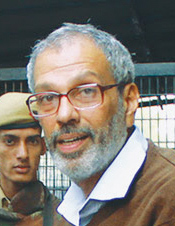
Kobad Ghandy: numbed sensibilities
The walls of Tihar shut out not only the warmth of the sun, but also of society. The inhumanity of the atmosphere within the jail is even colder. Truth is a rarity, falsehood, the norm, naturalness, a casualty, pretence is natural.
Of course, in the dirtiest muck one finds some diamonds, but that is rare. To live by principles is near impossible, to live opportunistically, the main principle. Simplicity is considered naïve, nay foolish. The cunning and the ruthless are the models.
Seven years in such an environment is enough to dehumanize anyone. It tends to numb one’s sensibilities. Yet, besides this ordeal of extreme confinement, that too in a jail within a jail, Tihar has been a great school of learning on why crime continues to rise in Delhi, why Delhi is the rape capital of the world and why the criminal justice system appears so unjust.
One could say Tihar has four categories of inmates — petty thieves who would comprise the bulk of the inmates; those in jail as a result of personal/family conflicts; professional big-time criminals/gangs; and, finally, white-collar inmates, the cheaters. Rapists come from all four categories. The last two have the highest status in jail, with all saluting them. The petty criminals have only one goal — to join the league of the big timers. The more the murders, the greater the loot — the greater your status.
The petty criminals are a product of the excessive poverty/unemployment in the vast juggis (shanties) and impoverished colonies of Delhi. I have met many who earlier worked 10-12 hours in back-breaking labor and earned barely Rs 3,000 to Rs 5,000 per month.
The rise in big time criminals in Delhi, more particularly in the outer Delhi/Haryana belt, is linked in many ways to the real estate bubble. In my first few years in jail, there were few such elements, but from 2011-12 there has been a spurt. The line between "property dealers” and criminals is thin and the bulk of the money is black (said to be 90% of any deal). Most of these gangs, for whom a few crores is peanuts, have a nexus with politicians and the local police. So they get protection.
One of the crime syndicates from outer Delhi/Haryana informed me that when farmers get crores for their land, the money goes to purchase SUVs (sports utility vehicles), revolvers, and investment in cable TV, gambling and moneylending. All this is done with black money. We see them attired in the latest branded clothes and they speak of nothing less than five-star hotels, malls and salons. So, we find a market for goods being generated not from labor and employment (manufacturing) but through wealth creation by the financialization of the economy.
It is no wonder that in 2014-15, the amount of property stolen in Delhi was gigantic. A meagre amount was recovered. The number of thefts has increased over twofold in just one year. The incompetence or unwillingness of the police to recover the loot is a major cause of encouragement for these crime syndicates. With their money intact, they use it to either weaken their cases or come out on bail. No amount of extra policing will reduce the crime rate as long as the criminalization of the economy continues apace.
And as for rape, in the three years since the Jyoti Singh (Nirbhaya) incident, the number of rape cases in Delhi has increased threefold and molestation sevenfold. New laws, closed circuit television cameras, more policing are going to make little difference as long as the mindset of people (including authorities) continues to be the same. As long as the feudal approach, coupled with the Westernized commodification of women exists, there can only be an increase. This is apparent from the type of talk one hears regarding women in jail. Reform is unlikely as long as the mindset exists and is promoted by the media.
And as far as the criminal judicial system goes, it functions purely on the whims of the police/public prosecutor (PP) who can weaken cases (Salman Khan syndrome) or delay cases with false accusations and delaying tactics. Many crime syndicates belong to the first category; my case belongs to the second. The public prosecutor has dragged my case on for six-and-a-half years in Delhi, clamped fake charges all over the country (many places I have not even heard of), and made sure that these cases do not proceed simultaneously by preventing my attending cases in other states. At over 68, with numerous health problems, this is nothing but the police utilizing the system for judicial murder.