
Victims of the system
Social reform movements are needed to ameliorate the lot of the disadvantaged
Maoist Kobad Ghandy who is lodged in Tihar Jail, charged with membership in an unlawful organization, expressed in a series of letters to Parsiana his views on society, the Parsis and the criminal justice system. We publish extracts from his letters:
"No doubt if I had become a chief executive officer or top executive like many of my classmates I would have been richly rewarded, but to work for the downtrodden, who comprise 80% of our people, appears to be a crime in our country…
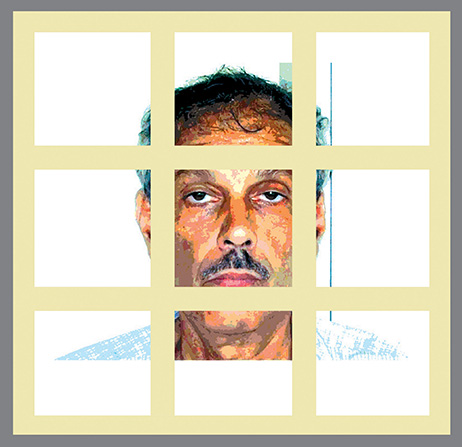
"I think the Parsi community seem somewhat insulated and are unable to conceptualize the horrors in which the bulk of our population live. About 70-80 crore people do not get two square meals a day, cannot afford medicine for their children and families, do not have humane living arrangements and very poor education. It is a degrading existence and with the caste factor added the untouchables (20% or 25 crore in number) are not even considered human. Caste and other social issues cannot be dealt with legally — only through social movements and reformers, such as (Jyotirao and Savitribai) Phule, Periyar (Ramaswamy), (Dr B. R.) Ambedkar, etc. For India to grow the main problem is not ‘investment’ but the ‘home market.’ If this 80 to 90 crore people’s purchasing power increases it alone will act as the motor for all round industrialization (instead of depending on the top 10% as one does today).
"With industrialization of basic goods will come more employment and so more purchasing power and so the spiral of growth — that too inclusive — will continue to evolve…
"The criminal justice system (has) a bias against the poor. I find habitual criminals with numerous murder cases get out easily as they fix the witnesses and often others. It is the simple citizens (some even middle class) who suffer as they do not know how to get round the system. Also, many a judge does not seem conversant with the social circumstances of a case. So in all this mostly the poor and the middle classes suffer while the habitual and big-time criminals get away. I have seen numerous examples. The new rape law has brought in all sorts of middle class people merely on the statement of a woman, without any evidence. It has only increased the arbitrariness of the police…
"I certainly feel a lot of empathy with the obviously innocent who are victimized by this system. Many are poor but also middle class. I also help in whatever way I can. We had an excellent sevadar (in the High Risk Ward, every work — food, toilet items, etc — has to be got through a sevadar) who got a life sentence for something he did not do. I helped gather some funds and he got acquitted in the High Court. Besides I am regularly writing appeals and going through people’s cases writing suggestions...
"There are (several) cases against me and some FIRs (first information reports) (mostly in Andhra Pradesh). FIRs do not become a case until produced in court. Whether to pursue these or not will, of course, be a political decision. Ironically, I spent most of my years working amongst dalits and unorganized workers in Maharashtra, but these FIRs are in places where I have never been...
"The second point that needs clarification is that all who are charged have a constitutional right to a speedy trial, which I have been denied. I have seen many Kashmiris, etc arrested about the same time as me who are now home. In addition, in Tihar there are numerous people with 20 to 30 murder charges against them in many states. I notice they finish them within three to four years as they attend to them simultaneously. But, in my case this has been prevented, as in July 2010 they clamped section 268 on me, which prevents me from attending cases outside Delhi until this case is over…”
"There is a clause in the Constitution that the government can release people over the age of 65. In fact they did release a person over 70 and very sick (though he was said to be a top leader) about a year back. In the late 70s they released thousands.
"If and when released the first thing I have to do is recover my health. Then I hope to write a biography on my late wife Anuradha, and also develop my understanding on the question of values and its relationship to power. I have already written about 100 pages on this philosophical topic in a series of articles in Mainstream. Just borrowed a book from another jail library by (the Persian poet) Jalaludin Rumi — who writes on this beautifully. Could also probably write a jail diary focusing on the individual inmates I have interviewed.”
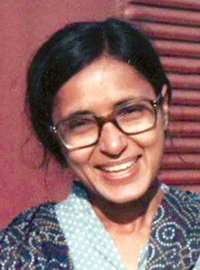
Anuradha Ghandy: a light in the darkness
An ode to Anuradha on her sixth death anniversary through a poem by Rumi in memory of his soul-mate and idol, Sham Tabriz, a fate similar to what I faced on this day six years ago.
Your face
You may be planning departure, as a human soul leaves the world taking almost all its sweetness with it. You saddle your horse.
You must be going. Remember you have friends here as faithful as grass and sky.
Have I failed you? Possibly you’re angry. But remember our nights of conversation, the well work, yellow roses by the ocean, the longing, the archangel Gabriel saying ‘So be it.’ Sham Tabriz, your face, is what every religion tries to remember.
I have broken through to longing now, filled with grief I have felt before, but never like this.
The center leads to love, soul opens the creation core.
I do not know about the soul, but her inner radiance lives on, as a message of human values, coming from deep compassion for the underprivileged.
Grief, is no doubt there, but time heals the wounds of the heart, and now acts as fuel to the fire, that brings light amidst this darkness, through the message of her life.
Anu lives on, as dew drops on the petals of humanity.