
Life-Style
Beguiled by Bilimora
A 95-year-old resident of Calcutta reminisces about her youth in the south Gujarat town
I was born and educated in Bombay but my maternal and paternal grandparents lived in Bilimora. My school in Bombay had a Parsi owner and principal and the majority of the students were Parsi. We used to have holidays for five gathas, Navroz, Khordad sal and Amardad sal. My brother Homi (Mengusi) and I would request extra leave for the muktads which were granted provided we kept up with our studies. Most of my summer and winter holidays and also some muktad periods were spent in Bilimora before I turned 20 (in 1940).
Bilimora had an agiary, a dakhma, a dharamsala with an attached hall for gahanbars and other functions, and the Zoroastrian Club. There was an office of the Zoroastrian Trust Funds managed by the trustees, two of whom were my grandfathers. We also had a primary school, a public library, a high school and a separate girls’ school all founded by Parsis. Yet the Bilimora of my childhood had no electricity and no sanitation system — which meant no flushing system in the toilet.
Most Parsis lived in their ancestral houses. Each of my grandfathers had a house in town and a bungalow about three km away across the railway lines. There were about 10 bungalows within a distance of a mile. Most of the time we stayed at the bungalow but during muktads or a death anniversary, the entire household moved to the townhouse. Every house had a prayer room next to the kitchen.
Bilimora had an agiary, a dakhma, a dharamsala with an attached hall for gahanbars and other functions, and the Zoroastrian Club. There was an office of the Zoroastrian Trust Funds managed by the trustees, two of whom were my grandfathers. We also had a primary school, a public library, a high school and a separate girls’ school all founded by Parsis. Yet the Bilimora of my childhood had no electricity and no sanitation system — which meant no flushing system in the toilet.
Most Parsis lived in their ancestral houses. Each of my grandfathers had a house in town and a bungalow about three km away across the railway lines. There were about 10 bungalows within a distance of a mile. Most of the time we stayed at the bungalow but during muktads or a death anniversary, the entire household moved to the townhouse. Every house had a prayer room next to the kitchen.
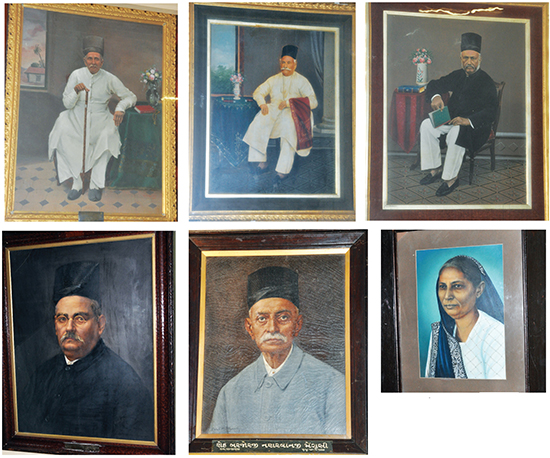
Portraits of (clockwise from top left) Limjibhai Mengusi; Sorabji Gabba;
Dadabhai Gabba; Jerbai Gabba; Burjorji Mengusi and Dhunjisha Gabba in the Bilimora Agiary
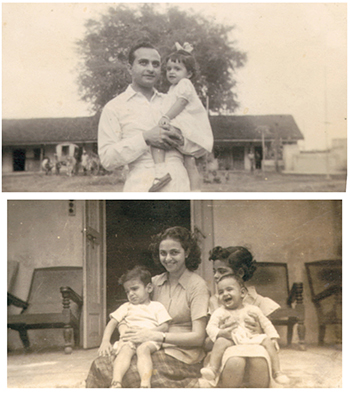
Top : Homi Mengusi with his daughter (1954);
Shirin Tata with children Dhun, Cyrus (on her lap) and infant Arnavaz (1954)
At that time there were four mobeds living in Bilimora with their families. Three of them were married and their sons were navars. One son from each family followed the father’s profession, while the others helped out during the muktads. The head of each family had the panthak of the agiary by rotation. He had to stay in the agiary and look after it for the period assigned to him. During muktads, baj ijvanu (maintaining sanctity) was done by him in the agiary. Daran and malido for the baj were delivered by the priest’s family in a shallow utensil (langri) with a cover which was returned after two or three hours. Prayers for the dead were held in individual houses. During the muktads, mobeds set the time table amongst themselves. One would come to our house at 6 a.m. for the morning stum (or satum as we call it). Two of them would come at 8.30 a.m. for the afringan ceremony, after which one of them would leave and the other would recite the farokshi. At 11 a.m. and again at 5 p.m. one of them would arrive for satum. Rain or shine they would walk to their appointments covering an area of over a square mile every day for 18 days. A Parsi female cook and a helper were employed whenever needed to prepare daran, malido, tea time snacks, lunch and dinner for the household. During muktads my mother and the workers rose at three in the morning. Water had to be drawn from the well to clean the behras (vases) and fill them with water before fresh flowers were put in them.
Evenings in Bilimora were quite uneventful with nowhere to go but the river jetty. Bilimora is a river port and I have heard that there is now a ship building yard there. Having nothing to do in the evenings, my mother showed my sister and me how to stitch sudrehs. This was done by hand as we did not possess a sewing machine at that time.
The Petit Public Library was a blessing. We could go there any time during the day and borrow English or Gujarati books. The Primary Gujarati School was quite close to the library. During the last period the children would recite tables every day. As the older children began to recite them, the younger ones would join in. Doors to all residences and institutions would remain open all day. While the tables were being recited in a loud sing-song manner, people of the mohalla, even the uneducated ones, had the opportunity of learning them by heart!
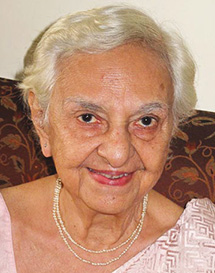
Tata at a recent function in Calcutta
The Zoroastrian Club held functions during the Christmas season. There were sports events for two days and a gymnastics display by students of the gym classes which were conducted by a gentleman from Surat who came every weekend to coach the boys. Students from the Girls’ School would put up a variety entertainment program. A contributory dinner was held in January each year.
Weddings and receptions were held in people’s houses. In most cases all the Parsis of the town were invited for lunch and dinner during the four days of festivities. I remember two weddings I attended around the year 1938. One was of the parents of Daraius and Nargis Tata in their family bungalow and the other was of my father’s cousin. Lady members of the house would visit all the families along with one mobed to hand out the invitations personally. I went along with them to invite people to my father’s cousin’s marriage. The mobed would enter the residence first and announce the names of the bride and bridegroom along with the date, time and venue of the wedding and invite the entire family for four days’ celebrations. The ladies would then say "Avjoji, avjoji (please come).” For the marriage, a shamiana was put up in the street near the house with tables and chairs which remained there for four days where all meals were served.
The gahanbars of Bilimora are unforgettable. The dhansak was superb. The flavor of the masalas was so pungent that one could smell it hours after washing one’s hands several times with soap and water. Many of the gahanbars were for men only but girls under the age of 10 were allowed. The last time I visited Bilimora in 1974, I had the good fortune to attend one which was open to all Parsis.
Our bungalow was at a distance of about two miles from the house. It had a garden in the front and an orchard (wadi) with mango, papaya, banana, chickoo and toddy trees at the back. We used to have a carriage with a horse and another cart drawn by two bullocks. Our cows would sit in the shade of a tree all day long chewing the cud and swishing flies with their tails. The horse lived in a stable.
On Dassera, I have seen my grandmother doing sagan to the horse. The groom would bring the horse near the verandah and Granny would put a tilo (red vermilion mark) on his forehead, a garland around his neck and feed him malido. In 1936 the horse was sent to Panjrapole, a retirement home for old and infirm animals. The bullock gari (cart) was only used when there were more people and the horse could not make many trips. Two bullocks were harnessed together, but as their gait was not as steady as a horse’s there was much swaying and jolting. In 1958 when I had gone to Bilimora with my children and the families of my brother and cousin, we had taken one car which had to make several trips for our outings. I suggested that we use the bullock gari to transport the children, who were so delighted with the ride that they used it every day in preference to the Desoto car.
Two men and a bullock drew water from the well and supplied it to the orchard and garden by a process called kos challavanu. I loved to stand and watch the procedure. The bull was harnessed and connected by rope to a large leather container called a pakhal which was in the well and handled by one of the men. The other man urged the bull to run down a gradient where by the pakhal, filled with water, would come up from the well and was emptied into a reservoir constructed next to it. The rope was then untied and the bull would be taken up the gradient and connected to the pakhal again. The procedure would be repeated several times. Water from the reservoir was distributed through channels to irrigate the orchard and garden.
As there was no electricity, light was provided by kerosene lamps which needed a lot of care. Every day a servant would remove all the hanging, table and hurricane lamps from the room. He would then clean the chimneys, trim the wicks, fill the lamps with kerosene and restore them to their places.
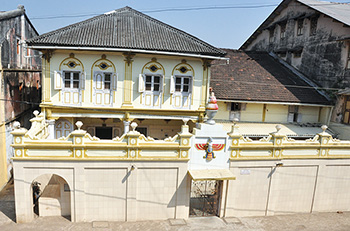
Seth Dadabhai Dhanjibhai and Sorabji Shapurji Gabba Daremeher
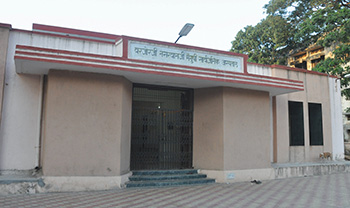
The Burjorji Nasarwanji Mengusi Hospital
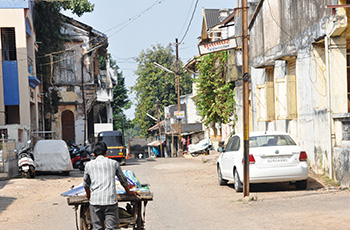
A Parsi mohalla today in Bilimora
We received electricity in 1933. An electric water pump replaced the kos and bulbs replaced kerosene lamps. At first we used only 25 watt bulbs as electric lights were much brighter than the kerosene ones.
Near the bungalow were the servants’ quarters occupied by a couple with five children. They all worked for the family. The girls were around my age and we used to play together. On one visit I found the two girls missing and was told that they were married and had gone away. They were 11 and 12 years of age. The caretaker and family of another wadi belonging to the family a little distance from ours would come over and work for us whenever required. There was also a mehtaji (clerk) to maintain the accounts of the estate and supervise the servants.
Our food was cooked on chulas (stoves) constructed about a foot above ground level and the cook would sit beside them. Wood and dried cow dung were used as fuel. The ash produced was sieved and used to clean our teeth.
Toddy was tapped twice a day, once early in the morning and then again at sunset. Freshly tapped toddy was sweet and refreshing but after a few hours it would ferment and be quite intoxicating. In winter, neera was tapped from toddy trees. It was a sweet drink like coconut water and always collected in a new matka with sakar (sugar). Another winter drink was doodh na puff, a sweetened frothy milk drink. Milk is left in the open during the night covered with a cloth. In the morning it is beaten and the froth which forms is served in tall glasses.
Some of the food specialties of Bilimora were bhujelo bhing (baked shad), levti-no-patio (made with mud hoppers) and sukka boomla (dried Bombay duck). Bhing, a fish somewhat like the hilsa with many small bones, was available only during the monsoons. A two or three kg bhing was stuffed with coconut chutney, covered with leaves and baked over hot embers placed under the ground. That was Smoked Hilsa a la Bilimora. Levti too was available only during the monsoon and was cooked in vinegar and masalas. The patio could be preserved for several days. Achaars (pickles) were made at home under the supervision of the older ladies. Vasanu was a must in winter. It would be so rich that there would be a thick layer of ghee on top. We had the good fortune to eat all these goodies in Bilimora: even while in Bombay we would receive parcels of mangoes and other foodstuff from Bilimora, depending on the season. Food was stored at home for the entire year. Onions, potatoes, ginger, garlic and chilies were stored in the attic. Rice, dal and wheat were kept in tightly closed tin boxes. Tuvar dal was smeared with castor oil to preserve it. These, along with other items like achaars, papads and murabba were stored in a locked room.
Every morning we children were assigned the task of buying eggs. We would stand at the gate of the bungalow with some small change. Village women on their way to the bazaar to sell some meager amount of eggs and vegetables would sell us the eggs. They cost three to five pies each and we would bargain with them to reduce the price. Three pies would make one paisa and four paise would make one anna. Can you believe that we could buy a paper coneful of chana for one pie?
There was a backyard to the house where there was a well and the bathrooms. The toilets were located a few steps further down. Mehters (or harijans as Gandhiji named them) came twice a day. We would never see these sweepers but they would shout out from the rear of the house to the servants who would go and pour water while the mehters cleaned out and emptied the toilet baskets, washed them and lined them with grass and foliage. My family installed sanitation in 1937 in the bungalow, though it was not introduced in the town until 1940.
Our townhouse was in the Agiary mohallo. The houses were built wall to wall with no space between the buildings. Ventilation was only from front to back. All the buildings looked alike as they had been built on the same plan but some were bigger than others. Even today the Agiary mohallo is the only one which is still occupied by Parsis.
All persons with the surname Bilimoria have original family names which they do not use. As there was no high school in Bilimora during my father’s school days, he was sent to Bombay for schooling where he changed his name to Bilimoria. Subsequently, all my uncles followed suit. Some of the original surnames which were later changed to Bilimoria are Doongaria, Bhagat, Dajinoki, Vasikusi, Vasankothavala and Gorji. Present day Bilimorias may be unaware of their original names. My father’s surname was Mengusi and my mother’s was Gabba.
Although my family no longer has any connection with Bilimora, their names will be remembered for years to come. Two colleges stand on a plot of land donated by the Mengusi family. The Mengusi Sarvajanik Hospital was also built by them. The Agiary was built by my mother’s family and is known as Gabba Agiary. It would be a matter of interest to know that the Mengusi Parsi Dharamshala in Delhi was built by my father’s family.
Today Bilimora is partly industrialized but there are only 150 Parsis left to carry on the legacy of their forefathers.
◆ ◆ ◆
From the archive