
Professions
Soda’s “chilled out” boss
A young chef is working to popularize Parsi cuisine through a rapidly expanding chain of restaurants
"Mum used to leave me (as a toddler) in the bedroom to play but I’d crawl into the kitchen and sit on the floor,” recalls 26-year-old 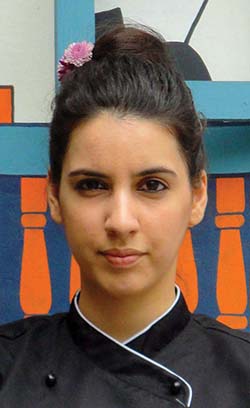 Anahita Dhondy (pictured alongside), Delhi based chef-manager of the SodaBottleOpenerWala (SBOW) chain. She tells Parsiana in a telephonic interview: "I’m so glad Parsi food has become popular and created a name for itself in the restaurant business. Earlier, our cuisine was only associated with going to people’s home for a Sunday lunch, dhansak and beer being a staple, but I think SBOW has been a pioneer in setting up a new fun Irani themed restaurant which serves dishes from Parsi homes and Bombay street food.” SBOW has outlets at six locations — three in the national capital region (NCR) and one each in Hyderabad, Bangalore and Bombay.
The menus at each of the outlets of SBOW are "slightly different as we keep changing, but largely the classics remain — sali chicken, berry pulav, seekh paratha, akoori and the taste remains the same in all outlets as we have standard recipes.” The décor is slightly different in all the eateries, she says, quoting that the Bangalore outlet has a live bakery and the others have functional juke boxes. Referring to the NCR outlets, she states that the Gurgaon restaurant has outdoor seating and the Khan Market restaurant is a two-storied building so it feels more like a Parsi home. "All outlets keep the essence intact. The quirkiness stays alive,” she informs us.
Anahita Dhondy (pictured alongside), Delhi based chef-manager of the SodaBottleOpenerWala (SBOW) chain. She tells Parsiana in a telephonic interview: "I’m so glad Parsi food has become popular and created a name for itself in the restaurant business. Earlier, our cuisine was only associated with going to people’s home for a Sunday lunch, dhansak and beer being a staple, but I think SBOW has been a pioneer in setting up a new fun Irani themed restaurant which serves dishes from Parsi homes and Bombay street food.” SBOW has outlets at six locations — three in the national capital region (NCR) and one each in Hyderabad, Bangalore and Bombay. The menus at each of the outlets of SBOW are "slightly different as we keep changing, but largely the classics remain — sali chicken, berry pulav, seekh paratha, akoori and the taste remains the same in all outlets as we have standard recipes.” The décor is slightly different in all the eateries, she says, quoting that the Bangalore outlet has a live bakery and the others have functional juke boxes. Referring to the NCR outlets, she states that the Gurgaon restaurant has outdoor seating and the Khan Market restaurant is a two-storied building so it feels more like a Parsi home. "All outlets keep the essence intact. The quirkiness stays alive,” she informs us.
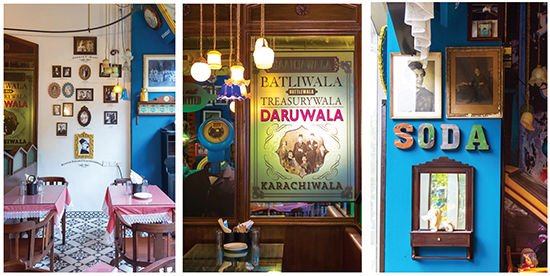
Views of the Bombay outlet of SBOW
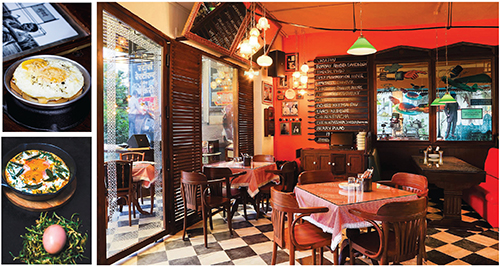
Clockwise from above: a view of the Hyderabad SBOW; bheeda par eeda; Eggs Kejriwal
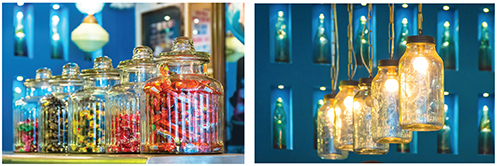
Glass jars (left) and lamps from the Bombay outlet
"Cookery school was something I was really looking forward to after my junior college at Springdales in Delhi,” states Dhondy. She enrolled herself into the four-year Institute of Hotel Management in Aurangabad for the Bachelors’ in Culinary Arts and chose this course as it was a "full-on culinary focused course” (that included aspects of management). "I think the years spent in that college were some of the best years, where I dived into books on all sorts of cuisines, slow food, regional food, food writings…” Revealing that the library was her place of choice to be in, she exults that she "gave it my all, and topped my college at the end of my course.” The course included a year’s internship at the Taj Mansingh Road, in Delhi.
Next came the one-year Grand Diplome (that included both pastry and cooking) at Le Cordon Blue in London, "a school that I always dreamt of going to.” Explaining that it was an extensive 10-hours-a-day, six-days-a-week schedule, Dhondy was in the heart of London with so much to explore but "spent my Sundays at food markets and through the week immersed myself in the kitchen.”
That’s when she turned to Indian and Parsi cooking. "You can’t eat French food round the year,” she states. "I would take home all that I had cooked during the day and spice it up with Indian masalas. I truly missed eating home cooked food,” she recalls. Revealing the details of her final exams, she gave a twist to her submissions: "I used French techniques with Indian flavors,” rustling up profiteroles with crab filling and mango chutney for appetizer, lamb with puris and kaddu (pumpkin) ki sabji for mains and for dessert, a rhubarb mousse with gajar ka halva (carrot pudding).
Originally looking to join a hotel or restaurant chain as a pastry chef, Dhondy landed an interview for that job with chef Sabyasachi Gorai who then headed the Olive Bar and Kitchen which owns the SBOW brand in addition to several other food related brands. He was looking for people for the then nascent SBOW project. "Something clicked,” states the young chef who was "truly fascinated with what they were thinking about, and in four days I joined the team.” Recalling the early days, Dhondy says: "We did a million food trials, menu planning and restaurant set-ups and got everything ready in November 2013.” Admitting that she had very little experience and was "truly thrown into the deep end of the pool,” she exults that she was a chef at 23. Calling the years "frightfully challenging,” she states that she "learnt so much on the job and three years later I am still learning.” Explaining the USP (unique selling proposition) of SBOW, she confirms that the eclectic menu, a mélange of Parsi cuisine, Bohri food, Bombay street food and club items notwithstanding, SBOW is an Irani café at heart. "We are reviving those old cafes that have long gone. It’s fun, quirky and nostalgic.” Continuing that all outlets have the "charms and eccentricities of a Parsi home,” she loves the way it’s been decorated by Sabina Singh, director with Olive, and wife of the founder A. D. Singh, along with architect Clement D’souza.
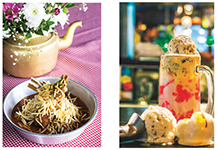
Sali mutton (left) and Irani falooda
As chef-manager her role is primarily in the kitchen, "even though I love chatting with guests and listening to their feedback,” she laughs. Handling quality checks, new recipe development, training of staff and continuous development for them is part of her job description. "If I’m in the restaurant, you’ll find me in the kitchen at lunch and dinner service; I am pushing out orders and even in the sections, cooking dishes as and when needed,” says the hands on cookery expert. "I travel across cities to implement new menus. In the afternoons, I sit at my laptop, work and research new ideas while finishing off some emails, and also taking part in a few marketing and public relations activities like demos and restaurant pop-ups.” Responsible for a total of 75+ chefs across the six SBOW eateries, Dhondy states that she is "part of the hiring process, …I enjoy imparting some of my knowledge before they start working.” She reports to Mohit Balachandaran, designated ‘head masalchi’ (an offbeat designation, using the word that means kitchen help) who is at the head of the pyramid. "He is the one with the ideas and does lots of tastings.”
Dhondy calls Parsi cuisine "one of the oldest to try fusion food … we mixed Irani food with Gujarati (khattu-meethu — sour and sweet), Goan (spicy) with British influences, (soufflés, cakes and all that jazz),” she writes in an email to Parsiana. And sometimes we experiment, explaining the origins of Mango Ravo, a semolina based mango pudding, the recipe of which she sourced from her maternal grandmother.
"We (at SBOW) do a few adaptations, and we also keep some totally traditional. And I do check it on the authenticity scale, and sometimes, yes, we need to tweak, but mostly we keep it simple and homely.” The young culinary professional does not have a particular favorite cuisine, but states she loves Japanese food and often craves for dim sums. "And obviously nothing beats mom’s home-cooked pork vindaloo and her carrot cake.” She picks the Eggs Kejriwal at SBOW as her favorite. "It’s a yummy toast with mushroom, cheese and green chillies, with a fried egg on top. Parsis love it,” she tells us.
Stating that she is a "chilled out boss,” she doubts her chefs would agree to that. "I am particular about hygiene in my kitchen. It’s not easy to educate, but it’s not impossible. I make sure they follow the approved recipes and yet allow a few to be creative.” Twenty-eight-year-old Irani chef de cuisine Danesh Vakshoor at the Bombay outlet who has known Dhondy for the last six months states that she is a very "good natured person … never been rude, even at tense moments.” Sharing that he has learnt how to deal with problems and find solutions "very smoothly,” from Dhondy, his one-word description for her is "friendly.” A sentiment that Deenaz Kooka, business head of the restaurant chain based in Bangalore, the other Zoroastrian in the SBOW world echos, separately in a phone call with Parsiana. Kooka joined SBOW six months prior to Dhondy’s arrival there.
Dhondy states she "hopes to be promoting our food and culture,” long term. "Apparently by 2025 there would be only 25,000 Parsis left” in India she states. (The figure will be closer to 50,000 — editors.) "That thought scares me and in a way motivates me to promote this beautiful cuisine, I hope to keep doing my bit, maybe even open up a place of my own.”
Imminent plans include the release of a yet untitled book which she expects to complete in May 2017 and release at the end of that year. "It is a mix of stories and recipes. I’d say it’s a food journey into the past with trendy new Parsi recipes.” The reader would get insights into the Parsi kitchen, then and now, she states. "I’m doing a lot research because there isn’t much out there for our generation to read and cook from. I want stories to be personal, all intertwined with good food,” she avers.
An admirer of cookery expert the late Bhicoo Manekshaw as "someone I look up to,” she is quick to narrate an anecdote on how Manekshaw stunned the admission committee at the Cordon Bleu Course by dishing up keri parr eedu (egg on mango). The late Dr Katy Dalal, archeologist-cum-cookery expert is another name she admires, as is Niloufer Ichaporia King whose book My Bombay Kitchen she describes as "a stunner.”
"Growing up with the heady aromas of masalas, patias, soufflés, casseroles and cakes which most Parsis homes have a penchant for,” she started her culinary journey helping her mother Nilufer mix cake batters. "I’d insist that I sit and watch her cook, and sometimes even help to stir,” she recalls. Nilufer supplies the Parsi sambhar masala and dhana jeeru masala. "Before the restaurant chain opened its doors, she made these for her clients and distributed from home … now she makes all the masalas for all the SBOW outlets in India … I think it adds a lot of value and tradition because it’s homemade,” states Anahita. Father Navroze is an advertising and marketing professional who runs his own creative agency while brother Kurush is just completing his college. Revealing that she is off in October to Gujarat to "all the small cities which are populated with Parsis to do some research, get some old recipes and talk to as many people as I could about food,” she lets on with a chuckle that she would love to get inputs from Parsiana readers on what she should not miss out.
"On my grandmother’s prayer shelf we’ve got Jesus Christ, Sai Baba and Zarathushtra,” states Dhondy. "We do pray to all of them, and I feel they are all committed to the same purpose: good thoughts, good words and good deeds.” We must do good to receive good, she philosophizes. Stating that she does wear the sudreh and kusti as "it protects us,” though "not as regularly as our parents and grandparents do,” she lets on.
"It’s impossible to force people to get married within the religion, and maybe all the practices like Jiyo Parsi should have been thought of 50 years back,” she states. An advocate of navjotes for offspring of inter-married Zoroastrian women, she feels they should "at least have the option of having their children be Parsis.”
"People who are passionate (about cooking) need no advice,” she avers. For the ones who are hesitant about taking up cookery as a profession, she advises them to "take a little sneak-peek into the industry before joining it ...get a few weeks of an internship, see the back-end work and then make a decision.” It all looks glamorous on the outside but it’s a lot of hard work. "You have to slog it out, but the results are rewarding. Imagine an old uncle smiling at you because you fed him the best chocolate mousse he’s ever eaten? Pure bliss!” she ends, sharing two of her favorite resipes with Parsiana.
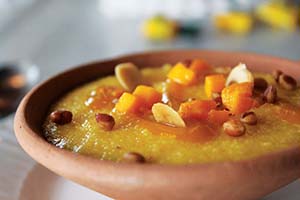
MANGO RAVO
Mango (250 g — fresh, ripe, pureed)
Castor sugar (100 g)
 Desi ghee (30 g)
Semolina (50 g)
Rose water (½ tsp)
Vanilla essence (½ tsp)
Garnish — to taste
Mangoes (chopped)
Chironji dana (toasted in ghee)
Almond flakes (toasted in ghee)
In a pan, add the milk and sugar. Let it heat. Puree the mangoes and keep aside. In another pan, add the ghee, add the semolina. Make sure its not brown but light almond colour. Add the milk, mix well and take off the flame. Add rose water, vanilla essence and the mango puree. Take out in moulds and leave to cool. Garnish with chopped mango, almond flakes and chironji dana. Serve cold.
Mango (250 g — fresh, ripe, pureed)
Castor sugar (100 g)
Desi ghee (30 g)Semolina (50 g)
Rose water (½ tsp)
Vanilla essence (½ tsp)
Garnish — to taste
Mangoes (chopped)
Chironji dana (toasted in ghee)
Almond flakes (toasted in ghee)
In a pan, add the milk and sugar. Let it heat. Puree the mangoes and keep aside. In another pan, add the ghee, add the semolina. Make sure its not brown but light almond colour. Add the milk, mix well and take off the flame. Add rose water, vanilla essence and the mango puree. Take out in moulds and leave to cool. Garnish with chopped mango, almond flakes and chironji dana. Serve cold.
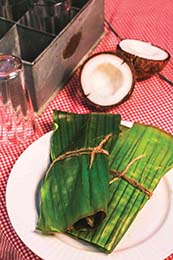
PATRA NI MACHHI
Silver pomfret (1 kg)
 Coconut (250 g — fresh)
Coriander (500 g — with stem)
Mint (50 g)
Sugar (50 g)
Garlic (50 g — peeled)
Green chillies (10 g)
Lemon (60 ml — juice)
Cumin (jeera) (5 g — whole)
Ice water (to blend)
Banana leaves (4)
Grate the coconut fine, and keep all other ingredients ready. Cut the fish into fillets. Marinate with salt and lemon juice and garlic paste. Keep for 1-2 hours. Blend all the ingredients for the chutney. Keep aside. Soften banana leaves on gas flame, and then cut away the stalk and cut into squares large enough to wrap the fish pieces.
Once everything is ready, arrange the leaf on a clean surface, apply chutney and place the fish and top with chutney. Pack the fish parcels with the help of a toothpick or string. Steam in a rice cooker, or an idli steamer for 15 minutes till the fish is cooked. Serve with onion rings and garnish with lemon. This can also be served as a main course.
Silver pomfret (1 kg)
Coconut (250 g — fresh) Coriander (500 g — with stem)
Mint (50 g)
Sugar (50 g)
Garlic (50 g — peeled)
Green chillies (10 g)
Lemon (60 ml — juice)
Cumin (jeera) (5 g — whole)
Ice water (to blend)
Banana leaves (4)
Grate the coconut fine, and keep all other ingredients ready. Cut the fish into fillets. Marinate with salt and lemon juice and garlic paste. Keep for 1-2 hours. Blend all the ingredients for the chutney. Keep aside. Soften banana leaves on gas flame, and then cut away the stalk and cut into squares large enough to wrap the fish pieces.
Once everything is ready, arrange the leaf on a clean surface, apply chutney and place the fish and top with chutney. Pack the fish parcels with the help of a toothpick or string. Steam in a rice cooker, or an idli steamer for 15 minutes till the fish is cooked. Serve with onion rings and garnish with lemon. This can also be served as a main course.
◆ ◆ ◆
From the archive