
A daughter’s reverie
Maja Daruwala, daughter of the late Field Marshal Sam Manekshaw (pictured) who passed away on June 27, 2008 at the age of 94, describes the many videos about Parsis which are sent to her by friends as "bittersweet gestures of affection... tinged with regret that seems to mourn the inevitable passing away of our tiny community,” in a special piece she wrote for The Indian 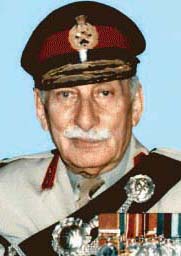 Express of June 27, 2016. One little video came with the message "You should be proud.” While watching it with "only tepid interest” she saw the usual galaxy of names appear "in blazoned heroic script... and realized I was mildly miffed at the producers who had missed one name.”
As the video "buffered into its last five seconds... I felt my chest tighten and my eyes prick as I remembered the missing man. He had meant so much to us. Eight years dead this week, he was still right there at every family gathering, lighting up the room with silly teasing and laughter, telling funny stories...”
Her reverie reads: "He taught us the names of all the flowers in the garden and read us Scheherazade stories from the Arabian Nights. Then wickedly played king. My sister was the favored and beautiful Lal Pari, I the ugly sidey grateful to be included. When we asked what our mother was he’d say airily: ‘Oh she’s the lady in waiting — waiting for everything.’ He loved being the hero and would post us scurrilous detective stories at boarding school. In the hols, I complained to my aunt that no one believed the letters were from my father and she cried out ‘Bhai, you’re still doing the same thing!’ She had been an early victim in their school days.
"He had enthusiasms and dragged us willy-nilly into them because they had to be shared by everyone around. So my mother, straw hat on head, walked across the winter sun field near Delhi while he shot quail and joined the locals in chai on the khatia (string cot) after. At home, my sister wiggled hot and impatient under studio lights while he perfected the angle of his tripod camera. At the race course, he taught me to feed our one-fourth of a race horse with an open flat hand so I wouldn’t get bitten. It mattered not at all that First Entry never won a race.
"In Ferozepur, the huge grounds of Flagstaff House turned him farmer. So we all dug potatoes out of the ground, picked cotton and felt how aniseed tasted right off the stalk. In Mhow, he battled the cook for suzerainty over the kitchen and competed with him to show he could make the best tasting chola (chickpeas) ever – for breakfast! In Coonoor, it was trout fishing and endless hours fiddling to just find the right rods and reels and being coaxed into spearing live bait on to hook because he wasn’t going to do it.
"Then it was milch cows. We had to have them. All the houses along Porter Avenue got milk at the same price for 20 years. Meticulous accounts were kept. The grandchildren got the 6 a.m. milk run and my mother got to name the animals: Rose (naturally, what else can you name a cow?), then Rose Bud, then just Bud, then Bud Bud. Until the Gorkhas put their foot down and only a minimal cow was allowed to remain on the premises.
"He loved being loved and retired hurt one time when our long time charioteer, cook and Gorkha agreed that ‘hamari madam jaisa koi nahi (there’s no one like our madam.)’ He wasn’t expecting it. Beyond the jesting, there was wisdom. ‘You must spoil your children and spoil your children but they must never get spoiled,’ he’d say.”
Then the video began to play and Daruwala was roused from her reverie. "At last I was face to face with the last name and portrait. We looked at each other and I realized I wasn’t looking for the great man at all but for the funny, handsome, brave father whose face lives behind my eyes — always.”