
“A name to reckon with”
As Zoroastrian Bank enters its 90th year, chairperson Homai Daruwalla intends to expand the institution’s network of branches and also grow by acquisitions
 taking over the seat at the helm of the Bank after "probably the first keenly contested election” in the institution’s 89-year-old history. A career banker with over 33 years of experience with various public sector banks, Daruwalla believes she has much to contribute to "this important Parsi legacy of ours.” Letting on that ZB needs to benchmark itself against Saraswat Bank, the bank with a business mix (deposits plus advances) of Rs 50,000 crores, she says, "I am more concerned with who is above me, not those who are in the same league as us,” she quips.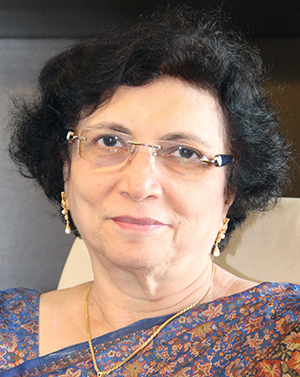
Listing her priorities, Daruwalla states that "making ZB a name to reckon with” tops her to-do list. For that, she states she needs the staff members to buy into her vision of where she wants to take the Bank. Employees "need to realize that change is inevitable,” says the seasoned banker, and at the same time, "I need to cultivate a sense of belonging (in the staff) to the Bank … Business development needs a thrust too,” she mentions.
Non-performing assets (NPAs), which are the bane of most banks across all sectors and geographies, are not a matter of concern to ZB, according to the incoming leader. "We only have 12 accounts totaling less than five crore rupees that are bad.” All bad loans are fully provided for, sometimes even more than statutorily required. "We are careful to dot the ‘i’s and cross the ‘t’s, when funding customers,” she affirms.
"With Homai Daruwalla taking over the reins of the bank as a chairperson … I see a very bright future for our Bank,” says Hilla Avari, who retired as senior vice president, marketing and business development from ZB in 2011 after a career spanning 17 years. She is all praise for Daruwalla’s "micro-management.” Avari, who was one of the unsuccessful contenders for a seat on the board in the April 3 election, in a telephonic interview with Parsiana, followed up by an email said that the idea was "to replace some of the … directors with professionally qualified and highly experienced bankers.” Bothered by the alleged "gradual exodus of respected HNI (high net worth individuals) borrowers and depositors cultivated over the years,” and the claimed "lack of trained staff and total demoralization,” Avari attempted to put together a team of alternative names for the directorship, none of whom were successful.
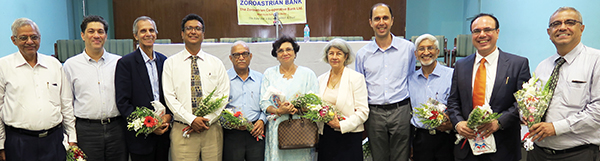
A pamphlet circulated by Zoru Bhathena, another unsuccessful contender referred to an alleged loss of existing customers and inability to attract new ones due to ZB reportedly offering "one of the lowest rates on FDs (fixed deposits) in the market.” With comparative tables to reportedly show the slow average yearly growth of ZB at eight percent as against 13-24% by other banks, Bhathena also complained of alleged poor service due to a demoralized staff and the fact that the Bank had its first ever strike in 2014, a situation he wanted to change had he been elected to the board. All but 45 of the staff of the Bank are unionized.
The board of directors met on May 25, 2016 to discuss the financial results for FY (financial year) 2015-16. According to an email received from the Bank, they "achieved a total business mix of Rs 1,472 crores as of the year end, with deposits at Rs 887 crores and advances at Rs 585 crores with a growth of around six percent and 11% respectively over the previous year’s performance.” Profitability stunted from Rs 19 crores for FY 2014-15 to Rs 18 crores for the current year due to lowering of interest rate in certain advances accounts, wage revision and higher cost of funds.
Shernaz Mehta, director at ZB for 23 years, and chairperson of the board for two-and-a-half, states the Bank’s recent growth is "not spectacular … is steady and our balance sheet strength is determined by the fact that we have less than one percent Gross NPAs, which is excellent compared to our peers.” She states in an email to Parsiana that she has "voluntarily given up chairmanship in favor of (the) very capable Homai Daruwalla” and she is sure that "with her years of experience ... (she) will lead the Bank to greater heights.” At the request of majority board members, she has "agreed to continue to give my services to the Bank in my capacity as a board member.”
Take Bank northwards
Daruwalla who feels "well settled” states she has "met 12 branch managers already.” She elaborates that this (financial) year she is "not pushing too hard…I have accepted all their targets… I have communicated what I expect in the coming months.” She has been meeting the statutory and internal auditors regularly. While it may be too early to share concrete plans, she informs us that the Bank is "looking towards adding 10 more branches in the next five years, and possibly another 20 more by 2025.” Currently focused on downtown Bombay, the western suburbs, Surat and Poona, the Bank is planning to open "more branches in the central suburbs of Bombay,” she notes. She is also "exploring the possibility of takeover of other banks.” Not wanting to "rush into things blindly,” Daruwalla avers that "all I know is that I must take the Bank northwards.” A big no to hasty steps, says the prudent banker in her. She wants to "add value on a day-to-day basis to the Bank’s operations.”
Daruwalla has been referred to in the media and by her ex-colleagues in the various banks she has served, sometimes with uncomplimentary references to her firmness as a leader. "I know I have been called Hunterwali (after the stunt-movie queen of yesteryears, Nadia) and Jhansi ki Rani (a reference to the warrior-queen who played a role in the First Indian War of Independence in 1857), but I had a job to do, so the names did not bother me.” Letting on with a smile that she was also likened to prime ministers Indira Gandhi and Margaret Thatcher, "which was okay,” she mentions that "people should know that I am not ruthless with them individually, but rather annoyed with what went wrong.”
"The very first Zoroastrian community bank,” as described in a write-up received by Parsiana, ZB was founded in June 1927 under the Cooperative Societies Act, with an authorized capital of Rs 10 lakhs by Sir Hormusji Dinshaw, a businessman whose family made its fortune in the British colony of Aden, along with a group of forward-looking individuals. As ZB enters its emerald jubilee year, the Bank’s net worth stands at Rs 130 crores. Fifty-two years ago, ZB expanded its scope to non-Zoroastrian clients too. The erstwhile cooperative credit society was converted to a cooperative bank in 1994 and in 2003 acquired the status of scheduled cooperative bank from the Reserve Bank of India (RBI). With the acquisition of Citi Cooperative Bank in Surat, ZB was reclassified as multi-state scheduled cooperative bank in 2013. "We are small, but very powerful,” says Daruwalla about the Bank, "but we do have to augment our (financial) numbers.”
Uday Shetye, managing director and chief executive officer informs that today 60% of its depositors are Zoroastrians, while the borrowers are "split 50-50 between Zoroastrian and non-Zoroastrians.” Daruwalla is unhappy that "less than one percent of its business comes from overseas Zoroastrian communities,” a fact she intends to correct by reaching out to the overseas associations. She wants "every Zoroastrian to know we are there for them.” Of the 238 staff members on the rolls, 38% are Zoroastrian, says Rajesh Sheth, general manager, explaining that the percentage of non-Parsis rose after the acquisition of the Surat bank as most of the staff members there are non-Zoroastrian.
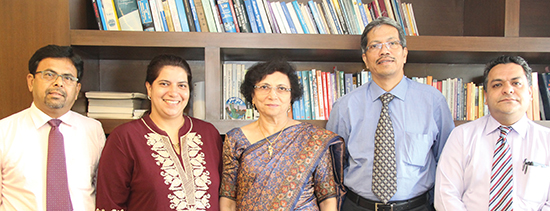
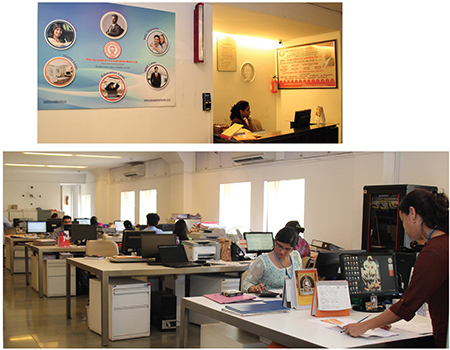
Views of Zoroastrian Bank’s Bombay corporate office
"I require the support of every staff member,” reiterates Daruwalla. "There is no ‘I, me and myself’ in my dictionary; it is always ‘we, us and ourselves,’” she asserts adding that in order to ‘listen’ effectively to employees, their IT team is building a portal for those who wish to communicate directly with her, and also make suggestions for improvement in processes and profitability.
While transacting online has been enabled by the Bank via RTGS (Real Time Gross Settlement system) and NEFT (National Electronic Funds Transfer), full-fledged Internet Banking and Mobile Banking will be rolled out in the current financial year, reveals Daruwalla. The systems are being tested currently by independent IT (information technology) auditors, mentions Shetye.
Yazdi Tantra, chairman of the technical committee of the Bank since 2006 and vice chairman of the board since September 2013 explains that "as compared to our competitors of approximately equal size, we are very well-equipped on the technology front,” and adds that ZB is "looking at delivering an app (application) for usage by our customers on their smart phones, subject to RBI compliances and approvals...
"Our customers have experienced hardly a couple of hours of downtime, which is comparable to, or sometimes even better than, the best private banks in the industry,” he states in an email to Parsiana.
Daruwalla, who started her banking career in 1975 at Union Bank of India, sees a "sea change in the way banking is carried out now.” The focus then was on deposit collection, rather than lending. Regulatory overview of the banking industry helps banks remain healthy, she believes. Shetye mentions that there are no significant privileges for cooperative banks in India vis-à-vis public sector or foreign banks.
Banking on a future
Explaining how she embarked on her career, 67-year-old Daruwalla states that when she completed her chartered accountancy examination, Union Bank was one of the few organizations that "took in freshly qualified accountants in the highest grade of management.” A friend named Kersi Gandhi was adamant she join that bank, and sought out her late father Ardeshir at Life Insurance Corporation where he worked, to persuade him to get his young daughter to join Union Bank. Which she did, and rose to be general manager there. Also having served as managing director of Oriental Bank of Commerce, she was chairperson and managing director of Central Bank of India from June 2005 to December 2008 (See "A Centralizing force,” Parsiana December 21, 2005).
Her past assignments have included membership of the central subcommittee on concurrent audit of banks of the Institute of Chartered Accountants of India and also membership of a committee on risk management practices formed by the Indian Banks Association. Daruwalla continues to serve as independent non-executive director in about half a dozen companies. "I was dedicated, dexterous in my duties and diligent,” she says of her long stint in the banking industry.
Daruwalla’s family now comprises her 88-year-old mother Rati, younger siblings Ketayun, now retired from a career in the travel industry, and Vistasp who was a marine engineer and is now in administration. An ardent devotee of the Zoroastrian ethic of hard work, Dauwalla states that banking jobs are challenging. "You really have to use your brains,” and at the same time "take advantage of the inherent trust that the community enjoys.” She admits to "not being too open minded.” Of Zoroastrian women who marry outside the community, she says, "You cannot have your cake and eat it too.” Inter-faith marriages are okay if the individual wants to take that step, "but then she should not ask for benefits as a Zoroastrian,” is her statement on the subject. A regular visitor to fire temples, she says: "I begin my day with a short prayer, ‘Dadaji, aajé kai bhi khottu thava na déta’ (God, do not let me do anything wrong today).”
Those elected to the Board in the April 3 elections were Homai Daruwalla (1,194 votes), Shernaz Mehta (1,096), Homa Petit (998), Mehrab Irani (863), Manek Kalyaniwalla (837), Aspi Kathawalla (830), Yazdi Tantra (827), Farhad Choksey (822), Saroosh Dinshaw (819), Phillie Karkaria (807), Dhanoo Khusrokhan (753), Firdos Shroff (738) and Jimmy Panthaky (710).
The following candidates also contested but were unsuccessful: Hilla Avari (695 votes), Tehmasp Bharucha (602), Maneck Bhathena (583), Noshir Paghdiwalla (556), Cyrus Digaria (535), Zoru Bhathena (494), Zeree Jehangirji (480), Bakhtyar Saklatwala (467), Neevia Bhathena (381) and Urvax Dhanda (171)
Daruwalla, former chairperson Mehta and Neevia Bhathena were contesting in the category of women directors.
Another existing co-operative bank founded by a Zoroastrian is The Sardar Bhiladwala Pardi People’s Cooperative Bank in the town of Killa Pardi in South Gujarat. Started by Sardar Khan Bahadur Vikaji Pirojsha Bhiladwala on January 1, 1930, the second branch was established in Vapi in October 1933. With 11 branches at present, mainly in Bulsar district of South Gujarat, the newest branch was set up in Dharampur in South Gujarat in August 2015.
The Bank which acquired the status of a scheduled bank from RBI in 2000 lists 18 directors, including one Zoroastrian, Aspi Sui on its website. According to the website, the Bank had deposits of Rs 582 crores and advances of Rs 358 crores as on September 30, 2015.