
Banking on change
Technology is changing the way banks function
A chartered accountant and information technology entrepreneur, he foresees that the Bank will be "four to five times its current size in 2030. Instead of clients visiting a bank, the bank must reach out to the clients, physically and electronically. We need to upskill, embrace technology and learn new ways of doing business, to keep pace with the rapidly changing environment. The banking industry is undergoing a major change,” he said.
"Yes, it is difficult for a 94-year-old (institution) to change and old habits die hard. Our focus is on people and technology and in both these critical areas, change we must, and change we will,” the chairman emphasized in an email to Parsiana dated October 27, 2021 and a follow-up interview in the conference room of the Fort Branch of the Bank on November 11. "Change takes time and perceptive changes will be visible in the next few months,” he added.
ZCB’s annual report for the year ended March 2021 mentioned that the "Bank will lay special emphasis on training, upskilling of existing employees and also recruiting new talent to enhance productivity.” Added Tantra, "We are working on a holistic plan to motivate and train our existing staff in behavioral and technical skills. New, experienced talent will be assimilated into our traditional, conservative culture to get the best of both worlds. We are working towards an honest, tech-savvy way of doing business. We are also looking at grooming talent at the grassroots level, as trainees, for building our future teams.”
Plans are on to upgrade internal systems. The Bank is "in the process of a revamp, both in terms of speed and efficiency. Once this is achieved, all our stakeholders — customers, staff, suppliers and shareholders — will reap the benefits of improved performance, satisfaction and returns.”
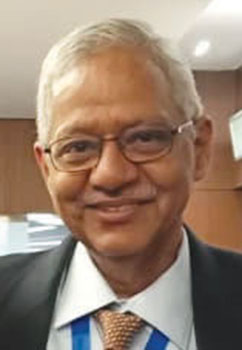

Tantra took over the top spot in the midst of the second wave of the pandemic. "It was a difficult time for the Bank… In an industry like ours, if our clients suffer, we also suffer. Apart from (lack of) new business, there were challenges in maintaining our level of services for even existing clients.” With restrictions on local travel, "it was very difficult for our staff to reach their respective workplaces…It is to their credit that we were able to run all our branches continuously,” he observed. At a few branches, services were suspended when Covid showed up at their doorstep. "Yes, it was a challenging 18 months,” the chairman summed up. Staff strength has remained more or less static at 230, he noted.
Tantra took over as chairman in March 2021after 15 years with the Bank in various capacities. He qualified as a chartered accountant in 1979 and worked with Tata Power, Lakme and Mazda Industries. He founded his information technology company Onlyne in 1989, which has now morphed into three companies: Y Tantra and Company which provides software consultancy, Onlyne Computer Systems which provides website hosting services and Onlyne Comtech India Private Limited which provides hardware services. Tantra stated that none of his companies currently provide services to ZCB.
Phillie Karkaria, fellow of the Chartered Institute of Management Accountants (CIMA), London who has served on the board of the Bank since 2014 and was the previous audit committee head, has been appointed vice chairman. A commerce graduate from Bombay University, Karkaria has served as a member of CIMA’s governing council for nine years, he noted. He has studied and worked in the UK, UAE and for the last 27 years in Bombay with Tatas, before retiring in November 2013. Karkaria said he serves as independent director on a few other boards as well.
Other directors, who will serve a five-year term include former chairwoman Homai Daruwalla, Shernaz Mehta, Saroosh Dinshaw, Dr Firdos Shroff, Manek Kalyaniwalla, Aspi Kathawalla, Bakhtyar Saklatwala, Hormazdiyaar Vakil, Noshir Paghdiwalla, Viraf R. Mehta, Zubin Billimoria and Smita Tambe.

To the customers’ credit
There have been recent changes to the Banking Regulations Act mandating stricter reporting norms, controls on key appointments, and fines for shortcomings for cooperative banks. "In the six months to June 30, 2021, the Reserve Bank of India (RBI) imposed penalties on 51 cooperative banks compared with 23 in 2020 and just seven in 2019,” reported news website livemint.com, July 1, 2021. Karkaria noted that "we are audited regularly by the RBI through an annual inspection. In addition, there are concurrent audits, internal audits and statutory audits. This exposes us to ensuring a stable, customer friendly environment with continuous scope for improvement.”
Explained Tantra: "They want us to make the same amount of investment in infrastructure and security as the larger players… That becomes a burden… Our governance structure and cyber security infrastructure will need a major revamp.
"Once we incorporate cutting edge technology into our day-to-day operations and boost volumes, our offerings will be equal to any other banking institution — customers should find the same ease in doing business and delight with us as they would, with any other financial institution,” he added.
Tantra is proud of the Bank’s sound financial policies. He pointed out that ZCB has a healthy Capital to Risk Assets Ratio of 24% as against the minimum statutory requirement of nine percent. "This healthy position arises out of our conservative policies. We have been extremely cautious in lending to only financially sound clients… We have also built up reserves through conserving our resources while the going is good… This will stand us in good stead over the next few years.”
 On the other hand, deposits at March end were more or less constant at Rs 1,177 crore (previous year Rs 1,143 crore) and advances to clients actually shrank from Rs 534 crore to 415 crore. "Many other banks, especially cooperative banks, saw a steady decline in deposits during the pandemic. In spite of a hugely adverse economic situation, our depositors and loyal customers had faith in us, and our deposits have grown marginally during the pandemic….With our conservative policies we did not lend to weak businesses during the difficult times… We, however, got a major portion of our repayments on time.” The chairman ascribed the increase in non-performing assets by 27% to the "failure of a few large accounts.” A non-performing asset is a loan given by a bank that is subject to late repayment or is unlikely to be repaid by the borrower in full.
The one factor that Tantra is proud of is depositor loyalty. "This was a year we paid no dividend…yet we had people wanting to buy shares in the Bank,” he stated, adding that though their depositors were largely community members, Parsis "did not form the majority of their borrowers.”
Karkaria noted that "the future of the Bank is good but we need to move with the times and have a progressive outlook on banking… Competition is fierce in the current environment. We also need to grow in line with the market, lest we be marginalized. Strong internal controls need to be ensured at all times… (We need) a well-structured succession plan which encapsulates the entire organization. As we move ahead in time, our endeavor would be to ‘future proof’ the Bank to meet these challenges.”
What are the challenges ahead for the Bank? "We have to expand our risk management structure,” stated the chairman. "Currently we are looking only at credit risk of borrowers closely…We need to look at the risks associated with our markets and our operations more closely. Our greatest challenge is to achieve all the changes planned for in an ethical manner in the minimum amount of time and emerge as a nimble-footed 100-year-old in the next few years.”