
Law
“Without fear or favor”
Fellow judges and others recalled the personal and professional side of the late Chief Justice Sarosh Kapadia
The former Chief Justice of India (CJI) Sarosh Kapadia was not the recluse he was made out to be, said several speakers at a condolence meeting for the late jurist convened by the Bombay Parsi Punchayet (BPP) on January 29, 2016 at the Indian Red Cross Building. He "attended all the functions of the Bombay High Court (BHC),” stated former Supreme Court (SC) justice Sam Variava. When initially appointed to the SC, Kapadia stayed with Variava till his official bungalow was ready. "He told me he met more people during those days than he had met in his entire life!”
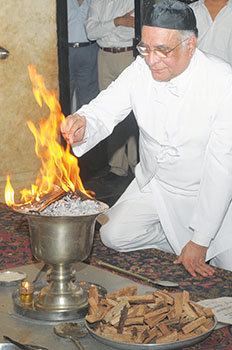
Justice Sarosh Kapadia
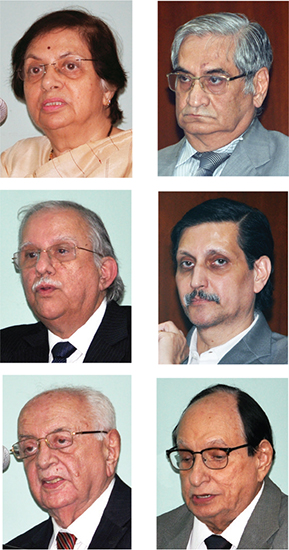
(Clockwise from top left):
Justices Sujata Manohar, Sam Variava,
Yazdi Desai, Dadi Engineer,
Godrej Dotivala, Homa Petit
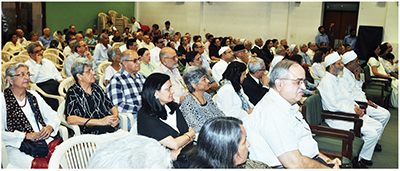
Audience
Kapadia "did not believe in the Parsi peg,” Variava added. "He never tasted liquor” and stuck to "soft” drinks. The CJI "read voraciously on all subjects.” He came early to court for "the peace and quiet...and not to be disturbed” while working, having read "all the case papers” before the hearings. He read novels in English, Hindi, Marathi and Gujarati. He had a "vast knowledge of many subjects.” He walked every day for an hour.
Referring to his sense of propriety, Variava noted that both parties in the priests ban case agreed to have him as a mediator despite his orthodox, religious leanings. Kapadia declined the assignment which was finally successfully mediated by former SC Justice Sujata Manohar.
Manohar noted that Kapadia took office at a time "when the country badly needed a Chief Justice who would inspire confidence.” He acted "without fear or favor.” Kapadia was a labor lawyer and, Manohar noted, "it was difficult for a labor lawyer to be appointed a judge of the BHC.
Lawyer and former BPP trustee Dadi Engineer said Kapadia was "a devout Zoroastrian” and had "a fierce desire to do justice. What stood out was his humility.” In Delhi he refused dinner invitations from fellow judges on the grounds that " if we were on the same bench it would be embarrassing to differ.” When Engineer once thanked Kapadia for a favorable judgment, he replied, "Don’t thank me. Thank the almighty who gave me the wisdom to decide on the case.” Of him people will say, "He was a just judge.”
Lawyer and B. D. Petit Parsee General Hospital president Homa Petit pointed out to Kapadia while driving around in a car that the secret to living correctly was written on traffic signs everywhere, "Keep right.” Kapadia agreed and added, "There is no right way to do a wrong thing.”
According to Petit, Kapadia viewed "tradition as a sacred trust... Prayer opens the heart to God’s grace... He believed you could not attain the shrine without undergoing the pilgrimage.” Kapadia told Petit that whenever Petit was in Delhi to give him a call and have a cup of tea with him, but "not if you have any matter before me or my bench!” He believed "a judge must choose to be a little aloof.” Having known him since the early 1970s, Petit knew Kapadia had "only one dream: to become a judge.”
BPP chairman Yazdi Desai spoke of Kapadia’s "abiding faith in Zoroastrianism.” Even as a CJI he was not embarrassed to state "I am proud to be a Parsi.” He referred to Kapadia’s wife Shernaaz without whose support the judge stated he "would not have reached where I am,” and the Justice’s brother Kurush who looks after their aged parents permitting Kapadia to travel and attend to legal issues.
BPP public relations officer Godrej Dotivala who compered the event then read out a resolution which stated, Kapadia "had the singular distinction of being the first Chief Justice of the Supreme Court of India to be born after our country attained independence…”
◆ ◆ ◆
From the archive