
Charismatic killer
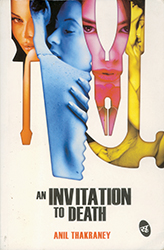 Anil Thakraney’s An Invitation to Death is a face-paced thriller. The murderer is Darius Irani who, using his charismatic personality, lures young and beautiful girls into his snare and murders them in an extremely cruel and vicious manner. He skillfully evades the police and the CBI (Central Bureau of Investigation) and has great success in managing to stay one step ahead of the law.
It is curious to note that Thakraney has chosen a Parsi to be his murderer; the community has long had the reputation of being peaceful, non-violent and law-abiding, though it has produced some murderers, albeit few and far between.
Irani is a strapping young man who is endowed with many excellent qualities. He is humorous and is the life and soul of his drug addict group; he entertains them and, as a result, never seems to pay his share. He is charming and impulsive and manages to attract with great ease and in a suave manner the young girls he murders. His crimes follow a set pattern: all his victims are young girls, all die from a head injury and all the bodies have been dismembered. None of the victims have been raped or sexually violated, but all are marked with semen on their faces and have some foreign object forced into their genitals.
The problem with serial killers is that their modus operandi is similar. Whether the victim is an English girl in India helping with the launch of a lifestyle magazine or an unhappy wife or a computer professional, most of the murders seem monotonously similar.

What is more interesting is Thakraney’s portrayal of the police force. He presents the policemen as ordinary individuals with often depressing marital lives and their visits to prostitutes, the hard drinking, the camaraderie in the police force and a mutual dislike and suspicion of the CBI. They are caught between politicians, who are insistent that the culprit be apprehended at the earliest, however difficult the task may be, and the Press, which continually hounds them for information on the progress they have made.
The seeds of Irani’s criminal mind lie in the sordid household in which he has been raised. His father has died under mysterious circumstances and his mother lives in abject poverty, unable even to afford a new refrigerator. It is in this domestic set-up that the bright and intelligent boy who was reading Shakespeare, Hawking and Tagore when his contemporaries were struggling with Tintin and the Hardy Boys, suddenly metamorphozed, when he turned 18, into the future criminal. One may not feel that Irani’s behavior is justified on account of his childhood, but Thakraney certainly gives a twist to the ending which makes the novel an interesting read.