
Books
Tortuous tale
P.S. I Love U, Mon Ami by Amor. Published in 2012 by FastPrint Publishing, Peterborough, England. Pp: iv+155. Price: £ 7.99, US $ 13.40.
It is very difficult to review a work like P.S. I Love U, Mon Ami by Amor, a pseudonym adopted by Dr Hufrish Taraporewala. We are not sure if it is to be read as fiction or as an autobiography. It seems like an autobiography as it is written in the first person and has received fulsome praise and acknowledgement in an Introduction by Pierre Russo. But a first person narrative is not an indication of an autobiography and the Introduction could be part of the fiction.
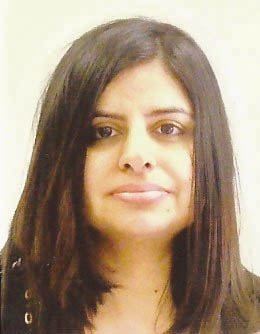

Dr Hufrish Taraporewala: fact or fiction
The book centers around Amor, a woman from a well-established and apparently wealthy family who moves from Bombay to Paris to join her husband. Dispelling her initial doubts she decides to go ahead with her marriage. After a blissful and idyllic honeymoon in Amsterdam, she finds that the man she has married is merely after her money. She suffers untold horrors at the hands of her husband and his family. She is forced to consume rat poison, she is hounded by goons who have been appointed by her husband to assassinate her and her toes are broken.
She seems to be alone in this dreadful situation. Her own mother, who comes to Paris to look after her, gets too close to her husband for comfort; Amor doubts her mother’s affections and even suggests that the latter had lured Amor into the "assassination attempt.” The poison she ingests leaves Amor "brain dead” as a result of which she is in a semi-comatose condition during which phase she appears for an English examination and scores the highest possible marks. If there was "no brain activity” as she suggests, it stretches the reader’s imagination as to how she could, in such a condition, pass her English exam with honors and get ready for a "trim.”
The novel shifts abruptly between Bombay and Paris and one is never sure in which city the incidents are taking place. Amor often switches from one sentence to another and it is very difficult to see the coherent connection between the two. If her husband was poisoning her in the first place it does not seem logical that he would consult an "expensive Irani healer.” If he is forced, it is not clear who compelled him to do so.
We are also confused as to her profession. At one time, we are given to believe that she was working in India as a neurosurgeon and was even in the process of taking her exams to qualify and practise in Paris. However, later she informs us that she had diversified into Information Technology and was studying web designing in a "renowned computer institute in Mumbai.” We are given to understand, that she even assisted in setting up the cyber crime cell of the Bombay police. A few pages later, Amor is managing a nongovernmental organization to provide free health education for all where her boss and his wife were involved in a medical racket. Towards the end of the book, one is told that she was trained by the British Broadcasting Corporation and ran a top-rated Indian PR firm.
The account is peppered with several pithy sayings. Her biological father died when he was 62 and this is followed by the idiom, "Those whom the GODs love die young.” Whereas 62 is probably not a ripe old age, it is certainly not "young.” The only pillar of strength in this chaotic life is a police officer called Adam Matthews who she constantly refers to as "daddy dearest.” There are frequent references to his honesty and upright character. Thanks to him she seems to have the entire Bombay police as well as the anti-terrorist squad at her beck and call.
The book stretches the imagination of the reader to unfathomable extents. Like most self-published books, it could do with some more skilful editing.
◆ ◆ ◆
From the archive