
Books
Painful prose
The Phoenix of Persia by Jhangir Kerawala. Published in 2014 at Unicorn Books, F-2/16, Ansari Road, Daryaganj, New Delhi 110001. Pp: 239. Price: Rs 295.
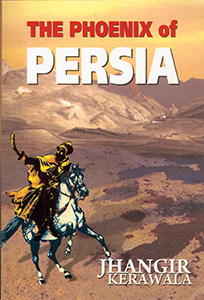 The reading of Jhangir Kerawalla’s The Phoenix of Persia can be described in one word: Torture.
The grammar is bad. Idioms are wrongly used. The language is convoluted. It is almost as if Kerawala did his thinking in Gujarati and then put it down in English. You have sentences like "in a short period of four years 10 monarchs changed hands.” What, pray, is that supposed to mean? The author talks of it being "a strange sight to see this unusual human being lying in bed. Almost a foot of his feet stretched out of his bed.”
Tenses change from past to present and present to past. And not just in the same paragraph: often they change in the same sentence. Unfortunately, that is not all that changes. The point of view also changes. Which is fine when the writer wants to express something from another character’s perspective. I quote: "‘I’m okay,’ I muttered.” The reader is all set to think the story will continue from the character Zahl’s perspective. But no! Half a dozen sentences later it goes back into the third person: "‘God!’ exclaimed Zahl.” And while I am on the subject of changes, the hero Jamshid’s friend Ardeshir’s name changes, for some inexplicable reason, to Asfandyar. I went back and forth a few times to try and find out who this character was, then decided that Kerawala had either changed the name or someone had goofed in the proofreading.

Jhangir Kerawalla: back and forth
Similarly, the spelling of the name Xerxes changes to Zerzes and back to Xerxes, that too on the same page. OK, so it was a mistake. But a little later it happens again. This time the spelling has changed to Zerxes! Kerawala has set out to write what one can best describe as an adventure story. There is one sequence in the beginning of the book that baffles me. Why in God’s name would Ahura Mazda (I presume the character is Ahura Mazda because if it is anyone else, it makes even less sense) appear to a seven-year-old and tell him "If they don’t allow you to be Zarthoshtis here, then go someplace else where they will.”
As if a seven-year-old is going to be able to do anything about it!
On the back cover is a statement and I quote: "The book is excellently written, the plot is gripping and unfolds smoothly.”
Gripping? Unfolding smoothly? I don’t think so. As for being excellently written, it is anything but.
Read the book. You might even enjoy it if you can overlook the bad English and grammar and the mix-ups. Me? I found it… well, to quote from Kerawala’s book, "the least said about it the better.” (sic)
As if a seven-year-old is going to be able to do anything about it!
On the back cover is a statement and I quote: "The book is excellently written, the plot is gripping and unfolds smoothly.”
Gripping? Unfolding smoothly? I don’t think so. As for being excellently written, it is anything but.
Read the book. You might even enjoy it if you can overlook the bad English and grammar and the mix-ups. Me? I found it… well, to quote from Kerawala’s book, "the least said about it the better.” (sic)
◆ ◆ ◆
From the archive