
Books
Murderous machinations
Maut, The Birth of Death by Behram Ardeshir. Published in 2013 by Jufic Books, an imprint of Leadstart Publishing Private Limited, 1 Level, Trade Centre, Bandra Kurla Complex, Bandra (East) Bombay 400051. Pp: 310. Price: Rs 175.
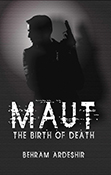 Behram Ardeshir’s Maut, The Birth of Death is, as the title suggests, a collection of violent episodes all ending in multiple deaths. There are eight "chapters” and it has been described as "fiction/thriller.” However, the chapters which I suppose were intended to form part of a novel seem to be eight independent and very violent occurrences. The novel seems to be a collection of incidents full of blood and gore as it does not have any sustained plot, just a series of brutal and sadistic events. Evidence is seen when suddenly in the second last chapter, the author decides to re-introduce us to Maut mentioning he is the most deadly assassin on the planet, a fact we are well aware of by now as in each of these episodes Maut, like Superman, fights against various opponents always succeeding even when it is a question of taking on more than 20 armed men or battalions of the Russian army.
He is, as his name suggests, an angel of death. We are told that he could have "been anything he wanted; a sportsman, lawyer, doctor, politician, actor.” However, in the novel we only get proof of his being a sportsman — as he can outrun anyone who pursues him — and an actor, as he changes his appearance from time to time to outwit the authorities who are trying to catch him or the villains whom he is pursuing.
But one must suppose he is a Robin Hood figure trying to get rid of corruption, vice and thugs. After all the horrifying descriptions of death, it seems ironic that the book is dedicated to world peace with the moral that violence begets violence. This seems to be in contradiction with the portrayal of the main character who, at one level, seems to be ridding the world of all its garbage; in the final chapter we are given a long but rather unconvincing explanation trying to justify this murderous behavior. Are we to understand that the best way to answer the machinations of the cruel mafia, rape and murder are by turning the other cheek? If this is the moral of the story, then it seems to be at some odds with the content which seems to justify the violence.
Much of the bloodshed is triggered by acts of physical brutality and crimes against women whether it is the lovely young woman attached to the French Consulate in Bombay, the beautiful nun, Sister Vera, or his own sister, Silla. The love of his life (and Maut is a Parsi named Rishad) is a girl from the same community, with the unlikely name of Charmaine. For love of her, he travels to Russia to eliminate an underworld don whose existence threatens her life. For her, he walks through endless tracts of snow and suffers inclement weather, the "wolf pack,” a group of five men who were ruthless and assured instruments of death, faces soldiers and shoots down a helicopter, all single-handed. When he suffers a near fatal attack of cerebral malaria on the way to Pimpalgaon, and is offered sanctuary by a family in a small village, he wreaks vengeance on the local thakur and his brother for the rape and murder of Rani, an innocent young girl. He fights three carloads of 22 men single-handed and enters a heavily guarded citadel!
But Ardeshir does not realize that there are just a few ways you can kill a man and the repetitious bouts of violence and murder give the reader a sense of déjà vu and boredom. The style is monotonous and flat; but one must give credit to the careful proof reading, which is not often the case with self-published novels: at least the English is correct!
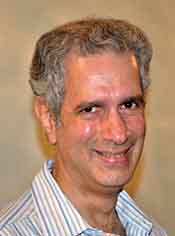
Behram Ardeshir: blood and gore
◆ ◆ ◆
From the archive