
Brouhaha in Bharuch
Dr Meher Mistry unscrambles the events that led to and followed the differences over the calendar amongst Parsis in the late 18th century
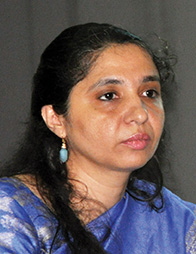
Mistry, who heads the Department of History at Ramniranjan Jhunjhunwala College in central Bombay, earned her doctorate from the Asiatic Society, Bombay University on the topic of "A history of some Parsi settlements on the Western Coast of India 1600 -1850” making Bharuch, Ankleshwar and Khambhat the focus of her thesis.
The Zoroastrians who migrated to India intercalated a month to their calendar sometime between 1126 and 1250, the academician explained. This led to "a difference of one month in the calendars of the Zoroastrians in Persia and India.” No intercalations were done thereafter and the tradition of Kabiseh was forgotten.
Differences highlighted
The calendar differences find mention, explained Mistry in the letters of 1632 exchanged between the Bharuch priests and those in Persia. A Rivayat (collection of epistles or correspondence) written in 1635 by the Persian priests advised the Bharuch priests to rectify the calendar, but no change was done. The arrival in 1722 of Dastur Jamasp Vilayati, a religious scholar from Persia, heated up the dispute, revealed the professor. A group of Parsis in Surat decided that as the system had been continued in Persia from Kadim (ancient times) it was correct and "decided to adopt the usage and called themselves the Kadmis, the group being established in 1722 by Maneckji Edulji, an Armenian-Zoroastrian broker.”
The communication with the clergy in Persia continued, explained Mistry, with questions now being put to the priests of Yazd regarding the calendar, which was replied to in the Rivayat of 1743. Since that Rivayat favored the Persian calendar followed by the Kadmis and asked the Parsis of India to follow the same, "it was regarded as a forgery” and dismissed!
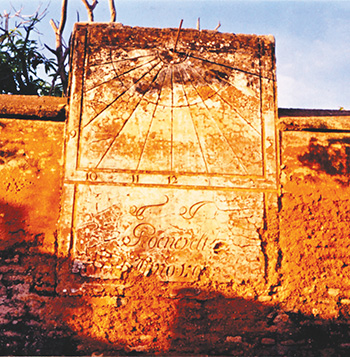
Remnants of Dutch factory walls in Bharuch
The emergence of leadership
By 1745, the Kadmis got the support of certain venerated priests and religious scholars like Dastur Darab and Mobed Kaus Fardun and also that of Dhunjeeshah Munjeeshah, a "broker and a ship-owning merchant working in partnership with the English, with a lot of influence over the Nawab.” Meanwhile, merchant prince Muncherji Khurshedji emerged as the leader of the Shahenshahis, or those who wanted to continue the local Indian calendar. Mistry explained that he was a "Dutch broker at Surat who had considerable political clout.”
Drawing on a narrative prepared by Dastur Faredun Kamdin of Bharuch (Kadmi Loko ni Hekayat), the Surat and Bharuch factory records, and the Parsee Prakash, Mistry reported that Munjeeshah tried to get support of the Nawab of Bharuch for the Kadmi calendar. The ruler tried to pressurize Dastur Kamdin Faredun, father of Dastur Faredun Kamdin the high priest of Bharuch to accept the Kadmi calendar and even imprisoned him, but he was later released and sent off to Surat. This aggravated matters in Surat where meetings were held for four months during which both sides argued their cases. Mistry reported that the learned Faredun "showed various documents supporting the Shahenshahi calendar.” According to the Parsee Prakash, the Surat Panchayat accepted the stand of the Shahenshahis and a proclamation addressed to the Samast Parsi Anjuman of Bharuch was prepared on January 5, 1768, "advising that the Parsis of Bharuch should stick to the old calendar and the new calendar practiced by 25 to 30 Kadmi families at Surat was incorrect,” stated Mistry.
Quoting the Kadmi Loko ni Hekayat, Mistry reported that the Kadmis tried to bribe Faredun with Rs 1,100 to support their cause but the venerable man refused. She further stated that Munjeeshah’s faction went to meet the Nawab of Surat and the English chief Price and spent almost Rs 10,000 to put their plan into action.
The Shahenshahi faction sought the support of the Bombay government and was somewhat successful when a letter from the President of the Bombay Council dated May 10, 1768 arrived in Surat, addressed to Price. "The point in dispute happens to be solely of a religious nature and ought therefore to be settled entirely amongst themselves (the Parsis) without the interference of the government,” it said.
Riots broke out in Surat in May 1768, according to Mistry. Munjeeshah’s faction planned to murder Faredun, with the help of the Nawab’s sepoys, but the plan was thwarted when the Shahenshahi faction under Khurshedji came to know of this through their network of spies. The dastur was rescued with the help of merchant princes who were supportive of the Shahenshahis. Matters were taken to the Bombay Council again. The Nawab and Price both were reprimanded by the Bombay Council for their role in the dispute.

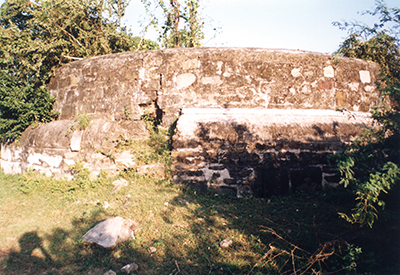
Dutch tombs in Bharuch
Price’s argument was that he got involved when Munjeeshah proposed terms of accommodation to solve the calendar dispute. Munjeeshah’s proposed amicable solution had three parts, explained Mistry: that men acquainted with the Persian language be appointed to check what was written in Parsi law books regarding intercalation; that representatives from both sides be sent to Persia to inquire from the priests regarding this dispute; if this was not agreeable then both sides should keep their feasts and ceremonies and follow the calendar which they believed was the correct one without any quarrels. Price decreed that both sects should follow their own practices and anyone found rioting on this issue would be a criminal in the eyes of the Nawab and the East India Company. "Even after this, there were incidents of violence reported in the factory records,” rued Mistry.
Quoting from the Kisseh-i- Gamgeenee, an account of the dispute, by Sayed Abbas Ali, a courtier of the last Nawab Mojuz Khan, Mistry said that Munjeeshah decided to wreak vengeance on the Nawab of Bharuch for having failed to support him. He convinced Robert Gambier, the head of the Surat factory that the Nawab had not paid certain custom dues to Surat for the past 40 years, thereby providing a pretext for the British to attack and conquer Bharuch in September 1772.
The Kadmi Loko ni Hekayat, according to Mistry, notes several attempts to murder Faredun till his natural death in 1781. The hatred for this Shahenshahi priest was so palpable that after his death his body was stolen from the dakhma, leading to the next wave of rioting between the two sects and the arrest of members of the Kamdin family.
It was now the turn of the Kadmis to appeal to the Bombay Council, with the help of Bombay sethias, accusing the Shahenshahis of beating up a pall bearer to extract a false statement that he was responsible for the purloined body. The petitioners accused two Shahenshahis, Homaji Jamshed and Muncher Jamedaar of having kicked Ratanbai, a pregnant woman, due to which she miscarried. Directed by the Bombay Council to look into the matter in detail, Gambier could find no concrete evidence and "felt that both sides were at fault and it was unwise to bring to trial and convict or execute 10 or 20 persons on the basis of doubtful testimonies motivated by the desire for revenge.” Not satisfied that justice was done, the Bombay Council asked the new Bharuch chief Hasley to investigate further. The case was reopened and now both Jamshed and Jamedaar were found guilty of doing physical harm to Ratanbai. Thirty persons, including the sons of Faredun and Jamshed, were sent from Bharuch to Bombay for trial. At the trial, Jamshed was found guilty of the crime he was accused of, and was hanged in Bazargate Street in July 1783. Others were let off with fines or imprisonment.
The academician stated that during the trial, Jamshed behaved as if he was in a trance and did not defend himself against the charges. After the verdict was passed, he is believed to have regained his senses and proclaimed that he was innocent, but it was too late. A legend circulates among Parsis even today that he was falsely accused. Many, to this day, commemorate the day of his hanging with a baj.
This, according to Mistry, drew the curtain on the violent phase of the Kabiseh controversy. Future discussions were restricted to academia and the Parsi Press. Dastur Aspandiyar wrote the famous book Kadim Tarikh Parsioni Kasar Iane Kabisa ni Hakikat (A Historical Account of the Ancient Leap Year of the Parsis) in 1826. Mulla Firoz entered the debate from the side of the Kadmis and began a series of articles in the Bombay Samachar in August 1826. Both sides continued to publish works to justify their stand on the calendar and in some ways this indirectly provided a powerful incentive to study the ancient scriptures and increased religious scholarship. The debate had now shifted from Surat and Bharuch to Bombay.
The traditional Zoroastrian calendar was a seasonal one made up of 360 days, with 12 months of 30 days each. Mistry informed the gathering that to synchronize it with the earth’s revolution around the sun (which takes 365 and a quarter days), a month was intercalated every six years and another month every 120 years. Calendar reforms in 224 AD led to five extra days dedicated to the five Gathas of Zarathushtra being added at the end of the last month and the calendar was extended to 365 days, as a result of which intercalation of one month every six years was done away with. To adjust the loss of a quarter day each year it was necessary to intercalate one month every 120 years. "An intercalation due in the period 621 to 628 was neglected,” Mistry detailed. A later reforms shifted Navroz from the first day of Fravardin month to the ninth month, Adar in which spring then fell. Gathas too were shifted to the end of the eighth month. When Persia came under Islamic rule, the authorities found it difficult to collect taxes as Navroz fell in winter. In 1006 Navroz was shifted back to Fravardin mah which fell in spring.
Talking to Parsiana in the staff room at her college on September 15, 2015, Mistry stressed she did not want to take sides. "My role as a historian is to record the facts as I see them, and as depicted in the texts.”
Born and schooled in Bharuch, Mistry states that she was interested in history from a very young age, with her quest for knowledge deepening after joining St Xavier’s College in Bombay. She recalls visiting historical sites around Bharuch with her parents Phiroze ("Phillip”) and Mini Kelawala, the owner of a shop selling Phillip’s products and school teacher respectively. In particular, she recalls visits to the Valanda ni Kothi, the local name for the remnants of the Dutch factory and to the agiary there, the one tended by the Kamdin priests who played a prominent role in the turbulent years. Mother of three-year-old Daerezar, the academician splits her time between Karjat where husband Noshirwan is an agriculturist, and their home in Bombay.
With Navroz celebrated by both sects on March 21, a sort of compromise has been reached, Mistry smiles, with the Kadmis and Shahenshahis additionally celebrating their respective New Years on the first day of the Fravardin mah as per their separate calendars.