
Food
Dishing out food history
Caterer cum archeologist Kurush Dalal digs out facts about the history of food
There is nothing quintessentially Parsi about saas ni macchi, according to archeologist cum caterer Dr Kurush Dalal. Calling the dish an example of fusion cuisine, he explained that the vinegar and chilly first came to India with the Portuguese; the egg in the dish is a nod to the British influence and the sea food to the coastal presence of the community. "Perhaps the only thing of Iranian origin is the sprinkle of fried onions and garlic on the dish,” he said. Dalal was speaking on "Reconstructing ancient food habits — An archaeological perspective” at an event on August 27, 2015 organized by Jnanapravaha, which seeks to facilitate critical thinking in the arts through courses, lectures, seminars, conversations and performances.
An assistant professor in archeology with Bombay University, and a caterer by passion, Dalal says he inherited this love of two diverse vocations as he "grew up listening to the wrong bedtime stories about Cyrus the Great and the Chalukyas” from his mother, the late Dr Katy Dalal who too was an archeologist cum caterer.
Dalal states that the study of the history of food in India "always leads to a dead end” as there is a dearth of libraries to systematically cater to researchers in this topic. Culinary history can be gleaned largely through the oral tradition and by talking to elders who remember. He said that timelines in India were a "salad of events, making it difficult to separate the grain from the chaff.” This is where, says the professor, archeology and all its various sub-sciences like paleobotany, paleoanthropology and archeozoology could play a role. Calling archeology a "study of the present,” he explained that professionals in this field use remnants from archeological expeditions found in the present day to study the past. Food, being organic in nature, does not by itself occur in archeological finds, unless it is carbonized, in the case of spills, on say, brick material. He mentioned, as an aside, that homemakers need to be tolerant of messy cooks as their wastage and spills could give clues about cultures a million years later!
An assistant professor in archeology with Bombay University, and a caterer by passion, Dalal says he inherited this love of two diverse vocations as he "grew up listening to the wrong bedtime stories about Cyrus the Great and the Chalukyas” from his mother, the late Dr Katy Dalal who too was an archeologist cum caterer.
Dalal states that the study of the history of food in India "always leads to a dead end” as there is a dearth of libraries to systematically cater to researchers in this topic. Culinary history can be gleaned largely through the oral tradition and by talking to elders who remember. He said that timelines in India were a "salad of events, making it difficult to separate the grain from the chaff.” This is where, says the professor, archeology and all its various sub-sciences like paleobotany, paleoanthropology and archeozoology could play a role. Calling archeology a "study of the present,” he explained that professionals in this field use remnants from archeological expeditions found in the present day to study the past. Food, being organic in nature, does not by itself occur in archeological finds, unless it is carbonized, in the case of spills, on say, brick material. He mentioned, as an aside, that homemakers need to be tolerant of messy cooks as their wastage and spills could give clues about cultures a million years later!
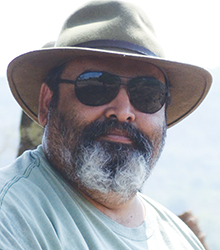
Dr Kurush Dalal
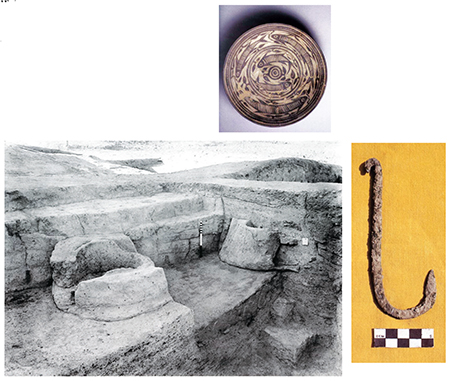
Clockwise from top: Faiz Md grey ware bowl from Pakistan; Photo: heritage.gov.pk;
Early Harappan fish hook from a dig in Bhavnagar; Photo: Vasant Shinde, Deccan College, Pune;
Early Harappan tandoors from a dig in Kalibangan, Rajasthan; Photo: Archaelogical Survey of India
A professional who is not "maniacally into preserving the past, as one must move with the times” Dalal explained that findings of early Harappan tandoors from a dig in a district in Rajasthan dispelled the myth that these vessels to bake bread were brought to India by the Mughals. Referring to the fact that there were two large outdoor tandoors that were discovered, he beamed that "the caterer in me hopes that this was the very first restaurant on the subcontinent.”
Referring to the current ban on the sale and consumption of beef in Maharashtra, he explained how archeological finds had amply demonstrated that beef was consumed in India even 8,000 years ago. "It was the custom to slaughter a fresh calf for revered visitors,” and continued tongue in cheek that "a certain Maharashtrian politician may not approve.” The existence of a large fish hook at an archaeological site in Padri in Bhavnagar District in Gujarat proved amply that fish was the food of choice in that region though "others tried to explain it away as a hook for lanterns.”
The academician illustrated that food habits were influenced by the necessity to grow one’s own food even as recently as 60 years back, let alone thousands of years ago, with the example of a typical Konkani menu. Breakfast he said would consist of a nachni (ragi an indigenous millet or finger millet) bread and milk, lunch would include rice bhakri, (unleavened bread) dried fish and onions. Dinner may have included dried fish in a curry with a few potatoes, judiciously rationed by the family matriarch. Meat was cooked only when the whole community or village had to be fed, as there was no refrigeration and cattle once slaughtered had to be eaten right away. "A family would consume less than two liters of oil in a month, he said, "because they would have to carry the oil seeds to the press themselves,” this being an arduous task. (Speaking to Parsiana on the sidelines of the lecture, the bon-vivant in him said that Parsis ate better, having access to fresh fish, wherever they were.)
Dalal who is leading the first Bombay University sponsored archeological expedition at Chandor in Goa stated that it is easy to detect foreign influences in food in digs around the coast. Giving the example of Chettinad cuisine, he explained how it was influenced by foods from South East Asia thanks to the trade influences from that region. Citing the example of the humble vada pau, the revered spicy potato patty in a bun, the professor said that "the only Indian element in it was the gram flour in which it was fried, the potato and the chilly having been introduced to Indian shores by the Portuguese.” He also explained how food influences ‘travelled’ inland. Giving the example of the baobab tree, a native of Africa, he cited that it proliferates even in Mandu in Madhya Pradesh, 550 kms inland from Bombay, where its fruit is considered a delicacy, and conjectured that the tree landed on the west coast of India thanks to Arab traders.
Bemoaning that genetic modification of food started at least 10,000 years ago with the special cultivation of grains that were easy to cook or to digest, he laughed that "we now do it in laboratories.” Giving the example of wheat, the professor said that the stalks grown now consisting of six rows of grain were modified from the original plant that had only one row of wheat. "Easier to harvest,” he shrugged. Asking whether being a global village is really a good thing, the academic lamented that people lose sight of nutritious foods available locally. Giving the example of jau (barley), he grimaced that urban Indians took to it only when it was marketed as pearl barley.
"There are tons of super foods in India. We have to make an effort to find them and popularize them,” he concluded.
◆ ◆ ◆
From the archive