
Books
“Bring out your dead!”
"Bring out your dead!”
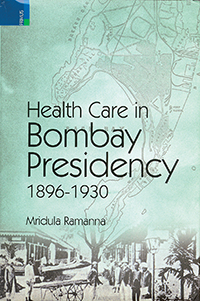
Health Care in Bombay Presidency 1896-1930 by Mridula Ramanna. Published in 2012 by Primus Books, an imprint of Ratna Sagar Private Limited, Virat Bhavan, Mukherjee Nagar Commercial Complex, Delhi 110009; email: rsagar@ratnasagar.com; website: www.primusbooks.com. Pp: ix + 202. Price: Rs 795.
When I opened the package and saw the cover of this book I was stunned for it was a 1922 photograph of the Arthur Road Hospital at Chinchpokli (the fact that the maximum security prison is located right opposite gives the hospital and added dread factor). It was to this very hospital, now named the Kasturba Hospital for Infectious Diseases, that I was admitted as a patient supposedly suffering from small pox though it was only a case of chicken pox! However, the mention of the Hospital’s name still evokes dread because of its association from 1896 to 1920 with the bubonic plague which claimed hundreds of thousand lives.
However, the book made very interesting reading particularly since both my mother and my aunt were doctors during the pre-and post-independence period and much of what is mentioned in it was what they themselves had described to me as a young boy growing up in Bombay. Between the mid-1890s and the early 1920s India was struck by a series of major epidemics: malaria, cholera, Spanish influenza, and, of course, the bubonic plague. The last wreaked havoc on the city of Bombay from 1896 till 1914. For a quarter of a century, plague was a major killer resulting in an estimated 10 million deaths, evoking scenes from London where dead bodies were piled high on wooden carts as the crier went round the city shouting, "Bring out your dead!” When the epidemic spread from Bombay city, western and northern India were hardest hit. In Bombay city alone, the death toll rose to 183,984 between 1896 and 1914.
However, the book made very interesting reading particularly since both my mother and my aunt were doctors during the pre-and post-independence period and much of what is mentioned in it was what they themselves had described to me as a young boy growing up in Bombay. Between the mid-1890s and the early 1920s India was struck by a series of major epidemics: malaria, cholera, Spanish influenza, and, of course, the bubonic plague. The last wreaked havoc on the city of Bombay from 1896 till 1914. For a quarter of a century, plague was a major killer resulting in an estimated 10 million deaths, evoking scenes from London where dead bodies were piled high on wooden carts as the crier went round the city shouting, "Bring out your dead!” When the epidemic spread from Bombay city, western and northern India were hardest hit. In Bombay city alone, the death toll rose to 183,984 between 1896 and 1914.
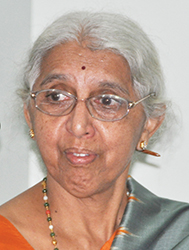
Mridula Ramanna: understanding
the public health scenario
The rigorous implementation of the measures that the Bombay government took led to a exodus in which nearly half of Bombay’s estimated 850,000 population at that time left the city between October 1896 and February 1897, to escape both the plague and government strictures. Their departure, which resulted in a great loss to commerce and industrial life, sadly helped the disease to spread. Those who remained seemed petrified by fear, suspicion and rumors. By the end of the 1920s, the disease was in gradual decline, which was probably due less to medical and sanitary intervention than to the natural limits set on its spread by a variety of zoological and ecological factors such as the geographical distribution of certain species of rat fleas and the growing immunity of rats to the plague bacillus.
The book also deals with the increasing acceptance of the idea of hospitalization which gave rise to the expansion of hospital facilities despite a great deal of prejudice especially among the rural population. For example, one Dr Lisboa, who was in general practice at Navsari, would be extremely frustrated when female patients came to him with complaints about their sick children while all the time giving the good doctor the impression that they themselves were sick! It is also a fact that British doctors as well as ‘England returned’ Indian doctors preferred the use of Western allopathic medicine and drugs and undervalued or rejected outright the remedies of vaids and hakims. The latter, however, were popular with the masses because they charged a fraction of the fees taken by more "qualified” doctors in the city.
The author Mridula Ramanna also mentions the lead taken by Parsi benefactors in donating generously for the opening of more hospitals in the city and presidency. However, some of these institutions were limited to treating only members of the donor’s community. As an example the author cites the eye hospital funded by the Wadia Charities in 1907, and of course The B. D. Petit Parsee General Hospital funded by Bomanji Dinshaw Petit, the latter having a separate obstetric and gynecological facility which was greatly welcomed by Parsi women. When the Jamsetjee Jeejeebhoy Hospital was opened, the wards were demarcated community-wise for Hindus, Muslims, Christians, with a separate Parsi Ward which still exists. A writer in The Times of India at that time raised an objection to such segregation, including at the St George Hospital, which was reserved exclusively for Europeans and Anglo-Indians!
Ramanna elucidates on these developments through an analysis of both the funding of these expanding institutions and the classification system of admissions, as well as by providing a detailed review of maternity and mission hospitals. With these issues in mind, this work examines a range of perceptions including those of British and Indian physicians regarding the causes of high maternal and infant mortality and their suggestions to tackle the problem, as well as semi-official and non-official efforts to promote maternal and infant welfare. Specifically addressed are issues such as the health of female mill workers, and the training of nurses and dais (midwives). In those days, especially in small towns and villages, it was left to a dai to take care of the majority of deliveries. In many cases women died at childbirth due to sepsis as a result of unhygienic or unsanitary conditions and lack of expertise of the midwives. My own aunt, the newly-married wife of my uncle Dorabji, died in Saharanpur in 1921 soon after giving birth to my cousin Freny. Such tragedies were repeated all over the country and deaths during childbirth were commonplace.
There was a close link between attempts to improve the health of women and the number of female Indian doctors. The career path of some of these doctors, including their activities in the All India Women’s Conference, the Association of Medical Women in India and the National Planning Committee, are traced in this book. Through such analyses, the relative place of Western and Indian medicine in the Presidency can also be explored to reveal their manifold and complex dimensions. This reviewer is confident that the book will contribute to an understanding of the public health scenario of the pre-independence years, and will be of interest to scholars of history, sociology, community health, gender studies and South Asian studies, as well as to health workers and NGOs (nongovernmental organizations), especially those dealing with gender issues.
The book is divided in to six chapters: State intervention and the Indian response to plague control measures, 1896-1920; Promotion of sanitary consciousness; Changing reactions to hospitalization; Maternal health and welfare measures; Women physicians; and Relative positions of Western and Indian medicine. Former reader and head of the Department of History, South Indian Education Society College, University of Bombay, Ramanna is eminently qualified to write authoritatively on this subject. She has authored Western Medicine and Public Health in Colonial Bombay, 1845-1895 (2002), and contributed chapters to several edited volumes: Science and Modern India: an Institutional History (2011); Science and Society in India, 1750-2000 (2010); History of Medicine in India: the Medical Encounter (2005); History and Gender: Some Explorations (2005); Colonialism as a Civilizing Mission: Cultural Ideology in British India (2004); The Spanish Influenza Pandemic of 1918-19: New Perspectives (2003); Disease and Medicine in India (2001); State Intervention and Popular Response: Western India in the 19th Century (1998), and entries in Encyclopedia of Pestilence, Pandemics and Plagues (2008) and The Dictionary of Medical Biography (2007). She has published articles in the Indian Historical Review, Economic and Political Weekly, Social Scientist, Radical Journal of Health and Indica. With such a distinguished publication record, the reviewer would not hesitate to recommend this book to those studying medicine, social issues, women’s health issues, as well as those interested in knowing about the past of the great city of Bombay and its passage through one of its darkest hours.
◆ ◆ ◆
From the archive