
From disrepair to distinction
It took over a decade to restore Jamsetji Tata’s opulent Esplanade House to its original grandeur
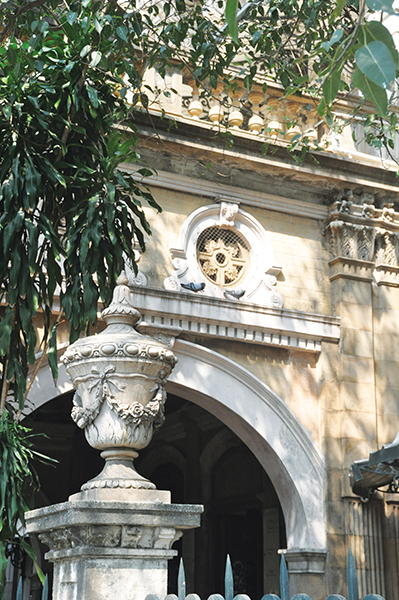
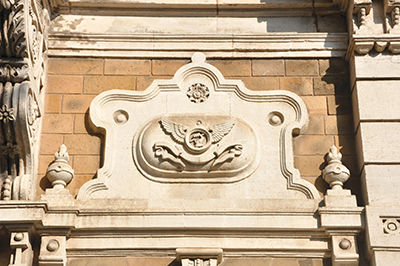
Conservation architect Vikas Dilawari took over a decade to restore the historic mansion. On September 2, 2014, his efforts were recognized with an Honorable Mention in the 2014 UNESCO Asia-Pacific Awards for Cultural Heritage Conservation. Farrokh Rustomji, chief executive officer (CEO) of the R. D. Sethna Scholarship Fund, told The Times of India (TOI) of September 3, 2014, "We started work on this historic building in 2003 and finished it in phases in 2014. The four facades were restored and the balconies were reconstructed. The staircases and toilets were restored as well. We fortunately had old photographs to go by, so we were faithful to the original design.”
Stained glass panel
Dilawari’s conservation, preservation and repair work on Esplanade House earned him his 10th UNESCO award. For the professor of architecture at Kamla Raheja Vidyanidhi Institute for Architecture and Environment Studies in Bombay, the first recognition from the international organization came in 2001 when he had restored the iconic Rajabai Tower. Last year two of his projects received UNESCO awards: the Royal Bombay Yacht Club was given an Award of Merit while the Lal Chimney Compound or Murzban Colony received the Award of Distinction (see "Recognition for restoration,” Parsiana, May 7, 2014).
"Esplanade House is one of the finest buildings to be constructed in the Fort after the demolition of the Fort walls in 1860. This project shows how conservation can work with adaptive re-use and by melding traditional skills with modern technology,” the architect told TOI. The project took "3,650 days” of actual work to complete, he said.
"The project is an effective example of adhering to basic principles of conservation, i.e. minimum intervention,” Dilawari mentioned to Live Mint of September 3, 2014. It "illustrates how interventions can help retain the authenticity and bring back the one-time charm of the structure at a time when other such stately mansions are either being demolished or losing their originality with the use of out-of-place modern materials,” he explained.
The south-east corner of the building underwent structural repairs as well as reconstruction of most of the wooden balconies, Mint noted. Localized repairs were required to plug leakages. No government funds or incentives were made available for the work, an obstacle frequently faced by conservationists in Bombay, according to Mint.
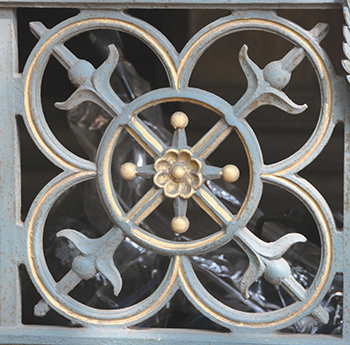
"(Esplanade House) is among the few surviving buildings that does not have a concrete slab flooring,” Dilawari noted in an interview with Mid Day (MD) of September 8, 2014. "It has wooden floors and a cavity with boarded teak ceiling on which (there is) decorative Plaster of Paris. Redoing the decorative Plaster of Paris’ missing parts was very challenging, so was redoing the zinc curvilinear awnings and the terracotta urns and the decorative railings in new materials that would match the old. The rear annexe had some severe structural problems like separation of walls and cracks measuring a few inches. Rectifying that and redoing the balconies (matching the original) were some highlights and challenges.”
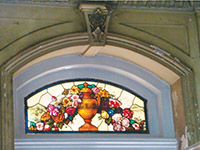
According to a write-up sent by Rustomji and Dilawari about the work undertaken, "Traces of high quality stained glass and painted glass panels adorning the windows and ventilators with floral designs were found. We restored the ones which were broken or found missing.” Experts were consulted to revive their old charm and authenticity. Wire mesh has been used to protect them and prevent further damage. Similarly, etched glass panels with designs of flora and fauna were cleaned and polished to revive their original look.
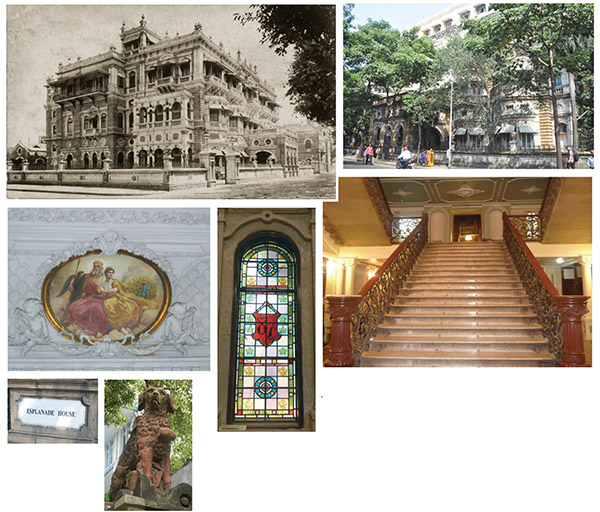
The history of Esplanade House has been preserved in the Tata Central Archives, along with amazing photographs which have proved invaluable to the process of restoration. It is recorded that with the growing prosperity of Jamsetji Tata’s textile ventures he and his father Nusserwanji thought of building a mansion in keeping with their status. Though the foundations were laid in Nusserwanji’s time, the work was completed after his demise.
Jamsetji and his sons filled their new residence with objects of beauty. Chandeliers adorned the interiors. Jamsetji, who had a passion for reading, had a well stocked library. There was a billiards room as well. A hub of much social activity, many distinguished guests were entertained in the banquet hall. Esplanade House was one of the first residences to use electricity for lighting and to have an elevator, the Archives reveal. There was a small army of domestic helpers to maintain the grand house, including some Chinese hands, a novelty at the time. The staff quarters were located at the rear as were the stables. Jamsetji was among the first persons in India to own a motorcar and employed the services of an English chauffeur.
Esplanade House became the center of Jamsetji’s family life. Two of his sisters lived there with him. When his younger son Sir Ratan married Navajbai Sett in 1892 the couple resided with Jamsetji until his death. Six years later, the elder son Dorab married Meherbai Bhabha and set up house at Malabar Hill. Dorab and Meherbai came to live in Esplanade House after Sir Ratan and his wife moved to Tata Palace, where the Deutsche Bank is now located, the records reveal.
In addition to the owners, whose offices are on the first floor, the three-storeyed Esplanade House has leased office space to private companies on the ground and upper floors. In 2007 the advertising agency R. K. Swami BBDO moved some of their offices to Esplanade House to "work out of Jamsetji Tata’s Indian and European dining rooms and the main courtyard” (see "The Esplanade effect,” Parsiana, January 7, 2008). Transforming the neo-classical European mansion into a spacious 6,700 square ft office involved a great deal of restoration, Shailen Sohoni, chief operating officer had said then, adding, "we restored the rooms we leased” which cost "less than what it would have if we hired commercial space.”
"This building is a surviving example from the late 19th century Mumbai or Bombay. Then, facing the Esplanade, it had the best view and breeze… this was the most opulent house then, having open space all around (there was no other building in the area at the time), very rich, tasteful imported finishes, which were trending in Europe. The typology of the bungalow will only remain in history books as they are fast disappearing… This restored and reused building helps in understanding this historical layer and also proves a point that conservation can work if the market rents that it generates are somewhat ploughed back to its maintenance and upkeep,” Dilawari further explained to MD.
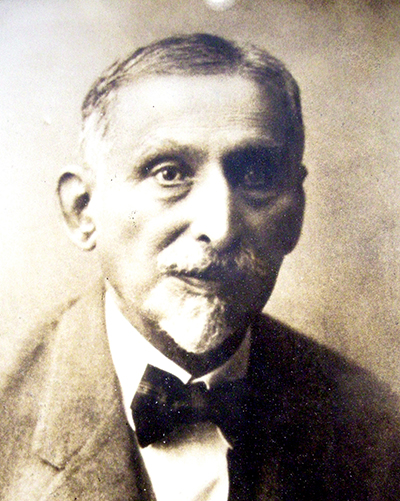
R. D. Sethna: promoting education
Though applicants need to have a good academic record, other factors such as the financial status of the parents are also considered. The loan Scholarships "are investments in individuals to empower them for pursuing their academic interests and career" and cover the cost of both books and tuitions. All aspects of the Scholarships are administered and processed by the chief executive as per the terms and conditions determined by the trustees. The office of the R. D. Sethna Scholarship Fund is located at Esplanade House, 29, Hazarimal Somani Road, Fort, Bombay 400001; tel: 22077044 and 22070764; email: office@rdsethnascholarships.org