
The Radicalization of Naoroji
As Dadabhai Naoroji aged he moved from liberalism to leftism taking India to self-rule
Extracts from a paper by Harvard doctorate thesis student Dinyar Patel, originally published by the Nehru Memorial Museum and Library in November 2012.
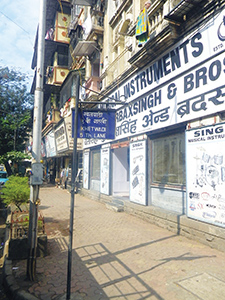
In all of these activities — the rationalization of Zoroastrian religious doctrine and ritual, reform of the Punchayet, and the promotion of women’s rights — we can detect the strong influence of his education at the Elphinstone Institution, which was, at the time, western India’s premier place of learning. His liberal, English language education here no doubt infused him with ideas of rights, freedoms and liberties and he received strong encouragement in his reformist campaigns from his British professors and teachers, some of whom turned out to be lifelong friends and correspondents. Naoroji’s steadfast belief in the justness and magnanimity of the British people — something that he stubbornly hung onto in spite of the many opportunities afforded to him throughout his lifetime to discard this notion — also stemmed from these formative years in Elphinstone and the support he received in his reform campaigns from British administrators such as Erskine Perry, at the time the chief justice of the Bombay supreme court.
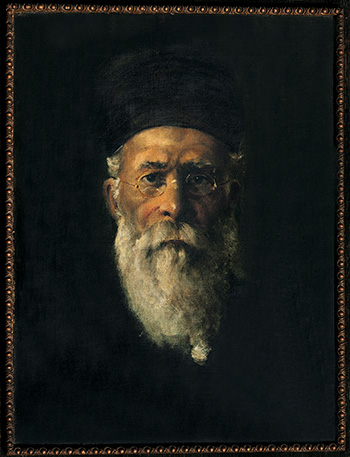
A study of Naoroji’s time at the Elphinstone Institution — where he was both a distinguished pupil and a professor of mathematics and natural science, becoming the first-ever Indian appointed to a professorial position — would provide for a fascinating glimpse into the making of one of India’s premier liberal voices. Unfortunately, this is nearly impossible to undertake. There is almost no relevant surviving correspondence in the Naoroji Papers and the scanty, weathered records of Elphinstone College provide hardly any insight into Naoroji’s formative early years. What is abundantly evident, however, is that Naoroji left Elphinstone convinced that western education was, as he often repeated, the "greatest blessing” that the British had given India, and throughout his life he remained firmly committed to expanding the scope of education in India and supporting those Indians who sought advanced educational opportunities in the United Kingdom.
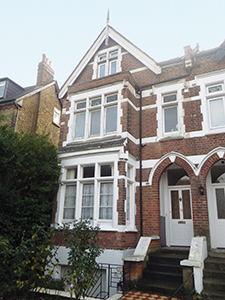
It is difficult to say precisely when Naoroji broadened his focus beyond the narrow world of Parsi social and religious reform to instead devote the bulk of his time towards Indian political matters. Hardly any of Naoroji’s papers from before 1870 still exist, and we are left with a handful of primary and secondary sources for clues. I believe that, while the seeds of this transformation were sowed in Bombay, this critical turn took place not in India but in England. In 1855, when he was not yet 30 years old, Naoroji joined some members of the Cama family of Bombay — prominent Parsi traders who had been involved in opium and cotton — in opening up the first Indian business in Great Britain. Naoroji’s first foray into business appears to have been spectacularly unsuccessful and he resigned from the Camas’ firm by 1859. But it was here in London and Liverpool that he came face to face with many of the consequences of British imperialism: the yawning gap between development in India and England, the British textile manufacturing industry, the opium trade and the fortunes reaped by a select few upon India’s poverty. It was also here that Naoroji joined the currents of British political and social life, taking an interest in Liberal politics and realizing the sheer level of ignorance amongst the British public on Indian political and economic subjects.
I believe the drain theory to be the first phase in the evolution of Naoroji’s political thought as well as an important precursor to his demand for swaraj (self-rule). In addition to being an economic critique of imperialism, it exposed a fundamental moral wrong in British rule. The theory, premised on the belief that British imperialism was directly responsible for Indian poverty, was not Naoroji’s alone, although he popularized it to a far greater extent than his intellectual predecessors.
Naoroji struggled hard to link the notion of Indian political rights with concepts such as workers’ rights, Irish self-rule, or women’s suffrage. This was part of Naoroji’s emerging philosophy of universal political rights, in which India had an important and special stake. As a result, we can find in the Naoroji Papers letters written by women activists or factory workers who pledged their support for Indian political reform and an Indianized bureaucracy. One working man from Lancashire, James Blackshaw, wrote to Naoroji in 1898 that he was speaking about India at public meetings and that he believed that people in Lancashire now saw that Indian reform was in their interests as well. Naoroji also launched a wide and varied speaking program across the United Kingdom, touring cities and industrial centers. All of this work paid off: in 1892, he was elected to the House of Commons from Central Finsbury in London…
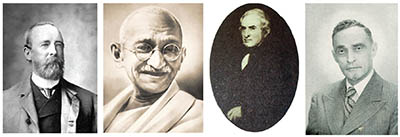
Naoroji, Member of Parliament (MP) became a celebrated figure in India. Letters and telegrams of congratulation streamed in from across the country — Bengal, Kashmir, Madras and the Deccan, as well as from Indian outposts abroad such as Guyana, Zanzibar and Shanghai. I strongly believe that Naoroji was the first modern Indian political leader with national, rather than regional appeal, and the shoals of congratulatory messages in 1892 help bear out this hypothesis. Although Naoroji was based thousands of kilometers away from the subcontinent, he remained deeply involved in Indian political affairs. During the late 1880s and early 1890s, this meant shepherding the Congress. Naoroji believed that one of the Congress’ greatest tasks was aiding political work in London; to this extent, he played an influential role in the Congress’ British Committee, established in 1889, where Sir Wiliam Wedderburn and Allan Octavian Hume also played an important role.
But, at the same time, Naoroji also saw the Congress as a means for national political consolidation and a potential mass organization. Writing to Hume in December 1887, Naoroji called for "petitions signed by millions,” a line that tells us that he foresaw the Congress as becoming something much more than an elite debating club. He was particularly keen to make sure that the Congress became a representative body, calling for the recruitment of people of all classes and laying stress on the retention of Muslims within its fold. Additionally, S. R. Mehrotra, former professor and chairman of history, Himachal Pradesh University, Simla, has uncovered a detailed transcript of the first Congress revealing that Naoroji advocated something very close to self-rule at that 1885 meeting: the transfer of the "actual government of India” from Britain to India, under "the simple controlling power of the Secretary of State (of India) and of Parliament.” This was an Indianized bureaucracy in its most extreme form. It is no mistake, therefore, that Naoroji concentrated his efforts in the House of Commons on establishing simultaneous civil service examinations in India and England, something that would pave the way toward the creation of such a bureaucracy.
Socialism, anti-imperialism and swaraj
If the early 1890s was a period of giddy triumph for Naoroji and his nationalist colleagues, then 1895 came like a crash. Naoroji was defeated in the parliamentary elections of that year. At home in India, there was a widening gulf between moderates and radicals, especially in places like Poona. Famine, the plague and the British Indian government’s high-handed response to the epidemic, soon added to the despair. On top of all these miseries, the new Conservative government in London took a much dimmer view about Indian political reform. The turn of the century was an extremely critical moment in Naoroji’s political career. Here unfolded the fourth and final stage in Naoroji’s political thought. Disappointed by his experience in Parliament, where India mustered very little interest amongst other MPs and disillusioned by policy reversals after 1895, Naoroji turned even further to the left. It was at this stage that Naoroji began publicly articulating self-government as India’s primary political objective, decisively moving beyond the scheme he had outlined at the 1885 Congress. Indians had to take control of their own political destiny.
If Naoroji could be described as adhering to the liberal political tradition in India — most recently explicated by Bayly — prior to 1895, then he became markedly different after his electoral defeat. Refusing to slow down in spite of being in his 70s, Naoroji began identifying more as a radically anti-imperialist socialist or laborite — and his thoughts on Indian self-government were ultimately influenced by the political left, as well.
Significantly, it is in the 1890s and early 1900s that Naoroji became involved in campaigning for the rights of Indians in South Africa, passing on regular reports from a young Mohandas Karamchand Gandhi to the Colonial and India offices. As Naoroji made one last, desperate attempt to re-enter Parliament — through North Lambeth in 1906 — he increasingly distanced himself from the Liberal party and sought out alliances with the nascent Labour party and Henry Hyndman’s (referred to as the so-called father of British socialism) Social Democratic Federation.
Conclusion
Identifying the negative economic consequences of British colonial policy in India, Naoroji, in the last years of his life, developed a sweeping condemnation of imperialism that was influenced by liberal and socialist ideas of individual rights, universal suffrage and government social responsibilities. A man who heaped praise on the British in his youth was, by the 1890s, making no hesitation in calling British policy in India "evil.” This leads us to the second point: unlike many other nationalists, Naoroji grew more radical as he aged. When Naoroji addressed the Calcutta Congress in 1906, reiterating his call for swaraj, he was 81 years old. Naoroji’s was a career of constant evolution. He was a unique individual in the sense that he grew more open to new ideas as he aged, rather than retreating into the safety of his own core convictions.
It is tempting, therefore, to wonder what would happen if Naoroji had lived for a few more years to witness Gandhi’s call for non-cooperation, something that caused a permanent split between Gandhi and the remaining band of 19th century liberals in the Congress. In his biography of Naoroji, Masani recalled a conversation he had with Gandhi in December 1931, while returning from London to Bombay after the Round Table Conference. "Don’t you think,” Masani asked, "Dadabhai’s policy, which the present generation ridicules as a mendicant policy, was the right one, considering the circumstances prevailing?” "Yes,” Gandhi replied. He then quickly added, "And I believe that if he were alive today he would follow the same policy that I have been pursuing for the last few years.”