
Cover Story
Dadabhai’s dossier
Dadabhai Naoroji — Selected Private Papers edited by S. R. Mehrotra and Dinyar Patel. Published in 2016 by Oxford University Press, YMCA Library Building, 1 Jai Singh Road, New Delhi 110001. Pp: liii + 604. Price: Rs 1,495.
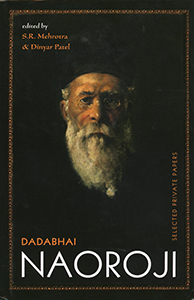 Endearingly known as the "Grand Old Man of India,” Dadabhai Naoroji (1825-1917) was justly described as the "author of nationalism” and the "Father of the Nation” by none other than Mahatma Gandhi who was subsequently honored with the latter epithet. Naoroji was one of the first to point out the exploitative nature of British rule in India and one of the first to call for Swaraj or self-rule. The present volume edited by S. R. Mehrotra and Dinyar Patel deals with selected papers from the massive correspondence generated by Naoroji during his six-decade-long public life. The National Archives of India houses the private papers of Naoroji and these have been meticulously sifted, selected and annotated for the present volume by the editors. This book has been dedicated to the memory of R. P. Patwardhan, a retired educational official of Poona who studied Naoroji’s correspondence for 15 years and produced two volumes in 1977. Patwardhan died before he could publish two more manuscripts. The editors have relied on some of his work for the present volume. Most of the papers are in a fragile state and regretfully many of the papers which Patwardhan had transcribed or what had been used by R. P. Masani in his biography of Naoroji have been lost to time.
The present volume consists of a detailed introduction with a brief analytical biography of Naoroji and a history of the Naoroji papers prepared by Patel on the basis of his extensive research on Naoroji for his PhD dissertation from Harvard University. It reproduces some select correspondence of Naoroji with 14 eminent individuals of the 20th century. The correspondence has been annotated with relevant footnotes and each individual correspondent is introduced with a short biography. Some of these, such as Allan Octavian Hume, William Wedderburn, M. G. Ranade, Gopal Krishna Gokhale, Erskine Perry, Behramji Malabari, Henry Hyndman, George Birdwood, and Romesh Chunder Dutt are well recognized names. But there are other relatively unexplored figures namely Aziz Ahmad, who ran two newspapers in Glasgow, Shankar Abaji Bhisey, the Indian Edison in whose inventions Naoroji invested, and Hormusjee Ardeseer Wadya, who was closely involved with the Bombay Presidency Association and Congress activities in Bombay in the pre-Gandhi era and considered Naoroji as his mentor.
Dinyar Patel: papers for posterity
Each individual shared a different relationship with Naoroji as he was a multifaceted person who donned several hats and served in different capacities in his 91-year-long lifetime. This volume throws more light on the correspondents than on Naoroji himself as very little of what Naoroji wrote as replies to their detailed letters is available. Also, for paucity of time in his busy public life and also due to the huge mass of incoming correspondence which he regularly received, Naoroji’s replies were extremely brief and reveal little. Much has to be inferred from what his correspondents wrote. This volume, as the authors themselves note, is therefore much more than a book on Naoroji. It is a useful resource for understanding the time and world which Naoroji inhabited. It is a vital source to understand this period of Indian and British history when a critique of British Indian policy transformed into a national movement against imperialism. Many biographies and academic works featuring Naoroji or his ideas have hardly consulted Naoroji’s voluminous writings and therefore as the editors point out, this laboriously prepared volume will be of great utility to future scholars working on Indian nationalism, political economy, imperialism, etc.
The correspondence throws much light on Naoroji’s career, personality and opinions. The Naoroji-Perry correspondence (1851-1879) ranks among the earliest letters in the collection and gives us a lot of biographical details. Perry, who had served as the president of the Indian Board of Education from 1842-1852, knew Naoroji as a promising student at Elphinstone College and wanted him to go to England and qualify for the Bar. He even offered to pay half the expenses for Naoroji if half would come forth from the Parsi community. Scared by the conversions by John Wilson, the community was hesitant and Naoroji settled for a junior post at Elphinstone College. In support of his reformist endeavors, the letters show how Perry helped Naoroji to secure a site for the first Parsi Girls School. It was because of Perry’s encouragement that Naoroji in 1854 became the first ‘pucka’ or full professor of mathematics and natural philosophy, the first Indian to achieve this post.
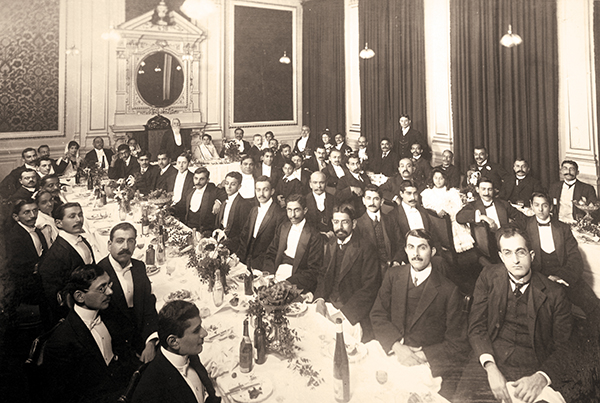
Zoroastrian Trust Funds of Europe Navroz banquet, 1906 with Dadabhai Naoroji
in the chair (standing) and Bhikaiji Cama on his left Photo: ZTFE Sesquicentennial Brochure
 fifth page.JPG)
Naoroji’s publicity leaflet shared by Patel
In the middle of 1855, he however resigned and moved to the UK to join the firm of the Cama family. It marked the beginning of Naoroji’s business career which did not sufficiently thrive due to his preoccupation with political issues and also because he was not a very shrewd businessman. He is known to have financially bailed out friends as is reflected in the letters with his correspondents. The move to England was partly borne out of his desire to guide Indian students for the Indian Civil Service examination. Indianization of the civil services and appointment of Indians in the judiciary was a cause dear both to Naoroji and Perry, and it was their efforts which led to the establishment of the statutory civil service in India by Lord Lytton in 1879. For Naoroji, Perry represented the "Good Englishman” in whom moderates like him had faith and hope for India’s better future.
Naoroji had a few political differences with Perry but he always considered him as his mentor and took his advice before taking up the Diwanship of Baroda in 1873. Naoroji was deeply interested in Indian princely states. He felt that it was possible to raise a skilled set of Indian bureaucrats in these states and challenge the British notion that Indians were incapable of ruling themselves. Also, these states did not suffer from any drain of wealth and Naoroji looked upon the diwanship as a testing ground for putting his ideas on administration in practice. Naoroji’s plans were thwarted by the vicious politics in Baroda and the reforms he attempted met several obstacles which finally made him and his colleagues tender their resignation in December 1875. Even after this setback, Naoroji continued to lobby for Indian princes in the India Office.
Between 1875 and 1885 Naoroji entered Bombay politics and served in the town council, Bombay Municipal Corporation and legislative council and constantly wrote on the poverty of India aggravated by the economic drain brought about through the policies of the British in India. It was one of these writings which was noticed by Hyndman, a critic of British rule in India, that led to their correspondence (150 letters) from 1878. Hyndman adopted Naoroji’s drain theory and Naoroji supplied him with notes and calculations for his writings. In 1884 Hyndman established the Social Democratic Federation. Hyndman was more fierce in his rhetoric than Naoroji and advocated reform and even revolution for India but not complete political separation of India and Britain. After the 1896 famine in India, Naoroji and Hyndman began a lecture campaign in UK but soon differences of opinion arose between them. Hyndman found Naoroji far too moderate while Naoroji was unhappy with Hyndman’s exhortations to Indians to rise in rebellion. In some of the letters, Hyndman is quite hostile in his tone and mocks Naoroji’s steadfast faith in the British public and its ability to influence administrative policy for India. In spite of their differences, they cooperated in financing and assisting Bhisey.
Wedderburn, a civil servant in India, was another correspondent who shared Naoroji’s views on poverty of India arising due to Britain’s policies. They exchanged around 200 letters. Along with Hume and Naoroji, Wedderburn played a pivotal role in the establishment of the Indian National Congress (INC). He took an active interest in Naoroji’s parliamentary campaign. In 1892, Naoroji became the first Indian to be elected to the British Parliament. Wedderburn who became a Member of the Parliament in 1893, proved to be a pillar of support to Naoroji. Even after Naoroji’s electoral defeat in 1906, Wedderburn continued to highlight Indian poverty and famine before Parliament. In later years, Naoroji and Hume grew more radical and found Wedderburn too moderate.
Hume came in close contact with Naoroji in 1884 when he was organizing a tribute for the liberal viceroy, Lord Ripon, an advocate of local self government. They worked closely for political mobilization in India and putting the Indian demands before the British government. Their correspondence clearly shows that the INC was not established by Hume to deflect the agitation brewing in India and also indicates Hume’s lifelong commitment to promote Indian political and social matters. These letters also show Naoroji’s optimism about the INC’s potential in the initial years. Naoroji’s views on making the Congress an all inclusive body and especially retaining Muslim participation also comes across through this correspondence. Hume’s despair after the split in the Congress in 1906 and the futility of constitutional agitation is also evident and he confides to Naoroji that he sees little option but open rebellion by Indians. Sadly many letters from this collection are missing.
Birdwood was another English civil servant with whom Naoroji shared six decades of friendship in spite of political differences. Very little of their correspondence survives. Birdwood was a Conservative and did not agree with Naoroji’s drain theory. He was also a staunch Orientalist who scoffed at the Indian adoption of western dress and education. In one of the letters he scorns the Parsi adoption of anglicized surnames. He supported the Indianization of Civil Services as also the INC. Birdwood favored Naoroji’s parliamentary campaigns but did not like Naoroji’s alignment with William Gladstone and Irish nationalists. The correspondence clearly shows Birdwood’s deep admiration for Naoroji in spite of being his "political enemy.”
There were many others who supported Naoroji in his attempt to enter the British Parliament. His failure in his first attempt from Holborn in 1886 had given him valuable experience. In 1892, when he stood from Central Finsbury as a Liberal candidate, R. M. H. Griffith canvassed for him as his election agent. In fact from 1888, he worked as Naoroji’s secretary and political advisor, cleared obstacles and steadily built prospects for his victory. The Naoroji-Griffith correspondence, around 2,000 letters, is the largest single collection in the Naoroji papers. Naoroji invested in Griffith’s Weekly News and eventually became proprietor of the paper. He reluctantly went on giving loans to Griffith who was unable to generate revenue from the paper and was struggling to keep it afloat. This caused some friction. Their correspondence slowed down by 1901 after Griffith decided to dispose the paper.
Ahmad also offered much assistance to Naoroji through his newspaper Asia during the Finsbury Parliamentary campaign. A Muslim convert to Christianity who supported proselytization and a staunch patriot, Ahmad wanted Naoroji’s help in securing Indian subscribers and advertisers for his papers. Their correspondence, like the Griffith correspondence, shows Naoroji both as a political and business figure. A scrutiny of the correspondence with Bhisey provides an insight into Naoroji’s diverse business interests. In 1901 Naoroji and Bhisey had formed a commercial syndicate where Naoroji invested £300 to sponsor the development of Bhisotype — a typecaster which would facilitate commercial printing. Facing financial difficulties after retirement by 1908, Naoroji was unable to continue monetary assistance. With the help of Gokhale, Bhisey found a new financier in Ratan J. Tata but there were certain misgivings between Bhisey and Naoroji on profit-sharing in the new syndicate concerning reimbursement for Naoroji’s earlier financial assistance, which were eventually resolved.
The correspondence of Naoroji with the widow of Maj Evans Bell, a military officer, who opposed annexations of princely states and supported Indian political reform, is interesting for several reasons. As the editors point out, it undoubtedly brings out the kind and humane nature of Naoroji whilst also revealing a lot about the politically and socially progressive late Victorian society in which Naoroji moved while in London. Bell died from an incurable illness leaving his family in debt possibly incurred due to the huge publishing expense in bringing out literature on Indian political and administrative affairs. Naoroji kindly responded to his widow Mynie’s pleas for financial assistance by securing some help from Indian princes as a token of gratitude for the Major’s untiring efforts to stop annexation of their states. Mynie and her daughter Tina, in their own small way supported Naoroji during his parliamentary campaign by gathering "an army of ladies” to canvass for him.
Naoroji’s correspondence with Malabari consisted of around 500 letters of which 242 letters have been reproduced in this volume. Malabari was a prominent journalist, poet and a social reformer, famed for championing the 1891 Age of Consent Bill. He was one of Naoroji’s closest confidants. In 1883, Naoroji and Malabari launched a paper — Voice of India and much of the correspondence is related to it and offers an understanding of how the nationalists used the Press to gather support from the British public. This correspondence throws light on Malabari’s political work and financial and organizational assistance he provided to Naoroji. He used his connections with princely states to get finance for Naoroji’s parliamentary campaigns.
These letters are remarkable for the wealth of information on the political events of 1880s and 1890s. They also tell us about Naoroji as a family man and the close friendship between Malabari and Naoroji. When Naoroji was in London, his family stayed with a longtime friend Mancherji Dadina. Eventually Naoroji’s two daughters were betrothed to Dadina’s two sons and Dadina’s daughter was married to Naoroji’s son. Mancherji had a quick temper and Malabari is seen helping the Naoroji family ease out occasional friction. Malabari consoled Naoroji upon the death of his son Ardeshir and also convinced the Durbar of Kutch where he worked as a doctor to support his widow and children. Naoroji is more candid, emotional and personal in his letters to Malabari.
Naoroji is today recognized as one of the first Indian nationalists who advocated Swaraj or self-rule for India. His growing disillusion with the pace of reforms made him increasingly radical. His correspondence with Dutt, a former civil servant, an economic nationalist and a strong Congress supporter, shows how he held the drain of wealth by the British as the primary reason for India’s abject condition. He argued with Dutt that agitating for land revenue reform was not enough and the real cause of the problem was the bleeding of India due to the unceasing plunder by the British. He wrote, "Till the bleeding ceases and India is moving towards self government and self enjoying her own resources, there is no hope for better days.” Their correspondence is interesting to understand the evolution of economic nationalism in India.
The volume also contains Naoroji’s correspondence with the moderate leaders, Ranade and Gokhale. Ranade, like Naoroji researched on Indian economic problems and explored its links with foreign subjugation and therefore Naoroji was keen on his appearing before the Welby Commission in 1895. Ranade was not allowed to do so as he was then judge of the Bombay High Court but he mentored Gokhale who travelled to the UK to appear before the Welby Commisssion investigating Indian fiscal affairs. Gokhale’s letters to Naoroji also show the government’s highhandedness during the plague epidemic.
The letters exchanged with Wadya, another staunch moderate leader also forms a part of this volume. Wadya’s name was once frequently invoked with Gokhale, Dinsha Wacha and Pherozeshah Mehta and this volume resurrects his contribution to the national movement. Wadya was recruited by Naoroji during his Diwanship at Baroda and Wadya later worked for several princely states. He often helped Naoroji by securing financial assistance from the princes of Kathiawar for political movements in western India. Wadya formed a strong association with the Congress in its moderate phase and denounced the activities of the extremist group led by Lokmanya Tilak. While Naoroji was amenable to both the extremists and moderate group, Wadya felt that the Congress should cut all connections with the extremists. Unlike Naoroji, he grew more conservative in his later years. He opposed the tactics used by Gandhi and distanced himself from the Congress. The Wadya-Naoroji letters provide insights into Naoroji’s later political career and retirement.
Naoroji returned to India in November 1907, due to failing health. In later years he also faced considerable financial distress. After the Congress split in 1907 wherein the moderates led by Mehta expelled the extremists, he stopped commenting much on Congress politics. In 1911, during the visit of King George and Queen Mary, he implored Indians to push strongly for self-government and in 1915, he even presided at Annie Besant’s Home Rule League. Naoroji however never advocated severing connections with the British and continued to believe in the fair-mindedness of the British. Acknowledging his everlasting contribution, Gandhi wrote that Naoroji prepared the soil for further nationalist activity.
Mehrotra and Patel’s tome is a befitting tribute to the Grand Old Man of India whose death centenary we commemorate on June 30, 2017. The editors are to be commended for this well brought out and systematically arranged book. The Naoroji papers continue to deteriorate and by publishing some of the valuable letters in the collection they have salvaged them for posterity.
◆ ◆ ◆
From the archive