
Anjumans
Community commitment
Generous donors help the small Shree Mahuva Parsi Anjuman renovate its 104-year-old Maneckwadi community hall
"The prosperity level is much better than it was in 2010. There are several reasons for this. The main occupation of the Zoroastrians here is agriculture and the crops grown are sugarcane and paddy,” says Hosi Bajina, president of the Shree Mahuva Parsi Anjuman in Surat district of Gujarat. "The price of sugar has gone up and the crop fetches a better return. Land prices are also higher and those with larger holdings have sold part of their land and benefitted.” Four years ago, the Anjuman had repaired their 100-year-old fire temple (dadgah) and have now refurbished their 104-year-old community hall known as Maneckwadi.
Mahuva village itself has but six Zoroastrian homes, four open and two closed! "They (residents) come in the vacation,” Bajina explains, adding that there are around 35 Zoroastrian houses in Mahuva taluka. Yet this tiny anjuman raised a phenomenal Rs 42 lakhs as donations from trusts and individuals in India and outside to turn the old hall into an air-conditioned, comfortably usable space with dining and kitchen facilities. "There is no electricity problem in Gujarat because of Narendra Modi and so we could air condition the place. We rent out the hall (for cosmopolitan use) and that generates some income for the upkeep of the dadgah and other recurring expenses. All work was done with a local contractor and workmen. We looked into all details ourselves and personally supervised everything. Prof (Dr) Hosang Mogal, his brother Rohinton and Rustom Kodia helped me a lot,” commends Bajina.
Mahuva village itself has but six Zoroastrian homes, four open and two closed! "They (residents) come in the vacation,” Bajina explains, adding that there are around 35 Zoroastrian houses in Mahuva taluka. Yet this tiny anjuman raised a phenomenal Rs 42 lakhs as donations from trusts and individuals in India and outside to turn the old hall into an air-conditioned, comfortably usable space with dining and kitchen facilities. "There is no electricity problem in Gujarat because of Narendra Modi and so we could air condition the place. We rent out the hall (for cosmopolitan use) and that generates some income for the upkeep of the dadgah and other recurring expenses. All work was done with a local contractor and workmen. We looked into all details ourselves and personally supervised everything. Prof (Dr) Hosang Mogal, his brother Rohinton and Rustom Kodia helped me a lot,” commends Bajina.
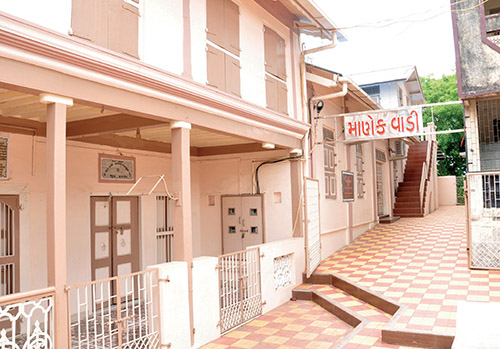
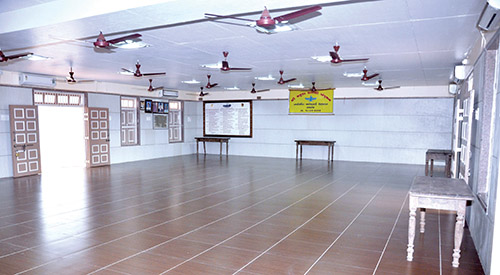
Hall and exterior (top) of Maneckwadi
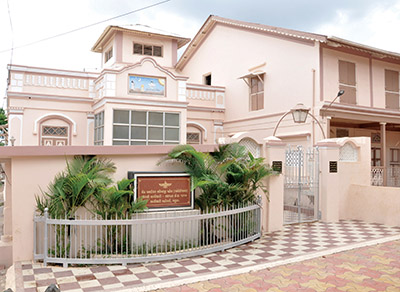
Anjuman property including dadgah
While Bajina and Hosang Mogal live in Navsari (around 28 km away), Rohinton and Kodia live in Mahuva village and take care of the dadgah and other local issues. The dadgah remains open all day though there is no priest and very few visitors, except during the annual jashan and get-togethers. Resources are limited "but by the grace of God gaaru gabraviach (we keep things rolling),” asserts Hosang. Bajina has been president of the Mahuva Anjuman for 20 years and drives down every day! Hosang, Rohinton and Maneck Mogal and Pervez Bacha are the other trustees of the Mahuva Parsi Anjuman.
"I was very pleased to see a large crowd at the inauguration on April 19, 2014,” Adi M. Patel of Bombay told Parsiana later. Patel was invited to preside over the function as it was his grandfather Ardeshir Bhikaji Patel of Andheri, Bombay (the founder of the Seth Pirojsha Ardeshir Patel Daremeher in Andheri in 1908) who in 1910 had donated funds for and supervised the construction of a new structure for the Mahuva fire temple as well as a community hall which was named Maneckwadi after his son who had died at a young age. The Tampal, Mogal and Bhesania ancestors had originally donated the land on which the community hall stands. The daremeher itself had been established as far back as 1859 by the anjuman of that time (see "Motivation at Mahuva,” Parsiana, December 21, 2010).
Dinshaw Tamboly, managing trustee of the WZO Trust Funds, was the chief guest at the inauguration of the renovated hall. Among the invitees were Jamshed and Yasmin Dotivala and Dr Sarosh Bhacca of Surat, Dara Deboo from Navsari, Persi Buhariwala of Vyara, Sam Chothia of Valsad, Marzban Baria of Bilimora and many others. Hosang Mogal’s book in Gujarati and English entitled Maneckwadi and Rusi Besania’s Mahuva ni Dhoop Sugandh in Gujarati were released on the occasion at the hands of Patel and Tamboly respectively. A marble plaque with the names of the donors was unveiled by Homi Mistry, trustee of the Seth Jivanji Jamasji Mistry Surat Adarian Fund. Aban Mogal was the master of ceremonies.
Besania, who writes on religious themes, lives in Surat but is originally from Mahuva and it was his dream that at least one of his books be released in his home town, Hosang Mogal, who has a doctorate in microbiology and is a retired principal, told Parsiana on the phone from Navsari. He commended Besania’s interest and hard work in tracing the Besania family genealogy back 200 years and incorporating the family tree in his book. Dhoop Sugandh also includes "sweet memories” of his (Besania’s) childhood. A 90-year-old photo taken in Kani village (in Mahuva taluka) at the navjote ceremony of three girls (Silloo Rustomji Bavaadam, Naju Jasi Adajania and Dolly Rustomji Anklesaria) captures for history the thriving Parsi population of the area in those days! Prominent Parsis from the Daboo, Gheyara and Vakil families, among others, find mention in the book.
Maneckwadi records for posterity a mix of past and present. There are pictures of trustees and a long list of donors, big and small, who contributed towards the repairs of the community hall as well as the dadgah renovation in 2010. It was far harder this time, Hosang mentions, to gather funds for refurbishing the hall. "People give more easily for a dharmik (religious) cause,” he asserts. The book also includes a two-page tribute to Arnavaz, Adi Patel’s wife, who passed away on February 5, 2014 in Bombay. A former deputy general manager of Union Bank of India and a director of The Zoroastrian Co-operative Bank, the vivacious Arnavaz had taken part enthusiastically in the 2010 celebrations, made and obtained donations and endeared herself to all, the tribute notes.
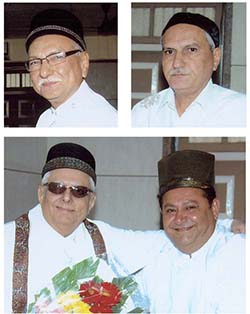
Dr Hosang Mogal, Rohinton Mogal, Hosi Bajina (right) felicitating Rusi Besania
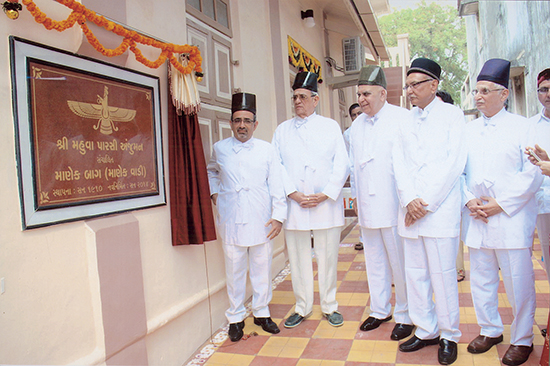
Unveiling plaque (l to r) Maneck and Adi Patel, Dinshaw Tamboly, Hosang Mogal and Jamshed Dotivala
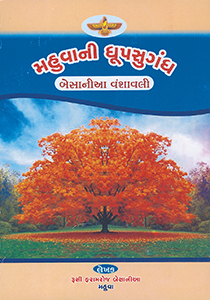
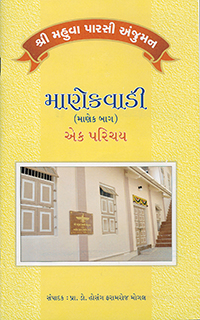
Books released on the occasion: Mahuva ni Dhoop Sugandh and Maneckwadi
The small book also includes pictures of recent functions held in the hall, including felicitations of the younger generation like Dr Simin Mogal and Malcolm Mogal, being honored for obtaining a PhD in microbiology and becoming a chartered accountant respectively. "It is difficult to get the young generation interested in Anjuman activities but we do hold a few functions so that the youth get to know their roots,” says Bajina, adding that fortunately most of the Zoroastrian agriculturists in the taluka are in their 50s. A small trust known as the Shree Mahuva Vibhag Garib Parsi Zarthosti Madad Fund, which has received considerable help through the years from the Surat Adarian Fund, continues to disburse around Rs 70,000 annually to deserving Zoroastrians of the surrounding areas. "Even at the time of Indian Independence there were around 40 houses open in Mahuva itself. By the 1970s the number had reduced to 20,” Hosang observes. "Most people have migrated to bigger cities for the education of their children.” (Wikipedia mentions another town named Mahuva situated on the Arabian Sea in Bhavnagar district in the Saurashtra region, which is a completely separate entity – editors)
Unlike in other places, the Mahuva Anjuman’s dakhma land has not been encroached upon though it is in disuse. "Though very few we are well known in Mahuva and people have left the land alone,” states Bajina who is also a committee member of a local high school and a director of a cooperative credit society. "We want to build a small boundary around the dakhma land to protect it and maybe plant bawal trees. Yes, we will need to gather donations and we are looking at the project very seriously,” Hosang declares. The minuscule community’s commitment remains unabated.
◆ ◆ ◆
From the archive