
Cover Story
Concourse at the Congress
A plethora of speakers and array of activities left the organizers fighting against time at the 10th World Zoroastrian Congress
Bags and bodies were frisked. The bar code on the identity card hung around one’s neck was scanned. Delegates registered for the 10th World Zoroastrian Congress (10WZC) converged outside the NSCI (National Sports Club of India) Auditorium well ahead of time. Considering that the program announced on the Congress website was repeatedly revised, and no kit bags could be distributed to the delegates on the first day, there was uncertainty whether the morning proceedings would start at 9.30 or 10 a.m. on December 27, 2013. Actually it commenced even later than that. Heavy security arrangements, with sniffer dog and trained personnel, continued throughout the day for this was the first World Zoroastrian Congress that was to be inaugurated by the President of India later in the evening.
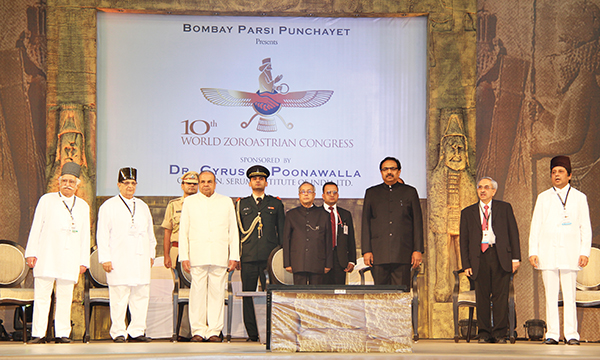
Inauguration (from left): Dadi Mistry, Dr Cyrus Poonawalla, K. Sankaranarayanan, Pranab Mukherjee, Jayant Patil,
Nadir Godrej and Maneck Davar
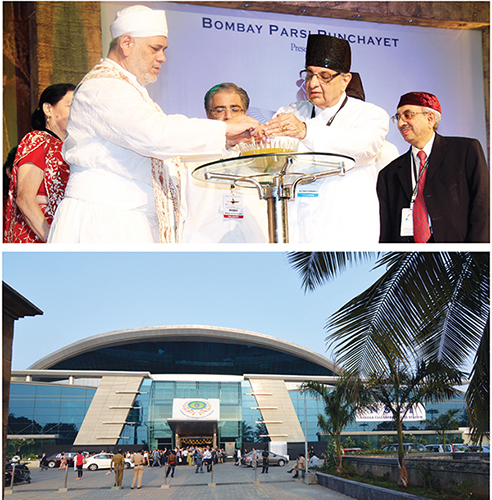
Lighting of the lamp by Dastur Khurshed Dastoor and Dr Cyrus Poonawalla; external view of the venue
Traffic in many parts of Bombay had been brought to a crawl with the arrival of the head of the nation, Pranab Mukherjee. Parsis at the Congress though were in the fast lane for as the chairman and chief sponsor of the 10WZC Dr Cyrus Poonawalla remarked, "The prestige of the community has been greatly enhanced.” Sharing the podium with the President and Poonawalla were the Governor of Maharashtra, K. Sankaranarayanan, the minister for rural development, Government of Maharashtra, Jayant Patil, vice chairman of 10WZC Nadir Godrej, president emeritus of the Delhi Parsi Anjuman Dadi Mistry whose influence in Delhi benefitted the Congress organizers at different times, and honorary secretary of the Congress, Maneck Davar. The glamorous Parizaad Kolah Marshall was the master of ceremonies for the inaugural function in the evening. No trustee of the Bombay Parsi Punchayet (BPP), the hosts of the Congress, was seen on stage for the inaugural function in keeping with their earlier agreement with Poonawalla who chose not to side with either of the warring factions.
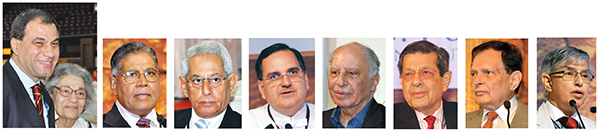
Lord Karan Bilimoria with mother Yasmin, K. Rahman Khan, Fali Major, Darius Khambatta, Keki Daruwalla,
Dr Rustom Soonawalla, Dr Farokh Udwadia and Sam Balsara
Community members on and off the dais were heartened with Mukherjee’s observation that whilst "retaining their identity and culture, they have merged into India’s social, cultural and political fabric… contributed to India’s development and achievements in diverse fields of human activity.” Recalling their contribution to India’s fight against colonialism, with Mme Bhikhaiji Cama unfurling the first Indian flag of Independence in Stuttgart, and Dadabhai Naoroji declaring that he was "above all an Indian,” the President named scientists like Dr Homi Bhabha and Dr Homi Sethna, industrialists like J. R. D. Tata, defence chiefs like Field Marshal Sam Manekshaw, Vice Admiral Jal Cursetji, Air Chief Marshal Aspy Engineer and Fali Major. A few days earlier he was surprised that the NDTV list of 25 distinguished Indians with unparalleled accomplishments included three Zoroastrians – Ratan Tata, Fali Nariman and Zubin Mehta.
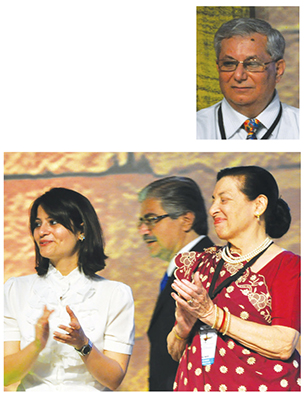
Top: Cawas Panthaky; above, from left: Ashishwang Irani, Mahiyar Dastoor and Homai Modi
For the Iranian delegates he had a special invitation. "India is your home and we have a warm place for you in our heart.” For the Indian Zoroastrians he had a query, "Why is it that today the community has come to a crossroad and is threatened with extinction?... This phenomenon needs to be addressed pragmatically and sensitively.” With the introduction of the Government of India’s Jiyo Parsi scheme he was "optimistic” that the 10% annual decline in community numbers would be arrested. With its "talent and discipline (the community) is bound to continue on the path of progress… and contribute to civilization.”
In his message carried on the first page of the Congress souvenir and program the President had written, "I am sure the deliberations held at the Congress will help evolve strategies for the welfare of the community even as it preserves its unique identity.” He was referring to the theme of the Congress: "Zoroastrianism In The 21st Century: Nurturing Growth And Affirming Identity.” Although messages from other dignitaries too referred to the theme, how many of the 1,200 delegates would have known it despite 121 speakers at 45 sessions alluding to it during the four days of the Congress from December 27-30? Whilst suggestions aplenty emerged, strategies may take a while to surface.
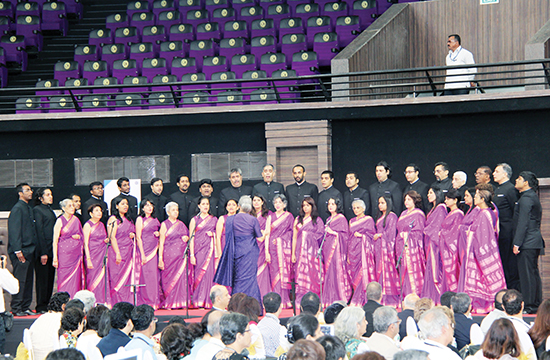
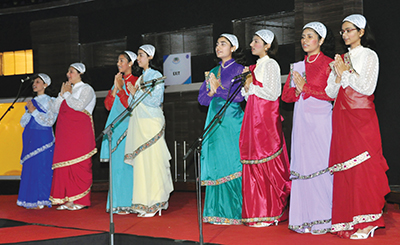
The Paranjoti Choir and students of the Bai Avabai Petit Girls High School
As Poonawalla had stated in his welcome address, "I hope a stronger path for the way ahead will emerge. I hope the Congress will come up with practical solutions for the dwindling community.” Whilst he was not averse to debate or controversy he was emphatic that "the Congress should be conducted in a cordial way.”
Yet another dignitary to grace the Congress was the minister of minority affairs K. Rahman Khan who was reminded of Mahatma Gandhi’s words "A civilization can be judged from the way it treats its minorities.” With the Direct Tax Code expected to be passed in the Parliament in the near future, the Parsi community was concerned that the tax exemption hitherto enjoyed by religious charitable trusts will be removed and they may be compelled to pay a 30% tax on donations received. Encroachment on its cemetery lands and inability to get admission into 15 institutions endowed by Parsis were other issues raised by the Zoroastrian representative to the National Minorities Commission Keki Daruwalla.
Reassured Khan, "As citizens we draw our strength from our constitution…that guarantees protection.” The community’s declining numbers "should be a major cause for concern for the entire nation. How can we allow this to happen to such a vibrant community?” he asked, urging the youngsters to take their duty seriously. "I hope the 10WZC will send a message that the community numbers should be one lakh before the 11WZC.” He was equally emphatic that there should be a law to protect the properties of all religious minorities.
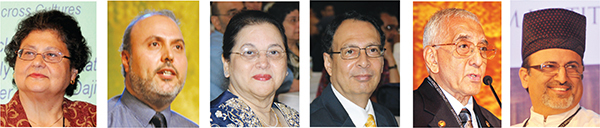
From left: Katayun Kapadia, Malcolm Deboo, Meher Bhesania, Neville Shroff, Rustom Ghadiali and Firoze Pestonji
"Are you going to enrich yourself to be able to help the community around you to improve?” enquired Lord Karan Bilimoria of Chelsea in his speech on "Zoroastrian Achievement: An Unbroken Thread from Cyrus the Great to Today.” "You cannot practice integrity unless you are whole,” observed Bilimoria after recalling the famous words: "Some fail because of and others succeed in spite of.” A stalwart of the Indian Airforce, Air Chief Marshal (Retd) Fali Major reinforced, "While it is great and honorable to be a Zoroastrian Parsi, may I suggest you are first an Indian and then a Parsi.” He was speaking on "Nationalism, Nation-Building and National Security: Our contribution then and now.”
Godrej’s speech in verse on "Zoroastrians and Bombay” brought a smile to the listeners especially the verses:
"And Canton’s loss was Bombay’s gain/As hospitals were built/And causeways spared commuter pain./They gave not from their guilt
But feelings of noblesse oblige./Asceticism was disdained/Their storied wealth gave them prestige/But only if they deigned
To share their wealth for public good/To satisfy a need./Their wealth, they always understood/Was not for private greed…”
Except for the meeting with the President and the dinners at night, every other session was delayed as time management took a backseat. Poor attendance at the first session for the day, delayed starts, serpentine queues for tea and lunch on certain days resulted in deliberations on the second and fourth day ending two hours behind schedule! The trip to the Prince of Wales Museum for a glimpse of the Cyrus Cylinder on the last day had to be abandoned mid way and eight bus loads were made to turn back once they learnt that the gates to the Museum had already shut. But when they knew that Tanaz Godiwalla’s patra nu bhonu awaited them at the Turf Club they did not complain excessively. All other meals with a spread of 18-20 dishes were catered by Indigo.
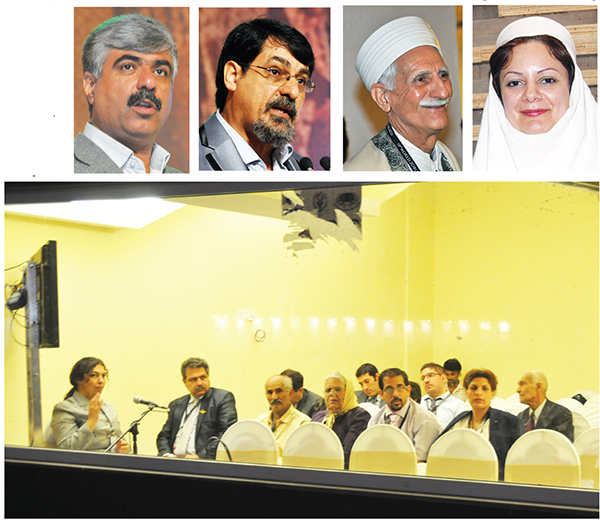
Top row (from left): Dr Esfandiar Ekhtiyari,Dr Rostam Khosraviani, Mobed Mehraban Firouzgari and
Mobedyar Rashin Jehangiri, a session in progress
Fortunately on the third day when the sessions were supposed to be wrapped up early in honor of The 10th WZC Race Day to which the delegates were specifically invited by Poonawalla and the current chairman of the Royal Western India Turf Club Vivek Jain, although the proceedings were behind schedule by over an hour, many were able to witness three of the nine races. As noted a message from Jain in the Cole Race Card, "For the first time ever we announce an entire race day in honor of a community and filled with a record, eight, million/multi million races catering for virtually every class… 1,500 delegates from 15 countries,” many of them dressed in traditional Zoroastrian wear, provided a special ambience to the Race Day.
None of the late evening entertainment programs suffered although during the day many speakers were compelled to condense their original presentation in one-third the allotted time. Thus at the end of the first day the audience enjoyed "And then they came to India,” a performance by Mallika Sarabhai and Darpana Performing Group. On the second evening Shiamak Davar’s troupe presented an impressive "Selcouth.” Seeing snippets of "Laughter in the House,” as the stalwarts of Parsi theater were remembered in a musical revue directed by Sam Kerawalla took many on a nostalgic journey. Ultimate dhamaka came on the last night at the Turf Club as cine star Boman Irani introduced fresh and familiar faces of community talent after the "unsung heroes” – religious educator Ratamai Peer and Bomi’s Boys who voluntarily clean and repair fire temples were honored with a cash gift of Rs 1,00,000 and a salver.
Adding their own charm to the proceedings were the students of Bai Avabai Petit School who sang a monajat at the first morning session and the Paranjoti Choir who rendered songs in different languages including a scant choral rendition of Ashem Vohu by Meher Madon Jansen during the inaugural session graced by the President. Compering on different days was done by Mahiyar Dastoor and Hoshaang Gotla.
Barring the breaks for tea and lunch, talk shops continued throughout the day, in the main hall, and on the second and third day with additional breakaway sessions. Whilst those in the main hall enjoyed the facility of larger seating capacity, those in the two smaller halls could just about accommodate 200 delegates, making the speakers and audience feel they were relegated to the sidelines. Outside the halls, small cubicles were offered to those who wanted to promote their books, artefacts, embroidery, toiletries, spices and condiments, or even banking services.
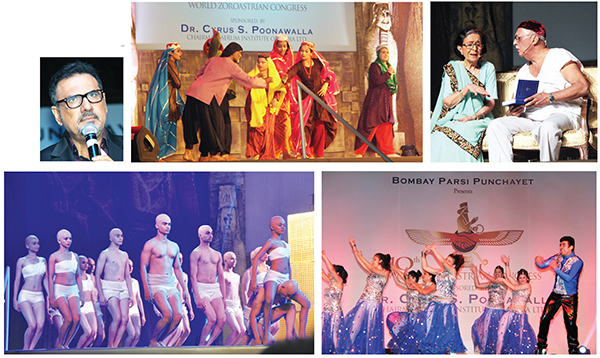
Clockwise from top left: Boman Irani; Mallika Sarabhai’s Darpana Group, theater veterans Ruby Patel and
Bomi Dotiwalla; youth talent night and Shiamak Davar’s Selcouth
Prayer and practice of the faith
A day prior to the Congress the organizers had scheduled a jashan at the H. B. Wadia Atash Behram that was led by Dasturs Khurshed Dastoor and (Dr) Peshotan Mirza. With 100 mobeds joining in the jashan there were more priests than devotees in attendance.
The deliberations at the 10WZC were meant to be ignited with a benediction by Dastoor but he chose to start with a brief congregational prayer in honor of the chief executive officer of the Bombay Parsi Punchayet Mehli Colah who had passed away the previous night after lying in a comatose condition for over two months. Following his benediction and English translation there was lighting of the lamp by Poonawalla, Godrej, Dastoor, Davar and program coordinator Homai Modi.
Whilst the presence of Dr Esfandiar Ekhtiyari, Zoroastrian representative in the Iranian Majlis, helped the Indian community connect with their Persian roots as did a speech by Dr Rostam Khosraviani, at the morning session, drawing maximum attention to the Iranian delegation was their young lady mobedyar Dr Rashin Jehangiri. Attired in a special white outfit designed to differentiate her from the rest of the laity, she was flooded with requests by delegates who wanted to get themselves photographed alongside the pretty mobedyar. Flashing a smile, she was always willing to oblige. The only disappointment for her was the half-hour time slot granted to her for her presentation. Whilst she was originally scheduled to speak between 6 and 6.30 p.m. on the second day of the Congress, Jehangiri ultimately got a chance after 8 p.m., not in the main hall but in an adjoining room when most delegates were more interested in grabbing seats for the Shiamak Davar show. A session on "Gathas the Beacon in the 21st Century” by Fariborz Rahnamoon was one more concurrent session addressed by an Iranian.
"We Iranians and Parsis are like twins separated at birth,” observed Perviz Varjavand who sought to clarify that "Iranians are very down-to-earth and different… We are very proud of our women mobeds. They participate in most of our functions.” He was speaking at the session on "Practices of the Zoroastrian Faith in India and Other Parts of the World — Future of Parsi Irani Communities in India and the Diaspora.” The same session saw four speakers from USA, with two, Pervin Mistry and Sarosh Maneckshaw being conservative and against "making changes in the divinely ordained religion,” and Bomi Patel and Federation of Zoroastrian Associations of North America (FEZANA) president Katayun Kapadia choosing to be inclusive and adaptive under the guidance of their two mobed councils so that "religion becomes relevant in the daily life of young Zarathushtis.”
As had forewarned session chair Dorab Mistry erstwhile president of the Zoroastrian Trust Funds of Europe (ZTFE), "Don’t criticize. Be factual. I don’t think any one of us is a fountain of wisdom.” On behalf of the UK community current ZTFE president Malcolm Deboo commented, "We are not radical. Historically we have looked to the BPP for guidance but we are not subservient. We are junior partners.” Australia being a young migrant community, they hope to "learn from the mistakes” of the others in the diaspora, remarked Firoz Pestonji.
A day prior to the Congress the organizers had scheduled a jashan at the H. B. Wadia Atash Behram that was led by Dasturs Khurshed Dastoor and (Dr) Peshotan Mirza. With 100 mobeds joining in the jashan there were more priests than devotees in attendance.
The deliberations at the 10WZC were meant to be ignited with a benediction by Dastoor but he chose to start with a brief congregational prayer in honor of the chief executive officer of the Bombay Parsi Punchayet Mehli Colah who had passed away the previous night after lying in a comatose condition for over two months. Following his benediction and English translation there was lighting of the lamp by Poonawalla, Godrej, Dastoor, Davar and program coordinator Homai Modi.
Whilst the presence of Dr Esfandiar Ekhtiyari, Zoroastrian representative in the Iranian Majlis, helped the Indian community connect with their Persian roots as did a speech by Dr Rostam Khosraviani, at the morning session, drawing maximum attention to the Iranian delegation was their young lady mobedyar Dr Rashin Jehangiri. Attired in a special white outfit designed to differentiate her from the rest of the laity, she was flooded with requests by delegates who wanted to get themselves photographed alongside the pretty mobedyar. Flashing a smile, she was always willing to oblige. The only disappointment for her was the half-hour time slot granted to her for her presentation. Whilst she was originally scheduled to speak between 6 and 6.30 p.m. on the second day of the Congress, Jehangiri ultimately got a chance after 8 p.m., not in the main hall but in an adjoining room when most delegates were more interested in grabbing seats for the Shiamak Davar show. A session on "Gathas the Beacon in the 21st Century” by Fariborz Rahnamoon was one more concurrent session addressed by an Iranian.
"We Iranians and Parsis are like twins separated at birth,” observed Perviz Varjavand who sought to clarify that "Iranians are very down-to-earth and different… We are very proud of our women mobeds. They participate in most of our functions.” He was speaking at the session on "Practices of the Zoroastrian Faith in India and Other Parts of the World — Future of Parsi Irani Communities in India and the Diaspora.” The same session saw four speakers from USA, with two, Pervin Mistry and Sarosh Maneckshaw being conservative and against "making changes in the divinely ordained religion,” and Bomi Patel and Federation of Zoroastrian Associations of North America (FEZANA) president Katayun Kapadia choosing to be inclusive and adaptive under the guidance of their two mobed councils so that "religion becomes relevant in the daily life of young Zarathushtis.”
As had forewarned session chair Dorab Mistry erstwhile president of the Zoroastrian Trust Funds of Europe (ZTFE), "Don’t criticize. Be factual. I don’t think any one of us is a fountain of wisdom.” On behalf of the UK community current ZTFE president Malcolm Deboo commented, "We are not radical. Historically we have looked to the BPP for guidance but we are not subservient. We are junior partners.” Australia being a young migrant community, they hope to "learn from the mistakes” of the others in the diaspora, remarked Firoz Pestonji.
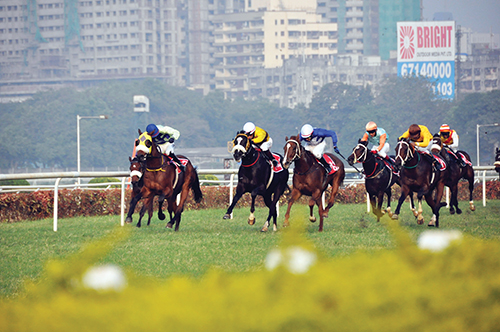
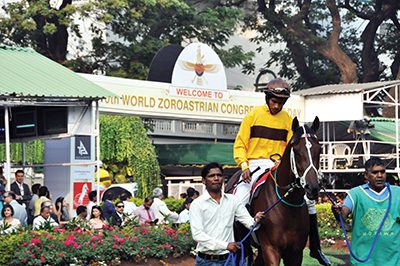
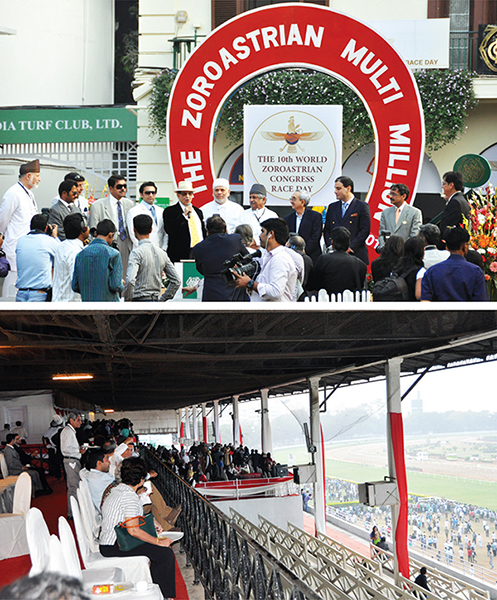
10thWZC Race Day at the Mahalaxmi Race Course Photographs: By staff photographer
Traditions, customs and heritage
The "farcical and tragic” interpretation of so-called Zoroastrian rules wherein admission to many fire temples is only permitted to those born of both Zoroastrian parents made Maharashtra advocate general Darius Khambatta wonder "whether Zarathushtra, born of non-Parsi parents, would be able to enter agiaries and atash behrams!... Let agiaries and atash behrams throw open their doors to all Zoroastrians. The zeal and fervor of any Zoroastrian can never desecrate a fire.” He advocated, "Let fires form the seeds of new fires… under new trust deeds that permit entry to all. There is nothing non-Parsi about this.”
A few hours later BPP trustee Khojeste Mistree commented, "As inheritors of a religious legacy we have to hand over the legacy intact to the next generation…The Zoroastrian religion is ethno focused; no non-Iranians were able to sustain the Zoroastrian message… It is foolish for people to say Zoroastrianism is a universal religion. Our fire temples were built for us; not for the whole world. Let them not break down customs.” Asserted Mistree, "Religion…cannot be left to legal luminaries.” It should be the domain of "those who have studied our faith, those who have done enough research.”
"How are we going to protect what we have if we are not willing to spare even the Iranshah?” asked Dastoor in his spirited talk lambasting the "so-called defenders of the faith” for trying to deny Udvada a heritage precinct by fabricating canards. Whilst he spoke on "Udvada Today” Mirza spoke on "High Priests: Early History of Udvada” in the session that included the release of the book Images of Udvada.
"Teaching and Studying Zoroastrianism in the 21st Century” was a topic close to the heart of Dr Yuhan Vevaina. Oft raised subjects like "Are the present day Parsis versatile and illustrious like their forefathers? If not why?” was the topic dissected by one panel whilst another discussed "Late marriages and divorce amongst Parsis.” Both these were chaired by noted solicitor Burjor Antia who believes every Zoroastrian is bestowed with a "trust and obligation to the next generation to follow the religion and race.”
A curator of the British Museum, Dr Vesta Curtis brought to life Ferdowsi’s Shah Nameh with accompanying visuals of certain episodes and described it as "one of the most important heritage that we have” tying up "myth/history/folklore of prehistoric Iran in beautiful and eloquent language and rhyme.” An audiovisual presentation by Rukshana Nanji showed archeological evidence of Zoroastrian migrants to India.
The "farcical and tragic” interpretation of so-called Zoroastrian rules wherein admission to many fire temples is only permitted to those born of both Zoroastrian parents made Maharashtra advocate general Darius Khambatta wonder "whether Zarathushtra, born of non-Parsi parents, would be able to enter agiaries and atash behrams!... Let agiaries and atash behrams throw open their doors to all Zoroastrians. The zeal and fervor of any Zoroastrian can never desecrate a fire.” He advocated, "Let fires form the seeds of new fires… under new trust deeds that permit entry to all. There is nothing non-Parsi about this.”
A few hours later BPP trustee Khojeste Mistree commented, "As inheritors of a religious legacy we have to hand over the legacy intact to the next generation…The Zoroastrian religion is ethno focused; no non-Iranians were able to sustain the Zoroastrian message… It is foolish for people to say Zoroastrianism is a universal religion. Our fire temples were built for us; not for the whole world. Let them not break down customs.” Asserted Mistree, "Religion…cannot be left to legal luminaries.” It should be the domain of "those who have studied our faith, those who have done enough research.”
"How are we going to protect what we have if we are not willing to spare even the Iranshah?” asked Dastoor in his spirited talk lambasting the "so-called defenders of the faith” for trying to deny Udvada a heritage precinct by fabricating canards. Whilst he spoke on "Udvada Today” Mirza spoke on "High Priests: Early History of Udvada” in the session that included the release of the book Images of Udvada.
"Teaching and Studying Zoroastrianism in the 21st Century” was a topic close to the heart of Dr Yuhan Vevaina. Oft raised subjects like "Are the present day Parsis versatile and illustrious like their forefathers? If not why?” was the topic dissected by one panel whilst another discussed "Late marriages and divorce amongst Parsis.” Both these were chaired by noted solicitor Burjor Antia who believes every Zoroastrian is bestowed with a "trust and obligation to the next generation to follow the religion and race.”
A curator of the British Museum, Dr Vesta Curtis brought to life Ferdowsi’s Shah Nameh with accompanying visuals of certain episodes and described it as "one of the most important heritage that we have” tying up "myth/history/folklore of prehistoric Iran in beautiful and eloquent language and rhyme.” An audiovisual presentation by Rukshana Nanji showed archeological evidence of Zoroastrian migrants to India.
Numerical decline
The world population of Zoroastrians has declined from 124,953 in 2004 to 111,691 in 2012, as per the figures available with Roshan Rivetna of Chicago who had brought on stage representatives of different regions to verify the count that she was giving. But given the paucity of time at her disposal, most were asked to restrict themselves to one to five minutes. The next day too, at the session on "Demography and Way Forward: Issues of Fertility and Solutions” she had to fight a losing battle with time.
"How can we sustain a loss of 13,000 in less than a decade?” she enquired. BPP chairman Dinshaw Mehta feared there would be "no Parsis left to occupy flats in Parsi colonies.” Former director of the Tata Institute of Social Sciences (TISS) Prof Armaity Desai referred to a TISS study that showed the community fertility had dropped to .89 when the required replacement level is 2.1. Their study also found that suitability and companionship were more important than looks and purse in a prospective marriage partner. A high degree of individualism, lack of parental push and ungrudging acceptance of unmarried individuals were other factors that contributed to late or no marriages in the community.
To community leaders desperate to offer incentives for reproduction, gynecologist Dr Nozer Sheriar pointed out, "You cannot buy reproductive behavior.” Dr Zinobia Madan and gynecologist Dr Anahita Pandole elaborated on the Jiyo Parsi scheme that will commence at the Jaslok Hospital in 2014 and gradually cover other regions. Dr Pervin Dadachanji, a psychiatrist who found "a lot of non-consummation of marriage within the community” recommended that pre-marital counseling should be made mandatory to improve the quality of parents and children.
The world population of Zoroastrians has declined from 124,953 in 2004 to 111,691 in 2012, as per the figures available with Roshan Rivetna of Chicago who had brought on stage representatives of different regions to verify the count that she was giving. But given the paucity of time at her disposal, most were asked to restrict themselves to one to five minutes. The next day too, at the session on "Demography and Way Forward: Issues of Fertility and Solutions” she had to fight a losing battle with time.
"How can we sustain a loss of 13,000 in less than a decade?” she enquired. BPP chairman Dinshaw Mehta feared there would be "no Parsis left to occupy flats in Parsi colonies.” Former director of the Tata Institute of Social Sciences (TISS) Prof Armaity Desai referred to a TISS study that showed the community fertility had dropped to .89 when the required replacement level is 2.1. Their study also found that suitability and companionship were more important than looks and purse in a prospective marriage partner. A high degree of individualism, lack of parental push and ungrudging acceptance of unmarried individuals were other factors that contributed to late or no marriages in the community.
To community leaders desperate to offer incentives for reproduction, gynecologist Dr Nozer Sheriar pointed out, "You cannot buy reproductive behavior.” Dr Zinobia Madan and gynecologist Dr Anahita Pandole elaborated on the Jiyo Parsi scheme that will commence at the Jaslok Hospital in 2014 and gradually cover other regions. Dr Pervin Dadachanji, a psychiatrist who found "a lot of non-consummation of marriage within the community” recommended that pre-marital counseling should be made mandatory to improve the quality of parents and children.
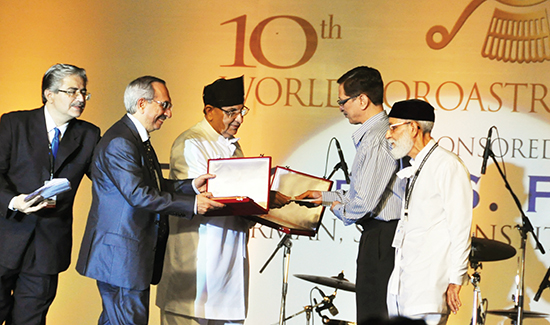
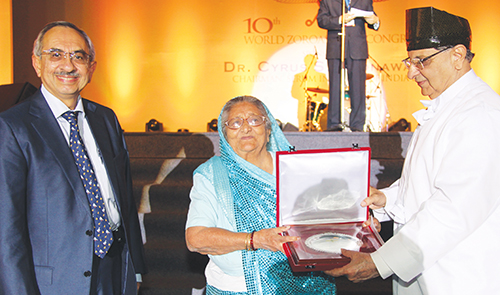
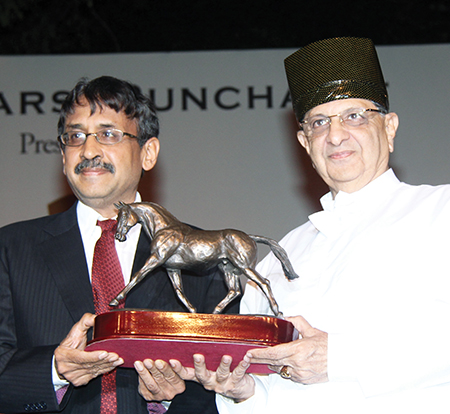
(Top) Godrej and Poonawalla handing Unsung Heroes Awards to Nozer Sutaria and Cyrus Siganporia of Bomi’ s Boys;
Ratamai Peer with individual award; (Below) Vivek Jain with Poonawalla
Glimpse of the diaspora
At the session on "Affirming the Global Parsi Iranian Zoroastrian Identity,” former FEZANA president Rohinton Rivetna referred to the five main identity constituents: language, that Iranians value but Parsis don’t; sartorial style, that is now becoming indistinguishable; wearing of sudreh-kusti, which Iranians do not consider important and Parsis are neglectful; names, that are no longer recognizable; culinary style, that is distinctive. Mehta mentioned that Parsi colonies in Bombay help to reinforce the community identity whilst Meher Bhesania of Dubai recommended the "skillful use of technological advances” to promote the community identity. Kapadia and Deboo recommended internal religious education for members of one’s own community and external education of the host country. Whilst remaining true to their faith and refusing to excommunicate anybody, in Ontario they advocate, "Each for oneself, Ahura Mazda for all,” announced Zoroastrian Society of Ontario president Sarosh Bharucha. Ekhtiyari referred to sacrifices made by Zoroastrians to preserve their identity despite being the most literate community.
The working of FEZANA and ZTFE was further enumerated at another session, as was "A window to the religious shrines of Yazd and Kerman,” a perspective on Pakistan and another on the Zoroastrian Association of New Zealand and the New Zealand Youth Congress scheduled in 2015.
At the session on "Affirming the Global Parsi Iranian Zoroastrian Identity,” former FEZANA president Rohinton Rivetna referred to the five main identity constituents: language, that Iranians value but Parsis don’t; sartorial style, that is now becoming indistinguishable; wearing of sudreh-kusti, which Iranians do not consider important and Parsis are neglectful; names, that are no longer recognizable; culinary style, that is distinctive. Mehta mentioned that Parsi colonies in Bombay help to reinforce the community identity whilst Meher Bhesania of Dubai recommended the "skillful use of technological advances” to promote the community identity. Kapadia and Deboo recommended internal religious education for members of one’s own community and external education of the host country. Whilst remaining true to their faith and refusing to excommunicate anybody, in Ontario they advocate, "Each for oneself, Ahura Mazda for all,” announced Zoroastrian Society of Ontario president Sarosh Bharucha. Ekhtiyari referred to sacrifices made by Zoroastrians to preserve their identity despite being the most literate community.
The working of FEZANA and ZTFE was further enumerated at another session, as was "A window to the religious shrines of Yazd and Kerman,” a perspective on Pakistan and another on the Zoroastrian Association of New Zealand and the New Zealand Youth Congress scheduled in 2015.
Welfare and philanthropy
To address the issue of growing economic vulnerability of the community in India was the session on "Parsi Philanthropy and Poverty Alleviation.” Having created "a permanent underclass,” charitable trusts should move "from dispensation to revitalization,” recommended session chair Dinshaw Tamboly. "We need to create jobs, to keep the universal wealth within our community,” declared Neville Shroff, president of the Zoroastrian Charity Funds of Hong Kong, Canton and Macao, whilst pledging to continue with the Hong Kong association’s "commitment to the worldwide community.” Recognizing that ownership of a house is considered the largest asset in the UK, Dorab Mistry said that when he appeals for funds he pitches for "just one year’s appreciation of your house” which roughly works out to £10,000. Philanthropy also encompasses religious studies, he added. FEZANA has a Zoroastrian unity and welfare committee and endeavors to be proactive and extend infrastructure support, stated Kapadia. Former FEZANA chair Firdosh Mehta who co-heads this committee, referred to Kapadia endowing a Fund for Children in memory of her husband Kersi who passed away last year.
Giving an overview of the Federation of Parsi Zoroastrian Anjumans of India, the only surviving founder member Dadi Mistry recalled the meetings of yore when smaller anjumans would appeal for financial help and "none would return empty handed because of the benevolent badshah Jamshed Guzder.” The underlying unrest within the 70 member anjumans of the Indian Federation made Mistry hope that there would once again be a "beginning of bonhomie.” He also referred to the work of the World Zoroastrian Organisation and the Delhi Parsi Anjuman.
The activities of the World Zarathushti Cultural Foundation were explained by Dr Homi Dhalla whilst Zareen Aroaz and her team elaborated on the Zoroastrian Women’s International Network. "Providing the Elderly a Life of Dignity” was one of the panel discussions led by BPP trustee Arnavaz Mistry whilst another session on "Caring for the Differently Abled and their Future — A Community Responsibility” was chaired by BPP trustee Armaity Tirandaz. Those participating with Mistry were Hutoxi Dadabhoy, Madan and Zarin Havewalla offering inputs. On the panel with Tirandaz were Dr Vispi Jokhi, Cyrus Bagwadia and Kashmira Kakalia.
To address the issue of growing economic vulnerability of the community in India was the session on "Parsi Philanthropy and Poverty Alleviation.” Having created "a permanent underclass,” charitable trusts should move "from dispensation to revitalization,” recommended session chair Dinshaw Tamboly. "We need to create jobs, to keep the universal wealth within our community,” declared Neville Shroff, president of the Zoroastrian Charity Funds of Hong Kong, Canton and Macao, whilst pledging to continue with the Hong Kong association’s "commitment to the worldwide community.” Recognizing that ownership of a house is considered the largest asset in the UK, Dorab Mistry said that when he appeals for funds he pitches for "just one year’s appreciation of your house” which roughly works out to £10,000. Philanthropy also encompasses religious studies, he added. FEZANA has a Zoroastrian unity and welfare committee and endeavors to be proactive and extend infrastructure support, stated Kapadia. Former FEZANA chair Firdosh Mehta who co-heads this committee, referred to Kapadia endowing a Fund for Children in memory of her husband Kersi who passed away last year.
Giving an overview of the Federation of Parsi Zoroastrian Anjumans of India, the only surviving founder member Dadi Mistry recalled the meetings of yore when smaller anjumans would appeal for financial help and "none would return empty handed because of the benevolent badshah Jamshed Guzder.” The underlying unrest within the 70 member anjumans of the Indian Federation made Mistry hope that there would once again be a "beginning of bonhomie.” He also referred to the work of the World Zoroastrian Organisation and the Delhi Parsi Anjuman.
The activities of the World Zarathushti Cultural Foundation were explained by Dr Homi Dhalla whilst Zareen Aroaz and her team elaborated on the Zoroastrian Women’s International Network. "Providing the Elderly a Life of Dignity” was one of the panel discussions led by BPP trustee Arnavaz Mistry whilst another session on "Caring for the Differently Abled and their Future — A Community Responsibility” was chaired by BPP trustee Armaity Tirandaz. Those participating with Mistry were Hutoxi Dadabhoy, Madan and Zarin Havewalla offering inputs. On the panel with Tirandaz were Dr Vispi Jokhi, Cyrus Bagwadia and Kashmira Kakalia.
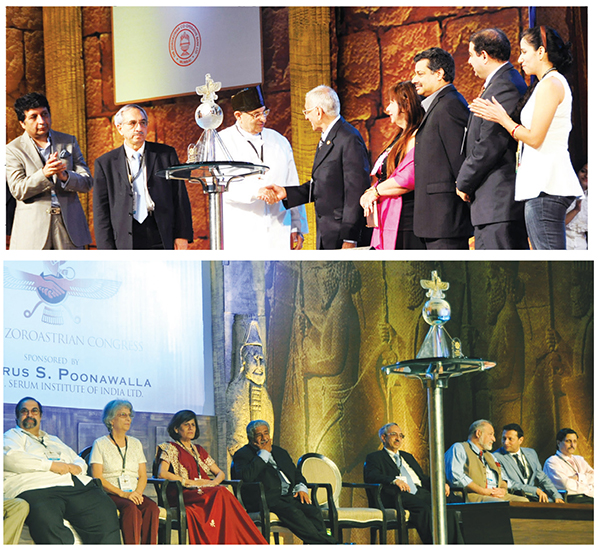
Top: Handing over the reins to Singapore and Hong Kong; (below) BPP trustees at the valedictory function
Business and entrepreneurship
"We should remember Jamsetji Tata’s words that the community is not just a stakeholder in our business but a major reason for our business,” opined Homi Khusrokhan, former managing director of Glaxo, Tata Tea, Tata Chemicals, when chairing the session on "Eminent Parsi Businessmen: Reconstructing the Community’s Business Skills.” Godrej observed that "business should have a social objective” like education or protection of environment. "Business becomes exciting when working for such goals,” he added. Keki Mistry, chief executive officer (CEO) of Housing Development Finance Corporation, specified that "in business you have to take risks. An entrepreneur should be able to understand risk with a clear perception.” "Develop strengths and expertise. Don’t harp on weaknesses. See change and challenge as opportunity,” suggested Shroff. Instead of being authoritative, be patient and humble. "From humility comes trust,” was the lesson learnt by Zubin Karkaria, CEO of VFS Global who earned respect even from his seniors. "Entrepreneurs are not born, they are made. We have to identify and promote them,” urged Yezdi Tantra, technical director of the international board of the World Zarathushti Chamber of Commerce (WZCC). A separate session on the WZCC was led by Adi Siganporia and Tantra.
"We should remember Jamsetji Tata’s words that the community is not just a stakeholder in our business but a major reason for our business,” opined Homi Khusrokhan, former managing director of Glaxo, Tata Tea, Tata Chemicals, when chairing the session on "Eminent Parsi Businessmen: Reconstructing the Community’s Business Skills.” Godrej observed that "business should have a social objective” like education or protection of environment. "Business becomes exciting when working for such goals,” he added. Keki Mistry, chief executive officer (CEO) of Housing Development Finance Corporation, specified that "in business you have to take risks. An entrepreneur should be able to understand risk with a clear perception.” "Develop strengths and expertise. Don’t harp on weaknesses. See change and challenge as opportunity,” suggested Shroff. Instead of being authoritative, be patient and humble. "From humility comes trust,” was the lesson learnt by Zubin Karkaria, CEO of VFS Global who earned respect even from his seniors. "Entrepreneurs are not born, they are made. We have to identify and promote them,” urged Yezdi Tantra, technical director of the international board of the World Zarathushti Chamber of Commerce (WZCC). A separate session on the WZCC was led by Adi Siganporia and Tantra.
Trusts and laws
In a hard-hitting talk Berjis Desai, partner of J. Sagar Associates, pointed out that good trusteeship material is lacking in community trusts and instead of providing leadership, trustees are wont to manage and micro-manage. The average age of trustees being over 60 they often look at a trust "as their personal fiefdom, accountability takes a backseat, vacancies are filled by family and friends, ability to disagree is missing.” In the next three decades there may be fewer persons willing to stand as trustees. With surplus assets and inept trustees "it could become a deadly cocktail where trusts become vulnerable to hostile elements and easy prey for fortune hunters…” When trustees fight in full public glare, the single largest threat would be the possibility of an administrator being appointed to take over charities, he cautioned.
The scope for redevelopment of Parsi baugs and properties was explored by BPP trustee Jimmy Mistry with other members of his fraternity Zareer Bhathena, director of Hilla Builders and Boman Irani, chairman of the Rustomjee Group. All three of them were unanimous in their opinion that with the government coming up with various schemes and offering maximum FSI (floor space index), this opportunity "should be grabbed with both hands.” With community housing getting dilapidated, redevelopment is a certainty, the only uncertainty is how to finance it and when to undertake it. This session provided for maximum interaction with the audience with session chairman Jimmy Mistry moving along the aisles to facilitate participation.
The session on "Indian Laws Affecting Zoroastrians in India and Abroad” had legal experts Dadi Engineer, Firoze Andhyarujina and Taubon Irani participating in the deliberations whilst the one on "Late Marriages and Divorce Amongst Parsis” had Andhyarujina, Irani and Armaity Khushrushahi with Antia.
Health and environment
In his presentation on the B. D. Petit Parsee General Hospital, "the first address for some and the last for others,” Homa Petit referred to their gross working deficit of Rs 98,136,793 and asked "What would happen if the Hospital was not there?” considering that 50% of their patients are given free and concessional treatment.
In his talk on "Women’s health from birth to menopause,” gynecologist Dr Rustom Soonawala explained how females are the basic sex and programed to be better survivors because they have two X chromosomes. "Health management requires not arms and ammunition but knowledge and education, genetics and immunization... A lot of adult problems have their roots in fetal life.” He urged postmenopausal women to spend around three hours a year on health check-ups to avoid subsequent complications.
"Of all the healers, he who heals with prayer is the greatest” for he heals the root source of all disease, Dr Farokh Udwadia quoted the Ardibehest Yasht in his talk on "Medicine: Past, Present and Future.” Prayer affects the mind and as the mind affects the body, it can affect healing too, he explained. "Blessed with the gene of longevity,” can have its disadvantages too in a community when they have to fight loneliness, diminution of faculties, disability, poverty, which can become unbearable. "I see quite a number of Parsis in that category. I wish the Punchayet would do something about it,” he urged. He referred to the efforts of Drs Bahadurji and Nariman to fight the plague epidemic in Bombay in the last decade of the 19th century when the community lost 1,000 Parsis. These doctors did not confine their activities to the Parsi community. "If we remain fossilized, confined to ethnicity, we are doomed. If we break ethnicity, Zoroastrianism will survive and perhaps even flourish.”
"Conservation can be equated with the good spirit and the work of Ahura Mazda whilst pollution as working on the other side,” related Aban Marker Kabraji, Asia regional director of the International Union for Conservation of Nature who was chairing the session on "The Zoroastrian Link to Nature and Conservation.” According to surgeon Dr Erach Bharucha, "Zoroastrianism has been an evolving religion,” whilst Ervad (Dr) Rooyintan Peer stated Zoroastrianism is "the most ancient and most scientific. Therefore it is known as the religion of nature.” Khusrokhan quoted from the Zoroastrian wedding ritual to remind the audience to "Be a doer of good deeds as Ahura Mazda is to his own creation.” "Every religion can learn from animals,” was the message veterinarian Dr Percy Avari sought to impress.
In a hard-hitting talk Berjis Desai, partner of J. Sagar Associates, pointed out that good trusteeship material is lacking in community trusts and instead of providing leadership, trustees are wont to manage and micro-manage. The average age of trustees being over 60 they often look at a trust "as their personal fiefdom, accountability takes a backseat, vacancies are filled by family and friends, ability to disagree is missing.” In the next three decades there may be fewer persons willing to stand as trustees. With surplus assets and inept trustees "it could become a deadly cocktail where trusts become vulnerable to hostile elements and easy prey for fortune hunters…” When trustees fight in full public glare, the single largest threat would be the possibility of an administrator being appointed to take over charities, he cautioned.
The scope for redevelopment of Parsi baugs and properties was explored by BPP trustee Jimmy Mistry with other members of his fraternity Zareer Bhathena, director of Hilla Builders and Boman Irani, chairman of the Rustomjee Group. All three of them were unanimous in their opinion that with the government coming up with various schemes and offering maximum FSI (floor space index), this opportunity "should be grabbed with both hands.” With community housing getting dilapidated, redevelopment is a certainty, the only uncertainty is how to finance it and when to undertake it. This session provided for maximum interaction with the audience with session chairman Jimmy Mistry moving along the aisles to facilitate participation.
The session on "Indian Laws Affecting Zoroastrians in India and Abroad” had legal experts Dadi Engineer, Firoze Andhyarujina and Taubon Irani participating in the deliberations whilst the one on "Late Marriages and Divorce Amongst Parsis” had Andhyarujina, Irani and Armaity Khushrushahi with Antia.
Health and environment
In his presentation on the B. D. Petit Parsee General Hospital, "the first address for some and the last for others,” Homa Petit referred to their gross working deficit of Rs 98,136,793 and asked "What would happen if the Hospital was not there?” considering that 50% of their patients are given free and concessional treatment.
In his talk on "Women’s health from birth to menopause,” gynecologist Dr Rustom Soonawala explained how females are the basic sex and programed to be better survivors because they have two X chromosomes. "Health management requires not arms and ammunition but knowledge and education, genetics and immunization... A lot of adult problems have their roots in fetal life.” He urged postmenopausal women to spend around three hours a year on health check-ups to avoid subsequent complications.
"Of all the healers, he who heals with prayer is the greatest” for he heals the root source of all disease, Dr Farokh Udwadia quoted the Ardibehest Yasht in his talk on "Medicine: Past, Present and Future.” Prayer affects the mind and as the mind affects the body, it can affect healing too, he explained. "Blessed with the gene of longevity,” can have its disadvantages too in a community when they have to fight loneliness, diminution of faculties, disability, poverty, which can become unbearable. "I see quite a number of Parsis in that category. I wish the Punchayet would do something about it,” he urged. He referred to the efforts of Drs Bahadurji and Nariman to fight the plague epidemic in Bombay in the last decade of the 19th century when the community lost 1,000 Parsis. These doctors did not confine their activities to the Parsi community. "If we remain fossilized, confined to ethnicity, we are doomed. If we break ethnicity, Zoroastrianism will survive and perhaps even flourish.”
"Conservation can be equated with the good spirit and the work of Ahura Mazda whilst pollution as working on the other side,” related Aban Marker Kabraji, Asia regional director of the International Union for Conservation of Nature who was chairing the session on "The Zoroastrian Link to Nature and Conservation.” According to surgeon Dr Erach Bharucha, "Zoroastrianism has been an evolving religion,” whilst Ervad (Dr) Rooyintan Peer stated Zoroastrianism is "the most ancient and most scientific. Therefore it is known as the religion of nature.” Khusrokhan quoted from the Zoroastrian wedding ritual to remind the audience to "Be a doer of good deeds as Ahura Mazda is to his own creation.” "Every religion can learn from animals,” was the message veterinarian Dr Percy Avari sought to impress.
Authors, poets and the media
Among the books released at the Congress were Ashdeen Lilaowala’s Threads of Continuity by Lord Bilimoria. Lilaowala was subsequently presented a cheque for Rs 1,00,000 for winning the WZC logo competition amongst hundreds of entries and seeing his motif used for the 10WZC. Keki Daruwala’s book Fire Altar was released by Homai Modi. Insights were offered by Brig (Retd) Behram and Zenobia Panthaki into their forthcoming coffee table book on Manekshaw. In Praise of Ahura Mazda reflects 50 years of Burjor Antia’s writings.
There being a "fairly large number of men and women in the advertising world,” in the session on "Parsi Contribution to Media, Advertising and Cinema” Sam Balsara, chairman and managing director of Madison World, advocated that their "skills be harnessed… and the power of communication” be used to solve a large number of problems facing the community. He also felt the community needed to establish a brand strategy. "We have to talk to the youth in the language of the youth,” observed veteran journalist Bachi Karkaria who felt that "the more doors and windows you shut, you will be left with a community not worth preserving.” Co-panelist Farokh Balsara, Ernst and Young’s media and entertainment industry leader for India, Europe, Middle East and Africa, urged Parsis to enter the sector of media entertainment even though it is somewhat looked down upon. Neville Taraporewalla who heads the Advertisers and Publisher Solutions Group of Microsoft Advertising in India impressed on the need to use digital tools to become a brand like the leader of Aam Admi Party Arvind Kejriwal.
The session on "Parsi Gujarati Literature, Theater and Parsi Authors” was brought to life by Keki Daruwalla, Meher Marfatia and Firdaus Gandevia.
Proof of advances in technology and media came with the announcement that thousands were able to view live the President’s inaugural speech and select other sessions. Even before the Congress ended, certain sessions were available for viewing on YouTube and the round of emails, Facebook and Twitter postings ensured that the highlights of the Congress were made known to even those who did not attend.
Among the books released at the Congress were Ashdeen Lilaowala’s Threads of Continuity by Lord Bilimoria. Lilaowala was subsequently presented a cheque for Rs 1,00,000 for winning the WZC logo competition amongst hundreds of entries and seeing his motif used for the 10WZC. Keki Daruwala’s book Fire Altar was released by Homai Modi. Insights were offered by Brig (Retd) Behram and Zenobia Panthaki into their forthcoming coffee table book on Manekshaw. In Praise of Ahura Mazda reflects 50 years of Burjor Antia’s writings.
There being a "fairly large number of men and women in the advertising world,” in the session on "Parsi Contribution to Media, Advertising and Cinema” Sam Balsara, chairman and managing director of Madison World, advocated that their "skills be harnessed… and the power of communication” be used to solve a large number of problems facing the community. He also felt the community needed to establish a brand strategy. "We have to talk to the youth in the language of the youth,” observed veteran journalist Bachi Karkaria who felt that "the more doors and windows you shut, you will be left with a community not worth preserving.” Co-panelist Farokh Balsara, Ernst and Young’s media and entertainment industry leader for India, Europe, Middle East and Africa, urged Parsis to enter the sector of media entertainment even though it is somewhat looked down upon. Neville Taraporewalla who heads the Advertisers and Publisher Solutions Group of Microsoft Advertising in India impressed on the need to use digital tools to become a brand like the leader of Aam Admi Party Arvind Kejriwal.
The session on "Parsi Gujarati Literature, Theater and Parsi Authors” was brought to life by Keki Daruwalla, Meher Marfatia and Firdaus Gandevia.
Proof of advances in technology and media came with the announcement that thousands were able to view live the President’s inaugural speech and select other sessions. Even before the Congress ended, certain sessions were available for viewing on YouTube and the round of emails, Facebook and Twitter postings ensured that the highlights of the Congress were made known to even those who did not attend.
Youth and sports
"Sports in the Parsi context or the lack thereof” saw well-known sportspersons deliberate on whether Parsis are shying away from commitment. Whilst holistic health guru Mickey Mehta felt sports remains the domain of the affluent who have access to clubs and gymkhanas, judo and sumo wrestling coach Cawas Billimoria pointed out that you have to be hungry and passionate about sports, not like the residents of Parsi colonies who are provided cricket nets but are yet not willing to practice. Athlete Adille Sumariwalla who represented India in the 1980 Olympics noted that students who are good at sports tend to be better at academics too. Former Test cricketer Nari Contractor regretted that "today we are on the lowest rung of the Homi Kanga League,” once the forte of Parsis.
The Return to Roots Program initiated by Parzor Foundation saw youngsters sporting white and green T-shirts sit in the first row as the group in charge Rosheen Kabrajee, Kaiyan Mistree, Dinsha Mistree and Shireen Havewala narrated their tale of helping 16 youngsters from overseas return to the roots, reconnect to their identity and revive the community. For this sojourn an itinerary was drawn up to take them from Varoli River where the first Zoroastrian migrants had supposedly arrived, through Sanjan, Surat, Navsari and Bombay.
Three members of the Zoroastrian Youth for the Next Generation — Viraf Hansotia, Darayus Tirandaz and Viraf Mehta — recounted the organization’s social and welfare activities over the last four years and their endeavors to increase their membership and reach without unwarranted policing from the elders.
"Sports in the Parsi context or the lack thereof” saw well-known sportspersons deliberate on whether Parsis are shying away from commitment. Whilst holistic health guru Mickey Mehta felt sports remains the domain of the affluent who have access to clubs and gymkhanas, judo and sumo wrestling coach Cawas Billimoria pointed out that you have to be hungry and passionate about sports, not like the residents of Parsi colonies who are provided cricket nets but are yet not willing to practice. Athlete Adille Sumariwalla who represented India in the 1980 Olympics noted that students who are good at sports tend to be better at academics too. Former Test cricketer Nari Contractor regretted that "today we are on the lowest rung of the Homi Kanga League,” once the forte of Parsis.
The Return to Roots Program initiated by Parzor Foundation saw youngsters sporting white and green T-shirts sit in the first row as the group in charge Rosheen Kabrajee, Kaiyan Mistree, Dinsha Mistree and Shireen Havewala narrated their tale of helping 16 youngsters from overseas return to the roots, reconnect to their identity and revive the community. For this sojourn an itinerary was drawn up to take them from Varoli River where the first Zoroastrian migrants had supposedly arrived, through Sanjan, Surat, Navsari and Bombay.
Three members of the Zoroastrian Youth for the Next Generation — Viraf Hansotia, Darayus Tirandaz and Viraf Mehta — recounted the organization’s social and welfare activities over the last four years and their endeavors to increase their membership and reach without unwarranted policing from the elders.
Credit Credits
"This position that brought honor and glory, also brought tension and worry,” summed up Dr Cyrus Poonawalla, chairman of the 10th World Zoroastrian Congress (10WZC) at the valedictory session. The seven sparring trustees of the Bombay Parsi Punchayet who had been expressly barred from being on the dais at the inaugural function as also the event graced by Mukherjee later in the evening, were requested to join him on stage for "I owe it to them that I came into this position.” He appreciated that they "spared no effort in the beginning,” met him several times and convinced him to contribute. He further lauded the "rest of the community that rallied around,” Godrej who offered "one of the greatest support,” and Davar who tried to convince him "that I don’t have to worry.” Earlier Davar had related that his attempts to placate Poonawalla with a "Don’t worry,” was always met with "When someone tells me not to worry, that is the time I start to worry.”
As commented Balsara in his summing up, "This Congress tried to match the five star pizzazz of the last Congress in Dubai. If we focus on being better than the best, the problems will take care of themselves.”
Following the 9WZC in Dubai, Davar said his vision for the 10WZC had been for the community "to look outward and inward,” with a national and societal focus, an exhibition showcasing the community’s history and culture. As he confessed, "The Congress would not have been possible but for one person, Dr Cyrus Poonawalla.” Besides his "generosity, he has given time and direction. With his sagacity, fair and conciliatory approach he was able to ensure the Congress was conducted in an atmosphere of harmony.” He also appreciated what Godrej termed as his "small contribution” with an accompanying clarification that "if the Congress succeeds he should get a little credit and if it fails, a small share of the blame.”
The Congress that had started to the strains of Also Sprach Zarathustra by Richard Strauss, also drew to a close with the same music when the torch was passed from Bombay to representatives of Singapore and Hong Kong, the joint hosts of the 11WZC. "WZC 2017 starts now. Let me thank Dinshaw Mehta who has kept his word and given it back to us,” said Rustom Ghadiali. Showing a short promotional film on Singapore as a tourist destination, he assured, "Singapore has been growing for the last 22 years… The next Congress website will be operational in six months.”
"This position that brought honor and glory, also brought tension and worry,” summed up Dr Cyrus Poonawalla, chairman of the 10th World Zoroastrian Congress (10WZC) at the valedictory session. The seven sparring trustees of the Bombay Parsi Punchayet who had been expressly barred from being on the dais at the inaugural function as also the event graced by Mukherjee later in the evening, were requested to join him on stage for "I owe it to them that I came into this position.” He appreciated that they "spared no effort in the beginning,” met him several times and convinced him to contribute. He further lauded the "rest of the community that rallied around,” Godrej who offered "one of the greatest support,” and Davar who tried to convince him "that I don’t have to worry.” Earlier Davar had related that his attempts to placate Poonawalla with a "Don’t worry,” was always met with "When someone tells me not to worry, that is the time I start to worry.”
As commented Balsara in his summing up, "This Congress tried to match the five star pizzazz of the last Congress in Dubai. If we focus on being better than the best, the problems will take care of themselves.”
Following the 9WZC in Dubai, Davar said his vision for the 10WZC had been for the community "to look outward and inward,” with a national and societal focus, an exhibition showcasing the community’s history and culture. As he confessed, "The Congress would not have been possible but for one person, Dr Cyrus Poonawalla.” Besides his "generosity, he has given time and direction. With his sagacity, fair and conciliatory approach he was able to ensure the Congress was conducted in an atmosphere of harmony.” He also appreciated what Godrej termed as his "small contribution” with an accompanying clarification that "if the Congress succeeds he should get a little credit and if it fails, a small share of the blame.”
The Congress that had started to the strains of Also Sprach Zarathustra by Richard Strauss, also drew to a close with the same music when the torch was passed from Bombay to representatives of Singapore and Hong Kong, the joint hosts of the 11WZC. "WZC 2017 starts now. Let me thank Dinshaw Mehta who has kept his word and given it back to us,” said Rustom Ghadiali. Showing a short promotional film on Singapore as a tourist destination, he assured, "Singapore has been growing for the last 22 years… The next Congress website will be operational in six months.”
Detailed reports on the 10WZC sessions will appear in forthcoming issues of Parsiana.
◆ ◆ ◆
From the archive