
In Memoriam
The charitable chairman
Died: Yezi Homi Tata, 88, chairman emeritus of Machine Tools India (MTI) Limited who for decades extended support to the Federation of the Parsi Zoroastrian Anjumans of India (FPZAI) by permitting his office premises and staff to serve as the Federation secretariat, on July 12, 2013, in Massachusetts following complications arising from an enlarged abdominal aortic aneurysm.
As a prospective buyer of MTI, Ashok Gupta was made to sit in Tata’s office for six months in 2005 to observe his style of functioning. Before finalizing the sale, Tata, the then chairman and managing director, laid down one specific condition: "You have to look after them (the staff)” whom he considered his best asset, recalled Gupta at the memorial meeting held at the Delhi Parsi Anjuman (DPA) Hall on July 21, 2013.
As a prospective buyer of MTI, Ashok Gupta was made to sit in Tata’s office for six months in 2005 to observe his style of functioning. Before finalizing the sale, Tata, the then chairman and managing director, laid down one specific condition: "You have to look after them (the staff)” whom he considered his best asset, recalled Gupta at the memorial meeting held at the Delhi Parsi Anjuman (DPA) Hall on July 21, 2013.
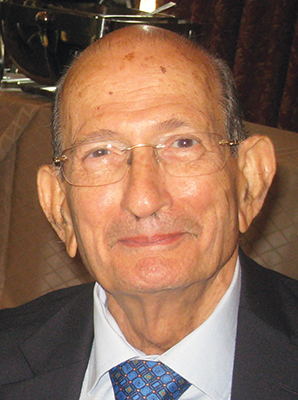
Yezi Tata: always calm and composed
"The trust he had in his staff and the liberty he gave them in discharging their duties and the style in which he ran the company was the foundation which raised the company’s turnover manifold (from seven crores to Rs 450 crores in a span of 35 years). He was a rare managing director who would go to the newly appointed engineer’s seat to enquire how he was faring with his new job and what assistance he needed from the management… Whenever a staff member fell sick and needed financial assistance he never put a limit to what was genuinely required for the treatment,” recalled Balasubramanian Padmanabhan who had served as senior general manager at MTI’s Madras branch.
Keki Gandhi who retired as MTI’s director secretary financial controller after 50 years of association with the firm, recalled Tata interviewing him in 1957 and so impressing the applicant that he "decided there and then that if appointed” he would leave the familiar environs of Bombay and relocate to the never visited Calcutta "for one reason alone… to work with this wonderful soft-spoken gentleman. Over the decades he was not only my boss but a true friend and confidant.” When Gandhi got married to Margaret, Tata’s secretary, "he blessed the union with ‘But I have been refereeing your fights for seven years!’” Giving him credit for "fostering relationships,” Margaret summed up, "He stood for a value system of consistency, loyalty and kindness.”
Tata’s association with MTI spanned nearly 60 years starting as secretary and chief accountant of this British subsidiary when he was deputed to Calcutta after being recruited in England by John Brown and Company Limited in 1955. Three years later he was elevated as director, secretary and financial controller. In early 1971 he was able to circumvent labor trouble by masterminding an overnight evacuation operation. Ava Khullar, vice president of the DPA and a close friend recalled how Tata had narrated the story of MTI’s move to Delhi from Calcutta. As MTI was under surveillance from the labor unions, Tata and some trusted colleagues managed to shift all the necessary documents and stocks overnight with the assistance of some youngsters from the Parsi Club.
Within two years when the company had managed to rear its head above water, the Government of India decreed that foreign enterprises could do business in India only if 60 percent control was in Indian hands. When the British managing director recommended closure of the company, Tata offered to inject fresh capital with the help of friends and relatives. "It was really his genius and ability to convince the parent company in the UK to form a rupee company where the parent company still retained their shares,” recalled B. K. Mathur, director sales at MTI. With Tata as managing director and noted metallurgist Dr Dara Antia as chairman, soon the loss making concern was turned into a growth oriented firm, ranking among the top five in the country. After Antia’s demise Tata was made chairman and managing director. He managed to ward off takeover bids by competitors for several years until he sold the entire shareholding in 2006 to Gupta who was content with a seat on the board as a non executive director whilst Tata continued as managing director until 2009. In 2011 when Tata was finally relieved as chairman, he was designated chairman emeritus.
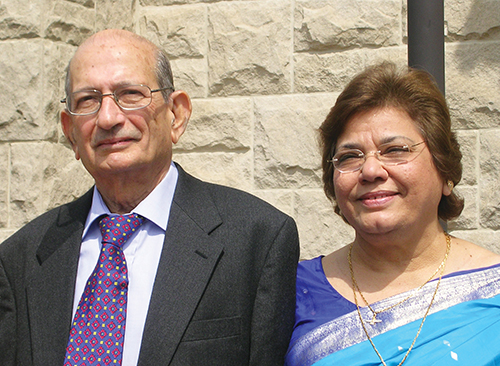
Yezi and Aloo Tata: complemented each other
Known to be a gentle introvert with a sharp intellect, he presented a sense of invulnerability and was always calm and composed. His dry sense of humor could keep the young and old regaled with umpteen tales, one of the popular relating his survival following the crash of the ill-fated Indian Airlines flight from Delhi to Bangalore in 1990.
Born in Jamshedpur to Ervad Homi and Mamai Tata, Yezi completed his schooling in Jamshedpur, studied commerce at Bombay’s Sydenham College and later obtained his chartered accountancy degree in the UK. He was wedded to his work until 2000 when at the age of 75 he married his friend and confidant Hoshang Dubash’s widow Aloo whom he had known since their younger days in Calcutta.
"Marriage suited him really well… They were a complementary couple — he calm, cautious and analytical, she was passionate, enthusiastic and intuitive… Finally after years of caring for others he had someone who would look after him,” commented his grand-niece Kainaz Dotivala Shroff who appreciated that after losing her maternal grandfather Piloo at a young age, it was his younger brother, "Yezi Kaka,” who proved to be the anchor for the family. "To us, the grand-nephews and nieces, he was always the exotic grandparent, who lived the exciting life… jet-setting across the globe and coming to us (in Jamshedpur) for brief much awaited visits, laden with gifts like Santa Claus. We cherished those visits, because he always made each one of us feel so special.”
She had come to Delhi to study at the time of their marriage and "they insisted that I live with them,” added Kainaz remarking that "Yezi Kaka was the quintessential Bada-sahib. He was always immaculately dressed with never a hair out of place. He loved his newspaper and his tea. His TEA was legendary...”
At the condolence meet, another old friend Farida Variava remembered their journey from Delhi to Nainital when along the way, he stopped unexpectedly, the reason she soon realized when out came a basket well equipped for tea, a crisp white tablecloth, bone china, flasks of hot water, with well made sandwiches by Daulat Singh, his trusted cook.
During their 13 years together Yezi and Aloo enjoyed traveling extensively. His hobbies also included golf, tennis, bridge, listening to classical music, reading, and walking for two miles four times a week until a day before his surgery last October.
After-death prayers for the much loved Tata were held not only in Delhi and Bombay but also in Jamshedpur, Boston and Los Angeles where the extended family reside. Broad-minded and liberal, he had progressive views concerning the Parsi community but was loath to take part in controversies. For years the FPZAI depended on his largesse for its administrative set-up. As summed up Gandhi who had served as joint honorary secretary of the FPZAI, "For 30 years Tata allowed the premises, facilities and services of the personnel of all offices of MTI, especially Delhi and Bombay, to be used for FPZAI. During the entire period the secretariat of the Federation was in MTI’s Delhi office.” Among the other community institutions with which he was connected were the Calcutta Parsee Club, the DPA and the Zoroastrian Association of Greater Boston Area. "He was a staunch supporter of the DPA, always there when the Anjuman needed him,” acknowledged DPA president Yezad Kapadia who had known him since their Jamshedpur days.
A founder member of The Oral School for Deaf Children in Calcutta, Tata continued to serve as its trustee and honorary treasurer until his demise. As recalled founder Dhun Adenwalla, he played a stellar role in the formation of the School, finalizing its constitution and statutory obligations as also looking after the nitty-gritty that helped the School reach a state of comparative stability. The governing body of the School held a condolence meeting on July 29 when the members commended his patience, planning, principles and purposeful life that inspired others.
The kind-hearted Tata is survived by his wife Aloo and sister Perin Jamshed Vazifdar.
◆ ◆ ◆
From the archive