
Cover Story
The energy of education
The Wadias of Bombay Dyeing continue their association with Poona’s Wadia College, as the oldest of the institutes named after their forefathers completes 80 successful years
"It is gratifying to bring back to memory all the achievements and accolades we received. At the same time our journey was not all fair weather. We have had our share of heartbreaks and hiccups, faults and foibles, tensions and worries,” asserts Prof Hoshang Moogat, retired principal of Poona’s Wadia College, now into its 81st year. Through the decades, the institution has worked hard to stay relevant, embodying the aspirations and attitudes of young India. The Nowrosjee Wadia College commenced its courses in 1932, affiliated to Bombay University as Poona University had not yet been born! Today its verdant and sprawling campus on Bund Garden Road has five institutes, with over 12,000 students — the Nowrosjee Wadia College of Arts and Science, Cusrow Wadia Institute of Technology, Ness Wadia College of Commerce, Neville Wadia Institute of Management Studies and Research and the Modern Education Society (MES) College of Engineering. The MES also runs the prestigious D. G. Ruparel College in Bombay and the New Law College in the Ruparel premises.
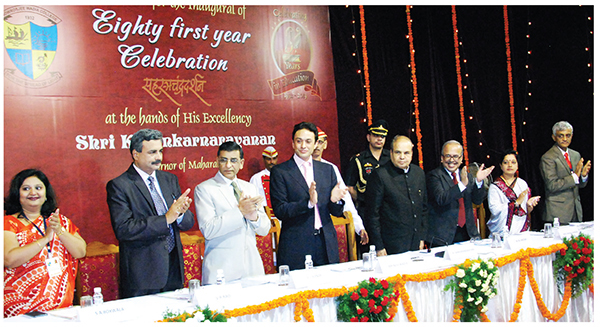
(l to r) Dr S. Boxwala, Prin V.R.Rao, Dr S. Bonde, Ness Wadia, Sankaranarayanan, Dr M. Andar,
Vaishali Bankar and Dr K. Venkataraghavan
"It is institutions like Wadia College that have made for Poona its reputation as the ‘Oxford of the East.’ The magnificent philanthropic contributions of Sir Cusrow Wadia and his brother Sir Ness, the vision and dedication of Principal V. K. Joag (MES founder) — let us salute all these men of vision,” stated K. Sankaranarayanan, Governor of Maharashtra at the inaugural function of the 81st Year celebrations on July 23, 2013 in the Tata Assembly Hall. Patiently awaiting the governor’s arrival into the gaily decorated hall were different generations of Wadians — silver-haired alumni in smart suits exchanging bonhomie and banter, faculty as gracious hosts and students as quiet but interested spectators. Principals of the various colleges and other dignitaries graced the dais. Seated in the first row of the audience were Moogat and Dr U. B. Bhoite who were to be felicitated as Eminent Wadians.
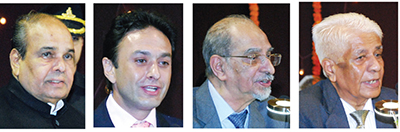
(From left): K. Sankaranarayanan, Ness Wadia, Hoshang Moogat, Dr U.Bhoite
"We are glad Ness Wadia (director of Bombay Dyeing and other Wadia Group companies and descendant of the College benefactors) is present and we express our appreciation to the Wadia family,” Sankaranarayanan stated. The biggest advantage India enjoys is its youth population, yet there is an acute deficit of skilled manpower, the Governor continued. We churn out millions of graduates and lakhs of engineers each year, but attaching too little importance to the liberal arts and humanities is hurting us. None of our universities figure in the list of the world’s top 50 universities. We have to attract the best and brightest to science, arts and humanities, he stressed, so that we have quality in all disciplines as well as a new breed of leaders.
"It is a pleasure and honor to be here,” Ness Wadia asserted, presiding over the function. "I have been coming here as a boy with my grandfather Neville and my father Nusli. The College motto — ‘for the spread of light’ — needs to continue. The Wadias have been facilitators, but it would be wrong for me to sit here and get accolades. It is the students and teachers who take things forward. We have 19 years to go to reach 100… with your support, wishes and all your good thoughts we will look back and say we did take it further…” he stated to a good round of applause.
Moogat and Bhoite received shawls, scrolls and floral tributes to a standing ovation. An emotionally overwhelmed Moogat stated: "It is with a feeling of deep nostalgia that I humbly accept the honor bestowed on me by my alma mater in its 81st year, coinciding with my 80 years on the stage of life. Our staff has pioneered the many projects that we have undertaken and far surpassed the little I did. The greatest reward is when a teacher’s students do far better than he could ever imagine. We ourselves feel that what we have done is just a drop in the ocean but the ocean, in the words of Mother Teresa, would be less because of that missed drop… I know that my College will live in my heart to my last breath as it gave me not only my bread and butter but also my life partner… I would like to remind our new generation of students and teachers that they are the standard bearers of a legacy of trust and respect.”
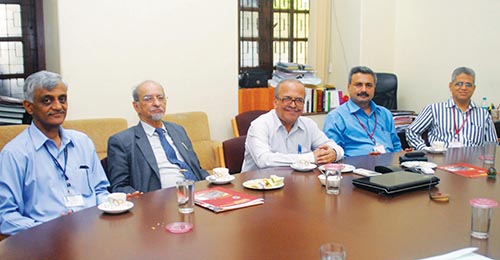
In the conference room (l to r) Venkataraghavan, Moogat, Andar, Rao and Prof D. Rajput
To Sir, with love
"I took my first tentative steps as a teacher in 1957 at a time when teaching was only for people who could not get something better to do. Even my parents and family including my future in-laws thought I was crazy to think of teaching as a career,” Moogat informed Parsiana later. His first pay packet was the glorious sum of Rs 23 and 12 annas! "I felt elated at being called Sir and strode into a class of about 100 boys and girls at the Wadia College when I was just 21. With lots of self-importance I began teaching a topic in maths and heard a lot of sniggering. I turned around to find that half the students were staring out of the window and the other half were in slumberland! I realized that this was not the way to teach. So from then on I started dancing on the podium singing the maths formula, egging the students to join the chorus!”
Teaching was interspersed with talk about life in all its hues. "I asked them to consider me their brother and tell me their difficulties. As the years passed I felt happy that my lectures were overflowing with students sitting even on the window sills, many from other colleges in Poona.” The professor’s antics, his ability to poke fun at himself leavened the lectures and taught students to laugh at themselves too.
"I took my first tentative steps as a teacher in 1957 at a time when teaching was only for people who could not get something better to do. Even my parents and family including my future in-laws thought I was crazy to think of teaching as a career,” Moogat informed Parsiana later. His first pay packet was the glorious sum of Rs 23 and 12 annas! "I felt elated at being called Sir and strode into a class of about 100 boys and girls at the Wadia College when I was just 21. With lots of self-importance I began teaching a topic in maths and heard a lot of sniggering. I turned around to find that half the students were staring out of the window and the other half were in slumberland! I realized that this was not the way to teach. So from then on I started dancing on the podium singing the maths formula, egging the students to join the chorus!”
Teaching was interspersed with talk about life in all its hues. "I asked them to consider me their brother and tell me their difficulties. As the years passed I felt happy that my lectures were overflowing with students sitting even on the window sills, many from other colleges in Poona.” The professor’s antics, his ability to poke fun at himself leavened the lectures and taught students to laugh at themselves too.
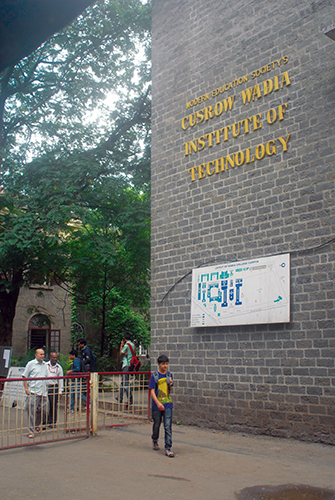
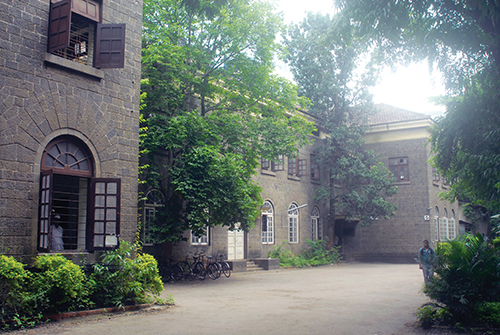
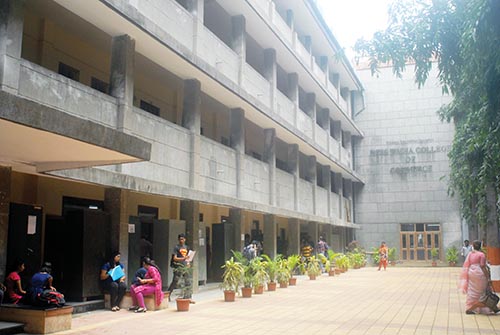
Different parts of the campus
Elevated from lecturer to head of the department of mathematics to principal of the Nowrosjee Wadia College, teaching is Moogat’s life, even post retirement. "As dean of the academic council I have to go for the meetings of the five institutes on our campus. When new staff is recruited I have to be present for the interviews. My former students have started running big classes, charging high fees. But my greatest reward is the love and respect I have received from thousands of my students. Even top executives of multinational companies meet me when they come to Poona and touch my feet. It is an overwhelming emotion.”
Through the decades however, Moogat says he has noticed "a slow and steady erosion of value systems, brought about tragically in our country by corruption and exploitation.” As president of the Sardar Dastur Schools Trust, he has written to Shashi Tharoor, central minister of state, with regard to the difficulties and coercion faced by schools due to the implementation of the Right to Education Act. The intrepid educationist had also written earlier to Prime Minister Manmohan Singh and other central ministers.
The edifice of education
Nowrosjee Wadia College of Arts and Science
"The Modern Education Society (MES, which runs the Wadia and Ruparel Colleges) was founded on February 15, 1932 by a group of experienced teachers from the Deccan Education Society’s Fergusson College when suddenly in December 1931 they found themselves released from the Society. Principal V. K. Joag and his colleagues lost no time in founding a college in the eastern part of the city,” states the MES Golden Jubilee souvenir released in 1982. Within four months they succeeded in finding a suitable building in Connaught House, near Poona railway station on today’s Sadhu Vaswani Path. "The College started on a high note having as many as 250 students on its rolls right in the beginning, attracted to it chiefly by the experienced and able teachers… Principal Joag (1888-1963) while in Fergusson College had approached Sir Cusrow and Sir Ness Wadia for a donation for the Fergusson College library. The Wadia brothers were approached once again in the new cause and they readily and generously came forward with a donation of Rs 20,000 each.”
Nowrosjee Wadia College of Arts and Science
"The Modern Education Society (MES, which runs the Wadia and Ruparel Colleges) was founded on February 15, 1932 by a group of experienced teachers from the Deccan Education Society’s Fergusson College when suddenly in December 1931 they found themselves released from the Society. Principal V. K. Joag and his colleagues lost no time in founding a college in the eastern part of the city,” states the MES Golden Jubilee souvenir released in 1982. Within four months they succeeded in finding a suitable building in Connaught House, near Poona railway station on today’s Sadhu Vaswani Path. "The College started on a high note having as many as 250 students on its rolls right in the beginning, attracted to it chiefly by the experienced and able teachers… Principal Joag (1888-1963) while in Fergusson College had approached Sir Cusrow and Sir Ness Wadia for a donation for the Fergusson College library. The Wadia brothers were approached once again in the new cause and they readily and generously came forward with a donation of Rs 20,000 each.”
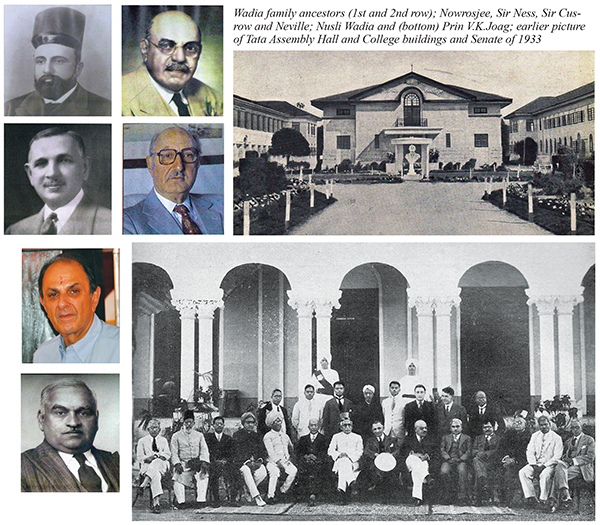
In 1935 the present site at Bund Garden Road was acquired by the MES. "The Wadia brothers were again generous enough to donate the cost of the site. The foundation stone of the main (Arts) building was laid by Lord Brabourne on July 21, 1935. This building is also a gift from the Wadia brothers… In 1937 at the gift of the Dorab Tata Trust, the Sir Dorabjee Tata Assembly Hall was completed.” Substantial donations from Seth Chaturbhuj Gordhandas, Mathurdas Dwarkadas and others were used to construct more facilities like the dining hall, women’s hostel, principal’s residence etc.
Vicaji D. B. Taraporewalla of Bombay donated Rs 80,000 and "thus the ground floor of the Taraporewalla Institute of Science (part of the College) took shape. On September 27, 1957, on the silver jubilee of the College, the first floor of the building was inaugurated.” Sports facilities were strengthened with a donation of Rs 12,500 from Ardeshir K. Irani which enabled the construction of the Gymkhana Pavilion and a small stadium.
Named after Nowrosjee, the father of Cusrow and Ness, the Nowrosjee Wadia College was initially affiliated to the University of Bombay but when the University of Poona was established in 1949, the College became one of its constituents. It received an ‘A’ Grade accreditation from NAAC (National Council for Assessment and Accreditation) in 2003. The College offers the Bachelor of Arts, Bachelor of Science (B.Sc), B.Sc (Computer Science) and B.Sc (Biotechnology) degrees, as well as Masters degrees in different specializations in Arts and Science. Faculty includes research guides for M.Phil and Ph.D.
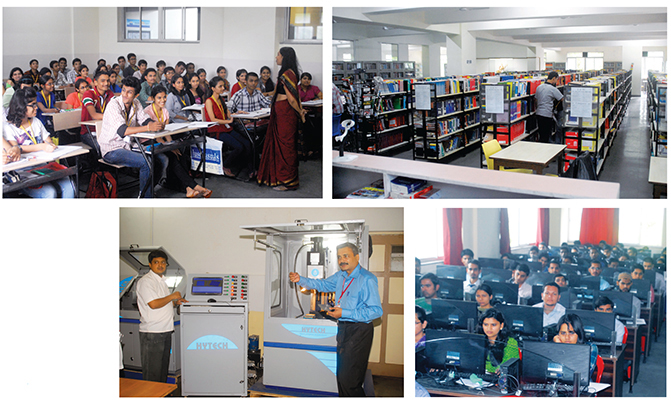
(Top row): Class in College of Engineering; library; (second row): Rao explaining Computer Aided Design; exam in progress
Cusrow Wadia Institute of Technology
In 1937-38, the MES "received a munificent donation of Rs 30,000 from Sir Cusrow Wadia (1869-1950) for starting a Department of Applied Electricity with a workshop and electrical and wireless laboratories.” This Department was a part of the Nowrosjee Wadia College and was started on an experimental basis. The need for technical education was acutely felt in the light of the economic depression through which not only the country but the world was passing in the 1930s. As an industrialist, Sir Cusrow was aware of the importance of electricity for the development of the country. In December 1938, he visited the College and "carefully discussed the issue of expansion… and with his characteristic munificence gave a princely donation of Rs 1,60,000,” in appreciation of which the Department was named "The Sir Cusrow Wadia Institute of Electrical Technology.” By 1943, the Government Board of Technical and Industrial Training, Bombay accorded permanent recognition to the Institute.
Sir Cusrow died in Geneva on October 3, 1950. In his settlement he provided a gift of Rs 3,00,000 to the MES primarily for the benefit of the electrical institute. By 1960 diploma courses in civil and mechanical engineering were introduced and the Institute became a full-fledged polytechnic and from the academic year 1963-64 it was renamed the Cusrow Wadia Institute of Technology. Subsequently his wife Lady Madeleine bequeathed her bank balances in the USA and India, which amounted to a little over Rs 62,000, and her husband’s and her own portraits in oil, which were unveiled in the College in 1963. With spacious buildings housing workshops, laboratories, drawing halls, etc, the Institute is approved by the All India Council for Technical Education and has close interaction with government, non-governmental organizations and industry.
In 1937-38, the MES "received a munificent donation of Rs 30,000 from Sir Cusrow Wadia (1869-1950) for starting a Department of Applied Electricity with a workshop and electrical and wireless laboratories.” This Department was a part of the Nowrosjee Wadia College and was started on an experimental basis. The need for technical education was acutely felt in the light of the economic depression through which not only the country but the world was passing in the 1930s. As an industrialist, Sir Cusrow was aware of the importance of electricity for the development of the country. In December 1938, he visited the College and "carefully discussed the issue of expansion… and with his characteristic munificence gave a princely donation of Rs 1,60,000,” in appreciation of which the Department was named "The Sir Cusrow Wadia Institute of Electrical Technology.” By 1943, the Government Board of Technical and Industrial Training, Bombay accorded permanent recognition to the Institute.
Sir Cusrow died in Geneva on October 3, 1950. In his settlement he provided a gift of Rs 3,00,000 to the MES primarily for the benefit of the electrical institute. By 1960 diploma courses in civil and mechanical engineering were introduced and the Institute became a full-fledged polytechnic and from the academic year 1963-64 it was renamed the Cusrow Wadia Institute of Technology. Subsequently his wife Lady Madeleine bequeathed her bank balances in the USA and India, which amounted to a little over Rs 62,000, and her husband’s and her own portraits in oil, which were unveiled in the College in 1963. With spacious buildings housing workshops, laboratories, drawing halls, etc, the Institute is approved by the All India Council for Technical Education and has close interaction with government, non-governmental organizations and industry.
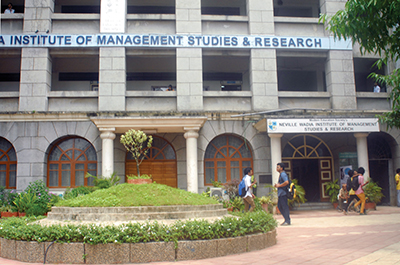
Management College
Ness Wadia College of Commerce
The pre-degree commerce classes were started in 1958 in the Nowrosjee Wadia College with just 14 students. Degree classes were gradually introduced and by 1968-69 the student strength of the commerce wing had increased to 690, raising the need for an independent entity. The College, inaugurated on July 15, 1969, was named after Sir Ness Wadia (1873-1952) "to commemorate the memory of Sir Ness to whom, as to his brother Cusrow, the MES owes a debt of gratitude too great to be adequately expressed in words,” records the souvenir. With an ‘A’ Grade accreditation, the College also offers a Ph.D program and add-on courses like post-graduate diploma in banking and finance, post-graduate diploma in international business, etc. "In keeping with the spirit of globalization, the College has recently entered into agreements with the University of Adelaide, Australia and the University of California at Berkeley, USA” to provide opportunities for students to study "at world renowned centers of higher learning,” the brochure mentions.
The pre-degree commerce classes were started in 1958 in the Nowrosjee Wadia College with just 14 students. Degree classes were gradually introduced and by 1968-69 the student strength of the commerce wing had increased to 690, raising the need for an independent entity. The College, inaugurated on July 15, 1969, was named after Sir Ness Wadia (1873-1952) "to commemorate the memory of Sir Ness to whom, as to his brother Cusrow, the MES owes a debt of gratitude too great to be adequately expressed in words,” records the souvenir. With an ‘A’ Grade accreditation, the College also offers a Ph.D program and add-on courses like post-graduate diploma in banking and finance, post-graduate diploma in international business, etc. "In keeping with the spirit of globalization, the College has recently entered into agreements with the University of Adelaide, Australia and the University of California at Berkeley, USA” to provide opportunities for students to study "at world renowned centers of higher learning,” the brochure mentions.
Neville Wadia Institute of Management Studies and Research
The B-School was promoted by the MES in 1991 with the MCM (Master in Computer Management) and MPM (Master in Personnel Management) programs, with the MBA (Master of Business Administration) being introduced in 1994. "I hope that during your time at the Institute you have not only had the opportunity to imbibe and be equipped to face the world with confidence in the discipline that you choose, but that the Institute has provided you with the value systems with which you will conduct yourselves wherever opportunity takes you,” writes Nusli Wadia, president of the MES and chairman of listed companies like Bombay Dyeing, Britannia Industries, etc. "The Institute would greatly appreciate that you not only continue your connections with it, but when you progress in life you bring back to the Institute your learnings in order to share them with the students and faculty,” Nusli Wadia notes in the college’s current prospectus. The Institute, named after Nusli’s father Neville, is approved by the All India Council of Technical Education and recognized by the Government of Maharashtra. "Since its inception the Institute has risen to new heights and is a renowned B-School,” notes Dr Mahesh Andar, MES secretary, adding that the Institute has more than 1,000 students on its roll, many of them from out of India.
The B-School was promoted by the MES in 1991 with the MCM (Master in Computer Management) and MPM (Master in Personnel Management) programs, with the MBA (Master of Business Administration) being introduced in 1994. "I hope that during your time at the Institute you have not only had the opportunity to imbibe and be equipped to face the world with confidence in the discipline that you choose, but that the Institute has provided you with the value systems with which you will conduct yourselves wherever opportunity takes you,” writes Nusli Wadia, president of the MES and chairman of listed companies like Bombay Dyeing, Britannia Industries, etc. "The Institute would greatly appreciate that you not only continue your connections with it, but when you progress in life you bring back to the Institute your learnings in order to share them with the students and faculty,” Nusli Wadia notes in the college’s current prospectus. The Institute, named after Nusli’s father Neville, is approved by the All India Council of Technical Education and recognized by the Government of Maharashtra. "Since its inception the Institute has risen to new heights and is a renowned B-School,” notes Dr Mahesh Andar, MES secretary, adding that the Institute has more than 1,000 students on its roll, many of them from out of India.
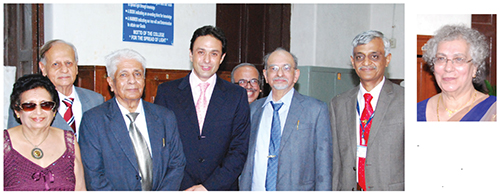
Ness Wadia and Moogat (to his left), Perin Fitter (ext left) and Mithoo Moogat (ext rt)
MES College of Engineering
Established in 1999, the College of Engineering offers the Bachelor of Computer Engineering, Bachelor of Electronics and Tele- communication Engineering and Bachelor of Mechanical Engineering degrees, as per its prospectus 2012-13. The interim fee mentioned for the year is Rs 78,000. The College also implements for needy students the Earn and Learn Scheme of the Board of Students Welfare, University of Poona wherein needy students can earn by working per hour in the laboratories and library. "We are proud of how well this ‘baby’ has grown to become one of the top engineering colleges of Poona University,” Moogat had stated at the felicitation function in July. "It was our dream to have an engineering college on our Wadia campus. However, the cost of providing up-to-date infrastructure and facilities has been staggering. Since the Wadias have always been our benefactors, we ask Nusli and Ness for all our major decisions,” he adds. The College of Engineering prospectus 2012-13 mentions Ness Wadia as chairman of the governing council of the institute, nominated by the MES.
Taking Parsiana on a tour of the campus in the company of Moogat and present principals, their pride in their institutions is obvious and immense. Moogat mentions that there are some Zoroastrian students but, as far as he knows, no Zoroastrian staff member. The general perception remains that the community is by and large honest and that is a tremendous advantage, he adds.
Given the economic scenario in the country, V. R. Rao, principal of the Cusrow Wadia Institute of Technology, mentions that the salary grants from the government are often received late and institutions, both aided and unaided, continue to bear the burden of maintenance, repairs and improvements. But the buzz of youthful energy, the respect and appreciation of the students make it worthwhile as faculty and management take the institutions forward, promoting learning, Wadian bonding and, in their own words, the spirit of sportsmanship on and off the field.
Established in 1999, the College of Engineering offers the Bachelor of Computer Engineering, Bachelor of Electronics and Tele- communication Engineering and Bachelor of Mechanical Engineering degrees, as per its prospectus 2012-13. The interim fee mentioned for the year is Rs 78,000. The College also implements for needy students the Earn and Learn Scheme of the Board of Students Welfare, University of Poona wherein needy students can earn by working per hour in the laboratories and library. "We are proud of how well this ‘baby’ has grown to become one of the top engineering colleges of Poona University,” Moogat had stated at the felicitation function in July. "It was our dream to have an engineering college on our Wadia campus. However, the cost of providing up-to-date infrastructure and facilities has been staggering. Since the Wadias have always been our benefactors, we ask Nusli and Ness for all our major decisions,” he adds. The College of Engineering prospectus 2012-13 mentions Ness Wadia as chairman of the governing council of the institute, nominated by the MES.
Taking Parsiana on a tour of the campus in the company of Moogat and present principals, their pride in their institutions is obvious and immense. Moogat mentions that there are some Zoroastrian students but, as far as he knows, no Zoroastrian staff member. The general perception remains that the community is by and large honest and that is a tremendous advantage, he adds.
Given the economic scenario in the country, V. R. Rao, principal of the Cusrow Wadia Institute of Technology, mentions that the salary grants from the government are often received late and institutions, both aided and unaided, continue to bear the burden of maintenance, repairs and improvements. But the buzz of youthful energy, the respect and appreciation of the students make it worthwhile as faculty and management take the institutions forward, promoting learning, Wadian bonding and, in their own words, the spirit of sportsmanship on and off the field.
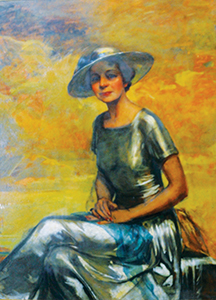
Portrait of Lady Cusrow Wadia
◆ ◆ ◆
From the archive