
Cover Story
Pilgrimage progression
The refurbished Sir Jamsetjee Jejeebhoy Dharamshala in Udvada offers modern amenities and a sea view
"I see this like a caravanserai” for the convenience of pilgrims, stated Sir Jamsetjee Jejeebhoy, 8th baronet, soon after the new avatar of The Sir Jamsetjee Jejeebhoy Dharamshala at Udvada was presented to the community on March 25, 2013, mah Avan, roz Avan.
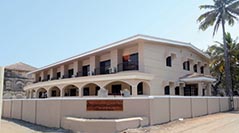
The refurbished Dharamshala
‘The JJ,’ as it is termed affectionately, has re-opened its doors after a two-and-a-half-year hiatus for major renovation and repairs. Chalk and toran festooned the portals of the ground plus one storey structure, the only guest accommodation in Udvada to offer an unimpeded view of the sea. Women in resplendent kors, gara patterned kameez and of course western outfits, men in daglis, topis and the rare pugrees were in attendance at the jashan performed by Dastur (Dr) Peshotan Mirza. (Dastur Khurshed Dastoor, the joint vada dastur of Udvada was in Bombay for the annual jashan to celebrate the Avan Yazad nu parav.) An invitation was extended to all practicing mobeds of the Iranshah in Udvada. Seven to eight busloads had come from Bombay. The gathering of about 1,200 was seated all over the dharamshala, including on the new granite benches against the walls.
Even the somnolent dogs were up and about, dodging cars, SUVs and buses which descended onto Udvada to celebrate the 175th anniversary of the Sir Jamsetjee Jejeebhoy Charity Trust and to see the nearly 150-year-old, newly bedecked Dharamshala. The normally tranquil town with a total populace of around 6,500, of whom Zoroastrians number less than 150, was abuzz. Trust secretary Firoze Damania told Parsiana the jashan was arranged for this day as it was the birth centenary of Maneckjee, the seventh baronet and father of the current incumbent, Rustom.
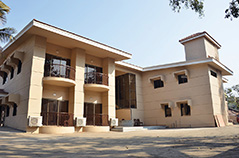
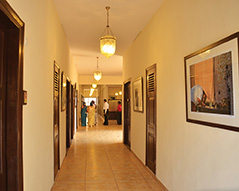
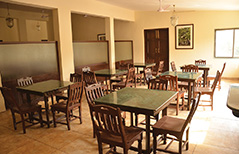
Exterior view of Sir Jamsetjee Jejeebhoy Dharamshala, Udvada; interior views
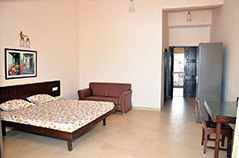
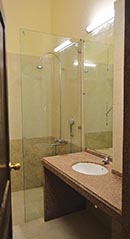
Bedroom; washroom
A takhti (plaque) in Gujarati at the entrance to the dharamshala, announces the cost of the original structure as Rs 47,500. The refurbishment cost today was over three crore rupees part of which came from the estate of the late Col Pesi and Hilla Bharoacha. The repairs and reconstruction were handled by Cyrus Unwala of Premier Construction Company while Behzad Kharas of ThinkBNK was the principal architect and Firdaus Masani did all the electrical work.
The baronet thanked the attendees, jocularly observing, "Udvada now not only boasts of a museum but also a photograph gallery.” He was referring to the photo prints in the rooms and the open areas donated to the dharamshala by photographers Sooni Taraporevala and Shantanu Das.
The JJ has 17 rooms, eight on the ground floor; two are family rooms that can accommodate five persons each, and the seven above are air-conditioned. The beds are king-sized, each room appointed with a Godrej cupboard, a settee, a sofa-cum-bed and a desk, all from Godrej, and the old world ghora (clothes horse). There is a common television stationed on each floor and a games room for children. For budget travellers who dart into town for a day’s worship, separate "changing rooms” are provided for ladies and gents comprising a shower and toilet. You can rent lockers. A VIP suite which used to be reserved for the occasional visit by trustees, their relatives and friends "has been dispensed with, with the changed times,” the philanthropist states.
Trucks groaning with cold drinks, chicken, meat, rations, masalas were brought in from Bombay for the March 25 celebration. When asked the number being catered for Tanaz Godiwalla shrugged, "Apré ghano maal laviyanch (we have brought lots of ingredients).” Bhonas (meals) were also sent home to all the mobeds residing in Udvada. It became easier to gauge quantities for a menu of chicken and cheese cutlets, akuri, chicken sali, mutton pulao-dar for the non-vegetarians and papri, rai na papeta, stew, ras na papeta and pulao-dar for the vegetarians, Godiwalla explained, when they "got a better idea of numbers,” as each panth (sitting) progressed. Sev, an orange drink, kulfi on a stick and rotli-achar were common to both.
The JJ competes with the Sodawaterwala Dharamshala situated on the main road, the N. M. Wadia Dharamshala near the railway station and Dastoor Baug next to the Iranshah. There is also a lodge run by the World Zoroastrian Organisation. The two hotels in Udvada are Globe and Ashishvangh.
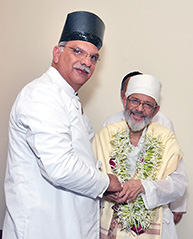
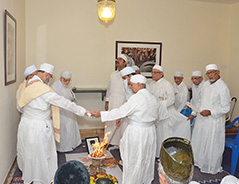
Sir Jamsetjee Jejeebhoy with Dastur (Dr) Peshotan Mirza, inaugural jashan
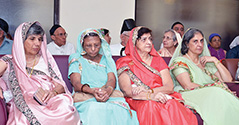
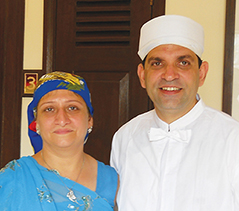
Ayesha Jejeebhoy (ext l) and Delara Jejeebhoy (ext r), Naaz and Teshtar Mirza
"More and more Zoroastrians are holding functions in Udvada, especially non-resident Indians,” observes Delara,the eighth baronet’s wife. The Trust is contemplating cultivating a garden in the sea-facing area in front of the Dharamshala. This would make an ideal venue for lagans and navjotes and continue beautifying the heritage town.
The resident manager of the JJ today is Teshtar Mirza. His wife Naaz happily assists him. Teshtar’s father Ardeshir managed the Dharamshala from 1970 to 1997. After the upgradation, room rates range from Rs 2,250 for five, to Rs 1,250 for an air-conditioned room for two, to Rs 350 for non-air conditioned rooms. The day visitor who opts for changing facility alone will be charged Rs 50, with extra charges for a locker. Bookings are done in Bombay at the trust office on (022) 22673843 or on e-mail: jj@sjjcf.org
Varied activities
Jamsetjee Jejeebhoy, first baronet, the merchant-philanthropist, had disbursed nearly £ 230,000 to around 126 secular charitable causes until the time of his death in 1859. The self-made man was orphaned before age five and was able to study only up to class IV. He was conferred the baronetcy in 1858. His wife, Avabai, donated the entire amount of Rs 157,000 in 1848 to build the Mahim Causeway in Bombay, linking the island of Bombay to the mainland. Her only condition was that the government should not charge a toll for its use or disturb the local Koli community who lived around the area.
The Jejeebhoy family runs operations for holiday villas in Khandala; baugs in Surat and Navsari; agiaries in Poona, Bombay and Navsari; dharamshalas; a school of art and architecture; hospitals; wards for needy persons — whether widows, poor or ailing; and also disburses monies to deserving applicants.
The upgradation of Jamshed Baug in Navsari in 2004 was due to a munificent donation by Hong Kong donor Keki Jokhi. The project of refurbishing holiday villas in Khandala in 2008 was made possible with an endowment from the estate of the late Col Pesi and Hilla Bharoacha. The Poona agiary renovation was paid for entirely by their family trust in 2010. Plans are afoot to add six more rooms to offer it like a guest house. The Adajan agiary on the outskirts of Surat was redone in 2011 with the help of Zarir Adajania and the Adajan anjuman.
The Trust also manages Allahi Baug in Navsari which houses 18 families. A proposal to house the current residents and add a further 42 families, did not find favor with the existing tenants. The Jejeebhoy Trust has now sought the Charity Commissioner’s sanction to sell the estate.
Delara reinforces all the efforts of husband Rustom and vets appeals for assistance. "She gives the feminine touch,” Rustom states. Their son Jahangir and wife Naira, were also present.
Jamsetjee Jejeebhoy, first baronet, the merchant-philanthropist, had disbursed nearly £ 230,000 to around 126 secular charitable causes until the time of his death in 1859. The self-made man was orphaned before age five and was able to study only up to class IV. He was conferred the baronetcy in 1858. His wife, Avabai, donated the entire amount of Rs 157,000 in 1848 to build the Mahim Causeway in Bombay, linking the island of Bombay to the mainland. Her only condition was that the government should not charge a toll for its use or disturb the local Koli community who lived around the area.
The Jejeebhoy family runs operations for holiday villas in Khandala; baugs in Surat and Navsari; agiaries in Poona, Bombay and Navsari; dharamshalas; a school of art and architecture; hospitals; wards for needy persons — whether widows, poor or ailing; and also disburses monies to deserving applicants.
The upgradation of Jamshed Baug in Navsari in 2004 was due to a munificent donation by Hong Kong donor Keki Jokhi. The project of refurbishing holiday villas in Khandala in 2008 was made possible with an endowment from the estate of the late Col Pesi and Hilla Bharoacha. The Poona agiary renovation was paid for entirely by their family trust in 2010. Plans are afoot to add six more rooms to offer it like a guest house. The Adajan agiary on the outskirts of Surat was redone in 2011 with the help of Zarir Adajania and the Adajan anjuman.
The Trust also manages Allahi Baug in Navsari which houses 18 families. A proposal to house the current residents and add a further 42 families, did not find favor with the existing tenants. The Jejeebhoy Trust has now sought the Charity Commissioner’s sanction to sell the estate.
Delara reinforces all the efforts of husband Rustom and vets appeals for assistance. "She gives the feminine touch,” Rustom states. Their son Jahangir and wife Naira, were also present.
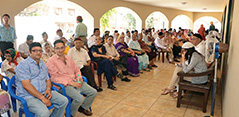
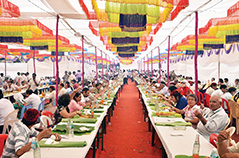
Audience, diners at the gahanbar
◆ ◆ ◆
From the archive