
Drama/Cinema/Theatre
Shining in shorts
Director Zia Mandviwalla’s Night Shift that featured among the 10 best short films at Cannes last year continues to win acclaim
Night Shift is keeping many awake. New Zealand writer-director Zia Mandviwalla’s fourth short film, it enjoyed the distinction of being selected for three screenings at the prestigious Cannes Film Festival last year and reportedly emerged among the 10 best out of a total of 4,500 entries. "Since Cannes 2012, Night Shift has screened at the New York International Film Festival and Sundance 2013. It will shortly screen at the Hong Kong International Film Festival and has recently been accepted into the Aspen International Short Film Festival,” conveyed Mandviwalla in mid March.

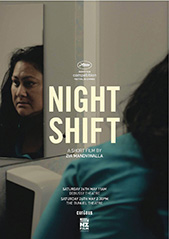
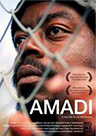
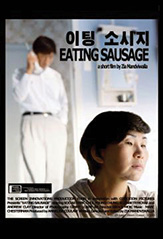
Zia Mandviwalla and posters of her award winning films
The sensitively made film, shot over several nights on location at the Auckland International Airport, portrays the travails of Salote, an airport cleaner. Emotionally and mentally drained, she cannot stop thinking of her partner who she misses nor her little children lying on the backseat of her isolated vehicle left in the car park. She desperately strives to bring them cheer with items discarded or unconsumed at the airport, leftover pizzas and forgotten toys, at the break of dawn when her duty ends.
"I think Night Shift is certainly my most satisfying directing experience, predominantly because of getting to shoot and work in a real environment of a functioning airport,” mentions Mandviwalla adding, "Preserving the character of the environment was so important for me and it was really satisfying to create fictional drama that sat so seamlessly within that environment.”
At the Show Me Shorts Film Festival in New Zealand in 2012, Night Shift won the Best Director, Best Short Film, Best Screenplay, Best Actress and Best Cinemato- graphy awards. Through the year the film also traveled to International Film Festivals in Sydney, Melbourne and Valladolid.
Fifteen minutes is what she requires — to impact viewers with her short films and to impress the film jury with her filmmaking ability. The production though is more arduous. As she explains, "The entire process of writing the script, getting it ready for a funding submission, waiting to hear about the funding and then getting ready for the shoot to final completion must have been about a two-year process,” she explains. Night Shift that received a grant of NZ $ 90,000 was the fourth of Mandviwalla’s films to be funded by the New Zealand Film Commission (NZFC). "In a year the Commission finances nine films and they get applications from 200 to 300” filmmakers, she states. "Even with that kind of budget — which is very generous for a short film — we were still relying on countless favors from the generous members of the New Zealand film industry who not only gave us their time and expertise but also the heavily discounted and sometimes free use of equipment. I will never know what the actual cost of the film would be — but certainly considerably more than NZ $ 90,000,” she clarifies.
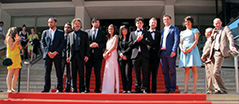
Zia Mandviwalla (3rd from right) with other directors of short films at the Cannes Film Festival, 2012
Credited with creating short films "that are intensely observant and deeply insightful,” in the past Mandviwalla has earned recognition for directing Amadi that explores the assumptions we make about our neighbors and colleagues at work; Clean Linen that penetrates the world behind a family’s veneer of happiness; and Eating Sausage that shows the isolation of a Korean couple in the suburbs of Auckland. Holding a certificate in Refugee Resettlement Support, the 34-year-old director declares on the website of Curious Film that produced Night Shift, "Human emotion transcends culture. We all know and understand love, loneliness or separation, regardless of what language we speak or what food we cook at home. For me the authenticity lies in bringing truthful experiences to the screen.”
As per the policy of the NZFC, a short film director can benefit from their funding for four films after which he/she is not eligible. Mandviwalla who has availed of their grants four times already explains their rationale, "A short film is just a platform for a director to upgrade to a feature film.”
Having decided to next zoom in on "a feature length documentary on Parsis,” Mandviwalla has started her exploration with a small research grant sanctioned by the NZFC. While efforts are still on to secure production financing, she came to Bombay in end 2012 to do spadework for her project. She refers to an incident during a visit to a fire temple in Bombay when she was stopped at the agiary by a person who demanded to know who her father was! Rather than feel offended by the reaction she declared, "It intrigued me. It offered an interesting perspective. I can understand.” Declining to share her personal views on the Parsi community or the Zoroastrian religion, the young director maintains, "I am interested in making a film that shows all views and all sides, and I am open to everyone’s opinion. As a result I would like the community to remain open to me.”
Born in Bombay to Soonu and Ronny Mandviwalla, the family had migrated to Dubai when Zia was four. After she completed her A levels in English, History and Theatre Studies from Dubai College in 1996, the family chose to relocate to Auckland. Her brother Xerxes works in Denmark. Zia did her BA in English, History, Theatre and Film from the University of Auckland in 1999 and the next year was conferred a certificate of proficiency for scriptwriting for a film. Describing herself as an "outdoor person,” who loves spending "as many weekends as I can on hiking,” she also considers herself a keen snowboarder.
Mandviwalla honed her flair for direction at the Australian School for Film, TV and Radio in 2004 and the same year directed Eating Sausage that was well received at film festivals in London, Pusan, Spain, Germany, Italy, US, Australia, New Zealand and Israel over the next four years. Between 2002-05, Mandviwalla devised and conducted drama workshops for adults and children under the auspices of Bushmen and Poets, a rural community organization, states her curriculum vitae. After directing Hotel Vladivostok and Clean Linen, she spent time in India in 2007-08 when she served as assistant to director Nandita Das who was filming Firaaq that sought to draw attention to the aftermath of the communal carnage in Gujarat in 2002. On her return to New Zealand she worked as a teaching fellow at the Waikato University, conducting a second year university film production course that instructed students on shooting practices, technical use of equipment, script and conceptual development, directing actors and photographic composition. Besides short films, Mandviwalla has also been directing commercials.
Among the recognitions that have come her way are for Best Short Film Script at the 2005 New Zealand Screen Director’s Guild Awards, Best Director and Best Short Film at Fitzroy Shorts in Melbourne and a Grand Jury Award Nomination at the South Asian International Film Festival in New York in 2008. She was also the recipient of New Zealand Screen Production and Development Association’s New Filmmaker of the Year Award in 2009.
Recognizing that every stage of the filmmaking process comes with its own challenges and rewards, Mandviwalla asserts, "However grueling the shooting process is, there is no greater reward than seeing a moment you have written come to life in the way you imagined, or at times better than you imagined!”
◆ ◆ ◆
From the archive