
Books
Macaulay’s coconuts
Macaulay: Pioneer of India’s Modernization by Zareer Masani. Published in 2013 by Random House Publishers India Private Limited, Windsor IT Park, 7th floor, Tower-B, A-1, Sector-125, Noida 201301. Pp: 288. Price: Rs 450.
The only Macaulay that people will recognize today is a freckle-faced red-haired brat surnamed Culkin — he of the "Home Alone” series of Hollywood hits.

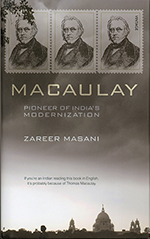
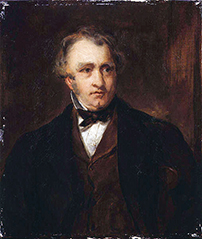
Not many people will know, or want to know, about the original Macaulay, the scholar-politician of the first half of the 19th century, Thomas Babington Macaulay (1800-1859), who is the subject of a scrupulously researched and erudite book by Zareer Masani, a historian-biographer based in London-Bombay. There is both a tendency to gag at the turn of every page and ask, "Why? Why? Why? Macaulay?” as well as to stop and admire the wealth of aphorisms and well-turned phrases that Masani has culled from the huge oratorical and literary output of his famed subject.
That Macaulay was a giant in his time is well-known. On the evidence put forth by his biographer he is to be admired for having brought the benefits of an English education to the Indian subcontinent with a singularity of purpose and conviction. A strap line on the cover goes so far as to remind us, "If you’re an Indian reading this book in English it’s probably because of Thomas Macaulay.”
This is another reason to gag. Even if we agree with Masani’s assertion that English is the glue that has held the country together or that "it’s no accident that he is still celebrated as a savior by many Dalits, who believe that his progressive educational ideas freed them from caste tyranny,” this is a tad hard to swallow. What about the missionaries, you want to ask, people like Dr Hermann Gundert (1814-1893) of the Basel Mission who published the first Malayalam-English Dictionary in 1872 and introduced the concept of punctuation marks into the Malayalam language? No doubt Macaulay’s famous, his detractors will say, infamous education minute established once and for all the superior benefits of an English education.
The chapter "A Battle for Minds” wherein Masani sets out the parameters that led to Macaulay’s iron-clad beliefs in the superiority of a Western approach to learning, linear thinking as some describe it, as against the circular more diffuse mode that sometimes defines the Orientalist view (though even here we have to guard against such simplistic models), will only harden the views of those who have made up their minds about Macaulay.
It’s difficult to quell a sense of extreme irritation for instance when reading lines such as "who could deny that a single shelf of a good European library was worth the whole of literature of India and Arabia?” Much worse is to follow. It does not help to be told that unlike some of his fellow scholars in India, Macaulay did not deign to learn Persian, Arabic or Sanskrit, or that his horror of "idol worshippers” was to define his view of Hinduism to an extent that even after he had left the subcontinent he opposed the re-building of the Somnath Temple on the Gujarat coast with a vehemence that would put him on par with its destroyers. It’s difficult to condone such attitudes with a passive nod as being consonant with the times in which he lived.
Macaulay’s children, or coconuts as we are sometimes called, with our hard brown exteriors and soft fleshy inner lining, tend to be a ragged band neither grateful nor willing to acknowledge the debt. For instance to extend this list of bipolar stereotypes there are bananas, people who are almost white, but are yellow on the outside. Writers of the ilk of Nirad Chaudhuri, the celebrated author who as a great believer in the civilizing power (and beauty) of Western music and literature, confessed that the first question he asked of his bride on their wedding night was whether she could spell "Beethoven,” could be identified as a banana. Might Masani also fit into this category, one asks?
 Equally, there is the discomfiting impression that by Macaulayian standards all those around him, whether his contemporaries in the arena of 19th century politics, or the despicable "other races” or those who fell into the category of the colonized people under the British yoke, were pygmies. Not just lesser folk like the Lilliputians encountered by Gulliver, the hero of Jonathan Swift’s satire, but commodities, or species who, once they had been subdued, were labelled, sorted out in different degrees of subservience and administered by the supremacist fallacy of British autocracy. Let it be added that this is the reviewer’s prejudice. This is despite the fact that both my children claim that English is their mother tongue and I readily accept the responsibility.
Masani is too scrupulous a biographer to allow any such judgment to pass his pen, except to remind us that Macaulay was a product of his times. It was quite in order to hold such views in the first half of the 19th century because that’s what being part of an imperial agenda and Pax Britannica, or peace of a relative kind meant to the world, when British interests ruled the seas. Indians were seen as a subject race. Macaulay’s early impressions were formed by news of an uncle, General Colin Macaulay, who had been held prisoner by Tipu Sultan until such time as the tide turned and he formed a part of the victorious assault on Seringapatam that led to the killing of the Tiger of Mysore. He then ended his career as the British Resident in the court of Travancore and, as Masani notes, "His early adventures and exploits would have given little Tom an early and exciting introduction to Britain’s rapidly expanding Indian empire.”
Tom Macaulay was all of eight years at that time. He was already something of an infant prodigy. An anecdote from his childhood that Masani recounts has him visiting a society hostess when a servant spilt some scalding hot coffee on his pants. When his hostess asked him how he felt, he replied: "Thank you madam, the agony is abated.”
His family was from a god-fearing middle class stock of Scottish forefathers on his father’s side. We learn that "his mother, Selena, was the pretty young daughter of a Quaker bookseller in Bristol.” We are told that she married for love and that Zachary Macaulay "was a lean, rather severe-looking man, descended from a pious family of Scottish Presbyterian preachers and ministers and actively involved in the campaign to abolish the slave trade.” He had also served as a governor in the West African colony of Sierra Leone, where we are informed the father presided over the worst effects of early colonial rule, an unruly local populace on the one side; belligerent attacks on the other by competing outside forces.
It’s in the deft and precise filling in of the social and cultural background of the Macaulay milieu that Masani is at his best. If the Indian reader can lay aside his or her prejudices as to the Macaulayian mind-set many of the chapters read like pages from a novel by William MakepeaceThackeray. The sojourn in Calcutta, after a long sea journey accompanied by his sister Hannah; that Macaulay remained a bachelor all his life and did not appear to form any romantic alliances with the opposite sex — perhaps he was too ugly or too preoccupied with his library — is described with great élan. Later, his bachelor quarters in a fashionable part of London where he stayed during his years as a parliamentarian, his visits to Windsor Castle to meet the young Queen Victoria, after which she could not suppress her giggles when someone pointed out that he looked like a "book in breeches” or his brilliance at composing his speeches in his mind and then talking extempore in Parliament, are all splendidly portrayed.
Here again, however, the reviewer felt a certain disquiet for Masani uses Macaulay’s pro-British involvement in other countries as a parallel for, if not endorsing, at least allowing for a need to the dominant power at the time to tackle insurgencies, as we may politely define them. Is he saying that gunboat diplomacy is fine as long as it is in the interests of the ruling power?
One will only mention one instance where Macaulay as "Secretary of War” took the initiative. The Opium Wars with China can be argued on both sides, but finally it was also all about trade, just as oil was the reason for the Iraq war. One of the worst effects and one that was to have the most crushing impact on the Chinese psyche, according to some historians was the deliberate sacking and destruction of the Old Summer Palace in Beijing during the Second Opium War. It was an act of unparalleled vandalism, sanctioned by Lord Elgin, the British High Commissioner to China, he of the infamous theft of the Elgin Marbles from the Parthenon.
One cannot resist mentioning the Parsi contribution to the opium trade, even though it does not figure in the book. Some sources mention the number of Chinese addicts to opium as being in the region of 10 million souls. The opium was grown in Bengal and Bihar and carried in ships built and owned by Parsi enterprise (maybe even the Wadia family to which Masani belongs!). It’s well known that the merchant princes who led to the rise of Bombay as a commercial capital in the 19th century, the Readymoneys, the Tatas, the Sassoons, (admittedly Jewish), all contributed to the successful management of the opium cartel run by the East India Company. Would it be invidious to lay their success on Macaulay’s broad shoulders?
Masani is content to draw parallels with the choices of a "just war” forced upon individuals as far separated by time as David Lloyd George, Winston Churchill, Margaret Thatcher and Tony Blair to underline yet another Macaulayian prescription for action: "But I would never abstain from doing what I had a clear right to do, because a neighbor chooses to threaten me with an unjust war; first because I believe that such a policy would, in the end, inevitably produce war; and secondly, because I think war, though a very great evil, by no means so great an evil as subjugation and national humiliation.” To which one may add that it’s all right if the subjugation and humiliation is meted out to some other unfortunate race or nation.
Then again, we must be grateful to Masani for reminding us that whether as coconuts or bananas we still have a choice of reading about a man of such prodigious talents.
That Macaulay was a giant in his time is well-known. On the evidence put forth by his biographer he is to be admired for having brought the benefits of an English education to the Indian subcontinent with a singularity of purpose and conviction. A strap line on the cover goes so far as to remind us, "If you’re an Indian reading this book in English it’s probably because of Thomas Macaulay.”
This is another reason to gag. Even if we agree with Masani’s assertion that English is the glue that has held the country together or that "it’s no accident that he is still celebrated as a savior by many Dalits, who believe that his progressive educational ideas freed them from caste tyranny,” this is a tad hard to swallow. What about the missionaries, you want to ask, people like Dr Hermann Gundert (1814-1893) of the Basel Mission who published the first Malayalam-English Dictionary in 1872 and introduced the concept of punctuation marks into the Malayalam language? No doubt Macaulay’s famous, his detractors will say, infamous education minute established once and for all the superior benefits of an English education.
The chapter "A Battle for Minds” wherein Masani sets out the parameters that led to Macaulay’s iron-clad beliefs in the superiority of a Western approach to learning, linear thinking as some describe it, as against the circular more diffuse mode that sometimes defines the Orientalist view (though even here we have to guard against such simplistic models), will only harden the views of those who have made up their minds about Macaulay.
It’s difficult to quell a sense of extreme irritation for instance when reading lines such as "who could deny that a single shelf of a good European library was worth the whole of literature of India and Arabia?” Much worse is to follow. It does not help to be told that unlike some of his fellow scholars in India, Macaulay did not deign to learn Persian, Arabic or Sanskrit, or that his horror of "idol worshippers” was to define his view of Hinduism to an extent that even after he had left the subcontinent he opposed the re-building of the Somnath Temple on the Gujarat coast with a vehemence that would put him on par with its destroyers. It’s difficult to condone such attitudes with a passive nod as being consonant with the times in which he lived.
Macaulay’s children, or coconuts as we are sometimes called, with our hard brown exteriors and soft fleshy inner lining, tend to be a ragged band neither grateful nor willing to acknowledge the debt. For instance to extend this list of bipolar stereotypes there are bananas, people who are almost white, but are yellow on the outside. Writers of the ilk of Nirad Chaudhuri, the celebrated author who as a great believer in the civilizing power (and beauty) of Western music and literature, confessed that the first question he asked of his bride on their wedding night was whether she could spell "Beethoven,” could be identified as a banana. Might Masani also fit into this category, one asks?
Equally, there is the discomfiting impression that by Macaulayian standards all those around him, whether his contemporaries in the arena of 19th century politics, or the despicable "other races” or those who fell into the category of the colonized people under the British yoke, were pygmies. Not just lesser folk like the Lilliputians encountered by Gulliver, the hero of Jonathan Swift’s satire, but commodities, or species who, once they had been subdued, were labelled, sorted out in different degrees of subservience and administered by the supremacist fallacy of British autocracy. Let it be added that this is the reviewer’s prejudice. This is despite the fact that both my children claim that English is their mother tongue and I readily accept the responsibility.Masani is too scrupulous a biographer to allow any such judgment to pass his pen, except to remind us that Macaulay was a product of his times. It was quite in order to hold such views in the first half of the 19th century because that’s what being part of an imperial agenda and Pax Britannica, or peace of a relative kind meant to the world, when British interests ruled the seas. Indians were seen as a subject race. Macaulay’s early impressions were formed by news of an uncle, General Colin Macaulay, who had been held prisoner by Tipu Sultan until such time as the tide turned and he formed a part of the victorious assault on Seringapatam that led to the killing of the Tiger of Mysore. He then ended his career as the British Resident in the court of Travancore and, as Masani notes, "His early adventures and exploits would have given little Tom an early and exciting introduction to Britain’s rapidly expanding Indian empire.”
Tom Macaulay was all of eight years at that time. He was already something of an infant prodigy. An anecdote from his childhood that Masani recounts has him visiting a society hostess when a servant spilt some scalding hot coffee on his pants. When his hostess asked him how he felt, he replied: "Thank you madam, the agony is abated.”
His family was from a god-fearing middle class stock of Scottish forefathers on his father’s side. We learn that "his mother, Selena, was the pretty young daughter of a Quaker bookseller in Bristol.” We are told that she married for love and that Zachary Macaulay "was a lean, rather severe-looking man, descended from a pious family of Scottish Presbyterian preachers and ministers and actively involved in the campaign to abolish the slave trade.” He had also served as a governor in the West African colony of Sierra Leone, where we are informed the father presided over the worst effects of early colonial rule, an unruly local populace on the one side; belligerent attacks on the other by competing outside forces.
It’s in the deft and precise filling in of the social and cultural background of the Macaulay milieu that Masani is at his best. If the Indian reader can lay aside his or her prejudices as to the Macaulayian mind-set many of the chapters read like pages from a novel by William MakepeaceThackeray. The sojourn in Calcutta, after a long sea journey accompanied by his sister Hannah; that Macaulay remained a bachelor all his life and did not appear to form any romantic alliances with the opposite sex — perhaps he was too ugly or too preoccupied with his library — is described with great élan. Later, his bachelor quarters in a fashionable part of London where he stayed during his years as a parliamentarian, his visits to Windsor Castle to meet the young Queen Victoria, after which she could not suppress her giggles when someone pointed out that he looked like a "book in breeches” or his brilliance at composing his speeches in his mind and then talking extempore in Parliament, are all splendidly portrayed.
Here again, however, the reviewer felt a certain disquiet for Masani uses Macaulay’s pro-British involvement in other countries as a parallel for, if not endorsing, at least allowing for a need to the dominant power at the time to tackle insurgencies, as we may politely define them. Is he saying that gunboat diplomacy is fine as long as it is in the interests of the ruling power?
One will only mention one instance where Macaulay as "Secretary of War” took the initiative. The Opium Wars with China can be argued on both sides, but finally it was also all about trade, just as oil was the reason for the Iraq war. One of the worst effects and one that was to have the most crushing impact on the Chinese psyche, according to some historians was the deliberate sacking and destruction of the Old Summer Palace in Beijing during the Second Opium War. It was an act of unparalleled vandalism, sanctioned by Lord Elgin, the British High Commissioner to China, he of the infamous theft of the Elgin Marbles from the Parthenon.
One cannot resist mentioning the Parsi contribution to the opium trade, even though it does not figure in the book. Some sources mention the number of Chinese addicts to opium as being in the region of 10 million souls. The opium was grown in Bengal and Bihar and carried in ships built and owned by Parsi enterprise (maybe even the Wadia family to which Masani belongs!). It’s well known that the merchant princes who led to the rise of Bombay as a commercial capital in the 19th century, the Readymoneys, the Tatas, the Sassoons, (admittedly Jewish), all contributed to the successful management of the opium cartel run by the East India Company. Would it be invidious to lay their success on Macaulay’s broad shoulders?
Masani is content to draw parallels with the choices of a "just war” forced upon individuals as far separated by time as David Lloyd George, Winston Churchill, Margaret Thatcher and Tony Blair to underline yet another Macaulayian prescription for action: "But I would never abstain from doing what I had a clear right to do, because a neighbor chooses to threaten me with an unjust war; first because I believe that such a policy would, in the end, inevitably produce war; and secondly, because I think war, though a very great evil, by no means so great an evil as subjugation and national humiliation.” To which one may add that it’s all right if the subjugation and humiliation is meted out to some other unfortunate race or nation.
Then again, we must be grateful to Masani for reminding us that whether as coconuts or bananas we still have a choice of reading about a man of such prodigious talents.
◆ ◆ ◆
From the archive