
In Memoriam
Stumped by Surti
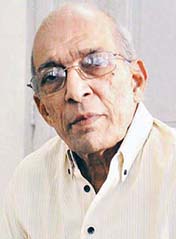
Died: Rusi Framroze Surti, 76, former Indian Test cricketer and respected coach, on January 13, 2013 at Bombay’s Jaslok Hospital following a paralytic stroke.
 His Indian and Queensland cricket blazers and caps, the stump of former Australian captain Bill Lawry he had broken during a Test match in Bombay in 1969 and a photograph of him shaking hands with the Queen were among the memorabilia on display at the well attended memorial service in Surti’s honor organized by the Queensland Cricketers Club on February 8, 2013. Whilst one son Kaizad wore his father’s Indian cricket blazer and tie, the other son Percy sported his Queensland ‘Bulls’ tie and his cuff links.
All present at the meet were handed a four-page Order of Service booklet bearing a photograph of a smiling Rusi on the front page with an inner page carrying tributes from his colleague on the Indian Test team Farokh Engineer who described him as being "extremely talented,” and former captain the late Mansur Ali Khan Pataudi who found him "courageous and dominating.” The highlights of his career as a cricketer featured in the handout too: 26 Tests for India between 1960 and 1969, 160 First Class matches, 8,066 runs and 284 wickets with his best performance being five wickets for 42 runs. It was in the Ranji Trophy matches when he played for Gujarat and Rajasthan that he made his highest score of 246 not out. Thereafter began his Test career with his first Test against Pakistan in Bombay in 1960 and his last, also in Bombay, played against Australia when he had an on-field argument with Lawry.
After his stint as a Test cricketer he settled in Australia where he represented Queensland 35 times in the Sheffield Shield, according to a write-up in the Mumbai Mirror of January 14. The first Queensland player to take a hat trick in a match against Western Australia in 1968-69, some Queensland cricketers who had played with him paid their eulogies too at the memorial meet as did Test cricketers Tom Veivers and Tony Dell. In fact Dell carried a message from the legendary Greg Chappell recalling one of their meetings in Bombay when they "had a good catch up with lots of laughs. He really was a good soul, our Gandhi.” "Dad’s affectionate nickname in Australian cricketing circles was Gandhi,” explained Percy.
Yet another cognomen for the elegant left-hander was "The Poor Man’s Garry Sobers” who is recognized as the greatest all-rounder in the history of cricket. It was in his final Test against New Zealand in Auckland that Surti made 99 that remained his highest test score. As researched by cricket statistician Kersi Meher-Homji, nine batsmen, including Australian legend Shane Warne, have made 99 as their highest Test score. In his book The Nervous Nineties, Meher-Homji had quoted Surti, "I was more anxious than nervous to get my maiden Test century. All I wanted was to nick a single to achieve what I had never attained in a Test before — and as it turned out — afterwards. I still remember returning to the pavilion a broken man …” As New Zealand writer Dick Brittenden had then summed up, "Surti looked the best of them as a batsman and comparisons made with Garry Sobers were in many respects valid. For watchfulness and subconscious elegance, he stood alone.”
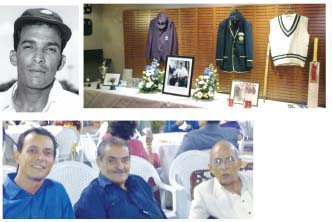
His Indian and Queensland cricket blazers and caps, the stump of former Australian captain Bill Lawry he had broken during a Test match in Bombay in 1969 and a photograph of him shaking hands with the Queen were among the memorabilia on display at the well attended memorial service in Surti’s honor organized by the Queensland Cricketers Club on February 8, 2013. Whilst one son Kaizad wore his father’s Indian cricket blazer and tie, the other son Percy sported his Queensland ‘Bulls’ tie and his cuff links.All present at the meet were handed a four-page Order of Service booklet bearing a photograph of a smiling Rusi on the front page with an inner page carrying tributes from his colleague on the Indian Test team Farokh Engineer who described him as being "extremely talented,” and former captain the late Mansur Ali Khan Pataudi who found him "courageous and dominating.” The highlights of his career as a cricketer featured in the handout too: 26 Tests for India between 1960 and 1969, 160 First Class matches, 8,066 runs and 284 wickets with his best performance being five wickets for 42 runs. It was in the Ranji Trophy matches when he played for Gujarat and Rajasthan that he made his highest score of 246 not out. Thereafter began his Test career with his first Test against Pakistan in Bombay in 1960 and his last, also in Bombay, played against Australia when he had an on-field argument with Lawry.
After his stint as a Test cricketer he settled in Australia where he represented Queensland 35 times in the Sheffield Shield, according to a write-up in the Mumbai Mirror of January 14. The first Queensland player to take a hat trick in a match against Western Australia in 1968-69, some Queensland cricketers who had played with him paid their eulogies too at the memorial meet as did Test cricketers Tom Veivers and Tony Dell. In fact Dell carried a message from the legendary Greg Chappell recalling one of their meetings in Bombay when they "had a good catch up with lots of laughs. He really was a good soul, our Gandhi.” "Dad’s affectionate nickname in Australian cricketing circles was Gandhi,” explained Percy.
Yet another cognomen for the elegant left-hander was "The Poor Man’s Garry Sobers” who is recognized as the greatest all-rounder in the history of cricket. It was in his final Test against New Zealand in Auckland that Surti made 99 that remained his highest test score. As researched by cricket statistician Kersi Meher-Homji, nine batsmen, including Australian legend Shane Warne, have made 99 as their highest Test score. In his book The Nervous Nineties, Meher-Homji had quoted Surti, "I was more anxious than nervous to get my maiden Test century. All I wanted was to nick a single to achieve what I had never attained in a Test before — and as it turned out — afterwards. I still remember returning to the pavilion a broken man …” As New Zealand writer Dick Brittenden had then summed up, "Surti looked the best of them as a batsman and comparisons made with Garry Sobers were in many respects valid. For watchfulness and subconscious elegance, he stood alone.”
"Surti could bat like a millionaire, bowl like a miser and field like a superman. He was India’s first agile fielder. Even a short innings by Rusi gave endless pleasure as this short-tempered Parsi was a brilliant cricketer, a panther on the prowl…” noted Meher-Homji, recalling that his friend was "straightforward and would take no nonsense from anyone.”
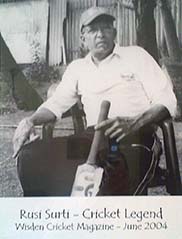
"When England or Australian bowlers swore at him, he gave it back in plenty,” noted an article by Makarand Waingankar in The Times of India of January 14. Waingankar further referred to Dicky Rutnagur’s reminiscence of the 1962 tour of West Indies when Surti was playing against Sir Conrad Hunte who was a member of the Moral Re-Armament movement. In one game when Hunte edged the ball but wasn’t given out nor did he walk out, Surti shouted, "Hey, where are your morals, maan!” On this tour when there were four Parsis — captain Nari Contractor, Polly Umrigar, Farokh Engineer and Surti — constituting 36 percent of the team, he made a lasting impression on Contractor who recalled, "The real Rusi I saw was on the tour of West Indies… Rusi was a great team man and a captain’s man. He was prepared to do anything for the team. He ought to have played longer for India.”
Once he was dropped from the Indian team he chose to settle in Australia and got himself a better life initially as a player and subsequently as a respected coach for top clubs in Queensland. In fact he continued his coaching until he was 65 years old. At the Gabba cricket ground in Brisbane a common sight was to see him being instantly recognized and greeted Aussie-style, "Good dai Rossi Serti.” He was selected to represent Australia even on The Over 50s Indoor Cricket team. Among his all-time favorite players were former Australian cricket captains Ritchie Benaud, Lawry and Ian Chappell, as also Don Bradman and Contractor.
Born in Surat, he was first sent to Bombay’s Dr Antonio De Silva School but was later shifted to Bharda High School specifically to nurture his cricket talent. He started showing his potential in the game from the young age of seven and had several coaches including Vinoo Mankad whom he considered his mentor. As recalled his grand-nephew Noel Surti, at a function last year in Bombay the humble and unpretentious Rusi started his speech by saying that much has been said "in my regard. Let me tell you, my qualification includes an FTFSSC degree, an abbreviation of Four Times Failed in SSC!”
Keen to support any upcoming Parsi youth in cricket, he ensured that he made time for them. In recent times his main interests were "giving advice to his two sons, seeing his two granddaughters Tamara and Stephanie play golf off a handicap of 12… enjoy his fishing and table tennis, and holiday in India for three months from November to February” to be in the company of his family, stated Percy.
"When England or Australian bowlers swore at him, he gave it back in plenty,” noted an article by Makarand Waingankar in The Times of India of January 14. Waingankar further referred to Dicky Rutnagur’s reminiscence of the 1962 tour of West Indies when Surti was playing against Sir Conrad Hunte who was a member of the Moral Re-Armament movement. In one game when Hunte edged the ball but wasn’t given out nor did he walk out, Surti shouted, "Hey, where are your morals, maan!” On this tour when there were four Parsis — captain Nari Contractor, Polly Umrigar, Farokh Engineer and Surti — constituting 36 percent of the team, he made a lasting impression on Contractor who recalled, "The real Rusi I saw was on the tour of West Indies… Rusi was a great team man and a captain’s man. He was prepared to do anything for the team. He ought to have played longer for India.”
Once he was dropped from the Indian team he chose to settle in Australia and got himself a better life initially as a player and subsequently as a respected coach for top clubs in Queensland. In fact he continued his coaching until he was 65 years old. At the Gabba cricket ground in Brisbane a common sight was to see him being instantly recognized and greeted Aussie-style, "Good dai Rossi Serti.” He was selected to represent Australia even on The Over 50s Indoor Cricket team. Among his all-time favorite players were former Australian cricket captains Ritchie Benaud, Lawry and Ian Chappell, as also Don Bradman and Contractor.
Born in Surat, he was first sent to Bombay’s Dr Antonio De Silva School but was later shifted to Bharda High School specifically to nurture his cricket talent. He started showing his potential in the game from the young age of seven and had several coaches including Vinoo Mankad whom he considered his mentor. As recalled his grand-nephew Noel Surti, at a function last year in Bombay the humble and unpretentious Rusi started his speech by saying that much has been said "in my regard. Let me tell you, my qualification includes an FTFSSC degree, an abbreviation of Four Times Failed in SSC!”
Keen to support any upcoming Parsi youth in cricket, he ensured that he made time for them. In recent times his main interests were "giving advice to his two sons, seeing his two granddaughters Tamara and Stephanie play golf off a handicap of 12… enjoy his fishing and table tennis, and holiday in India for three months from November to February” to be in the company of his family, stated Percy.
When Meher-Homji had asked Surti to relate his most exciting moments in cricket he had candidly declared, "My finest hour was in 1975 as a batsman in the semi-final of Channel O Knock-out Tournament. This ‘thrilla on Gabba’ was played between Easts and University. The ending was nail-biting. University made 175 and we were in strife at 58 for five when I entered. But soon I pulled my leg muscle and retired. I returned as last man as Easts needed 41 to win in 27 balls. In a dramatic count down we added 16 runs in one over, 13 by me.” As reported the Courier Mail, "Surti was in charge, dominating the strike like a military strategist.”
Believing that he would have made an excellent T20 player, Meher-Homji commented, "To see him perform in the middle…was like sipping a glass of champagne, lots of bubbles and fizz with a glorious after-taste.”
The committed cricketer is survived by his sons Percy and Kaizad.
Believing that he would have made an excellent T20 player, Meher-Homji commented, "To see him perform in the middle…was like sipping a glass of champagne, lots of bubbles and fizz with a glorious after-taste.”
The committed cricketer is survived by his sons Percy and Kaizad.
11 Parsi Test cricketers who played for India
(Listed alphabetically with years of birth and death, where applicable, and number of Tests played)
Sorabji Colah (1902-50; 2 Tests)
Nari Contractor (1934; 31 Tests)
Farokh Engineer (1938; 46 Tests)
Jenni Irani (1923-82; 2 Tests)
Rustomji Jamshedji (1892-1976; 1 Test)
Khershed Meherhomji (1911-82; 1 Test)
Rusi Modi (1924-96; 10 Tests)
Pheroze Palia (1910-81; 2 Tests)
Rusi Surti (1936-2013; 26 Tests)
Keki Tarapore (1910-86; 1 Test)
Polly Umrigar (1926-2006; 59 Tests)
(Listed alphabetically with years of birth and death, where applicable, and number of Tests played)
Sorabji Colah (1902-50; 2 Tests)
Nari Contractor (1934; 31 Tests)
Farokh Engineer (1938; 46 Tests)
Jenni Irani (1923-82; 2 Tests)
Rustomji Jamshedji (1892-1976; 1 Test)
Khershed Meherhomji (1911-82; 1 Test)
Rusi Modi (1924-96; 10 Tests)
Pheroze Palia (1910-81; 2 Tests)
Rusi Surti (1936-2013; 26 Tests)
Keki Tarapore (1910-86; 1 Test)
Polly Umrigar (1926-2006; 59 Tests)
NB: Contractor and Umrigar also captained India.
Contributed by Gul-Fraaz (Gulu) Ezekiel
◆ ◆ ◆
From the archive