
Sex and society
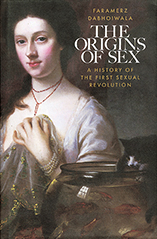
I wonder how many of us know that the sexual laws and practices prevalent in Britain in the 1600s would have met the requirements and the total approval of the most conservative and radical Muslim cleric. Faramerz Dabhoiwala’s remarkable and informative book The Origins of Sex, A History of the First Sexual Revolution begins in Westminster, London, on the banks of the River Thames on Tuesday, March 10, 1612 on which date the magistrate is dealing with a "criminal” case. An unmarried man and a woman who have been found guilty of having sexual relations are punished by being "stripped naked from their waist upwards ...tied to the cart’s tail ...to be whipped...and... be presently banished from the city.” Dabhoiwala drily comments that what happened to their child is not known. At this time, not only in Britain, but all over the western world, sex outside marriage was "illegal” on two counts: the religious premise that it incurred the wrath of God and the secular one that it undermined social order. By 1650, adultery was considered a capital crime.
 Thankfully, since then the world has changed and one now associates this attitude with societies with orthodox ideas and conservative ways of thinking. Most studies on the history of sexual relations have so far dwelt on specific texts or individual sexual experience which Dabhoiwala feels is missing the woods for the trees. In The Origins of Sex, Dabhoiwala’s first book, he "attempts to show how people’s beliefs were affected by social circumstances and how new forms of commerce, communication and social organisation transformed the perception, and the experience, of sex.”
Since the dawn of time, every civilization had severe laws against sexual immorality. A senior fellow in History at Exeter College, Oxford, and a fellow of the Royal Historical Society, Dabhoiwala gives several examples of these. The kings of Babylon made adultery punishable by death. The code of Alfred the Great equated adultery with incest by giving both the same punishment. The attitude of the Old Testament, as seen in the Seventh Commandment, was clear: "Thou shalt not commit adultery.” St Paul expressed the view that sexual abstinence is ideal; however, if one was unable to control one’s lust, it was "better to marry than to burn.” Religious texts clearly taught that the desires of the flesh were reprehensible and should be continually kept in check. In his youth, St Augustine was more inclined to surrender to his lust than to subjugate it: "grant me chastity and self-control — but please not yet.”
 During the 11th and the 13th century, the power of the church dominated the Western world and celibacy was enforced on priests. Church courts were set up and penalties imposed. People were actively encouraged to spy on their neighbors. Some sinners were sent on a pilgrimage, others were beaten publicly and repeatedly. With the advent of the Protestant movement, priests were allowed to marry but all sex outside matrimony was severely punished, adulteresses were put to death and brothels closed.
In 1589, a prison was built for sexual offenders in Dundee. Some of the laws were quite unexplainable and lacked logic. Husbands and wives could not testify against each other with a result that even when a wife found her husband in bed with another woman she was unable to give evidence as a witness. In the spring of 1564, the last person to be hanged for adultery was a woman named Susan Bounty but the persecution continued till the beginning of the 18th century when there was a sexual revolution.
Dabhoiwala mentions several factors which resulted in this event. In 1689 the Toleration Act was 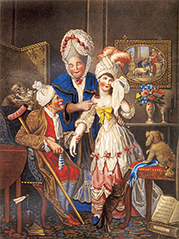 passed which resulted in religious plurality which in its turn led to sexual toleration. The belief spread that private practices of a person were in fact "private” matters and were no business of the government or the church as long as this did not threaten the well-being of others or of society as a whole. Morality was a matter of private conscience and none had the right to impose his own views on the salvation to others. Sexual freedom was now defended on the basis of individual conscience. The shift of population from rural to urban was another cause to weaken the punishment of extramarital affairs; much of the moral policing was done by interfering neighbors and with growing urbanisation sexual behavior was more difficult to supervise and control. Private conduct and public morality were distinguished. Sex was considered to be a natural human activity and central to human life. However, this sexual freedom came at a price. In 1650, only one percent of the total number of babies were born to unwed mothers. By 1800, this number grew to 24 percent and, in addition, 40 percent women were pregnant before marriage.
If sex between men and women was natural then came the corollary that certain types of sexual activity was abnormal. Homosexuals were executed in the 1930s and continued to be persecuted. In fact as late as the 1950s, 20 percent of the crimes against a person were against homosexuals. In spite of this, there was an extensive homosexual subculture in the early 18th century London and Dabhoiwala quotes several humorous examples of seduction and overt sexual acts which took place during that time. One such episode pertains to Edward Rigby whose seduction of a young man is hilariously described. Rigby was sentenced for sodomy but returned unsubdued and unvanquished to have a remarkable portrait painted which clearly shows him as anything but repentant. Several thinkers at this time did believe that homosexual behavior was no different from any other kind of sexual activity and that there was no such thing as "unnatural desire.” They advocated that consensual sex between men should be allowed, that homosexuality is "an imaginary crime no more dangerous to society than the practices of scratching or of blowing one’s nose.”
The rise of the novel also played a vital role in changing the balance of sexual relationships. Men were seen as seducers and women virtuous. Dabhoiwala relates the rise of libertines and harlots to the theme of seduction which forms a vital part of the novels of Samuel Richardson. In Pamela, the lustful Squire B tries desperately to seduce his servant, Pamela. Similarly, in Clarissa, it is Robert Lovelace who takes advantage of Clarissa. Even in the novels of Henry Fielding, promiscuous men were the pursuers and chaste women were the victims.
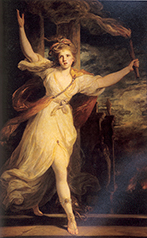
Dabhoiwala also presents the rise of the media and women writers as a potent cause for the revolution. Women now had unprecedented access to the public at large and started writing their memoirs. When Margaret Leeson, a much sought after prostitute and brothel-keeper, found herself in need of cash, she published her memoirs which covered her long and successful career; in addition to the salacious details, she even published several letters written to her by her former lovers. It was no wonder that the three volumes were "bought up with the greatest avidity.” The courtesan, Kitty Fisher, whose portrait adorns the cover page of The Origins of Sex decided to cover up her past demeanors and commissioned Joshua Reynolds, who probably was one of the most successful artists of the day, to set about "crafting more appealing images of her.”
In his book, Dabhoiwala presents a fascinating and extremely compelling and readable account of the origins of sex and the first sexual revolution. The book is a result of extremely hard and diligent research which is evident from the footnotes which run to almost a 100 pages. However, the account is interspersed with delightful vignettes and carefully chosen illustrations. Occasionally the research does hang heavily and one is assaulted by so many examples that it seems as if Dabhoiwala is laboring the point. However, The Origins of Sex is a scholarly and serious work greatly enlivened by Dabhoiwala’s wit and humor.