
Books
Cartoon capers
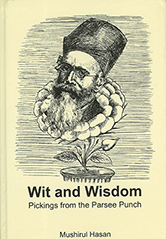 Wit and Wisdom: Pickings from the Parsee Punch by Mushirul Hasan. Published in 2012 by Niyogi Books, D-78, Okhla Industrial Area, Phase I, New Delhi 110020. Pp: 164. Price: Rs 795.
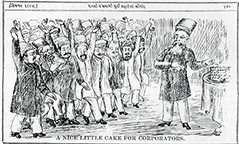
At a time when the Indian establishment — no longer one to know when or how to laugh — tried to clamp the draconian sedition law on a cartoonist who jibed at the parlous level of corruption daily mirrored by the Indian Press; and cartoons published 40 plus years ago to universal enjoyment reprinted in text books to provide senior school children a perspective on the history of independent India have had to be revoked, Mushirul Hasan provides glimpses of what were the issues in western India a century ago. It is refreshing to see what even the colonial authorities could tolerate: e.g. the robust John Bull in 1900 in a sweater and undies, epitomizing the British government, juggling weights. In his hands he swings Egypt and Sudan; held by the teeth are Buchanaland and the Boers of South Africa; the domestic Franchise Bill (adult franchise was still in the making in England) is a load on his head; other heavy weights await his attention like India, Afghanistan,  China, etc. The caption reads "Feats of strength, as performed by Mr John Bull.”
"A comic journal plays a good part in the development of the political and social reform of a country, and it shall be always our aim and desire to advance that end,” Hasan quotes the Parsee Punch, even as he examines the impact of the reformists of the time like Dadabhai Naoroji, Dosabhoy Framjee Karaka, chairman of the Bombay Municipal Corporation, and others, "convinced that the ‘effect of English education upon the Parsis generally will be to raise them still higher in the scale of civilization.’”
Prof Hasan, internationally known historian, author and former vice chancellor of Delhi’s Jamia Milia Islamia University, examines the close links between the urban sethias of western India and the colonial administration. The Parsis as a community thus led this collaboration, gaining in education and employment opportunities. Not so the Muslims, whose prejudice and religious bigotry put hurdles in the path of Syed Ahmed Khan who sought a similar fate for his community through the Aligarh movement, notes Hasan’s Prologue.
"The appropriation of colonial idioms and the relationship between public culture and colonialism are complex themes but Lucknow’s Awadh Punch and Bombay’s Parsee Punch (PP) dealt with them dexterously. What is more, they illustrated, in a lighter vein, contemporary anxieties and predicaments and unfolded events far more complex in actuality than as it has appeared to later historians,” states the author.
Priced at an annual subscription of six rupees, the weekly PP consisted of four semi-quarto sheets, the illustrations being captioned in English and Gujarati. Published by Dadabhai Soheri and edited by Barjorji Nowrosji, the first edition of PP bearing Dadabhai Naoroji on the cover saw the light of day in July 1854 and with its later offspring Pickings from the Parsee Punch continued to comment on the issues of the day until the 1930s, Hasan informs us. It was welcomed by the Mahratta which hoped that the Hindus "would follow in the wake” of this "Parsee enterprise,” while the Indian Nation from Calcutta observed, "The faculty of humor is worth cultivating and we are glad to see this opportunity afforded to countrymen of sweetening their temper, enjoying the ridiculous and training themselves to look at things occasionally in their comic aspect,” quotes Hasan adding, "Every generation has its own standard of critical judgment, but there is no denying these cartoons introduce a tenderness and loftiness of feeling.”
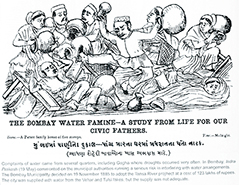 The range of subjects evoking PP’s comment covered not only local politics and events such as the disaffection caused by Lord Ripon’s Ilbert Bill which prevented the Indian judiciary from trying cases concerning European offenders. It chuckled at the antagonism between the English Press and the vernacular papers. It depicted the migration of Indian labor to the Red Sea and other ports. It commented on Britain’s external affairs, comparing the English bulldog to the French poodle; the jockeying for manipulation of an ailing Egypt (the sick man of the Nile) by Britain and continental Europe, Russia’s push for influence in Iran vis-à-vis Britain; the humbling of imperial China, the Boer War in South Africa…
Citing the example of Iran (1884 to 1921) Hasan notes, "The contemporary history of any Third World country appears shaped by the impact of a dynamic interaction between two logically interrelated phenomena,” namely the Russian push for access to its all weather ports and Britain’s equally assiduous efforts to prevent Russia from acquiring an easier access to its Indian empire. The hunt for mineral oil reserves was about to begin as also the "inevitable national movement which gradually grows out of combating this alien challenge.”
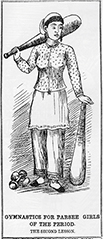 This widening range of subjects also indicates the influence of western education that enabled the educated Indian reader to understand and appreciate not only what went on in the confines of Bombay but in the world at large. As Hasan puts it, "With the Indian empire linked with the western hemisphere, the Irish question became as important as the developments in neighboring Afghanistan.”
While Hasan writes that he has not presented the PP cartoons in any particular order, his text covers the religion and identity of the Parsis, the reforms movement that dominated the thinking of the educated elite, the attitudes, practices and views that tinted people’s outlook and their responses to the politics of the day. Of special interest is the tension between the community’s professed love of the British and the liberation movement that spawned the Indian National Congress in the foundation of which Parsis of the ilk of Dadabhai Naoroji and Dinshaw Watcha were deeply involved. These contrary pulls remain ingrained in the community.
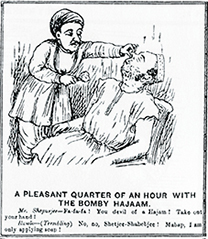
In the last chapter Hasan describes the outstanding specimens of 1887 and 1889 by date, explaining their significance in terms of the events and personalities involved as mentioned in the daily newspapers of the day. These write-ups make for easy and informative reading. Unfortunately, the cartoons he describes are not reproduced and those reproduced do not bear a date so that we can correlate the mood to events recorded by history as few readers would have access to the Press archives. Nonetheless the book, dedicated to Dr Suranjan Das, historian and currently vice chancellor of the University of Calcutta, not only makes for an easy read but reminds one of some of the entries in the history text compiled by the inimitable Fr Ghense, SJ that generations that schooled in the 1950s and 60s studied, before the emphasis shifted to the leaders of Indian independence and, in Maharashtra, the adulation of Shivaji and his family.
China, etc. The caption reads "Feats of strength, as performed by Mr John Bull.”"A comic journal plays a good part in the development of the political and social reform of a country, and it shall be always our aim and desire to advance that end,” Hasan quotes the Parsee Punch, even as he examines the impact of the reformists of the time like Dadabhai Naoroji, Dosabhoy Framjee Karaka, chairman of the Bombay Municipal Corporation, and others, "convinced that the ‘effect of English education upon the Parsis generally will be to raise them still higher in the scale of civilization.’”
Prof Hasan, internationally known historian, author and former vice chancellor of Delhi’s Jamia Milia Islamia University, examines the close links between the urban sethias of western India and the colonial administration. The Parsis as a community thus led this collaboration, gaining in education and employment opportunities. Not so the Muslims, whose prejudice and religious bigotry put hurdles in the path of Syed Ahmed Khan who sought a similar fate for his community through the Aligarh movement, notes Hasan’s Prologue.
"The appropriation of colonial idioms and the relationship between public culture and colonialism are complex themes but Lucknow’s Awadh Punch and Bombay’s Parsee Punch (PP) dealt with them dexterously. What is more, they illustrated, in a lighter vein, contemporary anxieties and predicaments and unfolded events far more complex in actuality than as it has appeared to later historians,” states the author.
Priced at an annual subscription of six rupees, the weekly PP consisted of four semi-quarto sheets, the illustrations being captioned in English and Gujarati. Published by Dadabhai Soheri and edited by Barjorji Nowrosji, the first edition of PP bearing Dadabhai Naoroji on the cover saw the light of day in July 1854 and with its later offspring Pickings from the Parsee Punch continued to comment on the issues of the day until the 1930s, Hasan informs us. It was welcomed by the Mahratta which hoped that the Hindus "would follow in the wake” of this "Parsee enterprise,” while the Indian Nation from Calcutta observed, "The faculty of humor is worth cultivating and we are glad to see this opportunity afforded to countrymen of sweetening their temper, enjoying the ridiculous and training themselves to look at things occasionally in their comic aspect,” quotes Hasan adding, "Every generation has its own standard of critical judgment, but there is no denying these cartoons introduce a tenderness and loftiness of feeling.”
The range of subjects evoking PP’s comment covered not only local politics and events such as the disaffection caused by Lord Ripon’s Ilbert Bill which prevented the Indian judiciary from trying cases concerning European offenders. It chuckled at the antagonism between the English Press and the vernacular papers. It depicted the migration of Indian labor to the Red Sea and other ports. It commented on Britain’s external affairs, comparing the English bulldog to the French poodle; the jockeying for manipulation of an ailing Egypt (the sick man of the Nile) by Britain and continental Europe, Russia’s push for influence in Iran vis-à-vis Britain; the humbling of imperial China, the Boer War in South Africa…Citing the example of Iran (1884 to 1921) Hasan notes, "The contemporary history of any Third World country appears shaped by the impact of a dynamic interaction between two logically interrelated phenomena,” namely the Russian push for access to its all weather ports and Britain’s equally assiduous efforts to prevent Russia from acquiring an easier access to its Indian empire. The hunt for mineral oil reserves was about to begin as also the "inevitable national movement which gradually grows out of combating this alien challenge.”
This widening range of subjects also indicates the influence of western education that enabled the educated Indian reader to understand and appreciate not only what went on in the confines of Bombay but in the world at large. As Hasan puts it, "With the Indian empire linked with the western hemisphere, the Irish question became as important as the developments in neighboring Afghanistan.”While Hasan writes that he has not presented the PP cartoons in any particular order, his text covers the religion and identity of the Parsis, the reforms movement that dominated the thinking of the educated elite, the attitudes, practices and views that tinted people’s outlook and their responses to the politics of the day. Of special interest is the tension between the community’s professed love of the British and the liberation movement that spawned the Indian National Congress in the foundation of which Parsis of the ilk of Dadabhai Naoroji and Dinshaw Watcha were deeply involved. These contrary pulls remain ingrained in the community.
In the last chapter Hasan describes the outstanding specimens of 1887 and 1889 by date, explaining their significance in terms of the events and personalities involved as mentioned in the daily newspapers of the day. These write-ups make for easy and informative reading. Unfortunately, the cartoons he describes are not reproduced and those reproduced do not bear a date so that we can correlate the mood to events recorded by history as few readers would have access to the Press archives. Nonetheless the book, dedicated to Dr Suranjan Das, historian and currently vice chancellor of the University of Calcutta, not only makes for an easy read but reminds one of some of the entries in the history text compiled by the inimitable Fr Ghense, SJ that generations that schooled in the 1950s and 60s studied, before the emphasis shifted to the leaders of Indian independence and, in Maharashtra, the adulation of Shivaji and his family.
◆ ◆ ◆
From the archive