
Mother Mary
For Mary Taleyarkhan of Poona, who completed a 100 eventful years on October 27, 2012, life has been a chequered journey
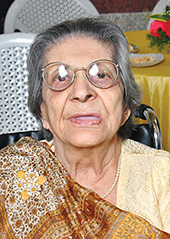 It was her first birthday party ever, and Mary Taleyarkhan, on completing 100 years basked in the love showered on her by family, friends and neighbors at the community hall of her residential complex in Poona. Some had come from other cities just for the evening, to share in the joy of this milestone event. There were two special, exquisitely decorated birthday cakes, one baked for her by a friend, and while the three-digit candle announcing ‘100’ was blown out by the centenarian others made wishes on her behalf and belted out the happy birthday song. One guest rendered a heartfelt version of the hymn Showers of Blessings. A guest book recorded the sentiments of well-wishers.
Dressed in a sari worn the Parsi way as always and pearls, our mother Mary sat in her wheelchair like the quintessential matriarch. An excited Sherezad Harda, her not-yet-three-year-old great-granddaughter raced in, hugged and kissed her "Mocca Granny” and wished her a happy birthday. Then, turning to the guests she flung open her arms and announced: "It’s a birrrthday parrrty!” setting the mood for the evening. And though it rained, no one’s spirits were dampened. The centenarian’s children Adi, a retired Wg Cdr in the Indian Air Force, Sherene Neville Vakil, Farida Daraius Irani and Jeroo Gev Irani made all welcome as did her grandchildren.
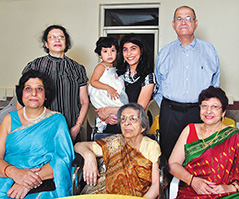 "I had the privilege of being the first grandchild from Mum’s side and Granny took care of me since I was a little baby. My earliest memories are of her in her gown, wearing black sapats (slippers) and old fashioned black thick-rimmed glasses,” recalls Dinaz Darius Harda. "We used to love going to her house in Pudumjee Compound (Poona) which had a huge porch in the front and back, and was surrounded by trees. I remember digging out the oldest and most rusted ‘chalk na dabbas’ which had the loveliest designs and put chalk on the front steps. I would spend my school holidays there and Granny taught me to stitch (her pedal Singer sewing machine was really old but very smooth), make mango fool, pickles, etc. The highlight used to be cleaning and re-arranging the majestic wooden cupboards as you never knew what old treasures you might find inside!
"In spite of facing some difficult times during her lifetime, she kept smiling through it all and helped fulfill the dreams of her family. She is our Mother Mary. She is our inspiration.”
Dinaz’s brother Farsheed Irani recalls, "My good memories while growing up are visiting grandmom at her house. Anything she cooked would be the best treat, especially her dhan dar patio. I can’t ever forget the tasty paani puri she would make for us. I remember her teaching my sis and me our navjote prayers.”
Writing from Dallas, Texas, grandson Gil Irani shares: "Granny is always the most loving and warm person in my life. When good things happen for me, she is the first person I want to tell. Hearing her being proud of me is often more gratifying than the accomplishment.
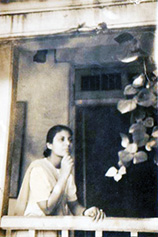 "She is the classic matriarch; everyone in the family looks up to her and respects her. She has seen India evolve, but still shares her memories of the good ole days. I have always loved her stories. They were so vivid; I often imagined myself in those times.”
And the years have been eventful indeed. Mary was born in Bombay on October 27, 1912 to Soonabai and Jehangirji Dadyseth, the eldest of six children. Though the family lived in Kanpur at that time, she was born in Bombay at the home of her paternal grandparents, Goolbai and Muncherji Dadyseth, as her father was an only son. He worked as a water works superintendent and the family remained in Kanpur until the fourth child, Dady, was born. Mary was followed by sisters Rati and Dinoo; the youngest, Munchie and Khorshed arrived on the scene many years later, with their eldest sister an ever willing surrogate mother to them.
While in Kanpur Mary and Rati had a dog cart pulled by a dariwalo bakro (bearded billy goat) in which they were sent every evening for an outing, accompanied by a maid and manservant walking alongside. One day, exasperated at the slow pace, Mary whacked the goat with a stick to make it go faster. The startled animal bolted, overturning the cart and landing the sisters in a ditch. The goat and cart went home sans passengers with the downcast servants following later. The girls lay in the ditch until an elderly Parsi couple passing by in a horse drawn carriage recognized the Dadyseth children, rescued them and took them home — where they got a spanking from their father!
Mary’s father taught her to shoot a rifle, ride a horse, handle a horse drawn carriage and drive a car at a very young age. In Kanpur they adopted a black sloth bear rescued from the jungle. When Bhaloo was three years old some of the water works employees who were celebrating Holi and drinking bhang (a narcotic prepared from the leaves and buds of the cannabis plant) thought it would be amusing to see what would happen if they gave some to the bear. Bhaloo danced and danced in a frenzy until he collapsed and died, Mary ruefully recalls.
 When his British boss returned to England, Jehangirji took over the position along with the house, 300 carrier pigeons, dancing pigeons, rabbits, buffaloes and horses. There was also a large collection of hats that had belonged to the Englishman’s late wife! The children would watch their father using the carrier pigeons to send and receive mail. He carried around in his pocket a two-headed snake about 18 inches long which he would pull out to frighten people. When the family moved to Dhulia, where they lived for five years, Jehangirji brought home a panther cub that had lost its mother.
Jehangirji’s next job took him to Peshawar in the north-west of India where he worked for a leather tanning company. He spoke fluent Pushtu. During trading, he wore the local costume which Mary describes as a heavily gathered-at-the-waist shalwar made from 20 yards of cloth, a khameez with a belt and huge buckle, his head covered in a gold-thread turban with a cap underneath. Peshawar being a lawless town, vendors would brandish knives during negotiations; Jehangirji would respond by pulling out his revolver! Those were wild times, Mary remembers, and the people were "ferocious.” Women and children dared not venture out alone. They would stand by the gate watching the passers-by, but if any Pathans were seen lurking around they would be shooed into the safety of the house for the danger of kidnapping was very real.
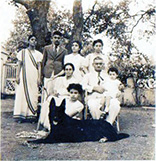 When Mary’s grandfather Muncherji, a well known barrister, passed away, Jehangirji left his family with his mother in Bombay and went wherever his job dictated. Mary’s Bapaiji had a zest for life and was an excellent cook, poring over a huge pakwan pothi (Gujarati cookery book) for new delicacies to create. The children were often roped in to help. On one occasion they grew bored while peeling a mountain of boiled baby potatoes, so they tossed handfuls out of the window until the downstairs neighbors complained vociferously about the unusual missiles landing in their homes! Living with her was fun though. Of a morning she would call in ferias (vendors) carrying huge trays on their heads laden with glasses of khariya ni jelly and doodh na puffs and urge the children to tuck in to their hearts’ content.
The sisters did not attend school in Dhulia because the medium of instruction was Marathi with which they were not familiar. In Bombay they were sent to Princess High School and later to Kimmins in Panchgani for a couple of years, living with their aunt who took in boarders. It was Mary’s lifelong regret that she was unable to continue her education. This became the driving force when as a parent she ensured the best possible education for her own children.
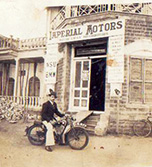
When he returned to Bombay for good Jehangirji brought home a lioness, named Sheba. He would take her for a walk without a leash on Chowpatty beach. From the Chowpatty area the family moved to Bandra. Mary worked for the family owned motorcycle dealership firm where she was responsible for writing out orders, office correspondence, book keeping, etc until her marriage to Khurshedji Jehangirshah Taleyarkhan in 1942. Khurshedji was with the defence services in the Electrical and Mechanical Engineering (EME) Corps of the Army and they moved to Belgaum where he was posted. The first three children were born during that time, the youngest arriving during a one-year stint in Bombay. Subsequently, Khurshedji was transferred to the EME factory in Khirkee but chose to live in Poona so that we could attend schools located nearby. He commuted to work on a bicycle — seven miles in each direction — until he got a motorcycle. They settled in Poona where he passed away in 1982.
Since the family was large and the income inadequate, Mary started a preschool at home where she taught about 40 children over a period of four years, readying them for kindergarten or the first standard of schools. One of her amazing achievements concerned a pupil with Down’s Syndrome who could not eat, drink or talk normally though he was well past nursery school age. A pioneer in inclusive education, Mary persevered with the boy, training him to become physically independent to a large extent, imparting the three ‘R’s and eventually placing him in a regular school. The image of the drooling, morose, dependent child was soon relegated to the past tense as he smilingly attended the "big” school.
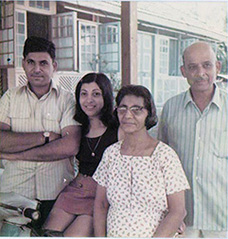 Mary was brave and could face crises calmly. During school vacations the children spent time with her parents in Bandra. One morning Jehangirji, while reading on the verandah of his bungalow heard a child coughing rather hard. He rounded up three of his granddaughters (the youngest escaped), loaded them onto his Triumph motorcycle, two at the rear and one in front, and roared off to Parel where he had them admitted at the Jerbai Wadia Children’s Hospital, ordering the surgeon to remove their tonsils!
On his return when Soonabai asked why the house was so quiet he casually mentioned that he had taken my sister and me, along with a cousin to the hospital for surgery. Have their mothers been informed? she asked. Bemused at the query he sent a postcard each to Mary and Rati who were in Poona. Mary received the card three days later and boarded the first available train, arriving at the hospital just as three prone girls were being wheeled out of surgery. She had to run from bed to bed to minister to their needs. Rati, who received the information a day later, was not amused.
Mary was an excellent cook and seamstress, taking care of the family’s needs in every department. A prolific letter writer, she communicated with family and friends until an advanced age when her vision deteriorated. She wrote with equal proficiency in both Gujarati and English in neat handwriting likened to moti na dana (pearls). Mary made entries in a diary of daily happenings and included newsworthy tidbits in emails sent to her family in the US (courtesy daughter Farida). Beset with ill health, she would soldier on, keeping others’ interests above her own. Osteoporosis gravely damaged and disfigured her spine. When she heard of "laser” treatment, she wanted to use it to "repair” her back so that she could be free from pain. Though dissuaded from undergoing an MRI which can be traumatic and disorienting, with true grit she insisted and later pooh-poohed the naysayers describing the experience as "not so bad.” The doctor who examined the test results was sympathetic, inquiring whether the patient was able to turn in bed without assistance. He did a double take when informed that Mary was seated in his waiting room! No operation was possible, but through sheer willpower Mary remained mobile using a walker until she was 98 years old when her legs failed and she was confined to a wheelchair.
In a major surgery when she was 74 years old most of her ulcer riddled stomach was removed by then Gp Cpt D. P. Sarkar, professor of surgery at Poona’s Armed Forces Medical College, giving her a new lease on life. For the doctor, now a family friend who retired as Air Marshall and lives in Bangalore, her case remains a signal success story. He was the first to telephone early in the morning on October 27 to wish her on her 100th birthday.