
Books
Karaka’s classic
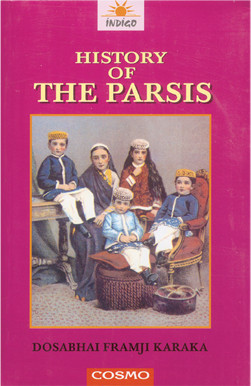
History of the Parsis by Dosabhai Framji Karaka. Two volumes bound in one. Published in 2002 by Indigo Books, paper back division of Cosmo Publications, 24-B, Ansari Road, Daryaganj, New Delhi 110002. Pp: xxxiii + 332 + 349. Price: Rs 495.
Dosabhai Framji Karaka had written the book History of the Parsis in 1884. The present two-volume reprint of the original book is a very researched account of the history of the Parsis. His aim was to enlighten Englishmen and Parsis regarding Zoroastrianism so that relations between the two would be facilitated. The whole book reflects his pride in Parsi achievement and his commitment to the progressive development of the community.
After starting with a historical sketch of the early Persian dynasties he goes on to discuss the birth and life of Zarathushtra in about 1300 B.C. He was remarkably close to the now archeologically and historically accepted date of Zarathushtra between 1700 and 1500 B.C. The defeat of the Sassanians and the arrival of the Parsis in India is described more or less in line with the traditionally accepted accounts. Again, here he is more closer to the truth when he states that the date of the first arrival in Sanjan was approximately 716 A.D. and that the fire-temple was built about 721 A.D. As is now accepted he states that there was close intercourse between the Hindus and Persians from early times from the days of Cyrus and Darius and also that after the defeat of the Sassanians several migrations to India took place before the major migration in 716 A.D. The chapter ends with the sack of Sanjan by Alaf Khan. The date given by him — 1305 A.D. — is found to be incorrect. The closer historical date is between 1393 and 1405. The later dates fit into the date when the Iranshah was brought to Navsari under the leadership of Changa Asa in 1419.
An account of the Zoroastrians remaining in Persia brings out their pathetic plight and the help rendered by the Parsi community of Bombay. Through the intervention of influential people the dreaded jazia tax on non-Muslims was abolished.
The early social life of the Parsis till the middle of the 19th century was very much influenced by their Hindu neighbors. Child marriage, bigamy, beliefs in superstitions based on non-Zoroastrian ideas were very rampant. The cases coming before the then existing Punchayet were very revealing and make interesting reading in the chapters on manners and customs of the Parsis.
According to a detailed demographic account of the Parsis carried in the book, in 1881 they numbered about 85,397, most of them, as of today, being concentrated in western India with more than half being in Bombay. According to an occupational break-up of the Parsis in Bombay, they surprisingly constituted a large number of domestics, both male and female. This probably reflects the lack of education in some sections of the Parsi population in the early 19th century. However at the same time he states that the Parsi standard of living was much higher than that of the other communities, thus bringing out the general prosperity of the community. The style of living described was a mixture of European and Indian, indicating the adaptability of the Parsis. The position of Parsi women during this period seems to have improved and the once high and equal position of women in ancient times in Persia was renewed. This also coincides with the development and progress of education amongst the Parsis. The influence of the British on the Parsis from the early 17th century convinced some of them to learn the English language. In the beginning of the 19th century the first school in English was started by Mountstuart Elphinstone, in Bombay. The Parsis were amongst the first to take advantage of the school. Then followed the establishment of many Parsi schools and the spread of the English language amongst the Parsis. They were also the first to start schools for girls with the help of many British officials. The formation of the Parsi Girls Association greatly enhanced the opportunity for girls to get education. By the close of the 19th century, Parsis were the most literate community in western India. Little information is given about the beginning of newspapers and magazines by the Parsis in Bombay. In fact it would have been more valuable if Karaka had given more details on the Parsi Press and journalism as they played a very important part in the development of public opinion and social reforms.
In the chapter detailing the history of the formation and functioning of the early Bombay Parsi Punchayet and the rules governing the Parsis, we learn that excommunication was commonly practiced against defaulters and beating with shoes was also a common practice. Some interesting illustrations are also given.
In 1818 there was a reconstitution of the Punchayet in a public meeting where members of the Punchayet were elected. Important decisions were taken at the meeting, particularly noteworthy was the decision to enforce monogamy and bar superstitious practices. A Parsi Law Association was formed in 1855 to prepare a draft of a uniform system of law for the Parsis and to petition the legislature of India for a formal enactment. As a result of the efforts of the committee a commission was appointed by the Bombay government to go into the matter and subsequently the legislature passed both the Parsi Succession Act and the Parsi Marriage and Divorce Act in 1865. Listed in the three appendices at the end of the book are the Parsi Chattles Real Act of 1837, The Parsi Marriage and Divorce Act of 1865 and the Parsi Succession Act of 1865.
Volume II starts with a biographical sketch of distinguished Parsis of Gujarat, particularly of Navsari and Surat. Through this sketch one gets an idea of the life and times in the early settlements of Navsari and Surat and the historical setting in which they lived. Due to Dastur Meherjirana who was responsible for initiating Emperor Akbar into the Zoroastrian religion and his successors, Navsari became the center — sort of Rome of the Parsi community. Another important personality of Navsari was Changa Asa who brought the Iranshah from Valsad to Navsari in 1419.
The commercial relations between the Parsis and the Europeans is conveyed in an account of Rustom Manek, a prominent broker of Surat. Manek helped the Parsis establish strong settlements and intervened whenever trouble arose between them and the authorities. Ardeshar Kotwal played a prominent role as a Kotwal in maintaining law and order throughout Surat. It is said that during his tenure, the people of Surat could sleep safely with open doors. He enhanced the status of the Parsis in Surat during the middle of the 19th century.
Another chapter gives a sketch of distinguished Parsis of Bombay who developed the city. He gives an account of the arrival of the first Parsi in Bombay. However it was not Kharshedji Pochaji Panday who arrived in Bombay first. It was in 1640 that one Dorabji Nanabhai Patel arrived in Bombay with his family from Suvali near Surat. He worked as an agent of the Portuguese to deal with the indigenous population. He was followed by other Parsi families, including that of Panday who came from Bharuch. The growth of Bombay is then shown through the various Parsi families who became master shipbuilders and traders such as the Wadia family, the Banaji Limji family, the Readymoney family and the Cama family. Sir Jamsetji Jejeebhoy’s career is one of amazing success in trade and his benevolence and philanthropies are described in detail as also those of Maneckji Petit and family.
Writing in 1884, it is surprising that the author does not mention the growth of Parsi theater which started in about 1850. Prominent then were Kaikhushru Kabraji and Dadi Patel. The chapter thus leaves out the Parsi contribution to the cultural growth of Bombay.
A detailed account of Zarathushtra’s life and teachings finds a place in the second volume as does an account of various religious books and prayers of the Zoroastrians. It particularly lays stress on explaining the importance of fire and monotheism in the religion in view of the attacks that were made against the religion at the time of writing the book. As a result of these attacks, an association composed of many influential and wealthy educated men of the community was formed in 1852 called the Religious Reform Association with the object of regenerating the social conditions of the Parsis and restoring Zoroastrianism to its pristine purity. The work and results of this Association is described.
The last chapter credits Parsis for being the pioneers of banking establishments, of cotton mills, and for collaborating in the development of railways. The author describes how the Parsis expressed their loyalty to the British Empire through prayers for the royal family and the welcome given to the Prince of Wales. The Parsis were looked upon as the most law-abiding subjects of the British Crown in the days before the formation of the Indian National Congress and the awakening of national consciousness thereafter.
This book is a mine of information on the social and religious practices of the Parsis and also includes accounts of prominent Parsis who contributed to the good of the community, and to the country which they have adopted as their own.
◆ ◆ ◆
From the archive