
Silver with the sixth
Celebrating FEZANA’s silver jubilee was among the highlights of Bomi Patel’s four-year tenure as president
"Our community is very different, our requirements are very different, our policies are different,” declared Bomi Patel, outgoing president of the Federation of Zoroastrian Associations of North America (FEZANA) whose second (two-year) term of office came to an end in August 2012. Unlike the community in India, "we don’t discriminate between Parsis and Iranis. We prefer to use the term Zarathushti,” he spoke on behalf of those who have chosen to make America their new home.
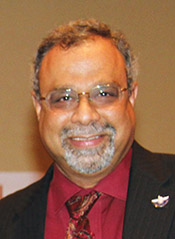 Whilst overseeing the activities of 10 standing committees and 11 ad hoc committees, Patel acknowledged that his smooth tenure of office for four years was thanks to the cooperation of "good committee chairs.” The FEZANA president appoints committee chairs and they function "like a cabinet,” he explained. At the FEZANA session during the North American Zarathushti Congress (NAZC) in New York in August 2012 Patel had reminded the congregation that FEZANA’s mission is to "preserve religion… put the Zarathushti community on the North American map… facilitate efforts of member associations… work closely in cooperation with Zarathushti communities abroad… provide effective leadership.” It was during Patel’s tenure as president that the FEZANA directory was uploaded on the web and his contribution was particularly commended for making the FEZANA Journal archives available online. Realizing the importance of making a transition from print to the web, 50-year-old Patel commented, "Technologies can make or break you.”
With the formation of the Global Working Group (GWG) he is happy that Zoroastrian representatives from different regions can "now sit together and understand each others’ problems. Earlier people (from India) would not hear the North Americans” who were considered ultra liberal. The GWG has provided a platform for their "voice to be heard.” The scheduled GWG meeting in New York prior to the NAZC in August was cancelled, stated Patel, due to "conflict of schedules” since UK representatives were busy with an interfaith meet and the Olympic Games in London. According to him, it was not linked to reformist Zoroastrian scholar Ali Jafarey’s presence at the NAZC that was objected to by the trustees of the Bombay Parsi Punchayet.
The silver jubilee celebrations of FEZANA this year, an opportunity to interact with Prince Philip at the sesquicentennial celebrations of the Zoroastrian Trust Funds of Europe last year were the highlights of his term of office, he says. Subsequent to the closure of his presidential term he will continue "to be active with FEZANA.” With his familiarity with most Federation bodies and other institutions he is now chairing the External Affairs Committee as also the NAZC Committee.
Having made his home in California for the last over two decades, where he resides with his wife Binaifer, a teacher, Patel has been "on a long-term sabbatical” since October last year after retiring from the University of California as divisional liaison, director of computing, to the chancellor’s office. After serving as president of the Zarathushti Anjuman of Northern California from 1994-2004, and in different capacities over the years, he is currently its trustee. Recalling his involvement with community activities, Patel had related for Ashavans: A Legacy of Leadership, "Initially I wasn’t in a position to help others financially. Then I realized that you can give in many ways and forms. This opened doors for me to contribute to our community. To serve others became my motto.” President scout of the Zoroastrian Boy Scouts Group when he was in Bombay, he recalled, "I was taught to ‘be prepared’ and ‘serve.’”
 Prior to the shift to US he was in Muscat for seven years, working with the SENCO Group. An alumnus of Sir J. J. School and Lala Lajpatrai College in Bombay, after completing his diploma in computer science and management studies he joined Intec Polymers in India. He additionally served as assistant secretary of the Maharashtra State Cycling Committee and was appointed assistant commissar of the Asian Games in 1982 and the 1983 Asian Cycling Championship. Currently he is active with the US chapter of Planinum India that helps people plan their future so that their professional, financial and health affairs are in control.
Although "quite religious in my personal views,” Patel admitted, "I am not conservative on the issue of mixed marriages. I have no objection knowing that in this cosmopolitan country where members of the community are widely spread, they may not have any coreligionists in the same school or college. In their daily life they may hardly encounter one or two Parsis. Should we then expect that they will not marry out?” If anyone is to be blamed for interfaith marriages, "it is the parents,” he believes. "It is the responsibility of the parents to bring the kids to the community center. If they miss the opportunity of mixing with community members,” the youngsters will naturally seek other bonds.
"Most frustrating” for him is to see "youth not coming forward to participate (in community events) although we are trying hard. We need more youth to take interest.” At the time of the North American Youth Congress in 2008 "they (the youth) did everything well; then fizzled out as they returned to their education and careers.” The youngsters often lose touch with their home base because "after their schooling they move to other states for higher studies… Here the youth move fast.”