
Cover Story
Seventh successor
Katayun Kapadia, FEZANA’s newly elected president, intends to further foster a unified North American Zarathushtrian community
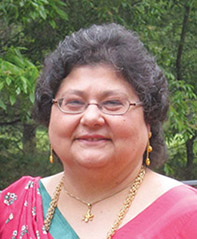 "I look forward to… reaching out to every one of you,” declared Katayun Kapadia, addressing the delegates of the XVI North American Zarathushti Congress (NAZC) two days after she was elected the seventh president of the Federation of Zoroastrian Associations of North America (FEZANA) on August 3, 2012. Having been associated with FEZANA for the last 20 years, the New Jersey based certified internal auditor and certified fraud examiner enjoys the distinction of being the only president who has also served as secretary, treasurer and vice president of the apex body.
Setting aside 15-25 hours a week to community activities depending on the issues that need to be addressed, Kapadia clarifies that at FEZANA "it is the president who puts in the maximum effort all the time; next is the treasurer, then vice president, and pre and post-AGM (annual general meeting) the work load for the secretary and assistant secretary increases.” When an AGM approaches, "a lot of time goes into reviewing the financials, committee reports and budgets, minutes of the AGM, discussions with committee chairs, and presidents and representatives of member associations,” she adds. With FEZANA executive members being based in different states of North America (NA), they monitor progress at their monthly conference call "to discuss and address actions taken and identify next steps. We share and discuss things by telephone and email as deemed necessary,” she explains their style of functioning. The FEZANA executive elected for 2012-2014 includes vice president Homi Gandhi, treasurer Ratan Mistry, secretary Nahid Dashtaki and assistant secretary Shiraz Italia.
"Privileged” to be president of 26 member associations and 12 corresponding members that constitute FEZANA, Kapadia had spelt out the goals before the coordinating body: "fostering harmony, religious education and awareness, advancing interfaith dialoging, improving financial stability, proactive communication and social networking, fostering hamazori between various Zarathushti entities and groups (to create) a robust image of FEZANA.”
 Elaborating on her mission statement, in an email response to Parsiana’s queries Kapadia further asserted, "To build, enhance and promote a unified North American Zarathushtrian community requires a direct, clear, systematic, well-planned and organized communication strategy” such that information is disseminated from FEZANA to "the stake holders” — its member associations — and thence to the individual members at the grassroot level. Likewise reverse communication from the members could be leveraged up to FEZANA and shared with other member associations so that it could result in "mutually collaborative and supportive solutions.”
Proposing to draw in the "talented, passionate and committed young adults in NA who are coming forward to shoulder community responsibilities,” she has mandated that every FEZANA committee have a young adult as its co-chair. Subsequent to her election last August, she has nominated six youngsters as co-chairs and revived two committees — Zoroastrian Youth of North America (ZYNA) and Zoroastrian Youth Without Borders (ZYWB), she reports. Over the years the FEZANA committees with which Kapadia has been associated are the Coordination and Planning Committee that she chaired, Academic Scholarship Committee, and Funds and Finance Committee.
A resident of US for the last 33 years, she has continued to be a pillar for the Zoroastrian Association of Pennsylvania and New Jersey (ZAPANJ) serving as its secretary for two years, treasurer for six years and president for seven years. The ZAPANJ community has grown from 15 families to 120 families "with an influx of young members every year,” conveys Kapadia who has under Lovji Cama’s guidance been instrumental in coordinating religion classes which are attended by about 30 children and 60 adults, as also organizing Navroz, Pateti and gahanbar functions to which members of neighboring associations of New York and Washington are invited. Since 2003 Katayun and her husband Kersi have been actively involved in developing the Zarathushti Cultural Center (ZACUCE) for the ZAPANJ community in Delaware Valley. In community service, 61-year-old Katayun considers North American stalwarts Roshan Rivetna, Dolly Dastoor and the late Khorshed Jungalwala as her mentors.
"We should be like one happy family working together for the common good. Stop using the term ‘Parsi/Irani.’ Say ‘I am a Zarathushti,’” recommends the president. Besides their concerted efforts to induct Iranians on the FEZANA executive, Kapadia will be endeavoring towards joint congresses, sports events, celebration of festivals between Parsis and Iranians across North America. Collaborative participation will be sought from larger member associations to assist smaller associations and corresponding members pursuing mutual community goals.
In her view the North American Mobeds Council (NAMC) has "a treasure chest of knowledge on our religion, history, heritage, culture and traditions” that needs to be communicated to the North American community. "FEZANA will solicit member associations to support the NAMC and religion class teachers to develop, implement and monitor a curriculum for proper religious education of Zarathushti children in NA.” To augment their limited knowledge on the religion, member associations will be encouraged to sponsor and host religious seminars, symposia and programs.
She considers herself "very religious” with the wearing of the sudreh-kusti "important” to establish her religious identity. The asho farohar round her neck reassures her that she has the protection of a guardian angel, she says. "We made the decision to come to the US so we now need to adapt,” Kapadia recommends. "In the North American diaspora we have our own way of life, our own rules. My personal views are conservative.” The North American Zoroastrians don’t have much interaction with the community leaders in India. "We just read about what goes on in India…” For the World Zoroastrian Congress scheduled in Bombay in December 2013, FEZANA has been "requested to send in topics…of importance to NA… that would enable discussions at global level… (and) suggest names of speakers.”
With over 30 years of accounting and auditing expertise in heathcare, higher education, shipping, public accounting, pharmaceutical and biotechnology industries, Kapadia has worked for the University of Pennsylvania and Health System, Philadelphia, Rhone-Poulenc Rorer, Aventis Pharma, Sanofi-Aventis, Elan Pharmaceuticals. Her stint with Aventis Pharma had taken her to Paris for five years from 1998-2003 during which time she served on the board of trustees of the Zoroastrian Association de France (ZAF) and held the positions of treasurer and vice president, working closely with ZAF president Meherafsoon Sassanfar.
.jpg) Born in Bombay, Katayun (née Dinshaw), studied at the J. B. Vachha High School, earned her BCom from Podar College and subsequently qualified as a chartered accountant and worked for the South East Asia Shipping Company Limited owned by the Dhunjibhoys. After her marriage to Kersi, a mechanical engineer with a masters in mathematics, she migrated to USA in 1979. She was active in the Girl Guides movement when she was in Bombay and subsequently in the Girl Scouts of USA. Kersi is currently retired after his last job as an engineering analyst for Syntex Dental Products. Katayun too has taken time out since 2012 when she was vice president and chief audit executive at Elan Pharmaceuticals, Inc, "to spend some quality time with my family and also devote time and effort to perform my duties as FEZANA president.” They have a daughter Zarin who is a High School counsellor based in Washington and son Farrokh, a lieutenant in The US Navy, Submarine Corps, based in Pearl Harbor, Hawaii.
Born in Bombay, Katayun (née Dinshaw), studied at the J. B. Vachha High School, earned her BCom from Podar College and subsequently qualified as a chartered accountant and worked for the South East Asia Shipping Company Limited owned by the Dhunjibhoys. After her marriage to Kersi, a mechanical engineer with a masters in mathematics, she migrated to USA in 1979. She was active in the Girl Guides movement when she was in Bombay and subsequently in the Girl Scouts of USA. Kersi is currently retired after his last job as an engineering analyst for Syntex Dental Products. Katayun too has taken time out since 2012 when she was vice president and chief audit executive at Elan Pharmaceuticals, Inc, "to spend some quality time with my family and also devote time and effort to perform my duties as FEZANA president.” They have a daughter Zarin who is a High School counsellor based in Washington and son Farrokh, a lieutenant in The US Navy, Submarine Corps, based in Pearl Harbor, Hawaii. The youth should remember where their parents’ roots were, reiterates Kapadia. "‘Zoroastrian Return to Roots Programme’ (an initiative supported by the UNESCO Parzor Foundation encourages Zoroastrians overseas to spend some time in India to understand the lifestyle of the community there) is an excellent idea. It is important for the youth to recognize what is out there.” Keen to promote youth involvement so that "things move into the 21st century,” the FEZANA president urged the North American associations to sponsor youngsters who are interested in visiting India: "When they go, they will understand there is a whole world out there, become aware, realize that everything is not so rosy. When they see infighting they lose interest. The youth are not afraid to speak their minds. There is no posturing or taking sides…We need to empower them but make them accountable.”
◆ ◆ ◆
From the archive