
Zoroastrians Abroad
Community commitment
"Parsis are Zarathushtis, but not all Zarathushtis are Parsis… FEZANA (Federation of Zoroastrian Associations of North America) is very positive that we are all Zarathushtis.” Bomi Patel, vice president of the pan American body, is concerned with the tilt this Parsi-Iranian Zoroastrian relationship can take.
As chair of FEZANA’s Congress Committee which oversees the organization of North American congresses, Patel aims to maintain a balance between the two groups. "FEZANA does not differentiate. We want the assistance and involvement of the Persian associations in FEZANA events,” says Patel, adding categorically that FEZANA is revising its terms of reference regarding the allotment of future congresses. "We have not allocated the next one though four associations have applied — the Zoroastrian Associations of Southern California, Houston, Greater New York and Atlanta. We hope that the next annual general meeting (AGM), to be hosted by the California Zoroastrian Center, will see all Iranian member associations represented, forget about the spouses of committee chairs or committee members.” Patel spoke to Parsiana at the end of the XIV North American Zoroastrian Congress in Toronto in July 2007.
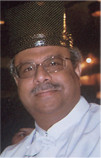
Bomi Patel: FEZANA includes all Zarathushtis
Patel aims to study the structure and management of the last three congresses to see what improvements are possible. Toronto saw the inception of the Khorshed Jungalwala lecture series. As an annual event it will be held in 2008 outside the framework of a NA congress which is held every alternate year. Also, when it is held during a congress, "should it be a plenary session? Unfair competition to other speakers should be avoided,” he notes. At Toronto the inaugural lecture by Prof Kaikhosrov Irani drew a mammoth crowd although it was one of several concurrent sessions in progress.
Another aspect of the Toronto congress that had Patel uneasy was the interactive media session devoted to The Titans. "Some people were upset because all the participants were Parsis whereas our North American culture enfolds all Zarathushtis. We don’t want Persian Zoroastrians to feel a congress is for the Parsis only. At the last AGM I was responsible for getting the PZO (Persian Zoroastrian Organization) and others back into the fold. They always feel sensitive, perhaps because of their roots.” Coming from an unequal society where they have faced negative discrimination, Patel is concerned that "they may feel the same thing here.” He says he has talked to them and is still studying why they feel uneasy. "Iranian youths speak Farsi whereas Parsis are much more anglicized. So we integrate better (with mainstream Americans)… In my opinion the first generation migrants are worried but the second generation gets youths together. However, the second generation doesn’t want to take part in the leadership because they see us always bickering…Host associations should make sure that they inform their speakers to conform to the North American culture (with its emphasis on including all Zoroastrians),” he reiterates.
FEZANA is currently pushing to institute more scholarships for tertiary studies, notes Patel. The FEZANA Journal is already at an international level of publication, he adds. "Our policies and decisions are laid by member associations.” Even if a vote is taken on an issue at a congress, it would have to be ratified by the general body, he informs us.
Currently, FEZANA is supporting youths who opt to go to the Fourth World Zoroastrian Youth Congress in Australia this year by subsidizing the cost upto US $ 500. Patel, who retired as president of Zoroastrian Association of Northern California (ZANC) recently, said the association had opted to provide matching funds, sharing upto $ 250 of the cost for the youths who were required to write an essay on why they wanted to go. Now FEZANA has added its own quantum of funds because traveling all that way in the Xmas season is very costly, says Patel.
An alumnus of Sir Jamsetji Jejeebhoy High School on Bombay’s Dadabhai Naoroji Road, Bomi completed his graduation in commerce from the Lala Lajpatrai College and has been a sports enthusiast and community activist. Fond of traveling, he volunteered with Lala Tours, was a member of the Maharashtra State Cycling Association. After a stint in Muscat he was back in Bombay as sales coordinator with Intech Polymers when he opted to come to the United States in 1991. Thanks to a good working relationship, a partner in the company offered him a job in his US establishment. He says he decided to try it out for five years and became quite comfortable.
In Binaifer Doctor, a school teacher in California, Patel found a wife and, always interested in community service, joined ZANC where he was encouraged to serve on the managing committee, rising to be vice president and thereafter president for six years. During that tenure he chaired the XIII North American Congress in San Jose. "Everybody felt it was very well organized and run. On the last day I was appointed chair of the FEZANA Congress Committee.” At the end of the tenure as president, the association nominated him for FEZANA where he is into his second term as vice president.
Currently administrator in the chancellor’s office of the University of California at Santa Cruz, Patel is "not sure” whether he will stand for election to president of FEZANA. "But whether I stand or not, I will be active in the community,” he assures us.
◆ ◆ ◆
From the archive