
Music
Without missing a beat
Swar Sadhna Samiti founded by Pandit Keki Jijina and Dr Aban Mistry celebrates 50 golden years of classical Indian music
Undaunted by the floods of 2008 or the riots of 1993, neither natural nor man-made catastrophes have prevented the Swar Sadhna Samiti (SSS) from holding their monthly soirées with metronomic regularity for the past 50 years. The program in September 2012 was the 611th performance hosted by the music school founded by the late Pandit Keki Jijina and Dr Aban Mistry — the guru-shishya (teacher-pupil) who shared a passion and common vision of promoting "music without pomp and narcissistic commercial spectacles,” as notes their 50th anniversary brochure.
On a roll
"Punctuality, which is in variance with many other organizations,” is given due respect here and every program commences "on the dot of time,” emphasizes joint honorary secretary Rupa Sethna. Dedicated members of the managing committee, Sethna and the equally fervent Nazneen Katila, narrate how during the riots they were at a loss about how to transport expensive musical instruments to the auditorium nearby, when a taxiwala offered to take them to their destination. For staging uninterrupted concerts every month from 1961 onward, SSS was featured in the Limca Book of World Records.
Jijina and Mistry’s purpose in establishing SSS was to hone musical talent from as young an age as five and to help students display it "charging no fees, no entry charge, no discrimination and no fuss and frills, to showcase pure talent,” the brochure specifies.
At the yearly sammelans (musical meets) they invite well-known, senior artistes and introduce new, promising ones. The SSS also holds competitions in 12 different classical music groups with categories like seniors, juniors and sub-juniors for Khayal Gayaki (a classical romantic singing style), light classical music, and string, wind and percussion instruments. Three prizes, ranging from Rs 300 to Rs 1,000 for the seniors and Rs 100 to 200 for the sub-juniors, are awarded in each category. These awards have been endowed in the past by benefactors and well-wishers. Funding also comes from members and patrons.
Their brochure states, "the modest but highly efficient Ms Sethna ensures that SSS runs smoothly and with clockwork precision.” A former piano student of Olga Craen, Sethna now devotes herself to Mistry and the SSS. In fact, she nurses the ailing 76-year-old bedridden Mistry, sheltering the guru in her Bombay home though Sethna herself is a resident of Panchgani. This volunteer reveals how the SSS calendar is full, starting with the general competition in music every January, followed by the annual sangeet sammelan in March held at the Bharatiya Vidya Bhavan, and in November there is the bal sangeet sammelan for artistes under 14 years and the kishore sangeet sammelan for those aged 14 to 22, interspersed with the monthly concerts.
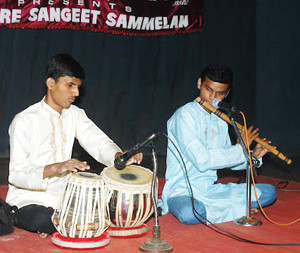
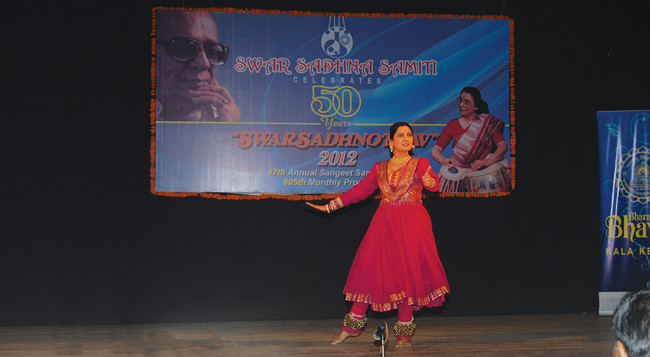
Top: Kathak danseuse Nandita Puri at the annual Swarsadhnotsav 2012 with banner of the founders. Above: Winners of Visually Impaired Trophy 2012
The SSS also awards scholarships of Rs 3,000 per annum for three to six persons. Sethna drives home the point that the monetary reward is not as meaningful as the prestige the award holds for "Indian classical vocal music, instruments and dance.”
The SSS music school concludes its golden anniversary celebrations on October 18, 1912. For half a century they have showcased thousands of musicians and well over 300 competitors annually in classical instrumental, vocal and dance styles representing all corners of India.
The Swar Sadhna Ratna award winners "are conferred this title for their outstanding contribution to music” from towns big and small — Lucknow, Indore, Rajkot, Nasik, Surat, Aligarh, etc. The recipients from 1986 onward include Gangubai Hangal, Ustad Allarakha, Dr Ashwini Bhide and scores of others.
Creating a platform
Founders Jijina and Mistry were offered a house by benefactress Alamai Banaji (née Wadia) in 1953 for the Wadia Sangeet Class in memory of her parents. This graduated into the full-fledged SSS — with Mistry teaching the tabla and Jijina the sitar. The "premises were offered with the sole request (from Banaji) to share and spread their knowledge of Indian classical music amongst all,” Sethna, 63, and Katila, 53, inform Parsiana. Jijina fervently held "that art — be it music, theater, drama or fine arts — is not the prerogative of a few, but was the birthright of every individual to learn, experience and enjoy,” Sethna enlightens. Not just a sitar player of great repute, Jijina also had good knowledge of violin, bansi (flute), jaltarang, kaanchtarang, harmonium and of course the tabla (all four percussion instruments).
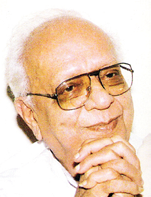
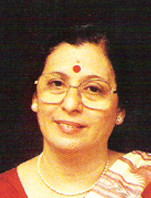
Founders Pandit Keki Jijina (left) and Dr Aban Mistry
Tabla exponent Mistry has researched and written a 140-page book, Pakhawaj and Tabla — History, Schools and Traditions. This comes from India’s first tabla vadika (lady tabla performer) who is known as musicologist, lecturer, research scholar, writer, PhD guide, jurist at competitions and visiting professor in about 15 universities, all rolled into one. She is a doyenne of intricacies of the tabla in four schools or gharanas but her research encompasses practically all the gharanas. She was a student of the Farroukhabad gharana. This is particularly creditable as Indian music schools are rigid and one does not in the normal course play the bandish or style of another gharana as the laya (tempo) and theka (beat) differ from school to school.
At a performance in Bombay, Mistry caught the attention of Ustad Amir Hussain Khan, a renowned vadak. The ustad offered to teach this gifted young girl in her own space, as the area in which khan saheb lived was not deemed fit for a lady to visit. The ustad shared with Mistry the tabla bandishes which are only known to that ustad and often are created by him. A bandish is the nuance of playing the "tabla ké bol” — the words of tabla, corresponding to strokes on the instrument. Khan initiated Mistry into this treasure trove of knowledge such as is not obtainable from books.
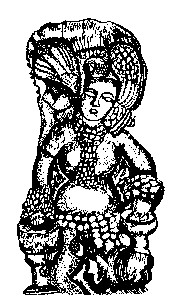
Above: A mural of a woman tabla player in Bhajaa, Maharashtra
Keeping the pulse going
In Mistry’s book on the tabla, Sethna has created notation for taal (rhythm) and kayadas (one of the first types of tabla compositions to be created for classical tabla playing) for denoting beats by computing them, in the western classical tradition.
The PhD researcher toured all over India for 15 years interviewing ustads, gurus and pandits to write her PhD thesis which culminated in this book in Hindi, later translated by Yasmin Tarapore into English, Sethna elaborates. All this travelling was possible as Mistry was encouraged by her mother "to go achieve your dreams but don’t do it for yourself,” and was not pressured to marry, despite her father’s early demise. Mistry sold her personal jewelry, guineas and heirlooms to finance her research. She earned a Masters in Sanskrit and Hindi and went on to complete a double Masters in vocal music and then a PhD in the tabla.
During her research travels, Mistry discovered a stone mural dating back over 2,300 years depicting a tabla vadika in a cave in Bhajaa, Maharashtra, thus establishing that the tabla is an instrument dating back 2,000 years and indigenous to India, not imported from Persia. It was believed that the tabla was adopted by the eminent musicologist of his time, Amir Khusrow of Persia, to especially accompany the soft and romantic singing style of India.
In that mural, the tabla player is a woman — further blowing the myth of it being an instrument for males! Mistry dispelled the gender bias by displaying the same robust energy, a certain degree of strength and aggression in her playing as any male. "The maestro that she was, Mistry demonstrated how the tabla can be played with a melody and softness and how the tabla player can become one with the instrument… her playing was mellifluous,” Sethna reveals. She also recounts how Mistry could mimic a waterfall, the pattering of raindrops and pigeons. She had a tabla composition on pigeons called "Guttur-goo” and one on the swaying of an elephant called "Gaj sawari” in 21 beats. The ancient instrument was cajoled into a deep and soft bol under her fingertips. To quote Mistry: "I play five different taals simultaneously with their khali (absence of beat or empty beat) and sum (the most emphatic beat) ending at the same time. I verbally recite "mutt taal” of 18 beats; whilst simultaneously with my left hand I give "ektaal” of 12 beats; with my right hand I give "teentaal” of 16 matras; also simultaneously my right foot gives ten matras and my left foot taps "deepchandi” of 14 beats… This is not a gimmick and needs utmost concentration, developed through deep meditation and spiritual practice…”
Belittled by the classical Indian music community for being a Parsi, Mistry set out to remove the prejudice. In the preface to her second book, The Parsis and Indian Classical Music (see "Messiahs of music,” Books, Parsiana, November 2004) the maestro states "other communities as well as fellow Parsis are only too aware of our contributions in every aspect of Indian life, be it social, judicial, sports, education… Unfortunately unknown are the feats of the many Parsi ladies and gentlemen who played pivotal roles and earned accolades in the rich, cultural world of Indian music and dance…” She has placed these for posterity in her two books which also debunk the myth that Parsis in India are mainly aficionados of western classical music.
In this book there is a chapter each on the Parsi contribution to Indian musicology, workshops and seminars, sound artistes, record companies, music direction and background music in films. Every field of music — from vocal to recording to patronage to dancers to mandalis which promoted the arts — has been touched upon, documenting 250 years of involvement of the Parsi community in fine arts in India. Natya sangeet in Parsi dramas and operas also has a chapter dedicated to it. Mistry relates how several Indian instruments have Parsi exponents — from keyboard to tabla, to sitar to the difficult sarod. There is no book similar to this on Parsis in Indian classical music and dance. Katila, Mistry’s disciple, co-edited the book.
Jijina was said to be very spiritual. Sethna recited a prayer he had derived by interlacing the Yatha Ahu Vairyo, Ashem Vohu and Yenghe Hatam which the spiritual guide gave to all his Zoroastrian followers who claim it has great potency. In fact, Jijina recommended personalized prayers to every Zoroastrian devotee — asking each to pray a specific yasht or nyaish. Mistry, Sethna and Katila all wear the sudreh-kusti. SSS has no fear of any break in continuity with Sethna, the Katila couple (Nazneen and Firoze) and Jijina’s son Sapal, a seasoned musician himself, all active in the Samiti. Their children also throw their weight behind these committed enthusiasts. Binaifer Katila and Zavareh Sethna assist with the administration and lend infrastructural support. The current president Jitendra Zaveri is also an ardent lover of art. There are several other members who offer allegiance to the driving force of the two Parsi founders of this classical Indian music society.
◆ ◆ ◆
From the archive