
Religion
Dakhmas and dogma
Dastur (Dr) Firoze Kotwal has quit the Doongerwadi Advisory Committee over the issue of installing rain shelters and circulating hot air in the dakhmas
Dastur (Dr) Firoze Kotwal resigned from the Bombay Parsi Punchayet (BPP) appointed Doongerwadi Advisory Committee on November 11, 2011. Parsiana reprints the text of his letter addressed to the BPP trustees stating the reason for resigning:
At our last meeting of the Doongerwadi Advisory Committee held on September 25, 2011, 1 was disappointed that politics had crept into our very first meeting. Subsequently, over a week ago, Dasturji Saheb (Khurshed) Meherji Rana telephoned me to ask me whether 1 would sign a letter jointly, with some advisory committee members, seeking a report from the trustees on sensitive issues connected to dakhmenishini. I refused to be a signatory to this request as anything put down in writing could be misused at a later date by those who are against the system of dakhmenishini or those who wish to arouse wrongful passions within the community.
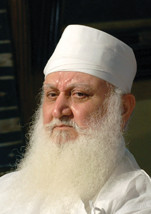
Dastur (Dr) Firoze Kotwal: refused to be a signatory
You may recollect that at our last meeting there was a lengthy discussion on the issue of lilo and suko naso and many concerns were raised about how long the corpse should be left on the pavi, to when the corpse should be lowered into the bhandar based upon the lay understanding of what constitutes lilo and suko naso.
I would like to, from a scholarly point of view, point out, (as I tried to unsuccessfully do at the meeting itself), that we have to consider the terms hikhr and nasa from a scriptural and theological perspective, rather than from the point of view of lilo and suko naso which are terms, colloquially and loosely used by members of the community. As I said at the meeting, hikhr is when blood, pus, other bodily impurities, nails and hair all become ritually impure, when these are exuded or are separated from any living being. Therefore in a working dakhma there is no question of hikhr or dead matter (suko naso) to be considered, as hikhr theologically only exists amongst the living and is a term given specifically to the impurities exuded from the living.
When a person dies, the corpse is said to be afflicted by naso (the fiend of putrefaction) once the ritual bath, known as the sachkar is given. Thereafter, the body is deemed to be ritually impure and so it is only the corpse bearers (nasisalars) who are allowed to touch the body. All matter, fluids, etc exuded or separated from a dead body is therefore deemed to be nasa. Within the context of the dakhma, the corpse should remain on the pavi until all the bodily fluids and the impurities have separated from the corpse. This then may, from a lay person’s point of view, be seen as the process of lilo naso becoming suko naso, terms which are used colloquially in Gujarati and in one sense can be quite misleading. Once the bodily impurities are exuded or separated from the corpse, it can be lowered into the bhandar by the corpse bearers. There is no fixed time limit for this process.
It should be noted that lilo and suko naso have nothing to do with rain water falling upon the corpse and making it wet, as was discussed in the meeting. In fact in the Vendidad, it is enjoined that all the elements should interact with the corpse including the falling of rain (Vd. Far.V. v.4). In other words, the wetness by way of rain water falling upon a corpse placed in the pavi or in the bhandar has no theological impediment, whatsoever. Hence, wet (lilo) and dry (suko) naso does not apply within the theological context of dakhmenishini. Therefore, in my opinion there is no need for "rain shelters” as was suggested at the meeting as I repeat there is no prohibition on rain falling on the corpses.
It is khurshid nigirishn (beholden to the sun) and exposure to the natural elements which are the most important theological necessities for the dakhmas to function throughout the year. Clearly, the process is expedited with birds of prey, which include crows, kites and the vultures as per the Vendidad. Even during the monsoons, khurshid nigarishn continues over the dakhmas during daylight hours. Therefore anything that thwarts this process by way of installing artificial rain shelters (particularly when rain is deemed to be propitious), and/or the ducting of hot air or steam to dry the bodies in the dakhmas is doctrinally unacceptable.
These are the same points that Dasturji Saheb (Kaikushroo) JamaspAsa and myself made in our letter dated December 1, 2010, to the BPP, in which we categorically stated that what Dr (Homi) Dhalla and his team want to do is religiously wrong and unacceptable to both of us. Subsequently, I believe that Dasturji Saheb (Peshotan) Mirza in his letter to the Bombay Parsi Punchayet, has expressed similar sentiments. Hence three High Priests have clearly stated that to install rain shelters and circulate hot air in our dakhma should be rejected totally as it is anti religious.
As I have repeatedly stated, let us leave the dakhmenishini system as close to nature and the natural elements as possible, for it is important to reintroduce birds of prey, specifically the vultures who in turn will strengthen the system of dakhmenishini on a permanent basis.
In view of what I have observed and the direction in which the newly formed advisory committee appears to be moving, I hereby tender in my resignation as I am committed to uphold what is religiously right and am not interested in pushing a political agenda or for that matter playing politics by introducing a system which in my view is anti the religion and not in the best interest of dakhmenishini or the community.
However, I will always be available to the trustees or other concerned members of the community who might require any religious and scholarly guidance on this or any other religious matters.
◆ ◆ ◆
From the archive