
Books
The prince and the Parsis
Parsi Portraits From The Studio of Raja Ravi Varma by Priya Maholay Jaradi. Published in 2011 by The K. R. Cama Oriental Institute, 136, Bombay Samachar Marg, Fort, Bombay 400023. Pp: 91. Price: Rs 1,500.
This slim volume of reproductions of mostly Parsi subjects, models, and formal portraits of important Parsi dignitaries, both men and women of an earlier era celebrates the compositions of Raja Ravi Varma, the princely painter of Kerala. The commentary that accompanies the collection extends the fascination that the artist holds for both connoisseurs and laypersons.
It’s more in the nature of a monograph. It limits itself to what the title indicates — the Parsi portraits from the studio of Raja Ravi Varma. It forms part of a thesis by the author Priya Maholay Jaradi. Obviously this also includes those of close associate and collaborator, his younger brother C. Raja Raja Varma who was not only an accomplished artist himself, but also the person who recorded in a diary the day-to-day events of their travels and meetings with different people. The diary meticulously annotated by Erwin Neumayer and Christine Schelberger, two well-known European scholars, has always been an important source for those working on the life and art of the Varma brothers.
It’s more in the nature of a monograph. It limits itself to what the title indicates — the Parsi portraits from the studio of Raja Ravi Varma. It forms part of a thesis by the author Priya Maholay Jaradi. Obviously this also includes those of close associate and collaborator, his younger brother C. Raja Raja Varma who was not only an accomplished artist himself, but also the person who recorded in a diary the day-to-day events of their travels and meetings with different people. The diary meticulously annotated by Erwin Neumayer and Christine Schelberger, two well-known European scholars, has always been an important source for those working on the life and art of the Varma brothers.
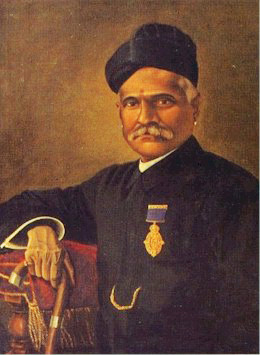
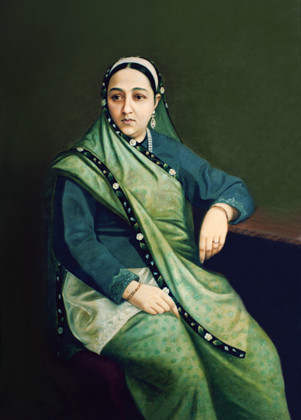
Artist Raja Ravi Varma Courtesy chennai-museum.org; (below) painting of Lady Nowrojee Pestonjee Vakil From a private collection
As described in the end papers, Jaradi is a scholar and curator of art who has worked as an assistant curator at the Asian Civilizations Museum at Singapore, one of the most interesting visual expositions to document and display the ethnic diversity of that tiny nation state. She therefore brings with her a certain rigor in her approach situating the study of her Parsi subjects within the larger agenda of the Colonial practice of their time (late 19th century and early 20th century), while also allowing the reader to enter in the unique artistic landscape of the Varma brothers, themselves a strange amalgam of tradition and modernity.
As Jaradi notes in her overview of the tremendous changes on the artistic scene, the artistic patronage that began, according to her reckoning from the mid-19th century onwards, also marked the emergence of the Parsi community in Bombay in particular as a westernized elite with social and cultural aspirations. It was but natural that the Varma brothers should find their clients amongst this dominant group. Or, as she puts it: "This project situates itself on the axis of imperial policy, (the) arrival of a new style of painting — chiefly Academic Realism, Ravi Varma himself, the prosperous Parsi community, and finally, the pictorial output of the aforementioned factors (in this case, Parsi subjects by Ravi Varma).”
Jaradi sets the scene with brevity and acumen. She provides the background to the story of Raja Ravi Varma by describing his birth in the year 1948 at Killimanoor, a princely state where he received an early education in the classical arts of music, Sanskrit and Malayalam recitation. An introduction to the ruling house of the Travancore Rajas was the first glimpse that Raja Ravi Varma had of the European style of painting, both in the use of perspective drawing, oil based colors as a medium and also more naturalistic approach to landscape drawing and portraiture.
As Neumayer and Schelberger note in their studies, Raja Ravi Varma was also fascinated by the prints that arrived from Europe, particularly of buxom Germanic beauties languishing in forest glades or amidst romantic Gothic ruins and these often became reference points from which he composed the famous mythological subjects that were to make him so famous throughout the Indian subcontinent in his adult years. These were of course part of the immense repertoire of mythological prints that came out of the printing press that Raja Ravi Varma established first at Bombay and then near Lonavla. Jaradi provides copious footnotes to document these activities that are of course well known.
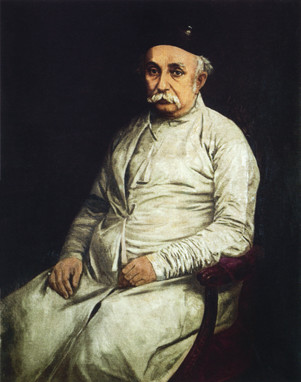
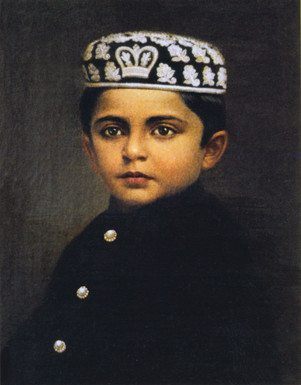
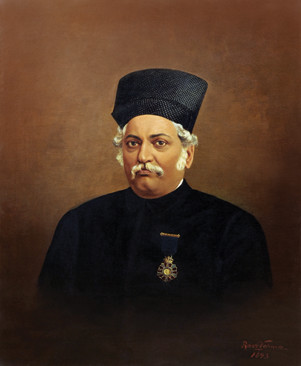
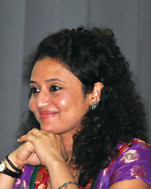
(L to R): Portraits of Nesserwanjee Manokjee Petit and Unidentified Parsi Boy Courtesy Portrait of a Community, Chemould Publications & Arts; Sorabji Shapurji Bengallee Courtesy Enduring Legacy (below) author Jaradi
In her splendidly illustrated volume A Zoroastrian Tapestry — Art Religion and Culture jointly edited with Firoza Punthakey Mistree, Pheroza J. Godrej has a superbly documented a chapter on "Parsi Portraits of Western India (1750-1900)” under the heading "Faces from the Mists of Time” that show how the Parsi community had been portrayed in an earlier era. Godrej underlines the many varieties of influence that led to the commissioning of family portraits and posthumous memorials based, as she says, on miniatures found in lockets and pendants. There were amalgams of European, Chinese and Indian artists at work here. It’s difficult not to be impressed by the quality of lively observation that the artist has instilled in his study of the patriarch sitting with his three grandchildren in the portrait entitled Dhunjishah Shroff and his grandchildren; or the gorgeous details of the clothes worn by Pherozebai Shapurjee Dhunjeebhoy Batliwala (1834-1906) and the charm with which the artist has captured her direct gaze; or the image, Decking the Bride, that appears on the cover of the volume and which has also been reproduced inside.
It was therefore only to be expected that members of the Parsi community would patronize a rising star like Raja Ravi Varma. It may have been out of Jaradi’s thesis to discuss how successful Raja Ravi Varma’s efforts were as compared to some of his predecessors. Such an exercise however is of immense interest to the tendency these days to extol the artist’s talents to inordinate heights. In the Portrait of a European Lady — purported to be a Parsi Lady the right hand holding up the lady’s face is as flat as a pancake. She holds it against her cheek drawing attention to the somewhat sour expression on her face. As compared to the exquisite details of the clothes and jewelry worn by some of Parsi ladies reproduced in Godrej’s chapter, Raja Ravi Varma’s efforts look positively inept.
No wonder we are told in a note by Neumayer-Schelberger that while painting the portrait of a certain Dr Dawar’s wife, he turned up at their atelier on Friday, November 27, 1903, and expressed his disappointment. As the Diary records, "This morning Dr Dawar came and had a look at his wife’s portraits and said he did not recognize her. Though it requires improvements we did not think it was so great a failure. These are difficulties of portrait painting especially from photographs. Another Parsee youth came with a profile of his deceased brother and wants a three quarter face made from his profile.”
This is not to detract from Jaradi’s endeavors. Yet, this small note tells us much more of the actual nature of the relationship between the prince and his Parsi patrons than many pages of elaborate scholarship. His Parsi clients were both middle class and more demanding than is generally acknowledged, while what is commendable about the Varma brothers is their pragmatic approach to their calling. It clears some of the mist from the pages of time.
GEETA DOCTOR
◆ ◆ ◆
From the archive