
Books
The Parsika Path
The Khareghat Colony Youth Association clubbed education and fun while launching Parsika
"If you believe that religion has power to change your life, give you happiness, then search for good and it will change something in you, it will hit you. Just one line from one article, book may change us. Every nyaish, yasht, the chanting of Ahura Mazda Khodae in baaj, touches each one in different ways and each has a different reaction.” These were the opening words of Ervad (Dr) Ramiyar Karanjia, Principal of the Dadar Athornan Institute, who delivered the keynote address at the launch of Parsika – Volume one, published in memory of the late founder and past president of the Khareghat Colony Youth Association (KCYA), Paeterasp Patel on his birth anniversary which fell on September 19, 2011 with lectures, sing-along, plays and skits.
A posthumous award was given to Ervad Kersasp Anklesaria for services rendered to KCYA which was lauded by Ervad Asphandiar Dadachanji. A shawl and plaque were received by Anklesaria’s grand-son Ervad Pashan Anklesaria, in the presence of the ervad senior’s son Farokh. Dadachanji humorously regaled the audience with stories of how some priests light heartedly claimed to have a balm bottle ready to soothe their sore throats when they prayed with Anklesaria as he always belted out the prayers.
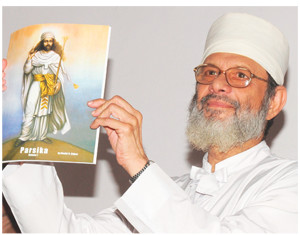
Parsika – Volume one launched by Dastur (Dr) Peshotan Mirza at the Khareghat Memorial Hall
Khojeste Mistree, trustee of the Bombay Parsi Punchayet (BPP) stated that "talking was easy but action difficult. Take this message (forward that) we have learnt. At BPP this is difficult.” He lamented that he was attending as an invitee and was therefore not prepared with a speech. Mistree ended with "we want people to have knowledge, increase faith and follow goodness as Ramiyar said.”
Dastur (Dr) Peshotan Mirza launched the journal. He reminded the audience that last year a Khordeh Avesta was published this day in English by the Frohar Foundation especially for the youth. "Today it is Parsika — a compilation of various writings — religious, historic and with incidences. It is simply put, thought-provoking and has interesting stories in their proper perspective.” He reiterated what Karanjia said that there were several wars because of misunderstanding, misguidance and misrepresentation… Let us gain proper knowledge and remain steadfast to the religion. For this Parsika will be useful undoubtedly.” Thanks were then offered to KCYA, the Patel family and Frohar Foundation.
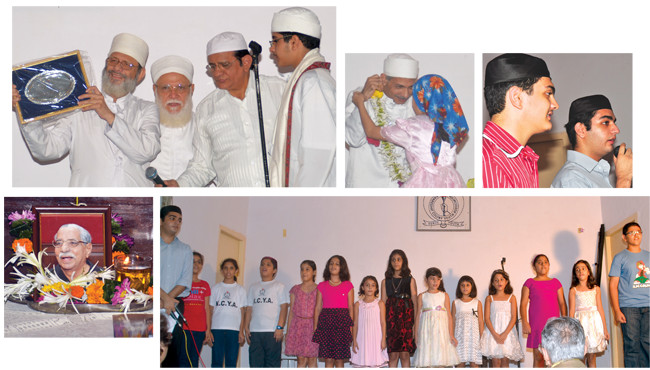
Clockwise from l: Mirza, Ervads Asphandiar Dadachanji, Cyrus Dastoor and Pashan Anklesaria; Ervad (Dr) Ramiyar Karanjia; Rushaad and Parzaan Dastur, children singing; photo of Paeterasp Patel Photos: Cyrus Shroff and Pervez Tavaria
Karanjia stated that it is knowledge which distinguishes our faith, was an essential part of the religion. "Ahura Mazda is termed all knowing — omniscient. Do we know what the 72 qualities in Hormazd Yasht are or in the 101 names of God or in the nyaishs?” He clarified that "there is a lot of difference between knowledge and doctrine… you cannot prove religion, soul, God and divine energy empirically in a laboratory. We need faith (astavani) to believe in divine energy.”
"When there is scholastic, documented writing, then vishwas (trust) settles in. However, if the gain (from this) is duplicitous – which does not lead to short or long term goodness, it cannot be called religious.” He stressed the word neki — intrinsic goodness. "Do according to the law (of nature). Goodness (abadi) is something which comes from within us. We need to stop when the need to harm someone surfaces.”
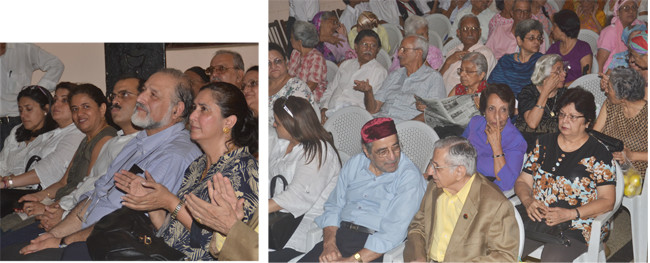
(Above, 5th and 6th from l) Khojeste and Firoza Mistree seated in the audience (above, right)
The scholar-priest ended with the thought: "Religion is not bad but people misuse it. Human beings interpret things wrongly. Nothing comes automatically. Make an effort to be religious. People write for religion, speak for religion but can’t live by religion.”
The masters of ceremony, the Dastur brothers Parzaan and Rushaad, called some resident children on stage for awarding scholarships for academic achievement. Entertainment was provided by skits detailing clear dos and don’ts — whether about the following of reet-rivaj (customs) in a place of worship, or the meaning and use of rakhiya (consecrated ash). A skit on the meaning of the Farohar was enacted. Two monajats were also sung with a neo monajat, if you will, to the tune of You Are My Sunshine. Chhaiyé Hamé Zarthoshti was sung by all. The film Kavyani Zando was projected to show Iranian history at the time of King Faredun and Zohak.
The book Parsika Volume One is an anthology of historic stories, charts done painstakingly and knowledgably by Noshir Daboo of Ahmedabad both in Gujarati as also partly in English. It has coverage of the time capsule placed at Sanjan in 2002. Religious knowledge is imparted on the meaning of ses, afarganyu, layout of an agiary, the grades of fire, etc. Pages devoted to languages — Avesta, Zend and the transformation from Zend to Devnagri make for informative reading. The almanac and zodiac signs initiate the reader into the differences of calendars. There are traditional stories and folklore, for perpetuating an interest in myths and tales that help bind a people.
The anthology published by Frohar Foundation on glossy paper with brilliant color reproduction and layout is a tribute to a man who set up a printing press and had a binding interest in imparting greater knowledge to Zoroastrian youth. Patel’s son Khushru and Aspi Forbes printed this book in their family press, JAK Printers, to honor the patriarch. Mistree termed Paeterasp Patel as a man who had neki. Surely, Patel’s dream will spread knowledge as the Zoroastrian wished for. As Karanjia mentioned, it may also change lives.
◆ ◆ ◆
From the archive