
Business
Trophies of enterprise
The World Zarathushti Chamber of Commerce mentors budding businessmen in India through its Entrepreneur Development Program
The range of the business plans presented was varied and unusual — the manufacture of what is known as technical textiles (synthetic twine, webbing, etc used in automobile seat belts, safety harnesses, luggage, agriculture, fishing, etc), the software development of Three Dimensional User Manuals (3D-UM) which enable internet users to interact with a product (e.g. a camera or car) and operate it in simulation, franchising the business of managing and operating budget hotels, the distribution of safe drinking water and solar energy products in rural areas, the development of rabbit farming (the breeding of rabbits for meat), the installing of car/vehicle washing systems at petrol stations, bus depots, etc…
"It is no secret — the amount of hard work and planning that it takes to transform a creative idea into a successful business and while entrepreneurs have long been supported in countries such as the US, such assistance is not so forthcoming in India,” stated World Zarathushti Chamber of Commerce — India (WZCCI) head Cyrus Bagwadia at the West End Hotel on March 4, 2011. Bagwadia was speaking at the awards night of the Entrepreneur Development Program (EDP). Seeking to provide the tools to reach the top, the EDP encompasses three key elements — intensive training workshops, designed especially for the WZCC in collaboration with established people in the field to provide proven practical skills; the launch of a business advisory group comprising highly placed persons in business and profession who give their expertise free of charge; providing critical networking opportunities which can link the participant to a global network, helping to boost sales, gain new markets or attract investors or partners.
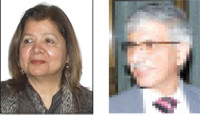
Shernaz Vakil (left) and Sam Balsara: building long-term businesses
The EDP was sponsored by The Zoroastrian Co-operative Bank Limited. There were entries for start-ups as well as expansion. "The program was held over four-and-a-half days. Godrej and Boyce provided their conference facilities, which were outstanding, at their Vikhroli plant. Yazdi Tantra, Zeree Jehangirji, Adi Siganporia, Bagwadia and I interacted with the participants,” described WZCC Mumbai Chapter chair Pheroze Kharas. "The difference this time was that we continued mentoring them through the writing of the business plan and presenting it. We did not do that last year.”
Winning the prize for the Best Business Plan were Vera Saiwala and Sayras Anklesaria of Brighton Synthetics. The Best Idea for Technology Adaptation award went to Kayomarz Gazder of Embbox Solutions. Percy Elavia of the Budget Inn chain hotels (franchising) won the Best Plan for Creating Opportunities award. The Best Presentation prize went to Cusrow Poonawala of Mabhlakh Corporation. Eric Bhathawala of Exomeat won the Best Idea prize. Hormuzd Daruwalla of Parvin Trading Company was recognized for his Environment Friendly Plan.
"I am very excited to be associated with this program and help mentor candidates who require advice,” stated Shernaz Vakil of the Neterwala Group, which is a professionally run, family owned and managed business enterprise with manufacturing interests in metallurgy, specialty chemicals, oil field chemicals and instrumentation, engineering, environment, Information Technology and software. In her talk "Women entrepreneurs in Indian society,” Vakil noted that a woman in business has to wear many more hats – financial, marketing, HR (human resources), wife, mother and teacher, cook… She is multi tasking every day, all the time! Vakil asserted. A woman entrepreneur needs extra support — that of in-laws, friends, mentors who could provide a shoulder to cry on. She is also differently wired from men in her approach. "Research has shown that a woman is more likely to ask for participation, consensus and discussion from her group. Men are more hardnosed in business. There is also more conservatism. Women may undervalue and under price what they offer,” Vakil stated.
The emotional connect with entrepreneurship is vital. "Passion, the feeling of really enjoying what you are doing, the focus, discipline and 150 percent hard work — there’s no going away from any of these,” she declared. "Choose the business you have passion for and go in for a well thought out, valuable business plan. Do not procrastinate too long… women do tend to hum/haw. Even a wrong decision is better than no decision! And don’t try to micro manage — delegate, or you’ll be so embroiled in the small stuff you forget to look at the big stuff!”
Responding to a question on the demise of the license raj and whether it was easier to do business today, Vakil narrated the story of earlier days: "I was seated in front of a bureaucrat in Delhi, trying to explain a major issue. I had a junior with me. The bureaucrat refused to look at me because I was a woman! He kept addressing his questions to the junior and I would reply!” The license raj has ended, but the challenge of competitors has grown! "There is no way to move forward except to compete. It’s a better environment now; it’s easier in that sense,” she added.
WZCC global head Minoo Shroff spoke about the opportunities available in India. "This is the right time. The world is beckoning us,” he stated. Shroff spoke about his own early international experiences as a consultant, at a time when India was far away from being on global high tables! He cited several examples of ‘venture and win’ successes, from people who dared to be different —Sorabji Pochkhanawala, Dhirubhai Ambani, Karan Bilimoria, Cyrus Todiwalla, Rohinton Aga… Failure of course is part of success. "Do you know in how many ventures the Tatas have failed, how many companies have closed down?” he asked. Capitalize on the Parsi calling card, he advocated. Parsis are known to be amiable, adaptable, likeable, trustworthy and, other things being equal, people do repose faith in them. "I’ve dealt with a lot of Parsis however who have let me down,” he added with a half smile in his soft-spoken manner.
Sam Balsara, chairman and managing director, Madison World and one of India’s leading lights in advertising and media, delineated on "Entrepreneurship — 99 percent perspiration, one percent inspiration.” Balsara founded Madison 22 years ago. It has offices all over the country and employs 800 communication professionals. The ad man put forth what he believed were the jingles and jangles of business! The main requirements for success in entrepreneurship are: domain expertise, customer/client focus, adequate resources, knowledge as to what your business stands for and the path to take, patience, readiness to experiment and the ability to hire people and scale up the business at the right time. "For God’s sake, don’t become an entrepreneur just because you want to make money. It’s hare-brained to go for something because ‘that sounds like a good idea,’” he stated. Take quick, concrete steps to achieve domain knowledge before you venture in, make sure your client is not just happy but delighted because there are at least another 25 people waiting to delight him, he counseled. Keep overheads and expenses to a bare minimum in the initial years. The customer wants to pay for your product or service. He is really not interested whether you rent at BKC (upmarket Bandra-Kurla Complex) or at Chakala (industrial area), Balsara added. "A lot of entrepreneurs I know go wrong because they want to take the next step a little too early…Be ready to experiment. There is no such thing as a safe route. If it’s completely safe, it’s not going to work!”
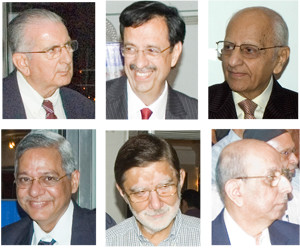
The mentors: (from left, top row) Pheroze Kharas, Cyrus Bagwadia and Minoo Shroff; (2nd row) Yazdi Tantra, Zeree Jehangirji and Adi Siganporia
Differentiating strengths
With adequate experience in the manufacture of technical textiles like twine, tapes, webbing and cords and an in-house dyeing department for net, ropes, etc, Meheli Saiwala, Vera Saiwala and Sayrus Anklesaria are looking to expand Brighton Synthetics’ operations, capitalizing on the huge demand-supply gap of technical textiles in the local and global market. "The current market trend for the larger Indian OEMs (original equipment manufacturer) is to import certain products, due to cost, capacity and quality. Brighton Synthetics is known for its quality consciousness and has the technical know-how to manufacture products as per international standards, customized for specific requirements,” states Vera Saiwala. Brighton Synthetics, founded by Meheli (who is Vera’s father) in 1971, now sees itself specializing in high-end technical textile products like automobile seat belts, industrial sewing thread and twine for the agro tech industry. From design to execution, the company will offer a single point solution to customer needs. Brighton Synthetics is expecting to up the tempo substantially over the next five years.
Dimensions in cyber space
"A 3D-UM can be added to any website, allowing online users to interact with it, rotate it to get a view from any direction, understand its features and even try to operate it, just like a simulation of the real product,” explains Kayomarz Gazder. Embbox Solutions provides an effective marketing tool through the 3D-UM because the manufacturer can demonstrate his product to millions of online shoppers at a low cost. It can also give animated views, instructions for assembling, repairing and servicing devices, for education or online customer support, Gazder adds. The 3D-UM is an obvious choice for electronics like mobile phones, MP3 players, televisions, laptops, gaming consoles, exercise gear, health monitors, as well as for industrial products like pumps, valves, etc, says the enterprising young man.
Budgeting business
"Our company will act as a franchisor in the business of managing and operating budget hotels,” says Percy Elavia. Budget Inn chain hotels have entities in Surat, Valsad, Vapi, Daman, Bharuch and Ankleshwar, as per their website www.budgetinnchainhotels.com "A report in DNA Money has estimated the growth of around 3,000 rooms in the economy segment and about 8,000 in the middle segment by 2013, the current stand being 110,000 rooms in India,” he says. Knight Frank India Private Limited, an independent real estate consultant, estimates the Indian hotel market to touch Rs 11,900 crore by 2013, he asserts.
Illuminating an idea
"Having gained about 14 years of experience with the Tata group after my chemical engineering and Masters in Business Administration, I decided that the time had come to start out on my own. I founded Mabhlakh Corporation,” relates Cusrow Poonawala. "Mabhlakh means ‘unlimited super abundance’ and that’s what I would like to do for the underprivileged of India, in the areas of safe drinking water and solar energy products.”
He explains that LifeStraw Personal and LifeStraw Family are instant microbiological water purification filters that help people access safe drinking water at home and outside. The former is portable and provides 1,000 liters of water, the latter delivers 18,000 liters of drinking water of US EPA (Environmental Protection Agency) standards, irrespective of the source of water. They even act on turbid water and purify it up to 20 microns, he elaborates. "Tie-ups with manufacturers for unique and innovative products give Mabhlakh Corporation an advantage over the others,” Poonawala declares. "Globally, for billions of people life comes to a standstill after dusk. Without access to reliable electricity, they are forced to light their homes with kerosene lamps, dung cakes, firewood and crop residue… (which) not only affects their health… (but) is an impediment to their self development… We have to offer solar power — lanterns, street lights, tube lights and generators.” Currently, 90 percent of the world’s six-and-a-half billion people and growing have little or no access to the products or services that benefit the other 10 percent. Additionally, 90 percent of all design, innovation and development are available to only the most fortunate 10 percent, Poonawala believes. "Mabhlakh Corporation believes strongly that our work, and that of our partners, will some day afford all humanity the basic human rights so many of us are currently without,” he declares.
The meat of it
"After my Masters degree, I was drawn towards the social work and education sector. I never entered the corporate race so I had no idea as to how to start and manage a company,” narrates Eric Bhathawala. "I currently operate a coaching class in Surat (under the name Eric’s Academy). It is doing well and growing every year… There are so many good business opportunities around us but how to start and succeed was the main problem.”
Particularly interested in the food industry, in which he believes the demand will always be greater than the supply, he was drawn towards the poultry industry and rabbit farming. With no idea of the detailed planning involved or of how to raise resources, "the EDP really proved to be a blessing. Preparing the Business Plan was a very intense process and it allowed me to think differently, think big and explore many avenues.” Bhathawala now plans to start a poultry farm this year and then gradually venture into rabbit farming, perhaps after a year or two. "I was actually planning to set up a rabbit farm first…But while preparing the Business Plan I ended up making contacts with a few very successful people in the meat industry. Their guidance is invaluable and now it seems that the best approach for me would be to first establish fast in a proven sector and then venture into new territory,” Bhathawala asserts.
Clean and green
Looking to import car washing systems is Hormuzd Daruwalla of Parvin Trading Company which is into the business of export/import. The obvious advantage of mechanical washing, as opposed to it being done manually, is of course that you can do considerably more business in the same amount of working hours, he believes. It is profitable and environmentally responsible as it recycles water which is an important utility in today’s time, he says.
The long haul
In what way did the EDP help you to bank on your business? we query. "The experienced guides questioned us at each stage to think and substantiate our ideas for viability and completeness,” responds Vera Saiwala. "EDP increased my level of confidence to grow my business,” states Gazder. Appreciating the fact that the mentors were always there, Daruwalla suggests the incorporation of field and factory visits. "An EDP should involve 30-40 participants and that’s how we would all get to see a pool of ideas and enthusiasm would start building up in the community,” he believes.
Dolly Dhamodiwala, a committee member of the WZCC Mumbai Chapter who is a senior researcher at the S. P. Jain Institute of Management and Research, announced a one-day seminar "Marketing and funding strategies for women entrepreneurs,” organized by Stree Shakti in association with the WZCC on April 9, 2011 at the Welingkar Institute of Management. Pilloo Aga, director, Gold Seal Engineering Products Private Limited, a manufacturer and exporter of extruded rubber products like door seals, window channels, bonnet and boot seals, electrical control panel seals, etc, is slated to be one of the speakers. The seminar is of special relevance to those in the MSME (micro, small, medium enterprises) segment.
SPOTLIGHT
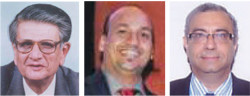
Worldwide excellence (from left): Dr Keki Gharda, Khushroo Daruwalla and Dr Firdos Shroff
Announcing on their website the WZCC 2010 Recognition Awards, the WZCC named Dr Firdos Tehmurasp Shroff and Dr Keki H. Gharda of Bombay as Outstanding Zarathushti Professional and Outstanding Zarathushti Entrepreneur respectively. Khushroo Boman Daruwalla of London has been recognized as the Outstanding Young Zarathushti Professional/Entrepreneur of the year. Shroff’s field of specialization is IT for the banking sector. Gharda founded Gharda Chemicals, one of the largest agrochemical companies in India. Daruwalla’s KhushTech is a complete IT solutions provider.
◆ ◆ ◆
From the archive