
Cover Story
Industrializing Satara
The third and fourth generation of the Cooper family carries its heritage further and higher
At public meetings everywhere generators are used because of the frequent load shedding. And the people can barely hear us because of the sound of the generators. But just now when the genset fitted with the new engine was started, we did not experience any uncomfortable noise,” stated Maharashtra’s minister of rural development Jayantrao Patil adding, "We should publicize Cooper’s genset.”
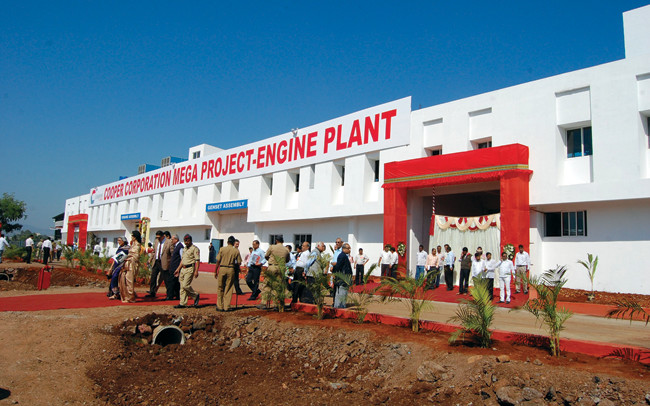
Genset and Engine Assembly Plant;
The Marathi speech of the chief guest at the inauguration of the Cooper Corporation’s Mega Project Engine Plant in Satara on December 18, 2010 was replete with praise for the company and the family that for three generations has sustained its roots there and is today the biggest employer in the area. Patil spoke of how the Coopers and Kirloskars had sought to establish industries along the Poona-Sangli railway track in the early decades of the last century after the arrival of the railways. "The Cooper family started to manufacture a plough of high quality but at the low price of seven rupees. At that time the plough manufactured by Kirloskar cost Rs 11. Hence the demand for the Cooper plough was high. You know, there is more demand for products of better quality and lower price in the market.”
Cooper’s have come a long way since the days of the plough. The company claims leadership in a number of engine components such as cylinder liners, valve seat inserts, cylinder heads and blocks, crankshafts, camshafts, etc. These are "demanding in terms of service conditions for highly rated engines used in automobiles, locomotive diesel engines, marine diesel engines and large engines used for power plants,” notes the company’s pamphlet.
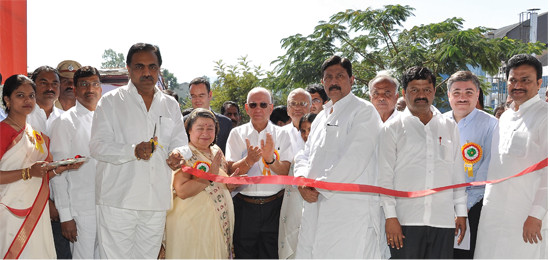
Jayantrao Patil cutting the inaugural ribbon
In his welcome address the firm’s chairman and managing director Farrokh Cooper noted that they currently employ 2,500 people and their vendors/suppliers employ 1,500 more. "With these local people only, we are running our Export Oriented Unit. With these people, we are able to send around Rs 500 crores worth of goods to the US, Europe, England, Japan and other countries.” With the production of two-cylinder diesel/CNG (compressed natural gas) automotive engines for commercial Euro 4 compliant vehicles and the production of silent generating sets which are claimed to be 40 percent lighter and 25 percent smaller than those produced by competitors, they say they are "taking performance to a new high.”
Addressing nearly 3,500 guests in the massive flower-festooned shamiana erected facing the new facility, Cooper recalled how "renowned entrepreneurs like Aristocrat, Patheja, Maharashtra Scooters and others were closing their units at Satara which forced us to think why they are leaving. Why are they winding up their units? I enquired of them. Is there something wrong with Satara? In spite of very good culture, transportation facilities, no robbery, no criminal activities, why are they leaving? And the answer was simply that grants or aids were being offered elsewhere… Almost 3,200 employees lost their jobs… As they went on vacating their buildings, we purchased them… and the same has reflected in our business rise and persuaded the government to take notice of us. In return, the government offered enormous facilities with the condition for going in for a Mega Project (requiring an investment of Rs 250 crore which is reimbursed by government by exemption from excise, VAT and other duties). Accordingly last year, Narayan Rane of the Maharashtra government issued us a Mega Project certificate. This forced us to work faster towards manufacturing of engines, engine components and our desire is to plan vehicle manufacturing very soon.”
The engines that Cooper is manufacturing have been designed by Ricardo of UK.
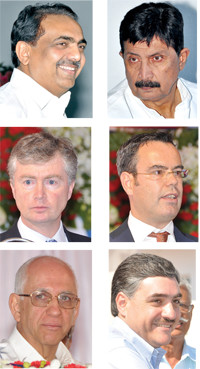
Clockwise from top left: Jayantrao Patil, Ramraje Nimbalkar, Markus Doerr, Zal Cooper, Farrokh Cooper and Paul McNamara
"The engine offered by those people to us is a state of the art engine which can be exported and we have received enquiries from both the indigenous and the outside market for it. They have precisely selected this engine for us,” Cooper was fulsome in his praise for his collaborators who may not have understood the compliment, couched as it was in Marathi. With the exception of two of the Ricardo representatives who had flown in to attend the inauguration of the plant — managing director Paul McNamara and director Markus Doerr — who spoke in English, the entire event was conducted in Marathi.
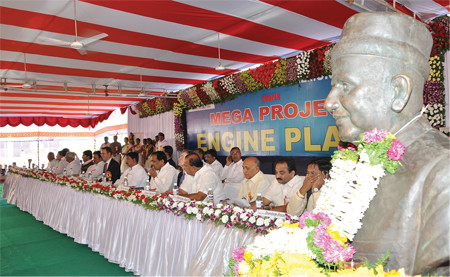
Dignitaries and the garlanded statue of Dhanjishah Cooper
The Government of Maharashtra’s minister for water resources Ramraje Naik Nimbalkar said he had felt the stress of the Nagpur assembly session but the sight of the Cooper enterprise had made him feel cheerful again. He spoke of industrialization in Maharashtra being confined to Bombay, Poona and Nasik, and recalled how Telco (now Tata Motors) first began the transformation of Poona, a pensioners’ paradise, into an industrial hub by employing more than 30,000 people. The city has now become the center of information technology and education. But for the rest of the state Nimbalkar felt that "except for the sugarcane industry… we haven’t achieved anything… With industry the farmer became educated, the generation saw a path of development, and its advantages like improvement in health, rural development, etc; but we never came out from the preoccupation with sugarcane, sugar factory, sugar or at most, textile mills, in the rest of the state for the last 50 years… We have to welcome industrialization with the wealth it brings and arrange to retain it. We have to use it as a support to help common people… to ensure less dependence on whimsical nature to meet daily needs… We want our nation, we want our state to be one of the superpowers at the world level and I think Mr Cooper in our district has given an example of what is possible by his great determination, by three generations of his family — a minority family — over the last 50 years.” Nimbalkar was particularly pleased by Cooper’s fluent Marathi and assured him, "Whatever is possible from my side, the (industrial) peace required for development of (his) industry will be positively maintained.”
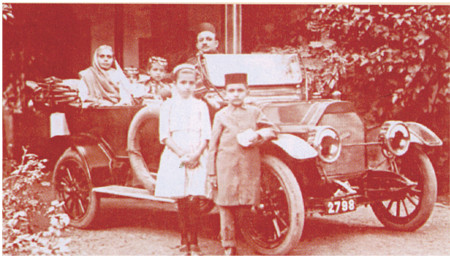
The Cooper family, circa 1917
"The drive and determination of Cooper’s leadership has made this plant possible,” noted McNamara, speaking of their long association. "Ricardo is privileged to work with such a forward looking company to produce products for the US and other parts of the world.” The new engines will enjoy the same success as Cooper’s original products, he predicted, and spoke of their new standards of fuel efficiency, noise and versatility which promised strong application in India as also for export to world markets with "the quality and reliability that Cooper’s customers expect.” Easy to use and easy to service, Cooper’s engines would benefit suppliers also as new business develops new capabilities, said McNamara who felt that the project promised benefits to Indian industry as a whole, apart from boosting the local economy of Satara.
Expressing his great pride in developing two, four and six-cylinder engines in collaboration with Cooper Corporation, Doerr described the new CNG, petroleum and diesel engines as "the cleanest… generations ahead in terms of emissions… world class engines being produced in world class facilities,” ranging from 19KW to 250KW, useable in trucks as well as earth moving equipment. "We are pleased that we could work with this forward looking company, carry the historic name of Satara to the rest of India and the world,” concluded Doerr.
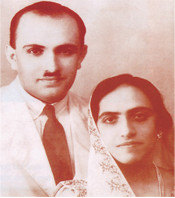
Homai and Nariman Cooper
The firm’s oldest employee was felicitated and a book, recalling the life and work of the patriarch, industrialist and politician Sir Dhanjishah Cooper who not only founded the company but who became the first Prime Minister of Bombay Presidency in 1937, was launched as also a new staff magazine in Marathi. The Gram Punchayet of Satara presented a manpatra (scroll of honor) to Farrokh Cooper and the labor union garlanded all members of the Cooper family as also the VIPs on stage with peda haars (a favorite Indian confection strung together).
The ministers had been escorted through the large three-pronged facility catering to Research and Development (R&D) and the engine and genset assembly plants by Farrokh and his nephew Zal Cooper, their progress being shown on large screens in the shamiana via CCTV.
On display were the ancestral plough and the original diesel engine developed by Dhanjishah and his son Nariman through the 1920s, 30s and 40s. Some of the older products set the stage for a display of the latest two-cylinder engine designed by Ricardo to meet Euro 4 norms. Electronically controlled and fuel efficient, we were informed that the multipurpose engine can meet the needs of agriculture, power generation, construction equipment and automobiles. Cooper is said to be among the few manufacturers of crankshafts in India which are used in marine, automobile and genset engine production. Piston heads and liners for railways were also to be seen. The Corporation counts Mahindra, Escorts, Ford, Honda, Santro and Maruti among its customers. Among its suppliers are Lucas TVS and Kirloskar Oil according to the information boards on display. In the R&D section are housed four electronically controlled test beds to check the power consumption and various other parameters of the engines being produced.
An assembly line of 250-300 components of the two-cylinder engines produces 20 per day. The current total annual capacity of 24,000 engines is proposed to be doubled in a year’s time. Thirty-six 10KVA to 30KVA genset units are slated to roll out each day.
After the formal part of the event which ended with Zal’s vote of thanks which embraced the many inputs of the day, not forgetting the caterer, the enormous audience, which had clapped and laughed through the many Marathi speeches, was served a multi-course buffet lunch in a large hall in the factory.
Urgent summons from New Delhi had prevented the participation of three VVIPs — union minister of agriculture Sharad Pawar who had been scheduled as chief guest, Maharashtra chief minister Prithviraj Chavan who was expected to preside over the function and the state’s deputy chief minister Ajit Pawar.
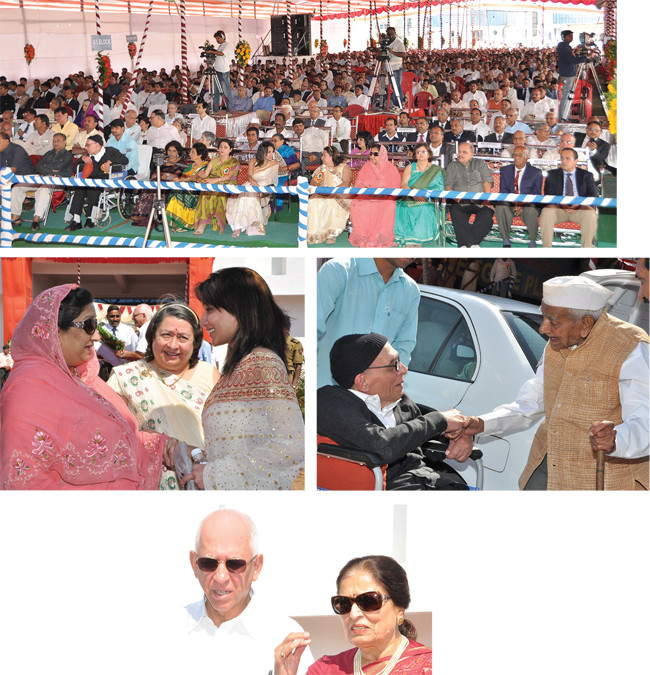
Top: the audience. Below, left (L to R) Shivaji’s descendant Arunaraje Bhosale with Mahrookh and Manisha Cooper; (right) Saam Cooper and Anant Umrani, oldest retired employee, and Farrokh Cooper and Saryu Doshi (center below)
The evolving company
Dhanjishah Cooper, a big agriculturist and owner of mango orchards, established a machine shop called the Satara Industrial Works in 1922 to produce the iron plough which had not been manufactured in India till then, notes an article by Jamsheed Kanga and Farrokh Cooper (see "Cooper’s caliber,” Parsiana, November 2003). Sugarcane crushers, wheels and spokes for well lifts and other items for agriculturists were added. In 1928 the company’s name changed to Cooper Engineering Works with more diversified production including the manufacture of weights and measures.
Then, in 1932 Dhanjishah went into partnership with the British firm Duncan Stratton Company and renamed his company the Hindustan Engineering and Implement Company, undertaking the manufacture of diesel engines under the supervision of British technicians, the first in India. These engines were suitable for flour, rice and saw mills as well as for drawing well water and for driving other kinds of machinery.
To expand the production and range of engines Dhanjishah needed an induction of capital. Walchand Hirachand, the man who floated Scindia Steamships, Premier Automobile and Hindustan Aeronautical companies — each one the first in its field in India — dreamt of making India’s first motor car and was on the lookout for a suitable engine for it. He found the diesel engine, created by Dhanjishah and Nariman with the help of their English general manager Arthur Lund, suitable and agreed to finance its development. It was fitted into a Morris car and deemed successful but their effort to manufacture cars in India was politely scuttled by the British and Americans they approached in 1942.
Despite the difficulties of getting essential materials while World War II raged, Cooper Engineering Limited expanded its diesel oil engine manufacture and became the largest producer in India and supplier to the British government and army. By the end of the War production had expanded to 6,000 engines covering a range from five to 256 horse power. By then the company occupied 126 acres and employed 1,200 workers. However, Nariman’s death in 1944 after a brief illness was a grievous blow and the old man died three years later.
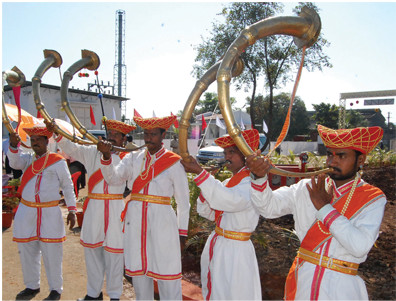
Announcing arrivals
With Dhanjishah’s demise his young daughter-in-law Homai had to shoulder the massive responsibility alone. Her son Saam was still young and Farrokh was born posthumously. She maintained their agricultural land holdings but industry took a backseat while the boys grew up. The young Saam was assisted to start a small factory called the Satara Industrial Works by Hirachand and he soldiered on until a horrendous road accident robbed him of the ability to work any further.
Farrokh, who had acquired his graduation in agriculture in 1968 and was cultivating grapes, onions, ginger and sugarcane and working with milch cattle, was urged by his mother to take over the factory. "When we were in farming, we used to smell of gobar (cowdung), muck, manure, plough and thereafter, with entrance in the factory, of machine oil, cutting oil and other sorts of oils,” Farrokh Cooper had noted at the inaugural, to chuckles from the audience.
◆ ◆ ◆
From the archive