
Politics and Policy
No out of turn allotment
Retired Bombay High Court Justice Hosbet Suresh delivers his report on the contentious 104 Bombay Parsi Punchayet flat allotment case
"This is an unfortunate episode mainly because of the rivalries between certain trustees and ex-trustees all at the expense of the poor applicants.” So commented former Bombay High Court (BHC) Justice Hosbet Suresh in the concluding paragraph of his 32-page report on the contentious issue of allocation of housing for 104 hotly contested Bombay Parsi Punchayet (BPP) flats.
The report submitted on December 30, 2010 in the writ petition of Dinshaw Rusi Mehta and others (petitioners) vs The State of Maharashtra and others (respondents) was the result of an initial order of the BHC dated October 2009 appointing a one-man committee by consent to examine the allotment of 104 flats. Retired Justice of the Supreme Court B. N. Srikrishna was elected but as he was tied up with the Telangana dispute in Andhra Pradesh, the BHC on August 16, 2010 appointed Suresh "to examine the list of 104 allottees to whom allotment of flats under the merit rating scheme (MRS) of the Parsi Punchayet, Bombay were made by the erstwhile board of trustees.”
Of the 104 allottees, Suresh approved 43 applicants "as there was no controversy from anyone.” From the remaining 61 applicants, he interviewed 42 persons. "The rest have not appeared before me.” For these 42 applicants the BPP trustees would have to rank their standing as per the MRS in relation to the 1,200 other applicants on the waiting list in the various categories.
"The respondents allege that the case files have been manipulated by the petitioners. I have gone through the relevant files which were all sent to my chambers for scrutiny, and I found no such manipulations, in the file… The respondents have pointed out that, in the past, some of the applicants have been considered and allotted flats at the trustees’ discretion. If in the past any such discretion had been exercised, that cannot be the basis for my consideration. The MRS does not provide for any such discretionary powers to allot flats out of turn.
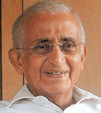
Former justice Hosbet Suresh: ranking becomes inevitable
"The problem, here, is that there are about 1,200 applicants, and there are not enough number of flats. That is why ranking becomes inevitable, till, as many flats are made available as may be required to allot flats to all the applicants...
"It is unfair on my part, or for that matter, on the part of trustees, that the 104 applicants be given priority ignoring the rest of over 1,000 applicants, only because these 104 applicants had jumped the queue earlier. When I posed this problem to the respondents, they had no proper answer. However, what I have done is, as can be seen above, that wherever the applicant falls in any category, I have allowed them to remain in the category subject to such ranking as may be presently found...
"Again, the scheme is such that the category in which any applicant is found at any point of time, may be placed in another category depending on the change in the time period and/or facts and circumstances of each case. Therefore, I would advise the trustees that while renewing the applications from time to time (or once in three years), they should rework out the category, the merit points and the ranking and the same should be conveyed to the concerned applicants. The applicants should have the liberty to point out any mistake, if any, in the said reworked particulars.”
Three lists
The genesis of the dispute goes back to around 2005 when members of the Alert Zoroastrians Association (AZA) alleged that the BPP trustees were manipulating the MRS to favor certain parties. The matter was taken up before the Charity Commissioner (CC) with both parties urging housing applicants to make their representation before the CC. After several meetings and interviews the then board of trustees submitted a list of 104 approved by both parties to the CC. However, following the October 2008 BPP trusteeship elections, six of the seven newly elected trustees challenged the consensus reached by the earlier board before the CC and approached the BHC. From the earlier trustees only Mehta continued on the new board. BPP trustee Noshir Dadrawala refrained from joining his co-trustees in the case and thereby earned their enmity. After several court hearings, the BPP and AZA agreed on a one-man committee to examine the allocation of the 104 flats.
"Initially, the petitioners had mentioned that out of 104 allottees, they had no objection for 64 allottees and the disputed allottees were about 40. However, in the next sitting (i.e. on September 24, 2010) they had come with three lists, with the names of (1) 43 applicants as approved by them, (2) 21 applicants whose names had been approved earlier, but they had become ineligible later on, and (3) 40 applicants who are not approved by the petitioners. It is these 40 applicants who are mostly represented by the respondents.”
After studying the second list of 21 applicants, Suresh found 15 "not eligible,” while four "were all eligible to be included in the MRS.” Of the third list seven "were not eligible,” observed Suresh. "Out of the remaining 33 applicants, the respondents have made representations (for) about 30 applicants. I may also say that most of them were and are eligible to be included in the MRS. Difficulty is in the ranking.”
Amongst the candidates was a priest whose family income crossed Rs 75,000 a month. "However, he is now claiming accommodation on his own and does not want his son’s income to be considered,” noted Suresh. His income therefore would be less than Rs 5,000 per month. But the trustees "point out that even in the priest category, he may have to wait. In other words, the petitioners have not rejected his case and he must wait his turn on merit.”
In another case an applicant is married to "a non-Parsi and therefore he is not eligible under this MRS… The respondents have submitted that if he could serve in a fire temple, why cannot he be given a house? Unfortunately, under the scheme, he cannot get a house having married a non-Parsi. I am not here to judge the wisdom of any rule.”
One applicant claimed to be "mentally challenged” but as he held a full- time job in a reputed manufacturing concern the trustees found it "difficult to accept” his claim of impaired capacity.
A person residing in a hostel since 2000 who had gone abroad to study and was expected back stated "without getting a flat, he would not be able to marry and under the rule, without proof of marriage, a flat cannot be allotted. He has been given a comfort letter assuring the girl and her parents that their case will receive priority when they present proof of marriage. Hence he will continue to remain in that category.”
Another applicant residing in the suburbs had a "grievance that his brothers beat him often and there are fights between them continuously. However, no flat can be allotted out of turn. Hence he would continue in the same position as mentioned above.”
In another case there was "a controversy that she (the applicant) owns (a tenement in) a chawl and as such she is not entitled to any accommodation… However, I recommend that if she brings further evidence to show that the place where she stays is really a slum, she may be included… and on that basis, her merit points and ranking would be re-worked out.”
An applicant wanted to exchange his flat in Byculla on the fourth floor with a flat in Dadar on the ground or first floor as he "is a heart patient and has so many other problems… Since it is not under the MRS, I would not recommend anything. However, I hope the applicant and the trustees should try to work out a place as near as possible to Dadar and preferably on the ground floor or the first floor.”
The Jam-e-Jamshed of January 9 on its front page termed the judgment "Good news for the BPP.” The paper quoted from the press release sent by BPP chief executive officer Mehli Colah stating "The BPP trustees will now be free to start allotting free charity flats as per norms/criteria to the approved cases, whilst those who are out of turn will have to wait as per their ranking in the waiting list.” While the press release was not sent to Parsiana as per the BPP’s policy to boycott the publication, Mehta surprisingly sent, at Parsiana’s request, a copy of Suresh’s report.
The WAPIZ (World Alliance of Parsi Irani Zarthoshtis) Page of January 7, 2011 titled Suresh’s report "One more victory for the new BPP board, continuing defeat for Kersi Randeria and AZA.” While terming the "Team AZA — Natural born losers” the Page claimed "WAPIZ is proved right once again!”
The Daily News & Analysis of January 5, 2011 quoted Mehta as stating, "Our stand is vindicated as the report has backed our MRS. We will start allotting the houses soon. People will have to wait their turn though.” AZA’s Zeree Jehangirji is quoted in the same paper as stating, "We are happy that the stay has been lifted. Some people will be allotted houses at the earliest as per the letters given to them. For the rest we will have to look into specific reasons and deal with it accordingly.”
In a press release titled "Reflections on the allotment of 104 flats” dissenting trustee Dadrawala noted, "I refused to join my colleagues and even today in hindsight I do not regret this decision. The one-man committee has recently arrived at his decision based on the information and files provided to him by the current board of trustees. It was not within the scope of the Commission’s mandate to check the veracity of the information placed before him…
"After more than two years and colossal loss of time, energy, money, goodwill and creating so much bad-blood, what has been the outcome?” Among those asked to wait their turn are "a deserving blind Parsi and a chasniwala’s family. Pray, can anyone call this a ‘victory’ for the BPP? Has this been a good investment of BPP’s time, energy and charity funds? Think about it.”
◆ ◆ ◆
From the archive