
Comment
Cooper’s caliber
Sir Dhanjishah Bomanji Cooper was not only a pioneering industralist but also Bombay’s Presidency’s first chief minister
Very few Parsis know about the man who became the first Prime Minister of Bombay. To commemorate the life and times of Sir Dhanjishah Bomanji Cooper, a prominent Parsi politician and industrialist of Maharashtra in the 1940s, his grandson Farrokh Nariman Cooper took on the task of collecting information on his life and work, and commissioned a biography in Marathi by Jaywant Gujar, a renowned Marathi journalist, titled Sahastrakatil Vegla Parsi Sir Dhanjishah Cooper (Millennium’s Unique Parsi).
In the presence of over a thousand friends and associates of the Cooper family, the book was formally released on August 10, 2003 by Dhunjishah’s daughter-in-law, Homai Nariman Cooper. Amongst those present were Abhaysingh Raje Bhosale, a scion of Shivaji’s family and an MLA, as well as industrialists Rahul Bajaj, Baba Kalyani, Suman Kirloskar, Mukundrao Kirloskar and others. This function and the speeches made by the leading industrialists of Maharashtra, whose families had been associated with Dhunjishah, demonstra-ted the enormous goodwill and respect the people of Satara still have for Sir Dhanjishah Cooper. An English edition of the book is now being prepared, to make it accessible to Parsis.
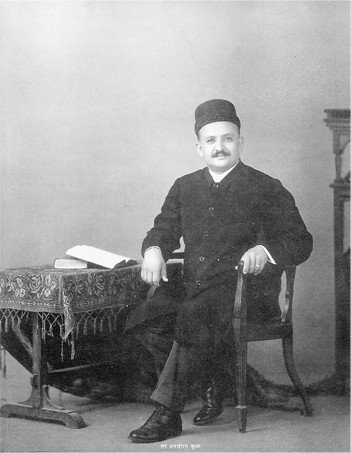
Dhanjishah Cooper in his formative years (All photos sourced from Sahastrakatil Vegla Parsi Sir Dhanjishah Cooper)
Since the Parsi community in this country has now shrunk to 76,000, it is difficult to imagine that at one time so many Parsis had played such a prominent role in the political life of India, particularly in Bombay city and the Bombay Presidency. In the 18th and 19th century Gujarat Parsis who were mainly agriculturists came in contact with the British at their factories in Surat. Appreciating their honesty, the British conferred on them many important positions and eventually the Parsis became prosperous and leaders of society. When the British shifted their activities to Bombay, many Parsis too relocated and were associated with the British in various activities. They also started their own businesses and industries and became involved in local and national politics. Early reports of the Municipal Council in Bombay and Ahmedabad show that the majority of the persons nominated or elected in the municipal bodies were Parsis. Persons such as Dadabhai Naoroji, Sir Pherozeshah Mehta, Sir Dinsha Wacha made a name for themselves in the city government and national politics. However nearly all the Parsis who entered politics operated in the urban areas, particularly Bombay city and other cities in Gujarat such as Ahmedabad, Surat, etc. But one person from the rural part of Maharashtra in Satara District, who made a mark in local politics and later on moved to the city legislature in Bombay and ended up as the first Prime Minister of the Province, was Dhanjishah Bomanji Cooper. This is the account of this unusual person who functioned in the Maratha territory of Shivaji.
Cooper was born on January 2, 1878 to a poor family in Satara and he was the only surviving son amongst three daughters. His father Bomanji was an artisan working in a government liquor warehouse repairing wooden barrels and hence the name Cooper (barrel maker). After his matriculation, he started earning to help his family. To better his prospects he moved to Poona where he joined the Pudumjee family business of wholesale and retail liquor. This gave him an opportunity to learn the liquor business thoroughly which came in useful later on when he started his own liquor business. However, he was too ambitious to work as an employee and he returned to Satara to start his own business. He initially took up small contracts for supplying goods to the army and soon became one of the biggest contractors in the Satara area supplying goods such as tents, furniture and food items to the army camps which were located there. Cooper was also a big agriculturist and planted different varieties of mangoes from Gujarat in his orchards.
He married Goolbai Batlivala in 1905 and began raising a family. His first daughter Tehmina was born in 1907 followed by a son Nariman in 1908. He had five daughters and one son, and he ensured that they were all well educated, in Satara and Panchgani. Nariman graduated from the Government agricultural college in Poona.
Despite the fact that there were very few Parsi families living in Satara at that time Dhanjishah decided to enter into politics. During this period the politics of the Province as well as the administration and economy were dominated by the Brahmins who though small in number were better educated. Even non-Brahmin rulers of various states used to employ Brahmins as their trusted ministers and dewans.
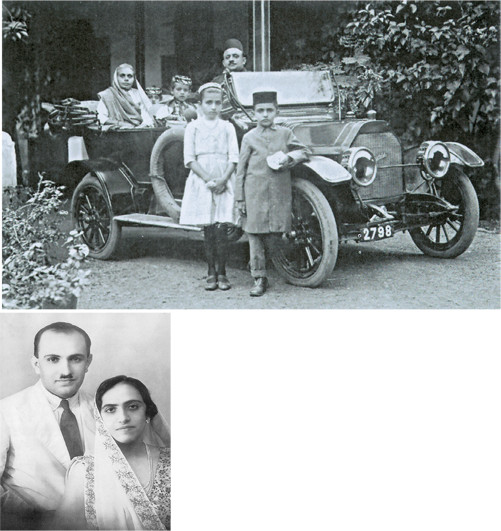
Top: Goolbai and Dhanjishah with children. Above: Nariman and Homai
As a reaction to this, a strong non-Brahmin movement was started in Maharashtra by Jyotirao Phule, a social reformer (1827-1890). Protests were staged employing rejection, confrontation and conflict. Non-Brahmins supported the movement. Unfortunately the Marathas who were mainly uneducated farmers had no leaders capable of fighting the Brahmin politicians. This movement must have encouraged Dhanjishah to enter local politics and provide leadership to the non-Brahmins from whom he received support. His first foray into politics was in the Satara District Local Board. These bodies were the first attempts at permitting local persons elected from within the district to manage the development of the local area. Cooper along with a few other non-Brahmin leaders emerged successfully during the elections that took place in the 1920s and 1930s.
It must be due to his inherent capability that in an overwhelming non-Parsi electorate Cooper was able to get elected to the District Local Board from 1920 onwards. He was also successful in the Satara Municipal Council elections and was vice president of Satara Municipal Council from 1920-1923 and president from 1923 to 1927. In the District Local Board he was vice president from 1922-1925, chairman of the School Board from 1925-1928 and its president from 1929 to 1932.
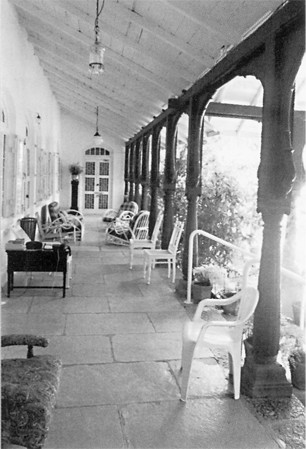
Verandah of the Cooper residence
During the same period that he was active in local politics, Cooper also consolidated his financial position through his various businesses which now included liquor. He was an excise contractor. He had at one stage a large number of liquor shops throughout the district which helped him build up his capital for the future. He then decided to start a factory for the manufacture of agricultural implements and items useful to farmers. With this purpose, he started a grey iron foundry and small machine shop called Satara Industrial Work (SIW) in 1922 in Satara itself, closer to the market for agricultural implements. His first major product was the iron plough which till then was not manufactured in India. This was one of the first companies in India to give the farmers strong and durable hardware for tilling the land at affordable cost. Aside from iron ploughs, SIW soon manufactured sugarcane crushers, wheels and spokes for well lifts and other items required by farmers. Six years later in September 1928 the company’s name was changed to Cooper Engineering Works and other products were added, including manufacture of weights and measures. In 1932 Cooper went into partnership with a British firm, Duncan Stratton Company, and renamed his company Hindustan Engineering and Implement Company. This Company undertook the manufacture of diesel engines under the supervision of British technicians. These engines were suitable for flour, rice and saw mills as well as for drawing water from the wells and for driving other kinds of machinery. This was the first factory in India to manufacture diesel engines which were till then imported.
Cooper had a unique gift of getting on with people at all levels in society, whether rich or poor. Perhaps it was this capacity which enabled him to succeed in politics as well as in business. Whether it was another industrialist like him, namely Laxmanrao Kirloskar or a poor villager who sought his help, he was able to deal with them in the same manner. An example of this was his treatment of Babasaheb (Bhimrao) Ambedkar, who became the first law minister of India, and his father Ramrao.
Subedar Ramrao Ambedkar retired from the Indian Army and decided to settle in Satara town. However, as he was a Dalit, he was forced to live in a small hut in Maharwada, one of the most unhygienic parts of the city. Babasaheb, who was a school boy, faced the discrimination that was the fate of all Dalit boys. However, he was a diligent student and made his mark in the same school where Cooper had studied — The New English School in Satara. This was noticed by Cooper who, when he realized that the promising lad was unable to study due to poor living conditions, rented a small house which he owned in Sadarbazar, opposite the Parsi agiary, to Ramrao for a nominal amount. He also assisted Babasaheb financially to pursue his studies. This was truly an unusual gesture as Dalits were not considered capable of undertaking higher education. The initial confidence Cooper reposed in Babasaheb Ambedkar and the support he gave his family, must have helped Ambedkar in achieving eminence later on. Ambedkar subsequently reciprocated this gesture when Dhanjishah’s ministry was facing difficulty.
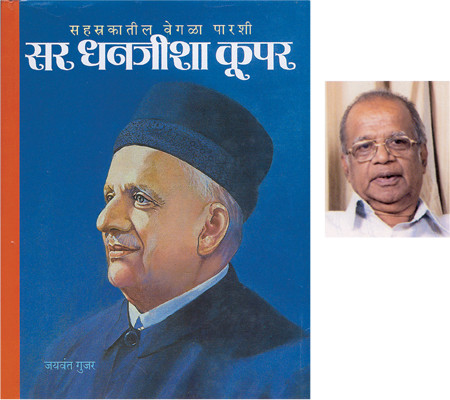
Author Gujar and his book
Another factory for the manufacture of agricultural implements was started by Laxmanrao Kirloskar at Kirloskar-wadi in Sangli District. There was considerable competition between Cooper and Kirloskar, both of whom manufactured the same implements. In order to improve his marketing, Cooper persuaded Kirloskar’s ace marketing executive, Bhaurao Patil to join his factory along with a few of his co-workers. Patil later became one of the most distinguished educationists in western Maharashtra and founded an organization called the Rayat Shikshan Saunstha which started 1,200 schools and 72 colleges in the rural area, imparting literacy to thousands of rural boys and girls. When he joined Cooper’s factory Patil claimed that he be given a share in the profits on the understanding that he would provide skilled workmen from Kirloskar’s factory. He also expected Cooper to help in meeting part of the cost of the education schemes which he had in mind. However, during that year the factory made meagre profits and he was dissatisfied with the share and demanded more. This led to a quarrel between them. Patil got desperate and at a function where he knew Cooper would be present, he came with a pistol in a bag to shoot him. At that time Keshavrao Sitaram Thackeray or Prabhodanker as he was known, father of Bal Thackeray of the Shiv Sena, was a prominent social worker and was also involved in the non-Brahmin movement. Thackeray noticed the pistol in Patil’s possession and realizing he might do something rash, quietly removed the pistol from the bag and hid it. Thereafter he persuaded Patil to give up his desperate objective of killing Cooper. Had Patil succeeded, Satara district would have been doubly poor, for the loss of Cooper, who took the district to greater glory later on, and the loss of Patil, who raised the educational standards and made Satara one of the most literate districts in western Maha-rashtra.
In order to expand the production and range of engines, Cooper needed more capital. Walchand Hirachand, a prominent industrialist joined Cooper in his business. Hirachand can be credited with having started in this country the first Indian shipping line viz Scindia Steamship, the first automobile company viz Premiere Automobile; the first aircraft company viz Hindustan Aeronautical. Hirachand had a dream of making India’s first motor car and was on the lookout for a suitable engine for the car. After examining various models, he believed that the Cooper diesel engine would be most suitable and agreed to finance the development of the engine at Cooper Engineering. Dhanjishah and Nariman, with the help of their English general manager Arthur Lund, developed an engine suitable for use in motor cars. Hirachand fitted the engine in a Morris car and it was deemed successful. Fitted with the Cooper diesel engine the car was driven before the commerce member of the Government of India, Nalini Rajan Sarkar and the governor of Bombay Sir John Colville during his visit to Satara and both felt that the engine was suitable for a vehicle. This emboldened Cooper to approach the Department of War Transport in Delhi in 1942 to give assistance in setting up facilities for manufacturing engines for cars and trucks which could be used in the war. However, the Government did not wish to encourage competition with the British car industry. Dhanjishah and Hirachand even approached the American Technical Mission for assistance in starting a factory for the manufacture of cars in India but their efforts were not successful. If fate had been kinder, perhaps a Cooper car may have preceded the Tata Indica.
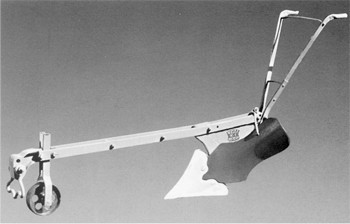
The plough made by Dhanjishah
Simultaneously, Dhanjishah continued to play an active role in politics. He was elected to the Bombay Legislative Assembly from 1921 to 1926 and also from 1930 to 1937. During this period he was simultaneously involved in the District Local Board and the Satara Municipal Council and was a revered figure in the District. The British Government also had great confidence in him and he was appointed minister for Local Self Government, Public Health and Public Works Department from November 1933 to June 1934. Thereafter, he was the minister for Revenue and Finance from June 1934 to March 1937. Dhanjishah was entrusted with all these important portfolios by turn and appears to have acquitted himself creditably. His contribution was recognized by the British Government and he was given the title of Khan Sahib in 1917, Khan Bahadur in 1920 and was knighted in 1937.
The Marathas revere Chhatrapati Shivaji as their greatest hero as he was the founder of the Maratha dynasty. Unfortunately, Shivaji’s direct descendant lost the kingdom of Satara when it was annexed by the British and Satara was thereafter in British hands. Shivaji’s family was however allowed to retain its properties as well as receive a privy purse. In March 1925, Chhatrapati Pratapsingh alias Bhausaheb Maharaj, the last living heir to Shivaji died without any male issue. This would have given the British an opportunity to abolish the title and stop the family’s privy purse and privileges under the law of Primogeniture which allows only direct male heirs to inherit the title. Dhanjishah was aware that Chhatrapati Pratapsingh had been trying to adopt a male heir from amongst his blood relations but had not been able to complete the process. He realized that unless a male heir was immediately adopted legally, the family would lose its privileges and because of his close relationship and regard for the family, he identified a blood relation (Chandrasen Bhosale) and convinced the British Government to accept the adoption and declare him as an heir. It was his diplomacy which persuaded the Government to accept an heir and thereafter, the British Government appointed a board of trustees including Dhanjishah to act as a Regency Council during the period of minority of the ruler.
The British Government enacted the Government of India Act of 1935 referred to as the Minto Morley Reforms. Under this Act the provinces would be governed by elected representatives who would be responsible to the elected legislature. This was a major step in the direction of self rule. However, the Act gave the governor the right to veto any legislation which he considered as not being in the interest of the British. In the elections held under this Act the Congress party won 106 seats out of a total of 201 seats in the legislature. The Congress Working Committee believed that the governor would use his powers to interfere in the working of the ministry, even though the party had a majority in the legislature. Hence they refused to hold office till satisfactory assurance was received from the viceroy not to use his veto powers. The Muslim League which was approached by the governor also refused to form the government. As a result there was a piquant situation with no party willing to form a government. Finally the governor asked the seniormost independent member, Dhanjishah, to form the ministry consisting of other independents, and he took over as the first elected Prime Minister of Bombay Presidency (as the chief minister was then called) on April 1, 1937. The Interim Ministry as it was called carried out a comprehensive program and undertook measures in keeping with its policies. Amongst measures taken by them were cancellation of three orders passed in the Bombay Special (Emergency) Power Act, 1932 and Refund of Securities of 20 newspapers and presses. It also released the freedom fighter Veer Savarkar who was imprisoned in Ratnagiri jail and removed all restrictions placed on him. At one stage the Congress party wanted to pass a no confidence motion against the ministry and asked the Ambedkar party to support them. Ambedker refused to work against Dhanjishah’s ministry, perhaps out of gratitude for his earlier help to their family.
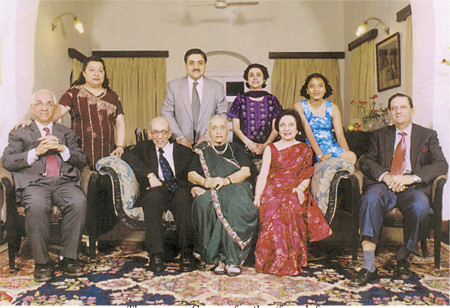
The present Cooper family: (from left, standing) Mahrukh, Zal, Kavita and Manisha; (seated, from left) Farrokh, Saam, Homai with Feroza and Jamsheed Kanga
Eventually, the viceroy gave the assurance of non interference to the Congress and they decided to accept office in the six states where they had received a majority. The Interim Ministry of Cooper resigned on July 15, 1937 and the Congress ministry headed by B. G. Kher formed a government.
Now that the reigns of power were in the hands of a popularly elected government, Cooper though still a member of the legislature, began to take more and more interest in his factory and with the help of Nariman to expand its activities. In 1939 the managing agency was transferred to the Walchand Group as he felt that it would be able to allow the company to expand and invest more capital. However Dhanjishah and Nariman remained as director and managing director respectively.
In 1942 despite difficulties in getting essential materials, Cooper Engineering Limited rapidly extended its diesel oil engine manufacturing program by introducing engines of a higher horse power and increasing production capacity. The company became the largest oil engine producer in the country and the Government of India Stores Department and the Army began using it in large numbers. At the end of World War II, to meet the demand for diesel oil engines the company further expanded and increased its production to an annual output of 6,000 engines, covering a range from 5 BHP to 256 HP suitable for industrial purposes of each and every kind. It was during this period that the successful motor car diesel engine was developed but unfortunately the car industry was not ready to use it. The company’s capital was increased threefold and its area increased from 20 to 126 acres and a small township was built alongside the factory employing 1,200 workers. Its engines and machine tools were exported to nearby countries.
Unfortunately, in 1944 Dhanjishah suffered a grievous blow when his only son Nariman died after a brief illness at Satara leaving behind a young widow and three small children. Though suffering grievously, Dhanji-shah took over the added responsibility and continued to look after the affairs of the company and attend to his duties as legislator. However, not having any other male heir to assist him, Dhanjishah found it impossible to manage a large factory as well as his own personal business. It is a pity that the Parsi community lost an opportunity to have another large business group.
Dhunjishah died of a massive heart attack on July 29, 1947 at the Taj Mahal Hotel while in Bombay attending the session of the Legislature. His main achievement lay in nurturing the young Marathas from western Maharashtra for politics under his Democratic Swaraj Party. Many leaders such as Balasaheb Desai who was a senior minister in the later government of Y. B. Chavan had worked under his leadership in the District Local Board of Satara and the Satara Municipality. He also pioneered in the establishment of an industry in a rural area long before the Government had. He achieved all this in an area where the community was insignificant in numbers.
When Dhanjishah passed away in 1947, his two grandsons Saam and Farrokh were not even in their teens. They were brought up and educated by their mother Homai who had shouldered the responsibility of looking after their vast agricultural estate as well as their other property. However, Dhanjishah’s entrepreneurial spirit was still alive in the family. Before his death, Dhanjishah had requested Walchand Hirachand and his brother Lalachand Hirachand to assist his grandchildren. When Saam wanted to start a small industrial unit in Satara, the Hirachands assisted him by giving him some machinery on hire and guided him in setting up a small factory called Satara Industrial Works. Setting up his small machine shop in 1960 the business has been developed by Dhanjishah’s younger grandson Farrokh and great-grandson Zal. It has grown into a large foundry and machine shop and has a sales turnover of Rs 100 crore. Their products have reached markets all over Europe and America and are highly regarded for their quality. Dhanjishah would have been proud to see that his grandsons and great-grandson have shown the same entrepreneurial spirit which made him begin in a humble way and yet achieve success through hard work and honesty. Cooper Foundries and Satara Industrial Works are large industrial units in Satara.
Today Satara is a bustling town with 700 acres of industrial area, with major industries such as heavy engineering scooters manufacture, pharmaceuticals, a brewery and many others.
Dhanjishah’s dream to bring industries to the rural area has at last been realized. Y. B. Chavan, the first chief minister of Maharashtra, when unveiling Cooper’s statue at the Cooper factory said that in the days of the freedom struggle, when he (Chavan) was a fugitive and there was a parallel government in Satara called the "Patri Sarkar,” Cooper was considered an enemy as he supported the British, but now we appreciate his vision. Dhanjishah’s spirit must be feeling gratified. Equally so must be the fact that his grandsons and great-grandson have continued in his footsteps and have established a modern foundry and a manufacturing unit exporting to the USA and Europe. Dhanjishah’s legacy continues.
A retired Indian Administrative Service officer, Jamsheed G. Kanga held senior posts in government including that of the municipal commissioner of Bombay. A former trustee of the Bombay Parsi Punchayet, he is on the board of several companies.
Farrokh N. Cooper is the chairman and managing director of Cooper Foundry.
◆ ◆ ◆
From the archive